


The Real Names of 6 Classic Hollywood Stars

  • Marilyn Monroe
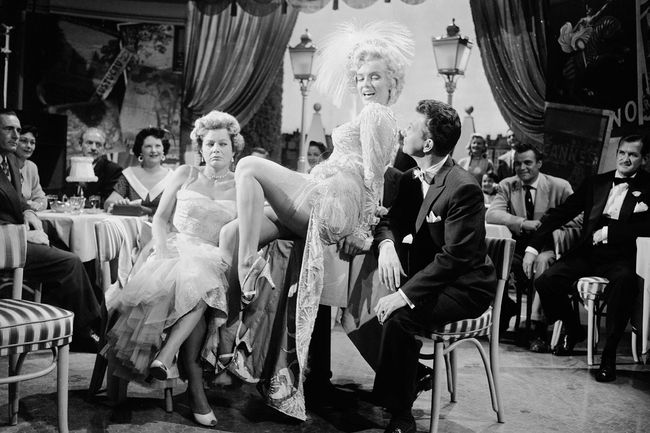
Marilyn Monroe
Credit: L. J. Willinger/ Hulton Archive via Getty Images
Author Tony Dunnell

February 5, 2025

Love it?

Film actors have adopted stage names since the earliest days of cinema, and some of the most recognizable names in entertainment history were in fact carefully considered pseudonyms. 

These stage names were adopted for various reasons. In many cases, actors, often under the guidance of their agents or studio executives, chose a pseudonym simply because it was more marketable than the name they were given at birth — whether because it was more memorable, more glamorous, shorter, or simply easier to say or spell. 

In other cases, actors adopted names that were considered more American-sounding than their given names. Martin Sheen, for example, was born Ramón Antonio Gerardo Estévez, but was persuaded to change his name to something considered more Hollywood-friendly — a decision he later regretted. Keanu Reeves also was told to change his name early on in his career, but he stood his ground and stuck with “Keanu.”  

Here are six of the most legendary Hollywood stars who adopted stage names, including screen icons such as Judy Garland, Cary Grant, and Marilyn Monroe.

Credit: Silver Screen Collection/ Moviepix via Getty Images

Judy Garland (Frances Ethel Gumm)

Judy Garland, born Frances Ethel Gumm, began her career when she was just a child, performing with her two older sisters in a vaudeville group called the Gumm Sisters. In 1934, when the group began attracting attention, comedian and emcee George Jessel suggested the sisters change their last name to something more glamorous and theatrical. He recommended “Garland,” possibly inspired by Carole Lombard’s character, Lily Garland, in the film Twentieth Century, or perhaps after the acclaimed drama critic Robert Garland. 

A year later, Garland chose to change her first name, too, adopting “Judy” after a popular Hoagy Carmichael song of the same name. The new stage name helped launch Judy Garland’s glittering career, beginning with her starring role in the 1939 classic The Wizard of Oz.

You may also like

What Was the First Musical Instrument?

  • A variety of drums and flutes-Musical-Instrument
A variety of drums and flutes
Credit: SanerG/ iStock
Author Timothy Ott

February 5, 2025

Love it?

Although some radio stations boast of their repertoire of “oldies,” we know that label is a bit of a misnomer. After all, songs from the 1950s are hardly old when compared to the sheer length of time that humans have been creating music.

Given the importance of this form of expression, it’s unsurprising that ancient cultures around the world created their own distinct instruments for making music. Some of these, including a 4,000-year-old Mesopotamian lyre and a 3,000-year-old Egyptian harp, are still in existence today. Others, such as the 2,000-year-old Roman water organ, are known only through documentation.

But even these standouts from antiquity represent relatively advanced examples of musical instruments. Prehistoric humans certainly sought to soothe and entertain themselves and their companions by way of music from simpler generators. So what form did these simpler instruments take? And can we definitively identify the first one known to humanity?

Credit: UniversalImagesGroup via Getty Images

Voice and Makeshift Instruments

If we consider voice a musical instrument, then this is undoubtedly the answer. Although it’s unknown when early humans first discovered their capacity for singing, they would have possessed the physical ability to do so as far back as 530,000 years ago.

If our definition of a musical instrument is an object that is deliberately used to create sounds, then it’s also worth noting that hominids realized they could rhythmically whack a stick against a tree or clap two rocks together at an indeterminate juncture of the distant past.

It would seem logical, then, for the earliest known instruments to be those of the percussion variety, which create sounds by the act of banging or shaking them. In fact, a remarkable “orchestra” of these instruments, consisting of mammoth bones and ivory rattles, was found at a 20,000-year-old Paleolithic settlement in modern-day Ukraine.

But neither these nor any other prehistoric percussion tool can be considered the world’s oldest musical instrument. The honor instead belongs to flutes that are at least twice as old, although the age and instrumental status of at least one of the candidates is up for debate.

You may also like

Why Did They Dig Trenches in World War I?

  • Soldiers in trench, 1914
Soldiers in trench, 1914
Credit: Hulton Archive/ Archive Photos via Getty Images
Author Tony Dunnell

January 24, 2025

Love it?

The First World War transformed modern battle through the emergence of trench warfare, a defining characteristic that shaped the conflict from its start in 1914 to its end in 1918. This entrenchment was not a planned strategy, but rather a necessary adaptation to the brutal realities of modern warfare and the devastating effectiveness of modern weapons. 

By the early 20th century, advances in weaponry meant that previous battlefield tactics had to be scrapped. Infantry could no longer march toward the enemy in formation, cavalry charges were impossible, making the grand maneuvers of past battles obsolete. The war soon became an effective stalemate at the front lines, most famously along the Western Front, with opposing armies digging into increasingly elaborate trench systems. Here’s a closer look at how trench warfare came to define World War I.

Credit: FPG/ Archive Photos via Getty Images

Protection From Artillery

Artillery was the most destructive weapon on the Western Front. Modern artillery shells could devastate troops in open terrain, raining down high-explosive shells, shrapnel, and poison gas. Artillery created zones in which almost nothing could survive in the open, putting an emphasis on defense and the advantage with the defender, as attacking became too risky. 

Because of the catastrophic effects of artillery, generals were forced to dig in at the start of the war. Trenches were initially seen as a temporary measure, but they soon became an absolute necessity, providing crucial protection against shell fragments and shock waves from explosions. As artillery quickly became the war’s deadliest weapon — around 60% of battlefield casualties were caused by exploding artillery shells — the depth and complexity of trench systems grew to match this horrific aerial threat. 

You may also like

Which Came First: Wine or Beer?

  • Glasses of beer and red wine
Glasses of beer and red wine
Credit: Kirill Z/ Shutterstock
Author Timothy Ott

January 24, 2025

Love it?

Whether you’re enjoying a glass of cabernet with a meal or downing IPAs with friends, you’re taking part in the multifaceted, multicultural act of alcohol consumption that dates back many thousands of years.

Indeed, although the dangers of excessive drinking are well known, and even small amounts of alcohol are now believed to come with health risks, imbibing has been part of the fabric of human existence since the dawn of recorded time. Some anthropologists argue that alcohol featured prominently in social customs that facilitated the rise and progression of civilizations. Others suggest that civilization itself was formed as a result of people settling in one area to domesticate crops for the production of alcohol.

Because spirits such as whiskey or vodka involve a more complex distillation process, beer and wine (and wine’s less-prominent cousin, mead) are the earliest forms of alcohol, left over from a time before any of humanity’s famous names, wars, or inventions etched themselves into history. Which sets up the ultimate bar debate: Which of these two ancient libations is older?

Credit: Old Images/ Alamy Stock Photo

Early Humans Likely Discovered Alcohol by Accident

To let some of the air out of the suspense, we’ll note that it’s difficult to pinpoint when people first began drinking wine or beer, since proto-versions of both drinks can be formed with little to no human intervention.

Ethanol, or drinking alcohol, is created through the fermentation process that takes place when sugar meets yeast. In the case of beer, that occurs when a grain such as barley is exposed to moisture and its starches are converted into sugar, priming this component for catalyzation by deliberately introduced or naturally appearing yeast. Similarly, crushed or even overripe fruits with high sugar content including grapes or figs will naturally begin to ferment, creating the basis for wine.

It’s likely that early humans (or even animals) stumbled upon the intoxicating effects of fermented grains and fruits, and maybe even figured out how to replicate the experience by leaving their collected wares out in the elements for too long. We can only speculate on the concoctions that may have been experimentally produced by pre-Neolithic people, although they were almost certainly different from the beers and wines that emerged under more controlled conditions in later epochs.

You may also like

Did People in the Middle Ages Really Believe the Earth Was Flat?

  • Flat Earth model
Flat Earth model
Credit: buradaki/ Shutterstock
Author Tony Dunnell

January 23, 2025

Love it?

The Middle Ages lasted for about 1,000 years, from the collapse of Roman civilization in the fifth century to the beginning of the Renaissance era. Despite it being such a long stretch of time, people of the era tend to get thrown together into one group when it comes to our common perception of them. And, in general, they tend to get a bad rap. Our medieval ancestors are often portrayed as unwashed, uneducated, and generally uncouth ruffians. These stereotypes, however, are either gross exaggerations or outright misconceptions

One commonly held idea about the Middle Ages is that most people believed the Earth was flat, and thus you could easily fall off the edge of the world if you sailed too far. But this is yet another misconception foisted upon the people of the medieval period. As it turns out, folks in the Middle Ages were not nearly as ignorant of basic geographical and astronomical facts as we tend to believe.  

Credit: Milkovasa/ Shutterstock

The Ancient Understanding of the Earth

Not only did most educated people in the Middle Ages know the Earth was round, but this knowledge also had been common among scholars since antiquity. The spherical nature of the Earth was well established in ancient times, particularly through Greek astronomy. 

Aristotle provided convincing proof of Earth’s roundness in the fourth century BCE, including the observations that ships disappear hull-first over the horizon and that Earth casts a round shadow on the moon during lunar eclipses. Later, around 240 BCE, the ancient Greek polymath Eratosthenes even calculated Earth’s circumference with remarkable accuracy. This knowledge was preserved and transmitted through the Roman Empire and into medieval times through texts and scholarly traditions. 

Of course, many people in the Middle Ages were uneducated. Public education was scarce at best, and illiteracy was widespread — literacy rates in Western European countries during the Middle Ages were generally below 20% (and were often far below that). Still, it is likely that even uneducated people knew that the Earth was round, simply because this information would have filtered through society to become common knowledge.

You may also like

What Is the World’s Oldest Story?

  • Inscribed “Epic of Gilgamesh” tablet
Inscribed “Epic of Gilgamesh” tablet
Credit: DEA / BIBLIOTECA AMBROSIANA/ De Agostini via Getty Images
Author Timothy Ott

January 21, 2025

Love it?

Whether relayed by way of a novel, poem, movie, or word of mouth, stories have served as a means of connecting people through shared experiences and emotions since we first learned to communicate with one another.

Some of the most famous stories have endured for hundreds or thousands of years. William Shakespeare penned his celebrated plays in the 16th and 17th centuries. Beowulf was written several hundred years before that, while the Iliad and Odyssey epics push back even further into the first millennium BCE.

And yet there are even older and far more obscure examples of storytelling that won’t turn up in a college literature course. Which inspires the question: How far back do we need to travel to find the world’s oldest story?

Credit: DEA / G. DAGLI ORTI/ De Agostini via Getty Images

The “Epic of Gilgamesh” Is the Oldest Surviving Written Tale

The ancient Sumerian Epic of Gilgamesh is often cited as the oldest known surviving story. This epic poem tells the tale of King Gilgamesh, the part-divine ruler of the ancient city of Urek, who battles terrible monsters sent forth by spiteful gods and seeks out a plant that brings eternal youth. Derived from sources that date back to approximately 2100 BCE, the first full version of Gilgamesh appeared on cuneiform tablets early the following millennium.

But while this would be an early example of a story that could be held and read, it’s more accurate to refer to Gilgamesh as the oldest known work of narrative literature. If you consider visual art capable of telling a story, then there are plenty of surviving creations that predate the written word.

You may also like

When Did People Start Eating Sweets for Dessert?

  • Selection of French desserts
Selection of French desserts
Credit: Universal History Archive/ Universal Images Group via Getty Images
Author Timothy Ott

January 16, 2025

Love it?

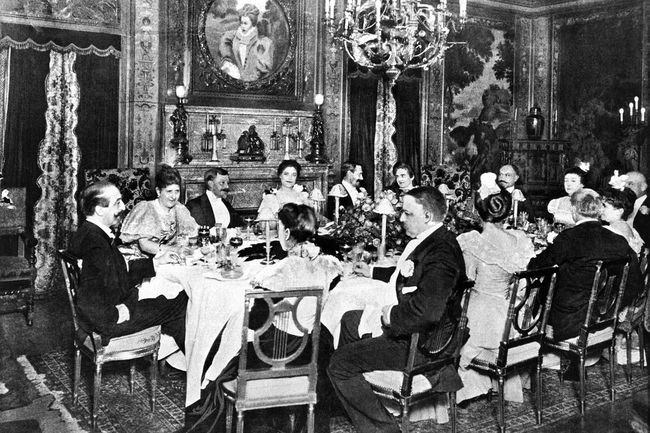
Most of us don’t give a whole lot of thought to the habit of finishing a satisfying meal with a dessert of something sweet — we’re too busy savoring the delectable mouthfuls of cake, custard, or ice cream.

Yet this is a clear culinary tradition that many people follow. While some may elect to eat sweets before a main course, and others simply dig into pie or brownies at any time of the day, most adhere to the standard operating procedure of dessert after the main course at lunch or dinner. But how and when did this order come about? Why do we eat sweets after a savory meal, and not the other way around?
Credit: AmiNiravTank/ Shutterstock

Humans Evolved To Have a Need for Sweets

To start somewhere close to the beginning, the craving for sweets is biological. Our hominid ancestors realized they derived more energy from ripe fruit with a higher sugar content than unripe fruit, and humans evolved with a hardwiring that connected sweetness to pleasurable feelings.

This primal need perhaps explains why sweets have traditionally featured into religious ceremonies for many cultures. As described in Michael Krondl’s Sweet Invention: A History of Dessert, Mesopotamian cooks prepared cakes as an offering to the goddess Ishtar. Similarly, Hindus throughout India have presented a sugar and milk concoction known as pedha to deities such as Kali for more than two millennia.
At times, the ritual of serving sweet dishes at distinct intervals has translated to something similar to the modern idea of dessert. After a day of fasting in celebration of Krishna’s birthday, Hindus traditionally indulge in treats such as bhog kheer, a pudding, or shrikhand, a sugar-flavored yogurt. In Turkey, the end of fasting at Ramadan means an opportunity for celebrants to sink their teeth into baklava, a beloved pastry.  

Of course, the preparation and consumption of sweets has long been a part of secular mealtimes as well. The Deipnosophists, a work from the third-century Greek writer Athenaeus of Naucratis, describes an array of honey-coated fare served over a series of lavish banquets. However, the now-commonplace notion of specifically relegating such sweeter foods to the end of a meal has its origins in France.

You may also like

The Rise and Fall of Sears Mail-Order Homes

  • Sears catalog, 1897
Sears catalog, 1897
Credit: Bettmann via Getty Images
Author Mark DeJoy

January 16, 2025

Love it?

In 1906, Sears was a flourishing catalog company that had just launched a highly successful initial public offering. The company went public under the name Sears, Roebuck and Co. after completing the construction of an enormous new headquarters and distribution center in Chicago, which totaled 3 million square feet of floor space over 40 acres of land. Sears advertised the new complex as “the largest mercantile plant in the world,” and included illustrations of it on the backs of its catalogs. It was a heady time for the company, but not everything was running smoothly. 

Though Sears was growing, its building supplies department was proving unprofitable, and a decision to close it loomed. Manager Frank W. Kushel was appointed to oversee the liquidation of the department, but he instead developed a way to sustain it: All the supplies needed to construct a home were bundled together with blueprints, and shipped directly from the factory. This eliminated the need to warehouse the materials, thus saving costs, while simultaneously creating a bigger-ticket product line. The Book of Modern Homes and Building Plans — the first catalog of Sears mail-order houses — was sent to prospective customers in 1908.

Credit: FPG/ Archive Photos via Getty Images

Sears was not the first company to sell kit houses — the Aladdin Company, Montgomery Ward, Lewis Homes, and others were also in the market around the same time — but Sears touted its status as one of the “largest commercial institutions in the world” with its massive distribution center, and promised to save customers between “$500 and $1,000 or more” in building costs, while guaranteeing the quality and reliability of materials. Balloon-style framing design, with drywall instead of lath and plaster, reduced the carpenter hours needed to build a house, in turn lowering the total cost for the buyer. In the initial 1908 catalog, 22 home designs were offered, ranging in price from $650 to $2,500 (roughly $20,000 to $80,000 today) and in sizes from unassuming to approaching grandeur. 

Not surprisingly, delivery of materials was a complex operation. The average buyer didn’t have the space to store all the building pieces at once, so shipments were phased. The lumber and nails for the frame arrived first, in order to allow the roof and enclosure to be built, thus ensuring adequate shelter for the ensuing materials. When the customer was ready, they sent for the next shipment, which included millwork and inside finish. Hardware, paint, and any additional furnishings were the third and final shipment. 

The majority of mail-order houses arrived by train; the buyers hauled the materials from the boxcar to their building site, unless they were well heeled enough to pay for the railroad to truck the supplies from the station. The first orders for homes were placed by customers around late 1908 or early 1909.

Sears moved aggressively to improve home offerings and stimulate sales. In 1909, it acquired a lumber mill in Mansfield, Louisiana. The following year, electric lights and gas (high-end amenities at the time) were included in home designs. The next two years saw the completion of an additional lumber mill in Cairo, Illinois, and the acquisition of a millwork plant in Norwood, Ohio. 

The new facilities enabled the company to manufacture its entire line of homes using its own sources, which allowed for an expanded number of home designs. By 1912, the Modern Homes department reached an annual sales volume of $2,595,000, which equated to a profit of $176,000. This was enough to wipe out the previous losses from the department’s former building supplies incarnation. Kushel’s plan was a success. 

You may also like

5 Surprising Facts About the Secret Service

  • Secret Service agents, 1982
Secret Service agents, 1982
Credit: Bettmann via Getty Images
Author Kristina Wright

January 16, 2025

Love it?

The U.S. Secret Service is a prominent part of American culture, often portrayed in action films and news footage where agents are seen sprinting alongside the president and leaping into action during high-risk situations. These representations have shaped much of our perception about the agency, creating an image of an elite force dedicated to the protection of the nation’s leader. 

Yet the Secret Service is much more than the group of sharp-suited agents seen flanking the president. Since its founding in 1865, the agency’s role has included some truly fascinating — and often surprising — responsibilities. Here are five facts about the U.S. Secret Service that you may not know.

Credit: Fotosearch/ Archive Photos via Getty Images 

Abraham Lincoln Established the Secret Service

On April 14, 1865, President Abraham Lincoln signed legislation establishing the U.S. Secret Service. Although now synonymous with protecting the president of the United States, the agency was not originally created for this purpose. Instead, it was conceived as a division of the U.S. Treasury Department, tasked solely with addressing the rampant issue of counterfeit money. In the aftermath of the Civil War, nearly a third of U.S. currency in circulation was counterfeit, destabilizing the fragile economy. The Secret Service’s mission was to combat this crisis, investigate forgeries, and safeguard the nation’s financial security.

Establishing the Secret Service turned out to be Lincoln’s final legislative achievement, as he was assassinated later that same day by John Wilkes Booth. Ironically, the agency Lincoln established did not take on the responsibility of presidential protection until decades later, following the assassination of President William McKinley in 1901.

McKinley’s death, the third presidential assassination in 36 years, highlighted the urgent need for enhanced measures to protect the nation’s leaders. In response, the Secret Service was formally assigned the responsibility of safeguarding sitting presidents. Despite this significant expansion, the agency has retained its original mission of protecting the nation’s financial system, a task that remains integral to its operations.

You may also like

5 Retro Photos From the Swinging ’60s

  • Dancers at Cromwellian Club, 1966
Dancers at Cromwellian Club, 1966
Credit: Pictorial Press Ltd / Alamy Stock Photo
Author Nicole Villeneuve

January 16, 2025

Love it?

The Swinging ’60s were a period of whirlwind of change in the United Kingdom — bold, colorful, and bursting with possibility. At the dawn of the decade, Britain was still shaking off the postwar doldrums, with austerity lingering and life defined by staid convention and cautious optimism. But as the country entered an era of economic growth and prosperity, a sense of freedom and opportunity also emerged. By the end of the 1960s, London had transformed into a global hot spot of youth, freedom, and creativity, where music, fashion, and art collided in a cultural revolution that reverberated around the world.

As a generation of young people — resulting from the postwar baby boom — emerged free from war and its looming shadow, they embraced individuality. Not content to follow the old rules, they set out to rewrite them entirely: Music became their driving force, with bands such as the Beatles leading the charge. Fashion transformed too, with Mary Quant’s daring designs embodying the era’s exuberance. London was alive with energy, and the city spent the better part of the decade reinventing itself. Here are five photos from the era that illustrate what it was like to live through the Swinging ’60s.

Credit: Trinity Mirror / Mirrorpix/ Alamy Stock Photo

George Harrison’s Sitar (1968)

Few things capture the cultural imprint of 1960s London quite like the Beatles. Their meteoric rise to fame coincided with the youth-driven revolution that defined the era. The Fab Four were more than just a band; they were an unstoppable force that touched everything from fashion to philosophy. The Beatles were known to experiment with new sounds, particularly Eastern influences, and guitarist George Harrison’s introduction of the sitar into their music marked a pivotal moment. 

This photo, taken in June 1968 at Heathrow Airport, shows George and Pattie Harrison, Ringo Starr, Maureen Starkey, and Beatles assistant Mal Evans returning to England from California after Harrison filmed scenes for the Ravi Shankar documentary Raga. Shankar, a renowned Indian composer and musician, was a major influence on Harrison, and Harrison can be seen carrying his own sitar off the plane. Years earlier, in 1965, the Beatles became the first Western rock band to use the sitar on a commercial recording when they released the song “Norwegian Wood (This Bird Has Flown).” It inspired fellow musicians to explore new sonic landscapes, paving the way for the Rolling Stones, Pink Floyd, and others to adopt the psychedelic sound that formed the soundtrack of the Swinging ’60s.

You may also like