




Shockingly Dangerous Toys Your Grandparents Played With
Before the age of cellphones and even TV screens, kids spent much more time outside, running rampant with unsupervised abandon and relying largely on their imaginations for entertainment — as well as the popular toys of the era.
It may seem like a rosy picture, but what’s often forgotten in the hue of nostalgia is how dangerous some toys were back in the old days. Your grandparents and possibly even your parents were kids before a wealth of emergency-room data had been analyzed, and no one knew how lethal certain toys could be.
From explosive Ping-Pong ball guns to radioactive science kits, the toys of the mid-20th century operated under a simple philosophy: If children enjoy it, then it’s probably fine to sell. (The U.S. Consumer Product Safety Commission wasn’t even established until 1972.) Here’s a look at the toys your grandparents played with that would never even make it off the production line today.
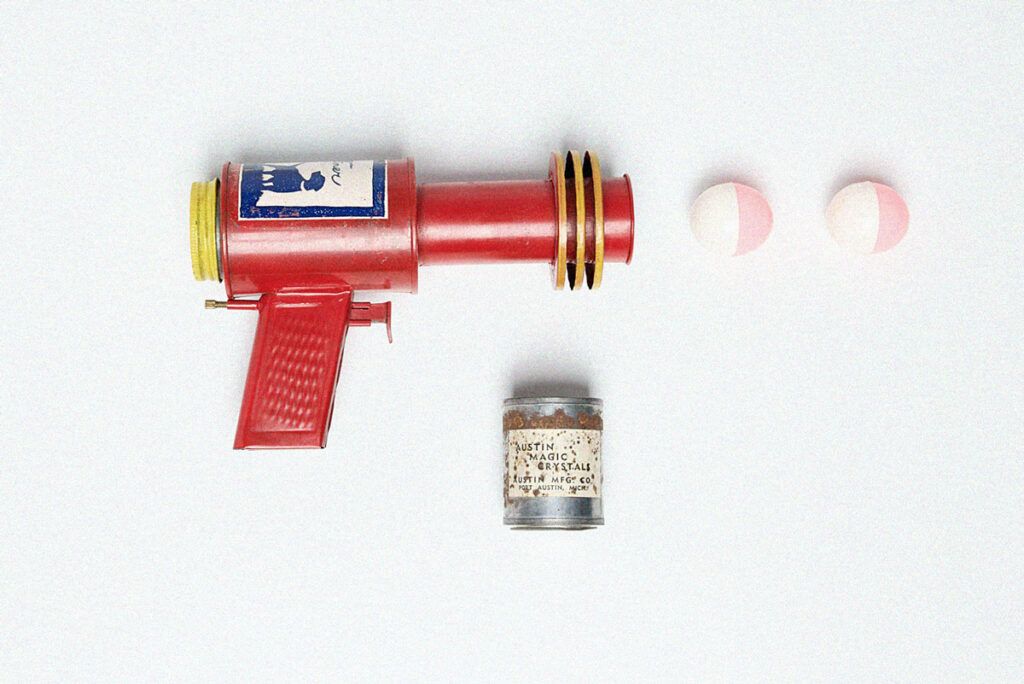
Austin Magic Pistol
In the late 1940s, a Michigan company released a toy that, by today’s standards, would be categorized as a firearm in many states. The Austin Magic Pistol was a toy gun that fired a Ping-Pong ball. But the ball wasn’t launched by a spring or anything else so benign — it was launched by an explosive chemical reaction between calcium carbide and water.
This produced acetylene gas, a colorless, highly flammable gas that could turn into a fireball. Firing the Austin Magic Pistol was therefore fraught with danger, not only because of the flames shooting out the end of the barrel, but also due to the risk of the gun itself exploding. Sales began to dwindle after a few years and the toy was largely removed from stores by the late-1950s.
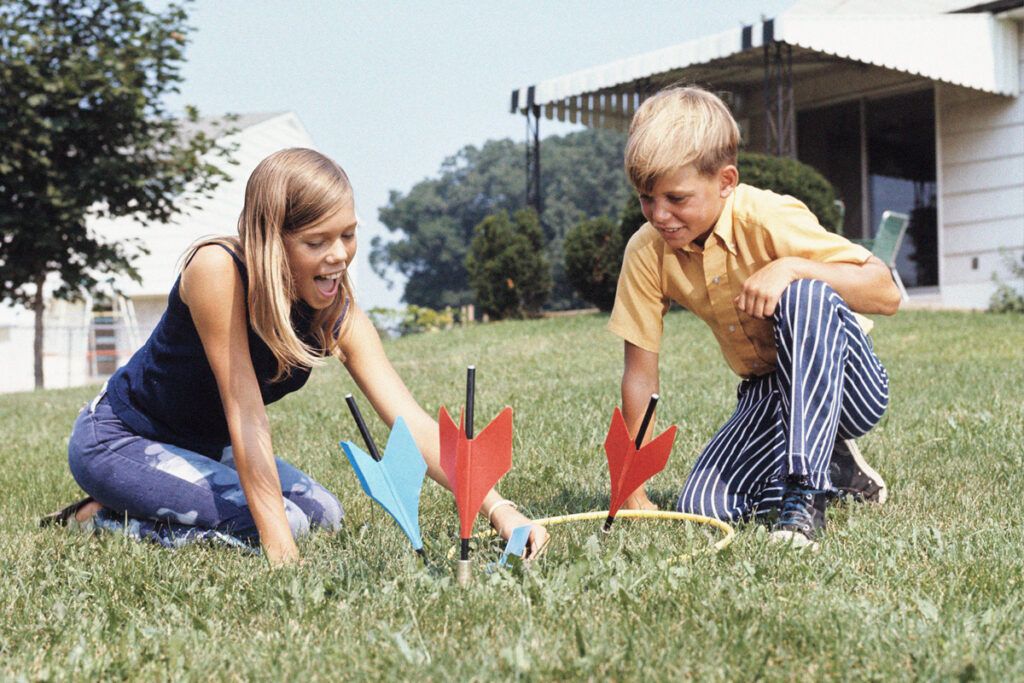
Lawn Darts
As early as the mid-1950s, people began playing lawn darts, also known as jarts. The premise was simple: Toss heavy, 12-inch-long pointed darts (essentially little metal-tipped spears) at a ground target from several feet away. It sounds easy enough, but the darts had to be thrown with some force, which wasn’t ideal in a garden full of children.
Despite the obvious risks, jarts grew in popularity in the 1970s and ’80s, when manufacturers created cheap and attractive lawn dart sets marketed directly to children. Things soon got out of hand. From 1978 to 1986, lawn darts were responsible for an estimated 6,100 injuries treated in the emergency room, including at least three deaths, with about 81% of the victims under 15 years old. The Consumer Product Safety Commission (CPSC) eventually took action, banning the sale of jarts in 1988.
More from our network






Clackers
Clackers — alternatively named Clankers or Ker-Bangers — consisted of two polymer balls attached to either end of a string. When swung, these two balls collided with each other, creating the satisfying clacking sound that gave them their name. They became very popular among American kids in the late 1960s and ’70s, but there was one major problem: The balls had a tendency to shatter after prolonged or overly forceful contact, sending sharp plastic shrapnel flying like tiny glass grenades.
Soon, a growing number of reports of facial and eye injuries emerged, prompting the Food and Drug Administration (which regulated toy safety before the CPSC was formed) to issue a public warning in 1971. Many schools banned the nefarious toy, but it continued to be sold in shops. Eventually, Clackers were banned entirely by the CPSC in 1985.

Belt Buckle Gun
In 1959, Mattel introduced the Agent Zero Buckle Gun — a belt buckle holding a small gun. To fire it, kids had to push out their stomachs, which would make the gun flip out and fire the cap. . While kind of cool in principle, the toy had a major flaw: Any sudden movement could accidentally ignite the cap, potentially causing serious burns. With the CPSC not yet established, it was up to Mattel to do the right thing. The company quietly discontinued the dubious belt buckle gun — a toy that would be instantly banned today — consigning it to the annals of dangerous toy design.

Gilbert U-238 Atomic Energy Lab
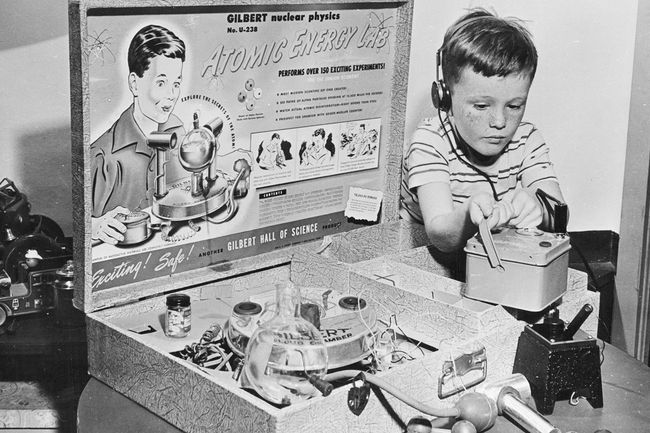
Widely considered one of the most dangerous toys ever produced, the Gilbert U-238 Atomic Energy Lab was a children’s science kit containing actual radioactive material. (At the time, people were aware of the harmful nature of radioactive materials, but not fully aware of the risk posed by lengthy exposure to very small amounts.) Sold in the early 1950s, the $49.50 set came with four samples of uranium-bearing ores, a Geiger counter, and an instruction manual outlining various experiments to try at home.
Thankfully, the Atomic Energy Lab sold fewer than 5,000 units before being quietly discontinued after about a year — not because of safety concerns, but because of the high price point and poor sales. The toy was never actually banned, which is pretty shocking by today’s standards.


