




Victorian etiquette guides had instructions for eating asparagus.
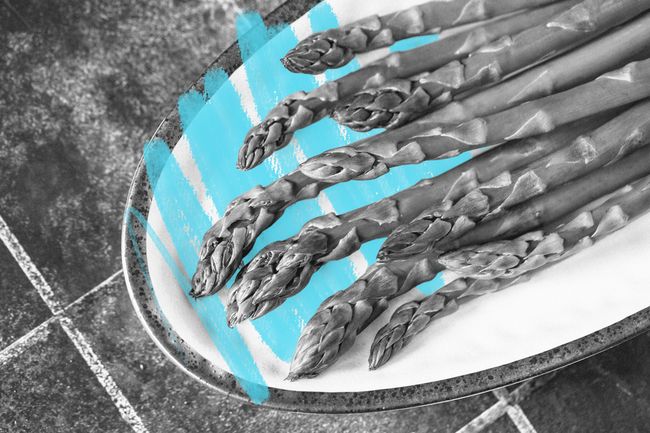
Upper-class society in Victorian England was governed by strict social rules, and dining was no exception. This included, perhaps surprisingly, a correct way of eating asparagus. Etiquette guides often made a point of specifying that picking up a spear with your fingers was perfectly proper — even at the refined dinner tables of the era.
The rule generally applied to whole, firm asparagus spears that could be grasped by the stalk. Diners were expected to pick up the spear by the end and eat it neatly from the top down. There were, however, exceptions: Asparagus that was overcooked and limp, already cut into pieces, or served covered in sauce was better suited to a fork and knife.
“In eating asparagus, it is well to observe what others do, and act accordingly,” Routledge’s Manual of Etiquette suggested in 1875. “Some very well-bred people eat it with the fingers; others cut off the heads, and convey them to the mouth upon the fork.” The 1859 etiquette manual The Habits of Good Society: A Handbook for Ladies and Gentlemen was more definitive — and descriptive: “As sucking asparagus is more pleasant than chewing it, you may as an epicure, take it up au naturel.”
The vegetable was an important enough part of a Victorian meal to inspire specialized asparagus platters and asparagus-specific tongs. By the early 20th century, some asparagus sets even included individual tongs for diners to use.
Asparagus etiquette didn’t disappear with the Victorian era, either. Decades later, experts still discussed the practice of eating whole asparagus spears by hand. Emily Post, whose 1922 etiquette guide helped define American table manners in the 20th century, considered it acceptable to eat asparagus with your fingers, provided it wasn’t a dripping mess.


