




Shoelaces are older than most civilizations.
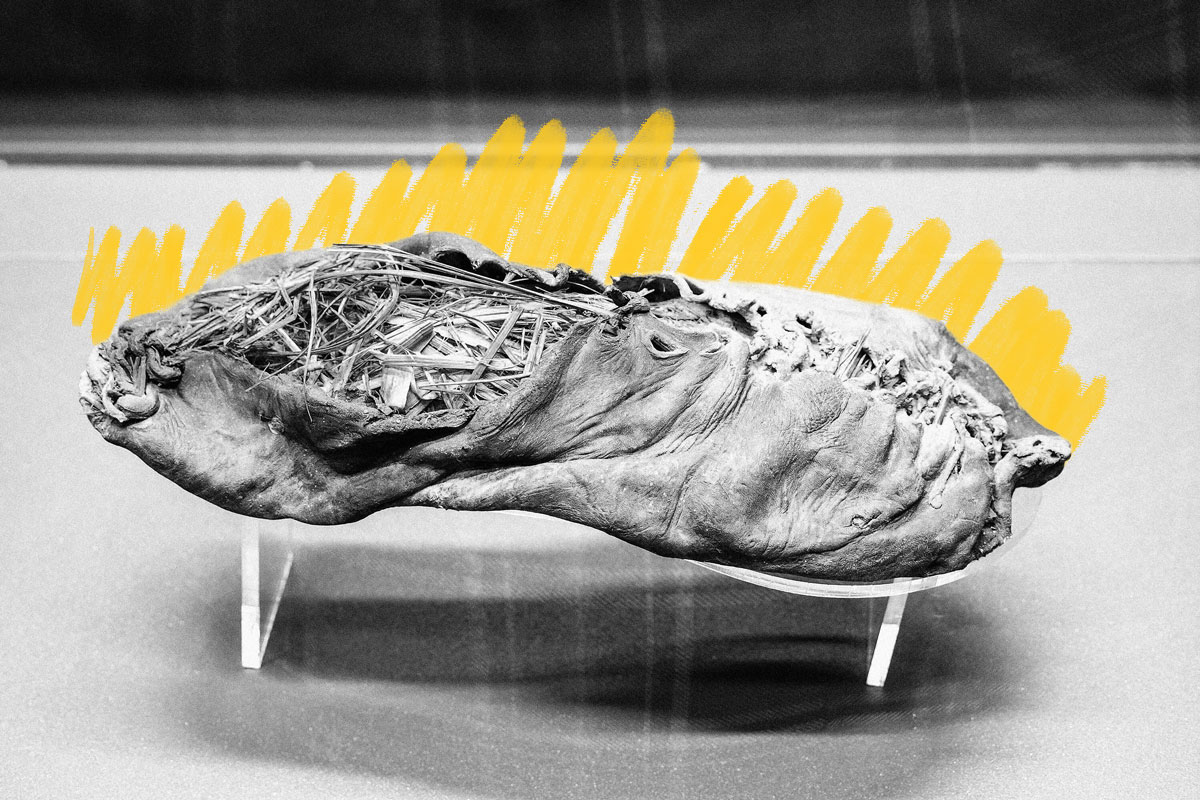
Shoelaces might seem like a modern convenience, but the basic idea of fastening footwear with laces is far older than most civilizations. The world’s oldest known leather shoe, complete with intact laces, dates to around 3500 BCE, during the Copper Age (between the Stone Age and Bronze Age).
Archaeologists discovered the ancient shoe in 2008 inside Areni-1, a cave complex in Armenia. The remarkably stable, dry conditions there had preserved organic materials that would normally decay. (The thick layer of sheep dung atop the shoe likely also helped.) Fashioned from a single piece of cowhide and shaped specifically for the wearer’s right foot, the shoe features leather laces threaded through eyelets — a design so practical that similar construction methods survived in Ireland until the 20th century. When the artifact was unearthed, parts of the laces were still visible, astonishing the research team.
That puts shoelaces only slightly younger than the earliest known human civilizations. Ancient Mesopotamia emerged around 4000 BCE, with the earliest Sumerian city-states taking shape in the fertile lands between the Tigris and Euphrates rivers. The beginning of the ancient Egyptian civilization appears to date to roughly the same period, although archaeological research in both regions is ongoing. Every other major civilization — from the Indus Valley to ancient China and the cultures of the Americas — arose centuries or millennia later.
That means humans were tying their shoes before they were building pyramids (starting around 2700 BCE) or inventing writing (around 3300 BCE). Modern civilization would take thousands more years to arrive, but the humble shoelace was already doing its job. You might say humanity started out on the right foot.


