




Medieval people may have walked differently.
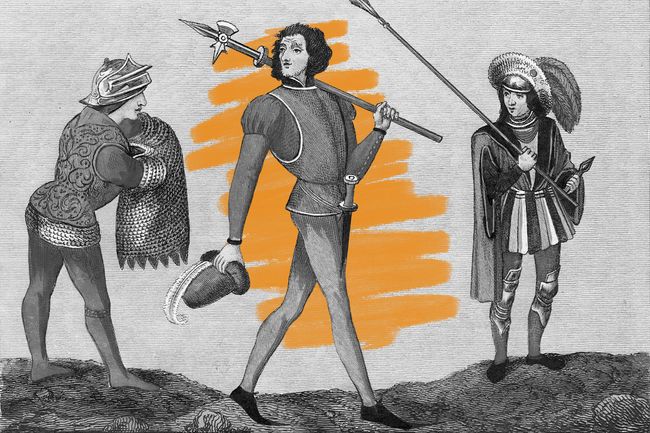
Compared to the Middle Ages, daily life now is considerably easier in countless ways, one of the most important of which is on your feet: modern shoes. Footwear in medieval Europe lacked sturdy soles, and according to one theory, people walked differently as a result.
Whereas we contemporary folk, in our infinite sophistication, land each step on our well-cushioned heels, medieval denizens may have done so on their toes. This ballerina-esque movement would have demanded more of their muscles but acted as a kind of early detection system for rocks or other obstructions. If you touched one with your toe, you’d be able to stop before putting your full weight on it and injuring yourself.
A toe-centric gait could help explain the prominence of poulaines, pointy-toed shoes that were all the rage in 15th-century Europe. Also known as Crakows because they were thought to originate in the Polish capital of Kraków, these shoes were considered deviant by the pious and even blamed for the plague. They weren’t responsible for it, of course, but to our eyes they were certainly the source of untold fashion crimes.


