




Why Is a Week 7 Days?

The seven-day week is so deeply baked into modern life that it feels almost inevitable. Workdays, weekends, school schedules, streaming release dates — nearly everything runs on the same seven-day rhythm. But there’s nothing especially natural about a week. Unlike a year, a month, or a day, it doesn’t neatly correspond to a major astronomical event.
While a year is tied to Earth’s orbit around the sun, a month is roughly one full cycle of moon phases, and a day is one rotation of Earth on its axis, the length of a week isn’t cut and dry. So why is it seven days instead of, say, five, eight, or 12?
More from our network





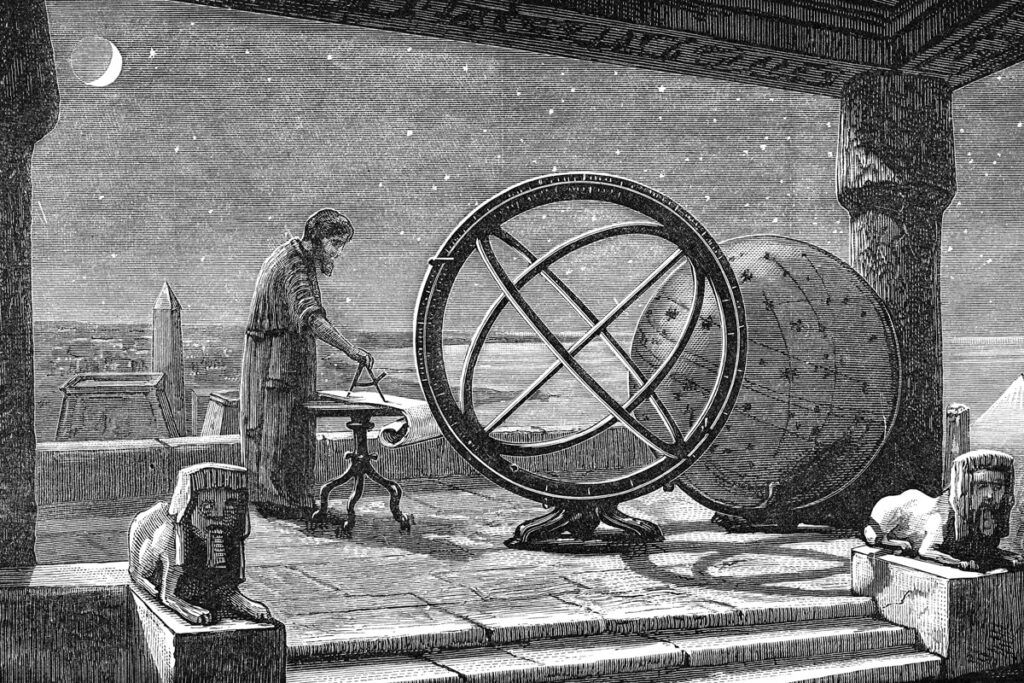
How the Ancients Shaped the Week
The seven-day week has endured for thousands of years, surviving empires, revolutions, religious shifts, and even a few determined attempts to replace it. Its origins lie in a mix of astronomy, astrology, religion, and ancient practicality — with a healthy dose of historical debate.
Many historians trace the roots of the seven-day week to ancient Mesopotamia, home to some of the world’s earliest astronomers. The Babylonians closely observed the sky and attached special importance to the number seven, partly because they recognized seven major celestial bodies moving independently: the sun, the moon, Mercury, Venus, Mars, Jupiter, and Saturn. Today, we know the sun and moon aren’t planets, but in the ancient world they were grouped together with the five planets visible to the naked eye.
The Babylonians also used a lunar calendar, and the phases of the moon may have helped shape the structure of the week. A full lunar cycle lasts about 29.5 days, which can be divided into four roughly seven-day phases. Some scholars believe Mesopotamian societies, including the Sumerians and Babylonians, used these quarter-moon intervals as the basis for a recurring seven-day cycle, and this is one basis for our current week.
However, scholars continue to debate exactly how much the modern week is influenced by this Babylonian practice versus by ancient Jewish tradition. The biblical creation story helped cement the importance of the number seven in Jewish culture: According to Genesis, God created the world in six days and rested on the seventh. That seventh day became the Sabbath, a recurring day of rest and worship. Unlike many earlier calendars tied directly to lunar phases, the Jewish week evolved into a continuous repeating cycle independent of the moon.
The Romans initially followed a different system entirely. For centuries, Roman civil life revolved around an eight-day market cycle. But as astrology from the eastern Mediterranean spread through the Roman Empire, the seven-day planetary week became increasingly popular. Each day was associated with one of the seven classical planets.
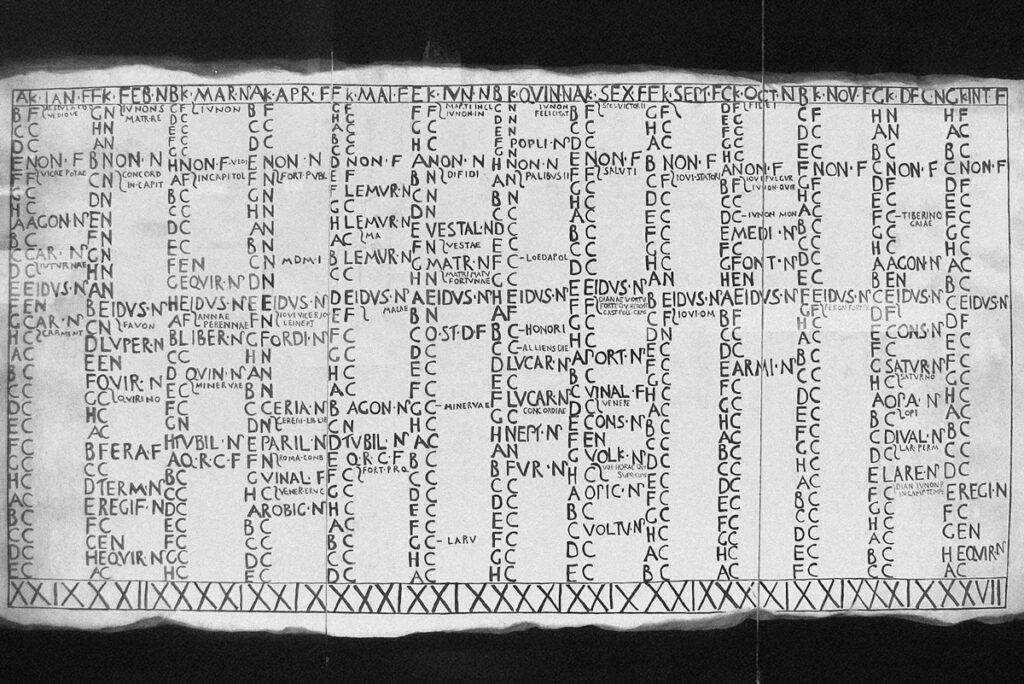
How We Got to Seven Days
In 321 CE, Roman Emperor Constantine officially established the seven-day week in the Roman calendar, helping spread it across Europe. Some of those planetary names still survive in English today. Sunday honors the sun, Monday the moon, and Saturday Saturn. The names for the other weekdays reflect Anglo-Saxon names for Norse deities. Tuesday comes from Tiw, a Norse war god linked with Mars. Wednesday honors Odin (or Woden), associated with Mercury. Thursday derives from Thor, connected with Jupiter, while Friday honors Frigg, tied to Venus.
Not every culture embraced seven-day weeks, however. Ancient Egypt sometimes used 10-day cycles, while parts of West Africa followed four-day market weeks. Revolutionary governments also occasionally tried to reinvent the calendar. During the French Revolution, reformers introduced a 10-day week intended to break with religious tradition and make timekeeping more “rational.” (All the days and months were named after elements in nature.) Soviet officials later experimented with five-day and six-day workweeks in an effort to maximize industrial productivity; the days were even color-coded. Neither experiment lasted.
The persistence of the seven-day week is remarkable, considering how arbitrary the unit really is. Unlike days, months, or years, a week is fundamentally a human invention — one shaped by ancient sky-watchers and thousands of years of habit.


