



What Exactly Is Feudalism?
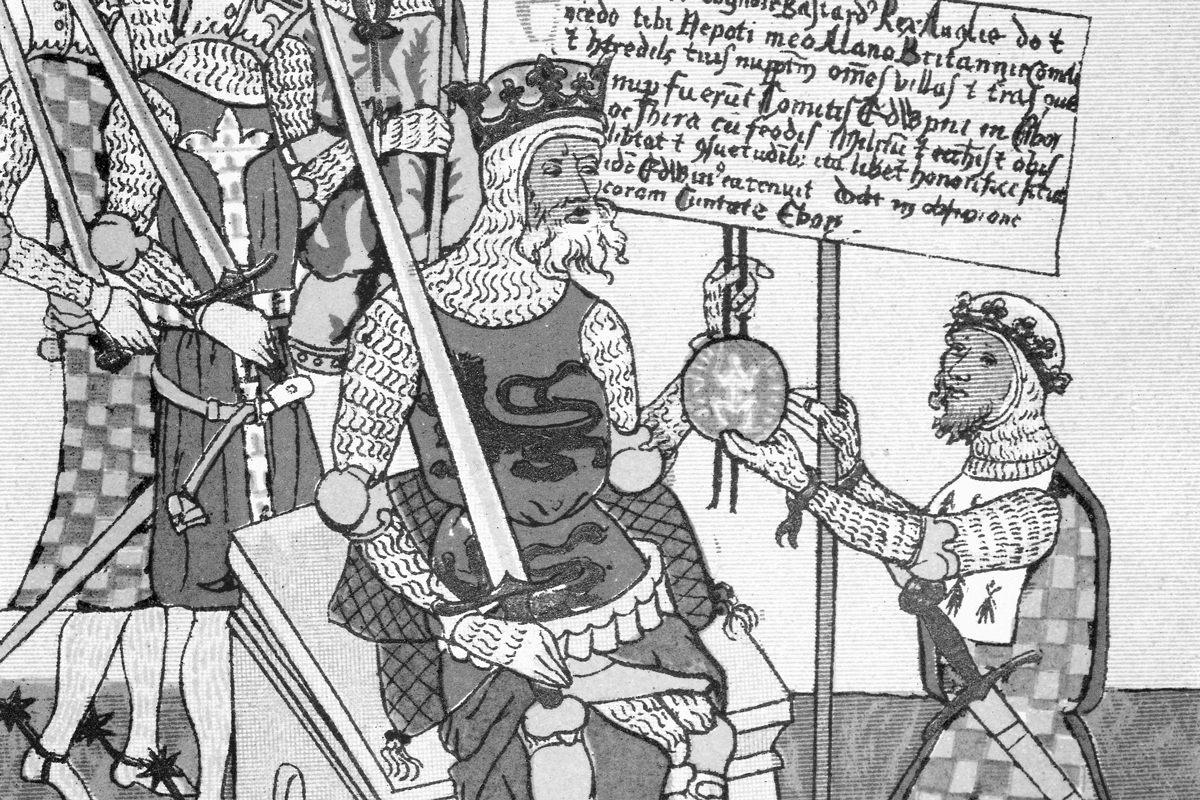
The concept of feudalism is probably a familiar one if you’ve encountered a medieval fantasy epic: Picture a stone castle overlooking fields of peasants tilling the soil while armored knights ride out at dawn. But what does the term actually mean, and how did feudalism work in practice?
Feudalism is a term used to describe how power, land, and obligation were organized in much of medieval Europe. At its core, it refers to a system in which land was the main source of wealth and political authority, and control of that land was tied to personal relationships of loyalty and service.
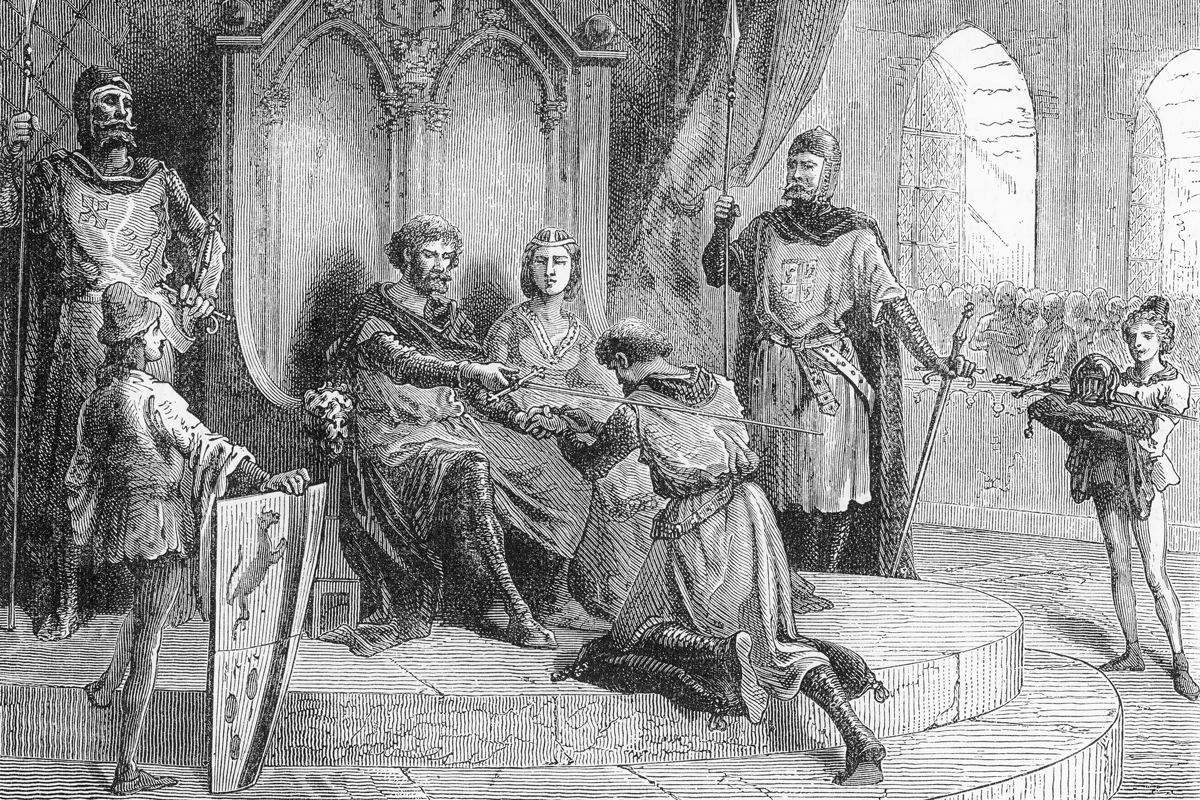
In this arrangement, a monarch was considered the ultimate owner of all the land in their kingdom. The ruler granted large estates, called fiefdoms, to nobles in exchange for allegiance and military support. Those nobles could then distribute portions of their land to lesser nobles (such as knights), creating a layered hierarchy of obligation known as vassalage.
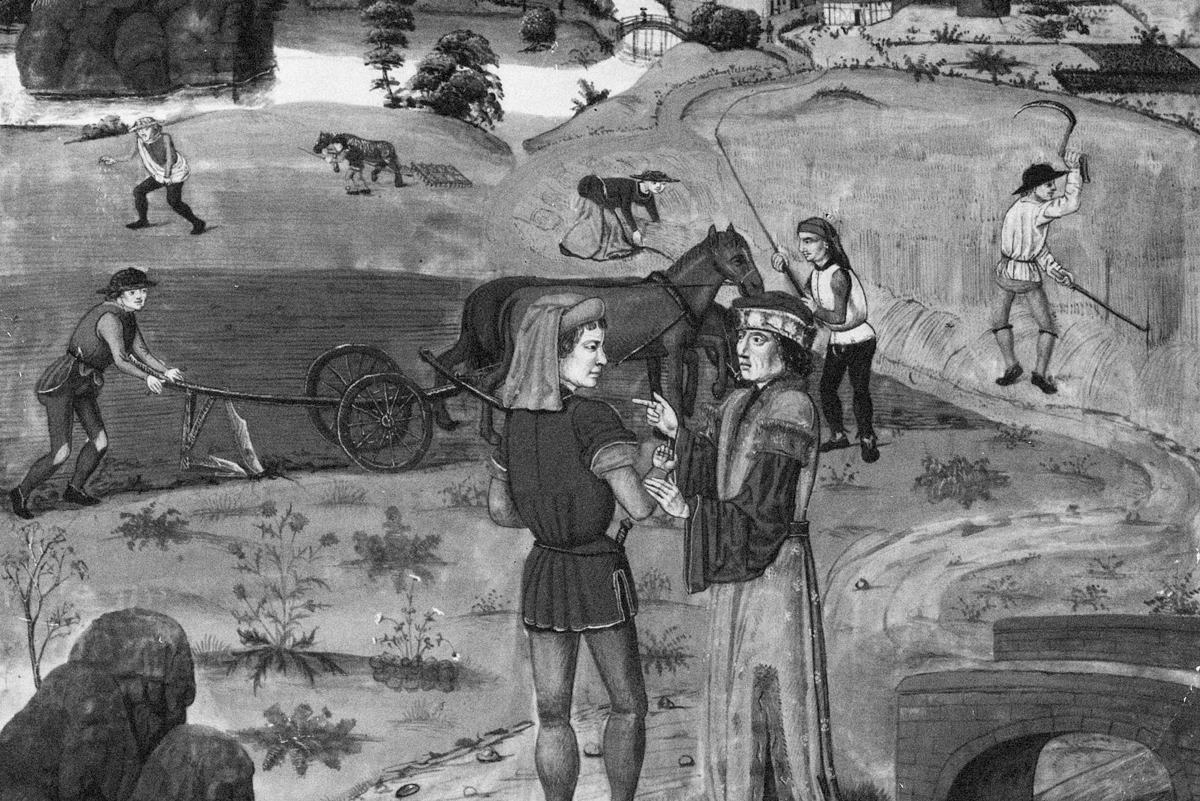
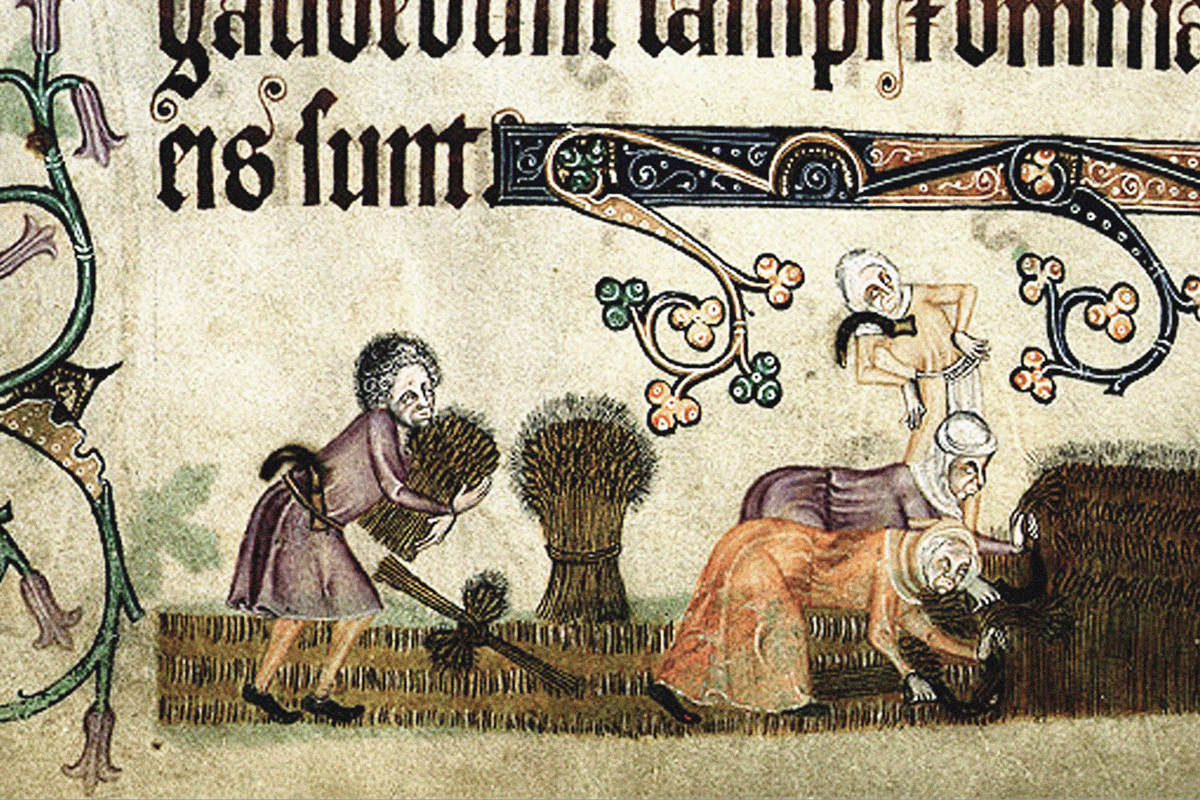
At the bottom of this structure were peasants and serfs, who worked the land and provided labor or goods in return for protection and the right to live on the estate. Power was exercised largely at the local level, rather than through a strong centralized government. For instance, a king might grant land to a duke, the duke to a knight, and the knight would then draw income and labor from the peasants who worked that land, creating a chain of obligation that ran downward while authority flowed upward.
It Started With the Fall of Rome
Europe’s feudal structure developed gradually in the centuries after the collapse of the Western Roman Empire around 476 CE. As Roman authority weakened, Western Europe experienced political fragmentation and repeated invasions by Germanic peoples, whose social structures emphasized personal loyalty to a leader rather than obedience to the laws of a centralized state.
Over time, Roman legal traditions blended with Germanic customs centered on allegiance and service. In an era marked by resource insecurity, warfare, and limited state power, people increasingly turned to powerful local lords for protection. In return, they offered these lords labor, military service, or political loyalty, reinforcing the link between landholding and authority.
You may also like



More from our network





Why Is It Called “Feudalism”?
Despite its association with the Middle Ages, “feudalism” is not a medieval term. The word derives from the Latin feudum, meaning land granted in exchange for service, which was a term used in the Middle Ages to describe a type of property arrangement. But medieval people did not describe their society as “feudal.” It wasn’t until the 16th and 17th centuries that scholars studying medieval legal documents began using the term to explain how land, power, and obligation had seemingly functioned during this period.
By the 18th and 19th centuries, historians and philosophers had expanded the term “feudalism” into a broad model for medieval society (with some differences in interpretation), often depicting it as a rigid hierarchy stretching from monarch to peasant.
Why Historians Debate the Term Today
Many historians now argue that the notion of feudalism oversimplifies medieval reality. Laws, customs, and power structures varied widely from region to region, and medieval society did not operate under a single, uniform system. For example, in some areas monasteries controlled land, collected rents, and ran courts; in others, particularly urban centers, merchant guilds often held real political influence. Some later scholars also tended to emphasize the importance of landholding arrangements at the expense of other forces that shaped society and daily life, such as trade, the church, and political institutions.
As a result, feudalism is often described as a historiographic construct — a framework created by modern thinkers to impose order on a complex past. Still, the term remains useful as shorthand for a world in which land, loyalty, and power were tightly linked, and political authority was fragmented rather than centralized. In other words, feudalism may not describe a single medieval system so much as a later attempt to explain how society held together, insofar as it did at all during this turbulent period in history.


