


Why Does the Military Use Bugles?
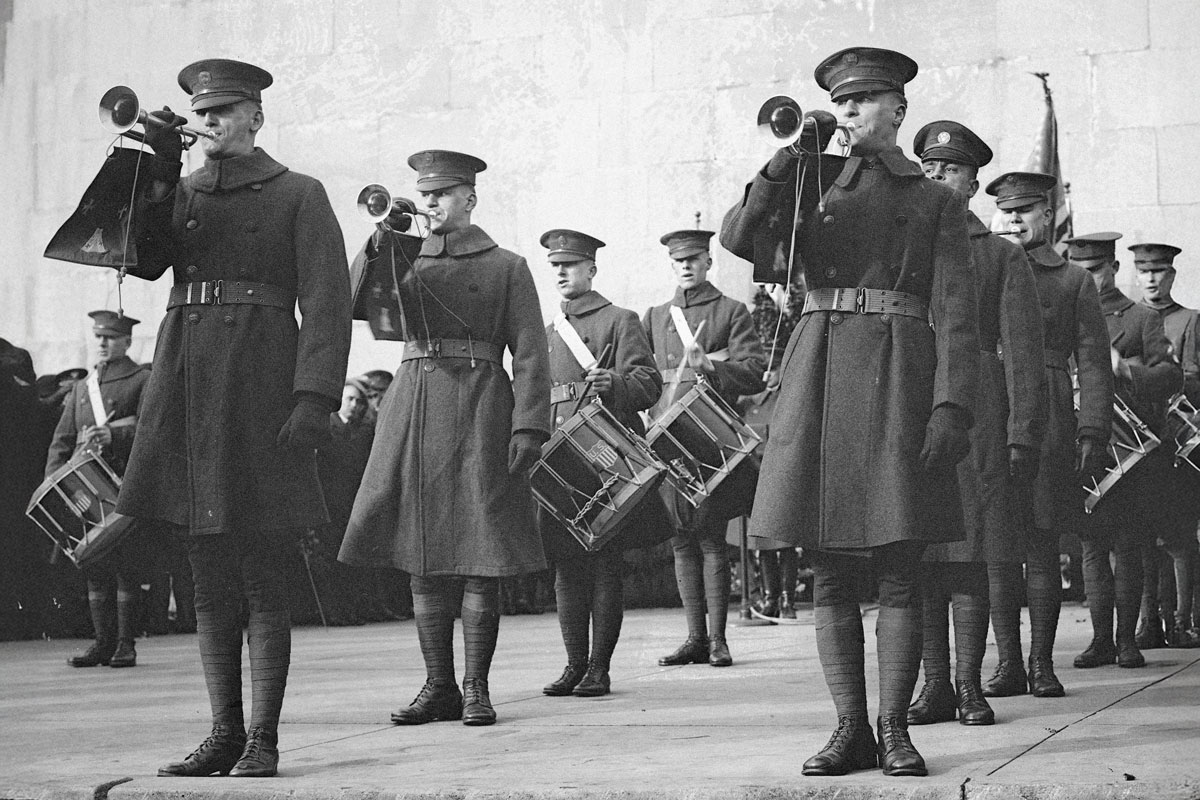
The bugle has long been part of military life, historically used to signal commands and guide troops before taking on its modern ceremonial role. Even for those who never served in the armed forces, the powerful, piercing sound can call to mind a mounted cavalry officer blowing into their instrument from a hilltop, or a uniformed soldier playing a somber melody to saluting troops gathered around a flagpole.
Whatever emotion it triggers, the bugle is often associated with the U.S. military — which makes sense, given that the most well-known bugle songs, such as “Taps,” originated in the armed forces. But how did this specific instrument come to define Uncle Sam’s musical leanings?
Bugles Came to America With the Revolutionary War
The use of horns for warfare dates back to at least the early years of the Roman Empire, when a predecessor of the bugle known as the buccina was among the brass instruments that sounded out at military ceremonies and when marching into battle. Centuries later, in the 1750s, light infantry battalions in the German state of Hanover adapted a semicircular hunting horn for military use. This instrument was picked up by the English in the following decades, taking on the name of bugle horn.
During the American Revolution, Continental Army troops were trained in the traditional European methods of military signaling, which generally involved the drum and fife. Soldiers learned that a distinct drum beat known as “The Reveille” would wake them from a night’s slumber, while another rhythm, “To Arms,” meant it was time to grab their weapons and prepare for combat.
While the sounds of English drumbeats filled the battlefields of the Revolutionary War, the Americans were also exposed to the blares of the bugle, the piercing instrument used by the Redcoats to spur troop movement and as a means of psychological warfare. Per one account, during the Battle of Harlem Heights in September 1776, attacking British troops blew their horns in a fashion that suggested the end of a fox chase.
You may also like


More from our network





Bugles Increased in Popularity During the War of 1812
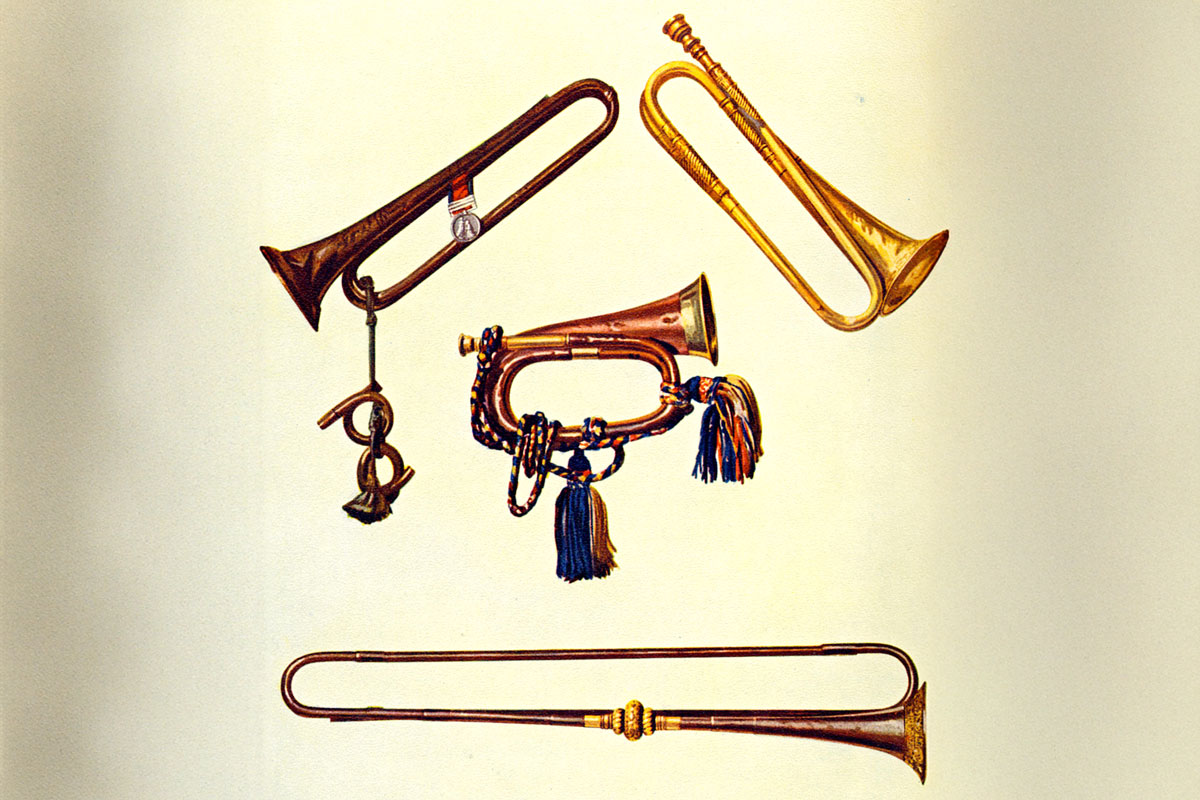
At the start of the War of 1812, the U.S. Army had only one unit that was utilizing the bugle instead of the fife and drum, the Rifle Regiment. By then, the instrument had evolved from its original semicircular form into the now-familiar trumpet shape, and it was on its way to becoming a standardized feature of military activity.
The 1812 manual A Hand Book for Riflemen by American author William Duane included music for 61 bugle signals, many of which originated with the British. Meanwhile, early military bands found space to incorporate the instrument into their repertoires: The U.S. Marine Corps Band added a bugle in 1812, while the United States Military Academy Band soon counted two buglers among its ranks.
Following the war, the U.S. military began studying French martial strategies, including instrument signaling. An 1825 military manual included 16 new bugle calls. Among them was one that summoned all uniformed personnel to gather, known as “Assembly.” And in 1835, Major General Winfield Scott included 22 bugle calls in his influential Infantry Tactics manual, including the one that eventually formed the basis of “Taps.”
A List of Calls Was Streamlined After the Civil War
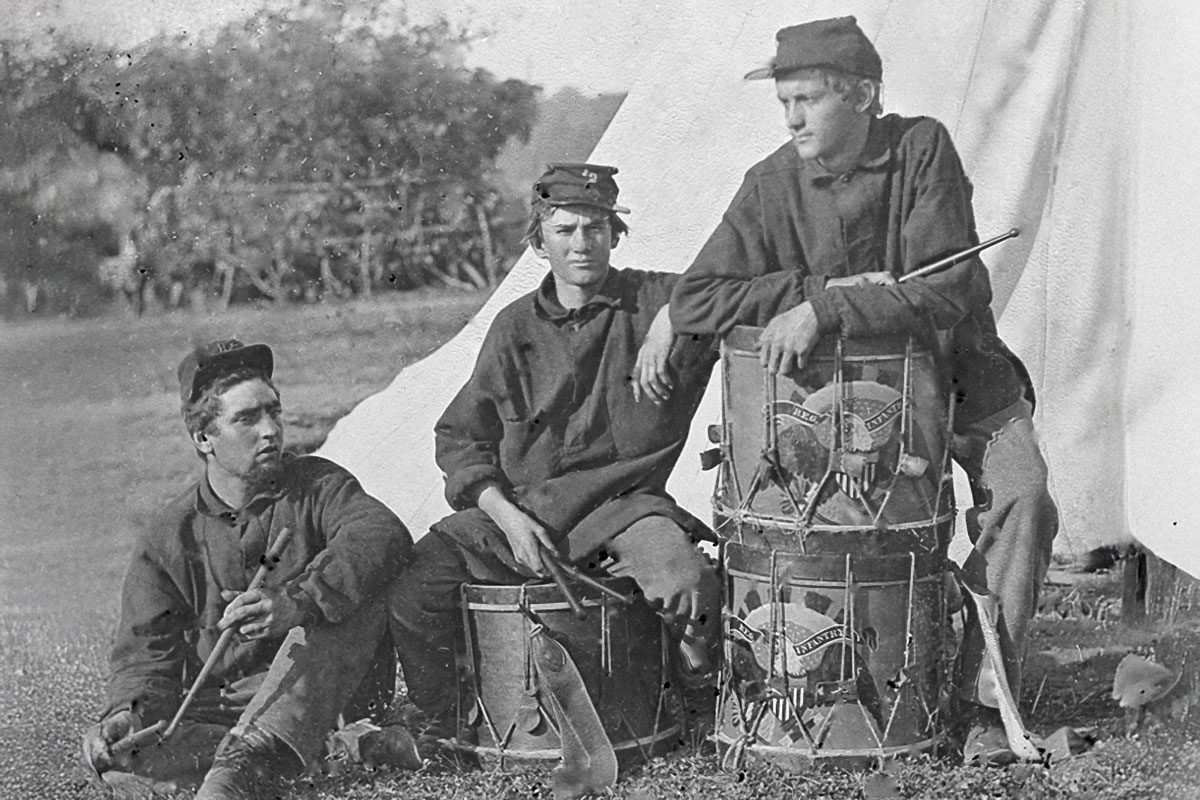
During the Civil War, bugles figured prominently in the military bands that provided a morale boost to soldiers and the units that depended on the instrument to be heard above the din of cannon and musket fire. Two buglers or trumpeters were authorized for each company or battery in a Union regiment; those in the infantry had more than 50 calls to learn, and members of the cavalry and artillery divisions were each assigned more than 30.
However, the sheer number of signals proved confusing and difficult for combatants to remember, and in the war’s aftermath, Major Truman Seymour was tasked with auditing and refining the expansive collection. Seymour streamlined the calls and delivered what became the U.S. Army’s definitive list of bugle calls in 1867.
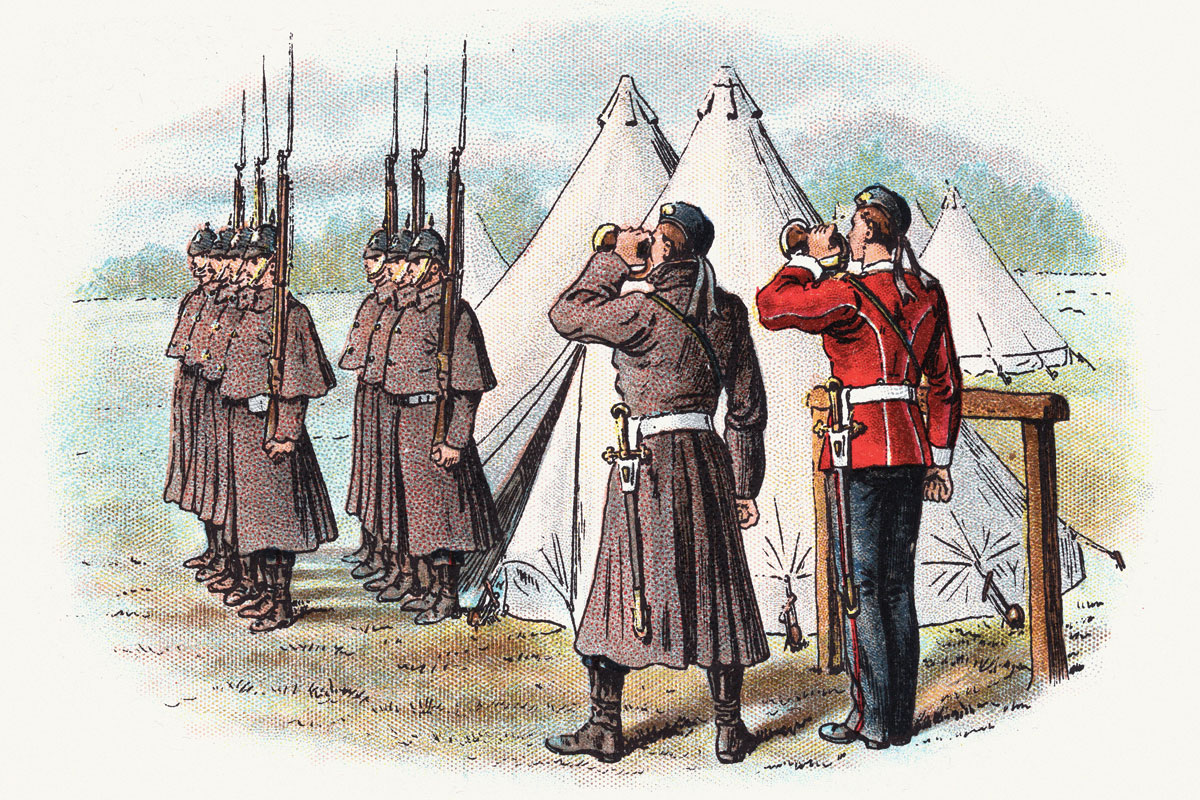
Even during times of peace, these calls came to define everyday life for people living in Army camps or frontier outposts in the late 19th century. A typical day would start with the bugler’s early morning call of “Reveille,” while the playing of “Mess Call” beckoned listeners to lunch. The notes of “Recall” marked the end of afternoon duties, before the nighttime call of “Tattoo” indicated it was time to hit the hay.
Bugles Fell Out of Use as Radio Communications Improved
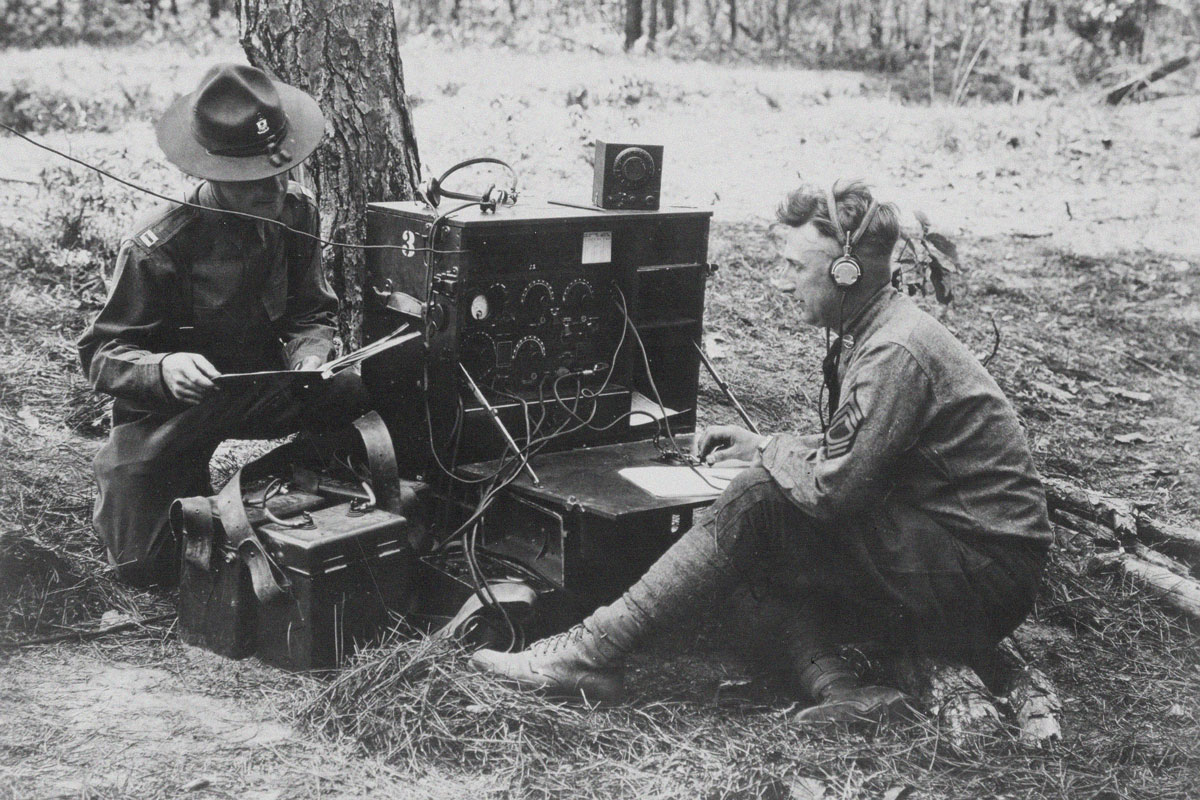
Even as the bugle was enjoying its heyday as a centerpiece of Army communications, developing wireless technology threatened to upend the ancient practice of using music to dictate the course of battle.
Buglers were still used to move regiments during World War I, with one even marking the end of fighting at 11 a.m. on November 11, 1918, by playing “Taps.” However, the bugle was largely phased out for signaling purposes by field radios during World War II.
Today, the spirit of the military bugle remains alive thanks in part to performing units such as the United States Marine Drum and Bugle Corps. The uniformed bugler has otherwise seen their ranks diminish, as Army bases typically play recordings over a PA system in place of a live musician. And yet, those calls remain part of daily rituals for many service members, the notes of “Retreat,” “To the Color,” and other stalwarts sounding the same to 21st-century ears as they did in the late 19th century.


