




Why Are Presidential Terms Four Years?

Every four years, Americans go to the polls to elect the U.S. president. It’s a familiar process — the campaigning, the debates, the Election Day drama — and an equally familiar four-year schedule. But why four years, and not three, or five, or 15? To find the answer, we need to go back to a sweltering Philadelphia summer in 1787, when 55 men argued, compromised, and at some points despaired over creating an executive office that wouldn’t lead to that most unwanted and troublesome of things: a new king.
Here’s a look at how, and why, a four-year presidential term was chosen — a story that reveals much about the concerns of the Founding Fathers and their deep-rooted desire to avoid monarchy, mob rule, or concentrated power, and instead strike a balance that would best serve their fledgling nation.
7-Year Terms Were Initially Approved
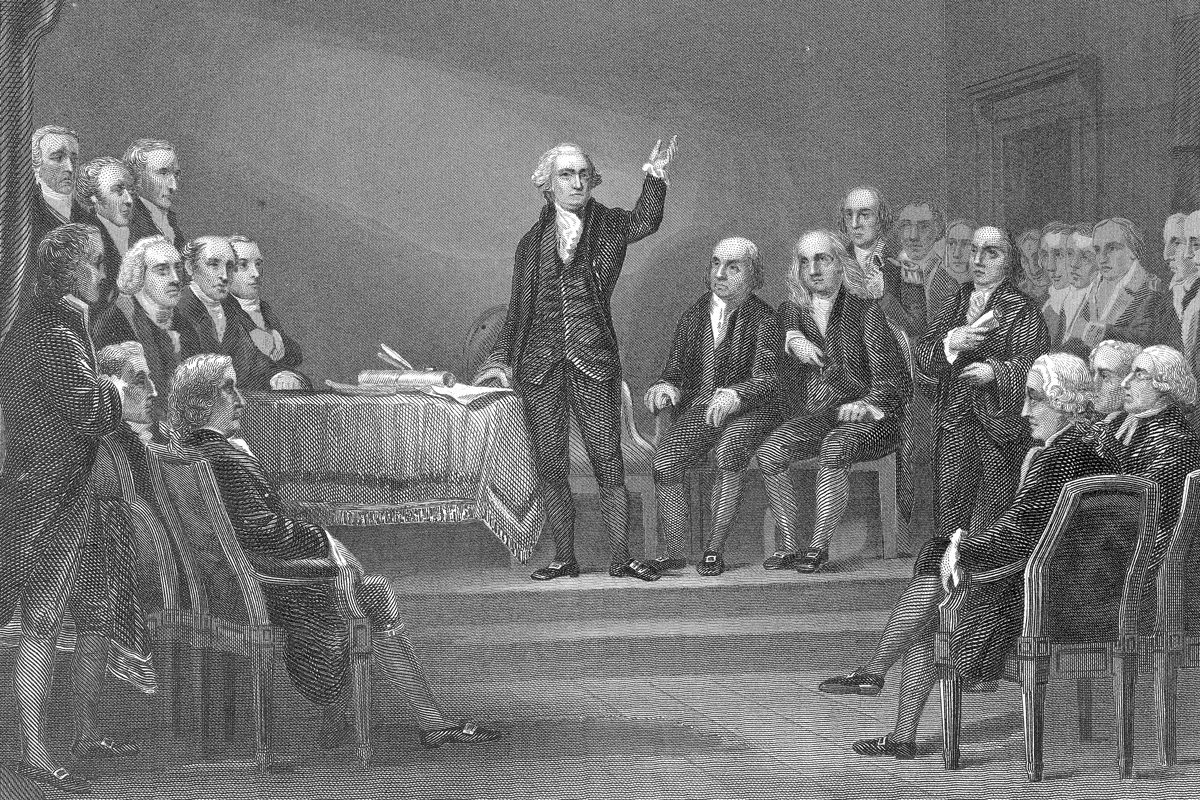
When the 55 delegates gathered at the Constitutional Convention in May 1787, they had no real blueprint for an elected executive. The Western world at the time was dominated by monarchies, such as those in England, France, Spain, and Prussia, and the handful of republics that existed offered dubious models. The Dutch Republic, for example, was on the verge of collapse, and the Polish-Lithuanian Commonwealth, with its system of elective kings, was already entering a period of protracted political decline.
The Founding Fathers, therefore, were staring at a rather blank slate — and so the debate began. James Wilson of Pennsylvania proposed a three-year term for the president, assuming reelection would be possible. Charles Pinckney of South Carolina countered with seven years. Others supported a single seven-year term with no opportunity for reelection, in order to avoid creating what North Carolina’s Hugh Williamson called an “elective king” who would “spare no pains to keep himself in for life, and will then lay a train for the succession of his children.”
On June 1, after much discussion, the exhausted committee voted for seven-year terms, with five states in favor, four against, and one divided. But not everyone was convinced, and the debate continued — especially regarding whether the president should be eligible for reelection. Some argued that the possibility of reelection was a motivating factor that would promote good presidential habits, while others saw it as creating dangerously long terms that could make a president too powerful. It eventually became clear that the delegates needed to find a better option.
You may also like



More from our network





Striking a Balance
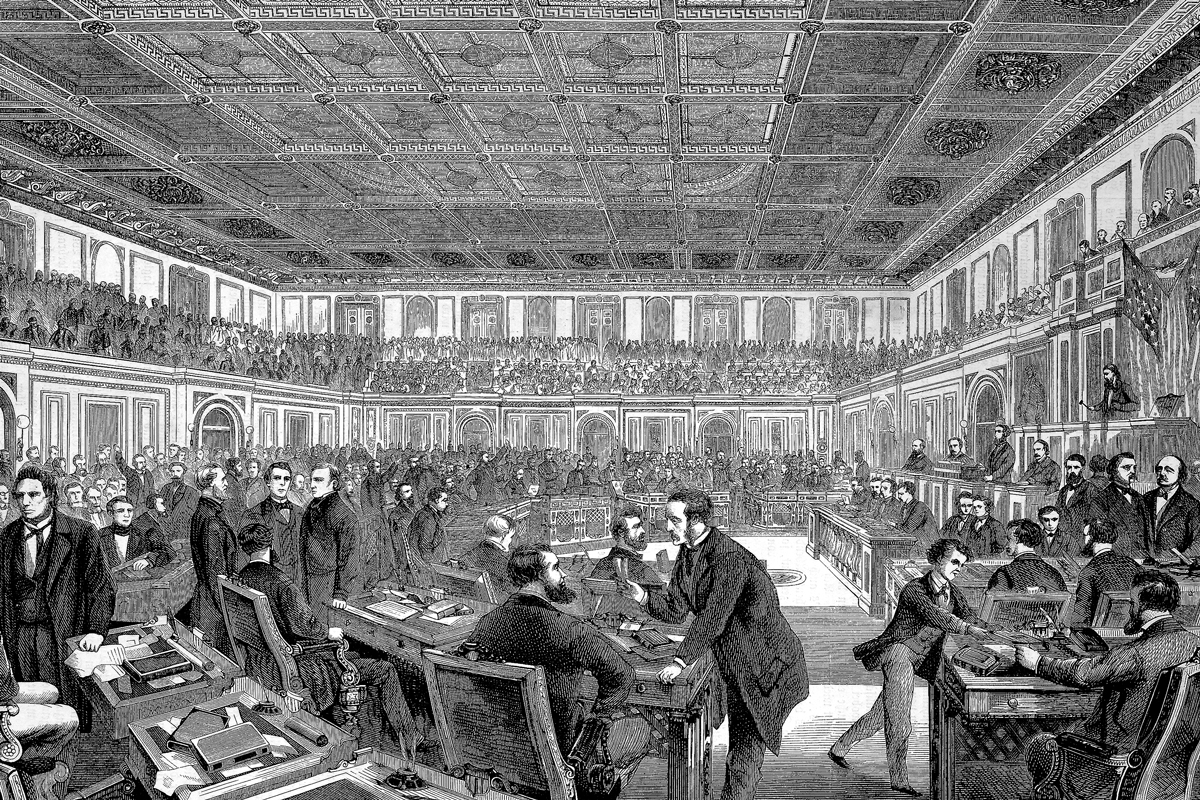
Upon reconsidering the seven-year term, the delegates at the Constitutional Convention found themselves facing a fundamental problem. If the presidential term was too short, the leader would be perpetually campaigning and unable to make difficult long-term decisions. If it was too long, there was a risk of creating a de facto monarch who could consolidate power and easily become corrupt. So, the discussion began again. Various proposals were put forward, ranging from three-year terms to 15-year terms — and even lifelong appointments.
Finally, in late August 1787, the convention decided on a term of four years with the possibility of reelection. However, the decision had its critics, who argued that even a four-year term would allow the president to establish dangerous influence. One of the most vocal and influential proponents was Alexander Hamilton, who defended the decision in the Federalist Papers (No. 71), arguing that four years offered a balance between accountability and stability. The initial term, he argued, would allow the executive to gain enough authority and public confidence to act with firmness, while the prospect of reelection would serve to incentivize the president to pursue policies with a lasting positive impact.
The four-year term had another factor in its favor: It would fall between the two-year terms of the House of Representatives and the six-year terms of the Senate. Delegates believed this meant the president would be subject to both the pressures driving the House’s need to respond to immediate public demands as well as the Senate’s focus on long-term objectives.
Not Too Short, Not Too Long
Having argued their way through that hot 1787 Philadelphia summer, the framers of the Constitution eventually agreed on four years as the ideal term length — not too short, not too long. And with that decision, one of the most stable and enduring features of American democracy began.
The delegates approved four-year terms with no restriction on how many times a person could be elected president — in theory, a popular (or corrupt) president could serve for life. They placed their trust in voters and the electoral system to prevent any president from serving too long. But then, America’s first president, George Washington, set an enduring — if informal — precedent. He voluntarily stepped down after two terms, despite being hugely popular at the time and almost certain to win a third term had he run.
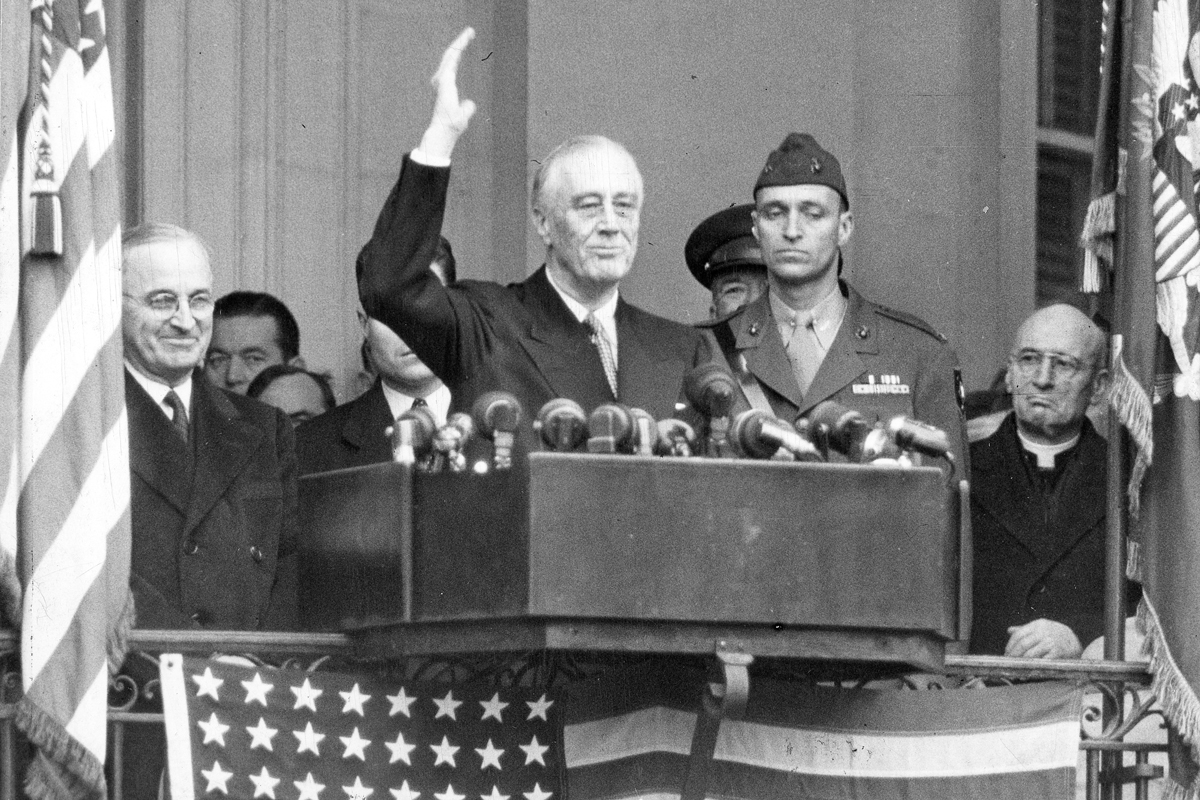
This two-term maximum became a tradition that was respected for decades by later presidents — until Franklin D. Roosevelt decided to break the precedent in July 1940. With the United States nearing its entry into World War II, FDR strongly believed that maintaining stability and leadership was vital — and voters agreed. He was elected a third time and remains the only U.S. president to serve more than two terms.
Once the war ended, however, concerns loomed in Congress regarding possible executive overreach — especially once Roosevelt entered his fourth term in 1945. Congress therefore passed the 22nd Amendment in 1947, stating, “No person shall be elected to the office of the President more than twice.” This officially gave the United States one of its most enduring democratic principles, limiting the nation’s president to two terms of four years.


