




The Rise and Fall of Tupperware Parties
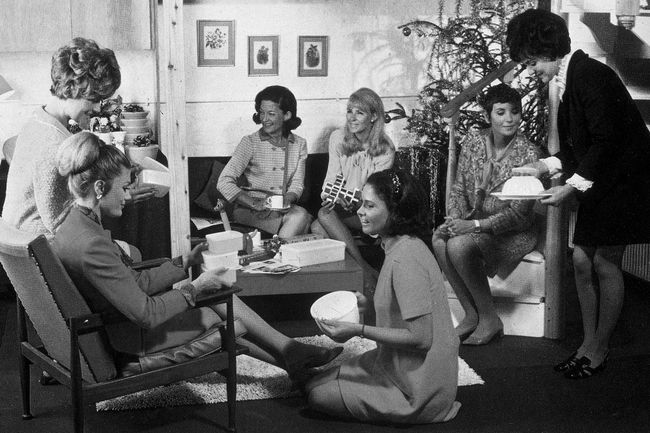
You might remember your mother or grandmother hosting a Tupperware party in the living room, with neighbors gathered around, sipping coffee and nibbling on dessert while someone demonstrated the magic of an airtight seal. Or maybe you still have a few pastel bowls of your own tucked away in a kitchen cabinet — gathering dust, and in some cases, vintage value.
For several decades in the mid-20th century, Tupperware parties were a cultural phenomenon that successfully blended shopping and socializing. Today, the idea of gathering friends to watch demonstrations of plastic bowls and storage containers feels like a relic from another time. Yet Tupperware parties remain a powerful symbol of postwar suburban life, when neighborhood gatherings and face-to-face connections were simply part of everyday life.
An Airtight Invention
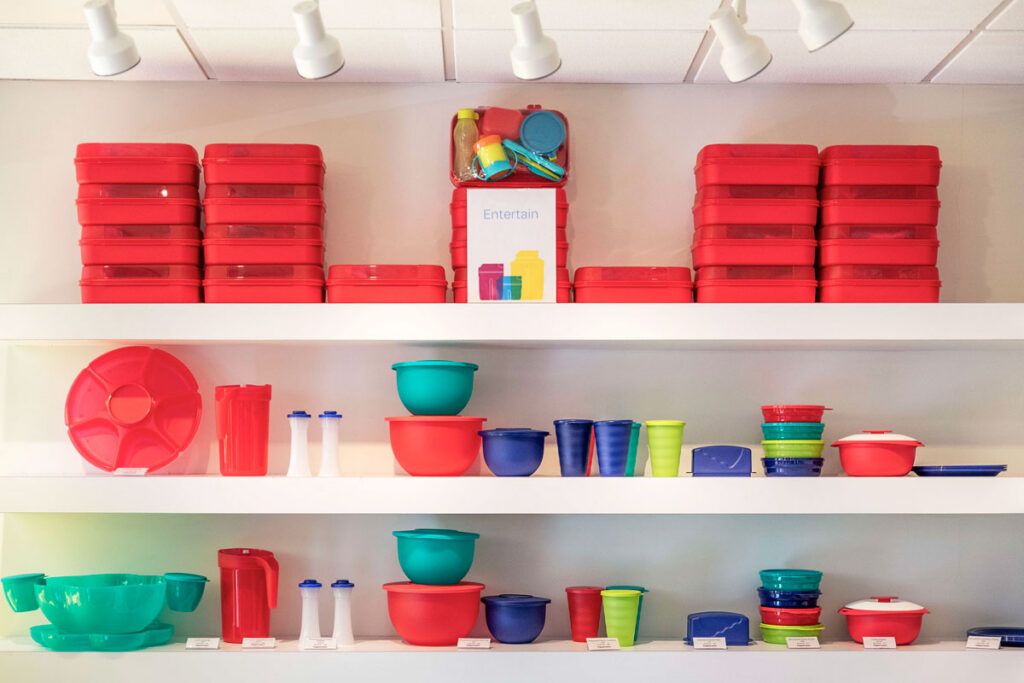
The history of Tupperware begins in the 1940s with inventor Earl Tupper, who developed lightweight, durable plastic containers using leftover polyethylene from wartime manufacturing. At a time when leftovers were typically stored in glass containers, wrapped in wax paper, or covered with aluminum foil, his products offered something genuinely new. They were reusable, relatively unbreakable, and featured flexible airtight seals that kept food fresher for longer.
There was just one problem: People didn’t understand how to use them. The famous burping seal that made Tupperware so effective required a specific technique to close properly. When the products appeared on department store shelves, shoppers often overlooked them or failed to appreciate their advantages. Some consumers who took a chance on them ultimately returned them to the store because they didn’t think the lids fit. Sales lagged despite the innovation behind the design.
More from our network




The Tupperware Party Is Born
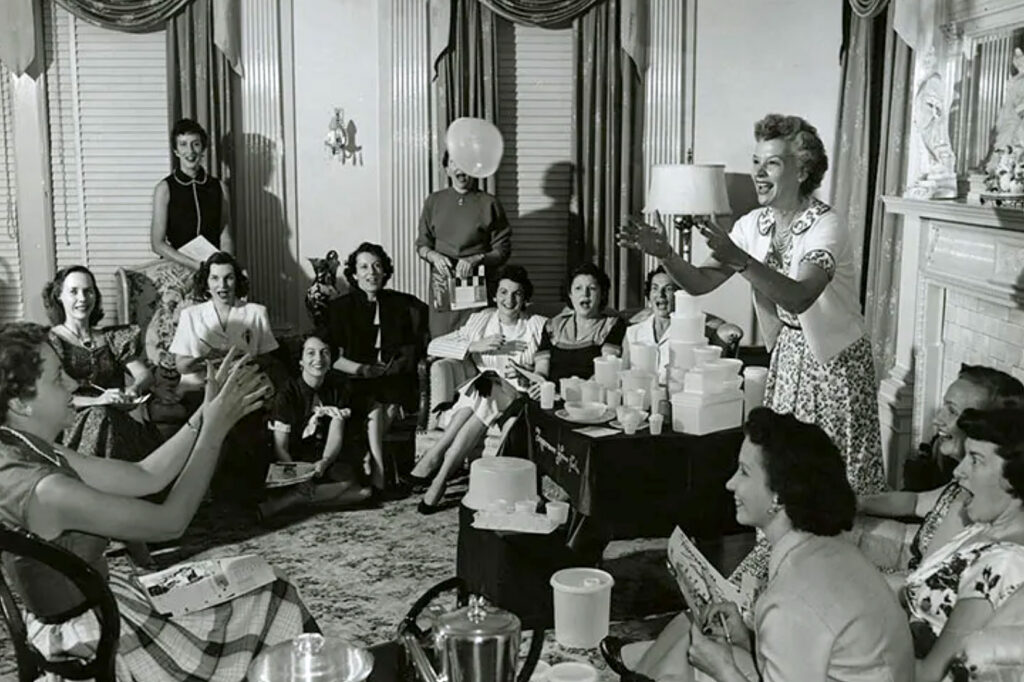
Everything changed when saleswoman Brownie Wise entered the picture. Wise and her mother had already found success selling household products through their direct-selling venture Patio Parties and recognized that home demonstrations were the most effective way to market Tupperware. Instead of sitting on store shelves, the containers were brought directly into people’s homes, where customers could watch demonstrations, ask questions, and handle the products themselves.
The format made the products far easier to understand and more appealing — guests could see the containers in use rather than read about them on packaging. Wise’s success led Earl Tupper to appoint her vice president of Tupperware Home Parties, where she scaled the hostess-party model into a nationwide sales network.
The approach proved extraordinarily effective. By 1954, roughly 20,000 people were involved in Tupperware’s sales system as dealers, distributors, and managers, all supporting its rapidly growing direct-sales operation. That same year, Tupperware sales reached $25 million — equivalent to roughly $310 million in 2026 dollars.
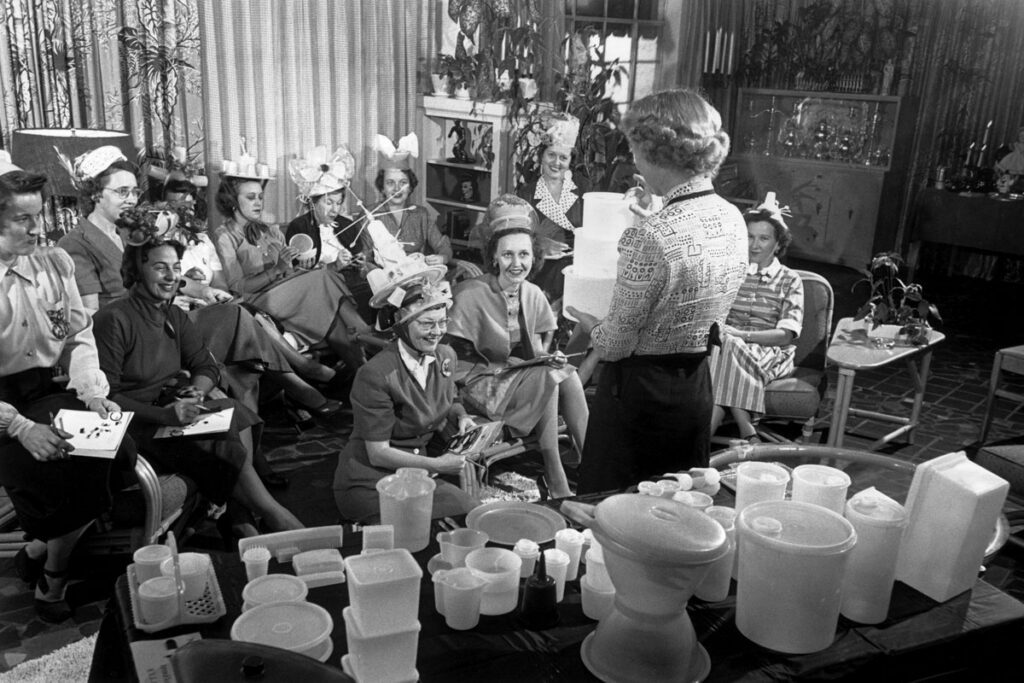
Where Shopping Met Socializing
For many suburban homemakers in the 1950s and 1960s, Tupperware parties were as much social events as sales presentations. A host would invite friends, neighbors, and relatives into their home for refreshments and a product demonstration, and a Tupperware representative would showcase the latest containers, kitchen tools, and serving pieces, using games and giveaways to keep the atmosphere lively. At a time when many women were home managing households, these gatherings offered a regular chance to connect outside church groups or school activities — blending shopping and socializing long before social media existed.
The model also came with financial incentives. Hosts earned free products based on sales, encouraging them to invite more guests, while independent consultants earned income by hosting parties and building networks of additional sellers. For some women, this created one of the few flexible ways to earn money while balancing family responsibilities. Brownie Wise herself became one of the first female business executives to gain national recognition in postwar America.
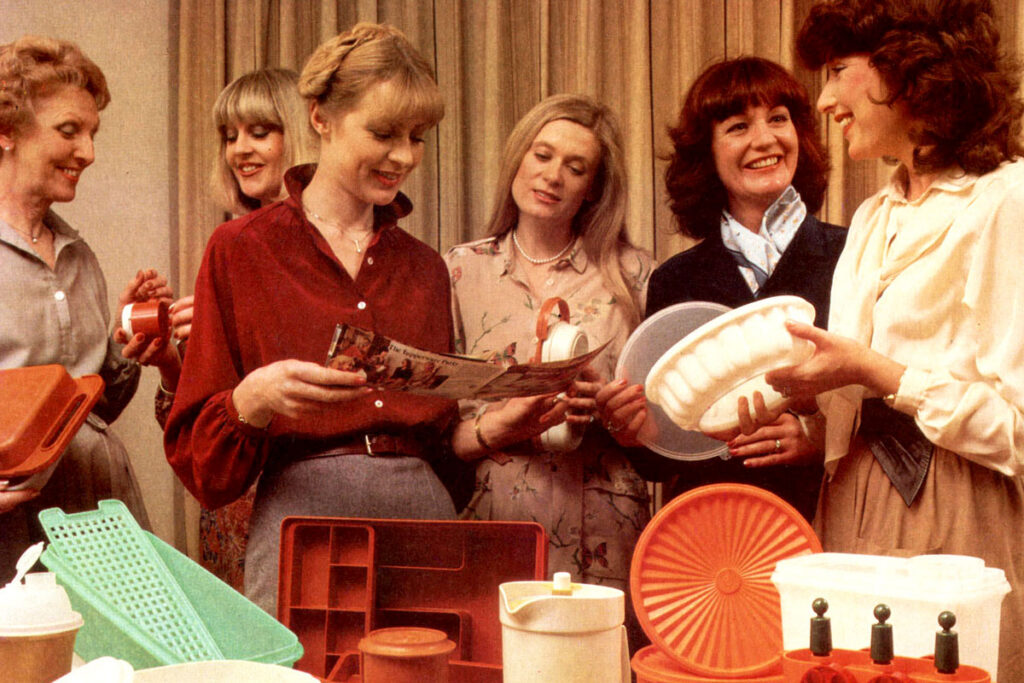
Peak Tupperware
By the 1960s and 1970s, Tupperware parties were firmly embedded in suburban American life. Kitchens filled with pastel pinks, mint greens, and baby blues gave way to the bold earth tones of the 1970s, such as avocado green, harvest gold, and burnt orange.
After being spun off as an independent public company in 1996, following decades under its corporate parent Premark, Tupperware actively expanded overseas. By then, its direct-selling system — built entirely around independent consultants rather than retail stores — had reached almost 100 countries worldwide.
The company’s financial peak came in 2013, when sales revenue hit $2.67 billion. By then, the party-plan model it popularized had already reshaped retail culture, inspiring a wave of home-based selling across categories from clothing to cookware, and turning Tupperware parties into one of the most recognizable symbols of consumer life.
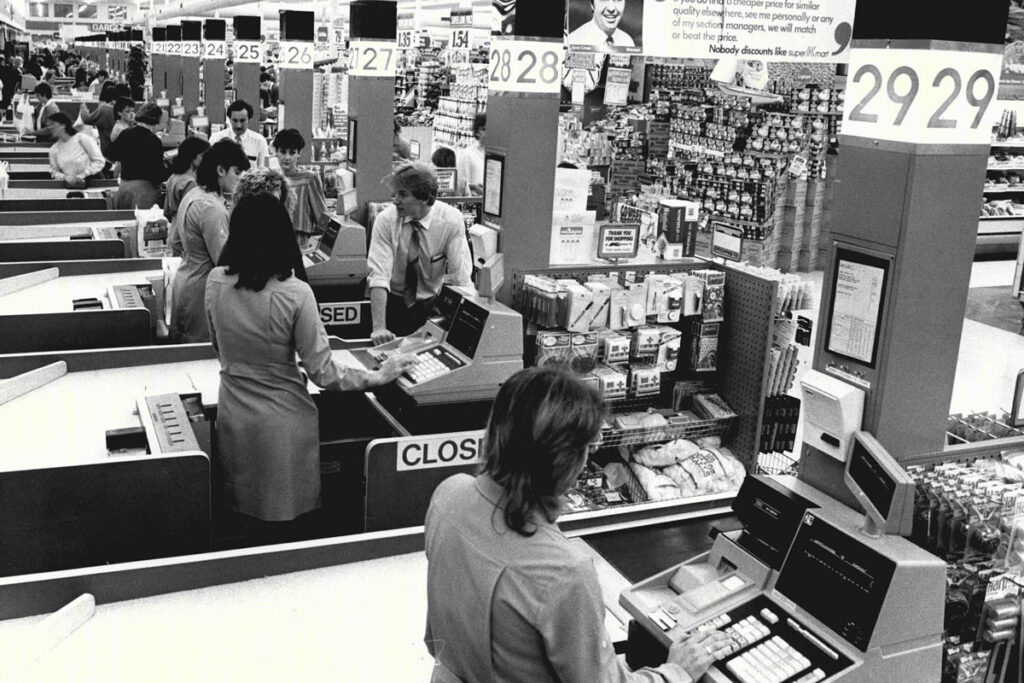
The Party Ends
Several cultural shifts gradually eroded the model that had made Tupperware parties so successful. As more women entered the full-time workforce, it became harder to host or attend sales parties, and the social role these gatherings once filled diminished as workplaces and other activities expanded social networks.
At the same time, shopping habits shifted toward convenience. Big-box stores, shopping malls, and eventually online retailers made it easier to buy similar products quickly and directly, without spending an evening at a sales demonstration. Competition also intensified after Tupperware’s patents expired in the 1980s. Food storage containers from multiple manufacturers soon filled retail shelves as airtight plastic storage became a standard household item rather than a novelty.
Although the classic home party has largely faded, Tupperware itself did not disappear. From the 1990s onward, the company gradually supplemented its traditional party-plan model with catalog and direct-mail marketing before moving into digital catalogs and early online ordering in the late 1990s and 2000s. By the 2010s, social media and virtual parties had become a growing part of its sales approach, even as physical gatherings declined.
After years of declining sales and mounting debt, Tupperware Brands filed for Chapter 11 bankruptcy protection in the United States in 2024 as part of a restructuring effort aimed at stabilizing its operations. Despite its financial difficulties, the brand remains deeply embedded in consumer culture — many people still use “Tupperware” as a generic term for any plastic food container, regardless of who made it.


