


Before cable was the norm, and long before streaming services were even an idea, network television ruled the airwaves. With fewer choices, viewers coalesced around a small number of shows in a way that’s practically unheard of in today’s fragmented media landscape.
That was especially true in the 1960s, when countercultural forces were butting up against decades of tradition — a phenomenon that could be seen in the stories shown on the small screen in living rooms across America. Let’s take a trip to the past with these eight TV shows that dominated the 1960s:
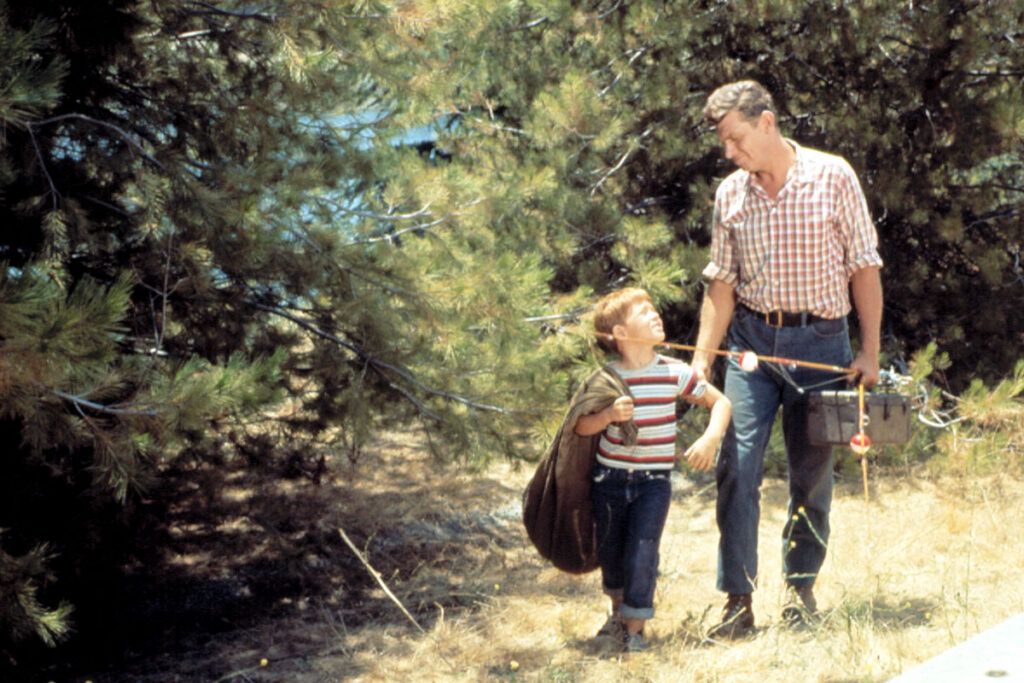
Arguably the decade’s defining television program, The Andy Griffith Show was a ratings juggernaut throughout its entire run. It never placed lower than seventh in the Nielsen ratings, and it aired its finale while still at No. 1 — a feat replicated only once before (I Love Lucy) and after (Seinfeld).
The show was inherently nostalgic, with Griffith once stating, “Though we never said it, and though it was shot in the ’60s, it had a feeling of the ’30s … of a time gone by.” Even if you aren’t old enough to have grown up watching it, The Andy Griffith Show has been in syndication for so long that there’s a good chance its theme song was still a part of your childhood.
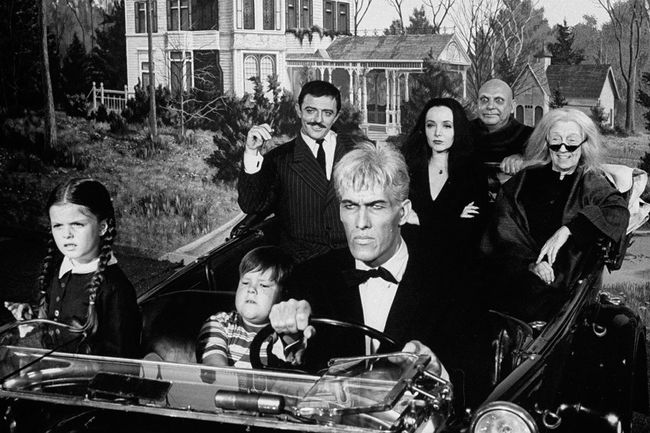
The Addams Family (1964-66) and The Munsters (1964-66)
The ’60s were a golden age for spooky family sitcoms. And while The Addams Family has had a longer afterlife (in the form of two cult-classic ’90s movies, the Netflix series Wednesday, and two recent animated films), The Munstersfared better in the ratings when the two shows were on at the same time.
As for why the two hits came to an end within a month of each other, Eddie Munster actor Butch Patrick points the finger at a certain caped crusader: “I think Batman was to blame,” he said in a 2019 interview. “Batman just came along and took our ratings away.” Both shows lasted two seasons and aired nearly the same number of episodes (64 for The Addams Family, an even 70 for The Munsters), making them perfect for a back-to-back binge session.
Bewitched (1964-72) and I Dream of Jeannie (1965-70)
Why limit yourself to one witchy show when you can have two? Whether you preferred Samantha (Elizabeth Montgomery) or Jeannie (Barbara Eden), you were spoiled for choice when it came to supernatural sitcoms in the ’60s. Bewitched was the country’s second-highest-rated show during its debut season, was named one of TV Guide’s Top 50 Shows, and inspired a movie starring Nicole Kidman — but many viewers dreamed of Jeannie just the same.
Though it began in the 1950s and ended in the ’70s, this long-running Western was at its peak in the ’60s. It hit No. 1 by 1964, stayed there for three years, and didn’t drop out of the top 10 until 1971 — all while helping redefine the genre to a generation of viewers.
The series followed the Cartwright family as they faced one moral dilemma after another during and just after the Civil War, with the action taking place near Lake Tahoe in Virginia City, Nevada. And as was the case for a lot of shows on this list, its earworm of a theme song became a hit unto itself. Airing 431 episodes over 14 seasons, Bonanza is the second-longest-running Western in TV history, behind only Gunsmoke.
What was meant to be a three-hour tour turned into a three-season classic. One of the decade’s most iconic series, Gilligan’s Island still airs reruns today and continues to inspire debate in the form of “Ginger or Mary Ann?” More than anything, though, it made people laugh.
The show received solid ratings during its initial run, reaching as high as No. 3 in the ratings during its first season, and has only grown in popularity since its cancellation. It spawned a number of made-for-TV movie sequels and animated spinoffs, the most bizarre of which has to be 1981’s The Harlem Globetrotters on Gilligan’s Island.
A dimension not only of sight and sound but of mind, The Twilight Zone inspired too many other TV series and movies to list. Episodes such as “Time Enough at Last” and “It’s a Good Life” are no less haunting today than they were 60 years ago, when Rod Serling introduced viewers to an enduring sci-fi classic that has since been revived three times (in 1985, 2002, and 2019) — never to nearly the same effect — and that inspired a 1983 movie and an appropriately terrifying theme park ride.
Though it wasn’t a runaway hit as far as ratings were concerned, The Twilight Zone proved so influential that it’s impossible to tell the story of 1960s television without it. Frequently cited among the greatest TV shows of all time, it has aged as well as, if not better than, any other series of its era.
Credit: Getty Images/ Hulton Archive via Getty Images
Author Kristina Wright
November 21, 2024
Love it?62
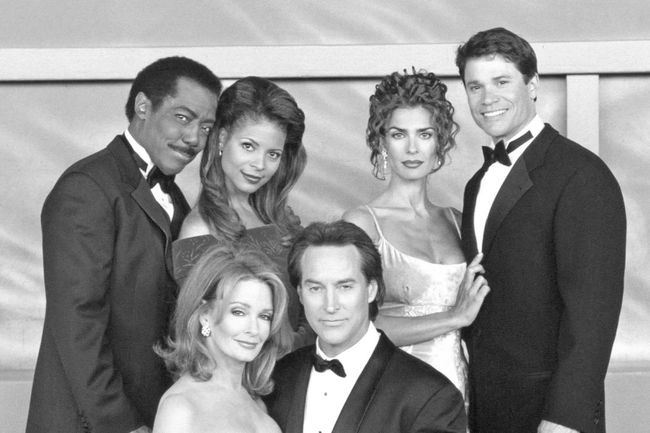
If you grew up anytime between the 1950s and 1990s, you may have had a family member who tuned in every afternoon to watch their favorite TV soap operas. Or maybe you had your own favorite show that you watched during summer break or sick days from school. These daytime dramas, airing Monday through Friday, were fixtures in many households, providing homemakers, stay-at-home parents, and even kids home from school with a daily escape into the lives of familiar characters. For more than seven decades, soap operas have held a unique place in popular culture, with their tales of romance, betrayal, family feuds, timely topics, and farfetched plot twists. Here’s a look back at the origins of this nostalgic television genre, and the reason these long-running TV serials came to be known as “soap” operas.
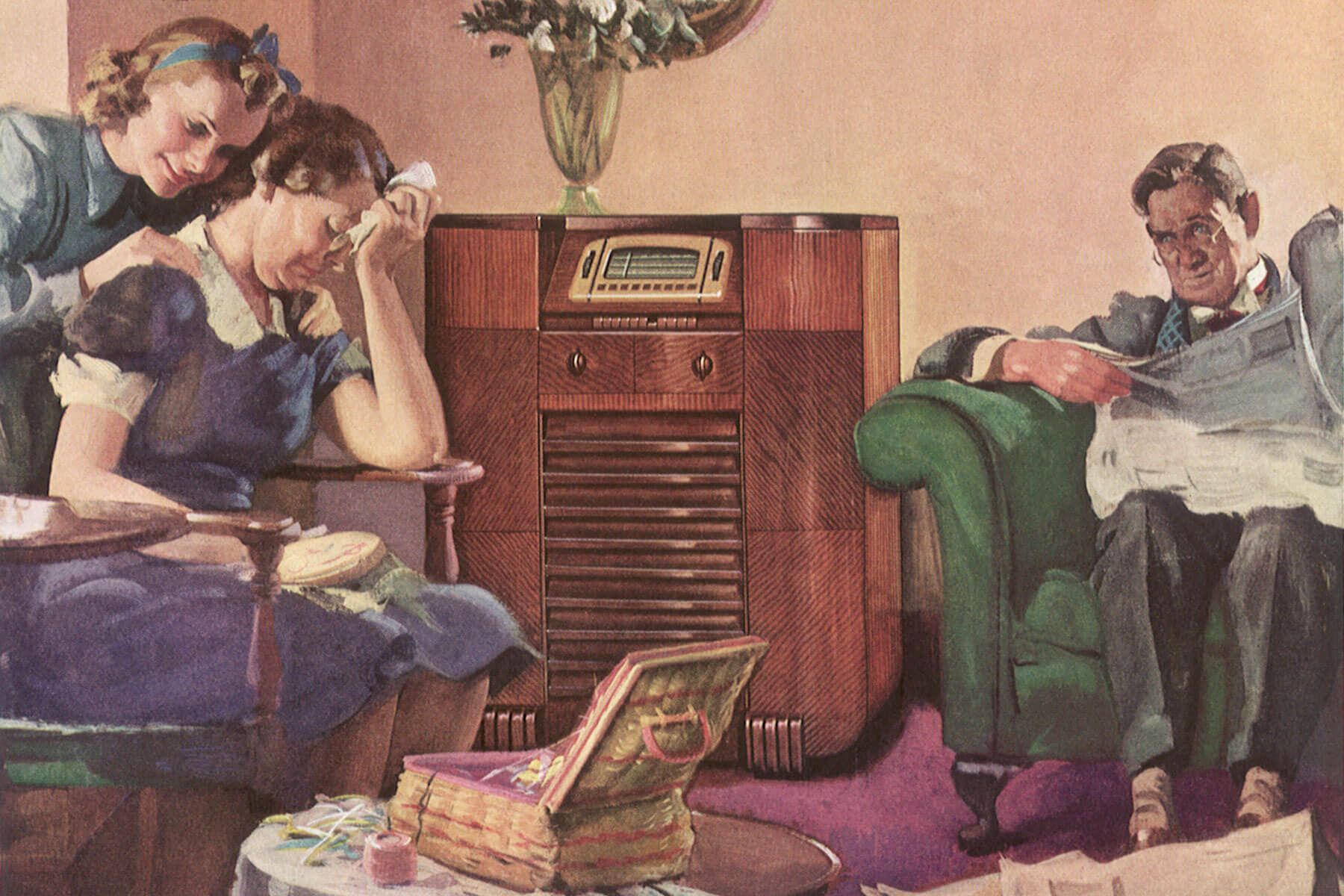
Soap operas trace their roots to the early days of radio in the 1920s. At the time, they were simply called “serial dramas” or “radio dramas” because of their recurring nature. Originally airing in the evenings, the first radio dramas included a variety of genres to entertain families. Once advertisers recognized the potential of the medium to sell their household products, radio dramas made the switch to daytime and a largely female audience. The storytelling format was structured so that listeners, who were primarily homemakers, could easily follow ongoing storylines while they did their household chores, even if they missed an occasional episode.
One of the earliest soap opera precursors was Clara, Lu ‘n’ Em, which debuted in the evenings on NBC’s Chicago radio affiliate, WGN, in June 1930. The series had begun as a sorority sketch created by three friends at Northwestern University and centered on three Midwestern housewives who shared a duplex. The show was picked up by the NBC Blue radio network and gained a national audience before going on to become the first network daytime serial when it shifted to a matinee time slot in 1932.
In October 1930, WGN debuted the radio serial Painted Dreams, which is credited as being the first daytime soap opera for radio. Created by radio actress Irna Phillips, whose considerable contributions to the medium earned her the nickname “the mother of the soap opera,” Painted Dreams featured a character named Mother Moynihan, who doled out old-fashioned advice to the two young women who lived with her. Phillips not only wrote the scripts for the series, but also played the part of Sue Morton, an orphaned young woman who lived with the widowed matriarch along with Moynihan’s daughter Irene.
By the 1940s, there were more than 70 serialized dramas on daytime radio, and it was only a matter of time before they were reinterpreted for a popular new medium, television. Phillips was involved in the creation of at least 18 radio dramas, including Guiding Light, which centered on the struggles of Reverend Dr. John Rutledge and the community he served. The 15-minute drama, which debuted on NBC Radio on January 25, 1937, was the first radio serial to make the jump to television in 1952 and went on to become the longest-running soap opera in history, airing for 72 years on radio and TV. Phillips was also responsible for the first soap opera created specifically for television, the short-lived These Are My Children, which aired in 1949 on NBC.
Television breathed new life into the popular radio genre, and from the 1950s through the 1980s, soap operas reached the height of their popularity. In addition to Guiding Light, shows such as Search for Tomorrow, As the World Turns, Days of Our Lives, and The Edge of Night were household names by the mid-1960s. These programs drew in millions of viewers who became deeply invested in the lives of their favorite characters. Airing on weekdays, television soap opera episodes expanded from the 15-minute segments of radio and early TV to 30-minute or hour-long episodes.
The appeal of soap operas was not only in their characters and plots, but also in their ability to create a strong sense of continuity. Fans could follow a character’s entire journey over years, and this slow-burn storytelling gave viewers a deeply immersive experience, drawing them in with familiar settings and faces and making the characters feel like extended family. And, it turns out, the daytime format offered advertisers dozens of time slots per week to promote their products to their target audience, women.
The term “soap opera” evolved out of the genre’s primary sponsors in its early days on radio. Because the shows catered to a predominantly female audience at a time when many women were homemakers rather than working full-time, sponsors were typically companies that marketed household products, such as soap. Companies saw these dramas as ideal advertising platforms to reach their target audience: homemakers who spent their time listening to, and later watching, their favorite serialized dramas while going about their household chores.
Early on, Colgate-Palmolive-Peet, known for their Super Suds laundry detergent, became the first sponsor of Clara, Lu ‘n’ Em. As part of their sponsorship contract, the radio actresses who portrayed the three women in the show were featured in print ads and made public appearances in costume on behalf of their sponsor. Other household product manufacturers who targeted the primarily female daytime audience included Lever Brothers, Procter & Gamble, B.T. Babbitt, and Manhattan Soap.
As their popularity grew, daytime radio dramas came to be described in a variety of dramatic (and some would say derogatory) terms, including “washboard weeper,” “strip shows” (after comic strips), “love dramas,” and finally “soap operas.” The term “soap opera” was likely coined by the entertainment trade presses in the 1930s and the name soon caught on with general publications. The term “opera” was a way of highlighting the over-the-top emotions and cliffhangers that characterized these serials, which were known for their melodramatic themes and formulaic storylines.
Unlike highbrow operatic productions, however, soap operas were designed to be relatable and engaging, often portraying working-class and middle-class families facing challenging life events. By the time these dramas transitioned to television, the “soap opera” nickname had stuck and the genre became an established and beloved staple of daytime television.
In recent years, traditional soap operas have seen a decline in viewership as the media landscape has evolved. While a handful of classic shows are still in production, both on network and streaming platforms, the days when soap operas ruled daytime television have passed. The term “soap opera” may not hold the same relevance as it once did, but the storytelling format it introduced left its own legacy.
Advertisement
Advertisement
Watch These Thanksgiving Specials of Your Favorite Old Shows
Want to add a little nostalgia to your Thanksgiving celebration? Try revisiting these beloved Thanksgiving specials that perfectly capture the joy and chaos of the holiday. These Thanksgiving-themed episodes celebrate family and friendship, bringing a mix of laughs, heartwarming moments, and plenty of hilariously relatable family drama. From awkward dinners and family squabbles to unexpected guests — and, of course, the occasional kitchen disaster — these episodes remain timeless no matter how many years go by.
“Thanksgiving Comes But Once a Year, Hopefully,”Season 2, Episode 11(1967)
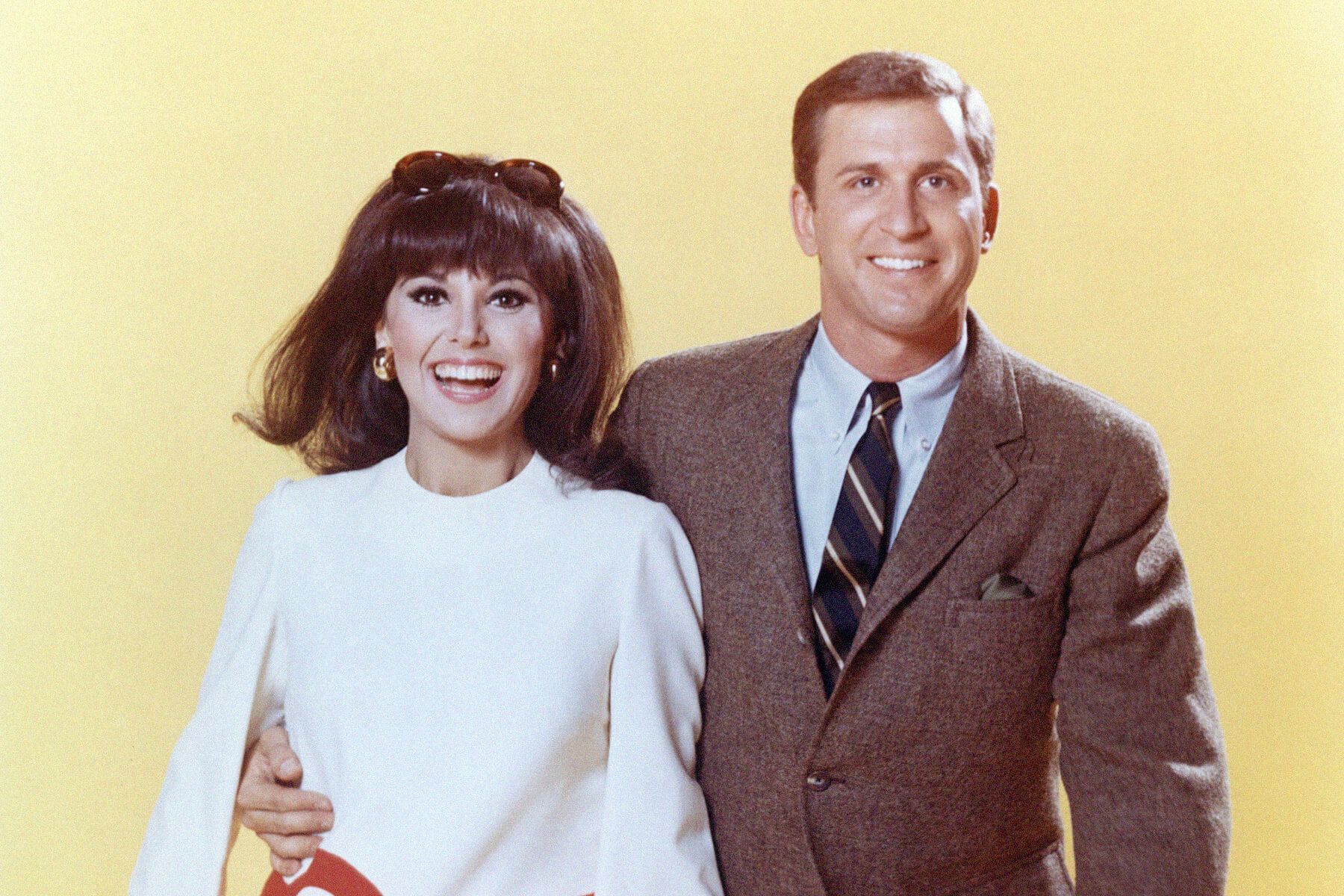
In this Thanksgiving episode from the feminist TV classic That Girl, Ann (Marlo Thomas) and her boyfriend Donald (Ted Bessell) want to spend Thanksgiving together, but their respective parents have other ideas. Ann ends up hosting dinner at her apartment and trying to honor each family’s traditions — with comically frustrating results.
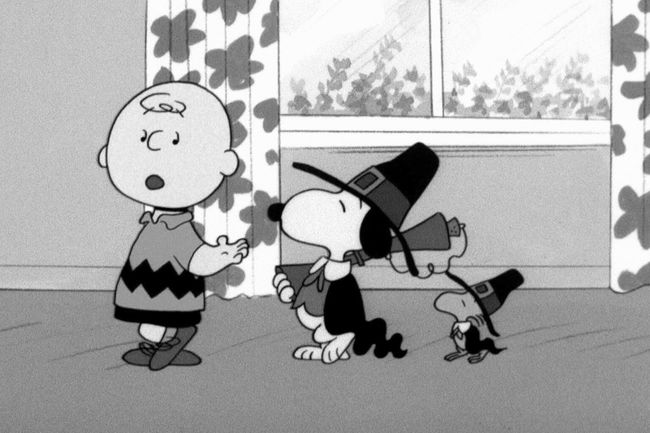
No matter how old we get, it wouldn’t feel like Thanksgiving without Charlie Brown, Snoopy, and the gang. This animated classic reminds us of the importance of friendship and gratitude when poor Charlie Brown is tasked with putting together an unconventional Thanksgiving dinner for his friends.
“Over the River and Through the Woods,” Season 4, Episode 11 (1975)
Thanksgiving takes an unexpected turn for Bob (Bob Newhart) when his wife, Emily (Suzanne Pleshette), goes out of town, leaving him without plans for the holiday. Bob’s friends drop by and soon decide to have their own casual celebration. It’s a Thanksgiving to remember that involves a lot of random food and a series of drunken, comedic antics. And it’s a memorable and hilarious look at a nontraditional Thanksgiving that still manages to bring people together.
As Florida Evans (Esther Rolle) and her children prepare for Thanksgiving, James Sr.’s estranged father, Henry Evans (Richard Ward), arrives with an unexpected guest — his loud-talking, live-in girlfriend, Lena (Pauline Myers). Grandpa Evans hasn’t been in touch with the family for years, bringing tension and mixed emotions for everyone, especially Florida, who is scandalized by the unmarried couple living together.
Feeling left out after recent changes around the station, WKRP station manager Mr. Carlson (Gordon Jump) comes up with a unique promotional event and arranges a Thanksgiving turkey drop. In one of the most iconic Thanksgiving TV moments, the publicity stunt — dropping live turkeys from a helicopter over a crowded shopping area — goes horribly, hysterically wrong as Les Nessman (Richard Sanders) reports from the ground.
Credit: Aaron Rapoport/ Corbis Historical via Getty Images
Cheers
“Thanksgiving Orphans,” Season 5, Episode 9 (1986)
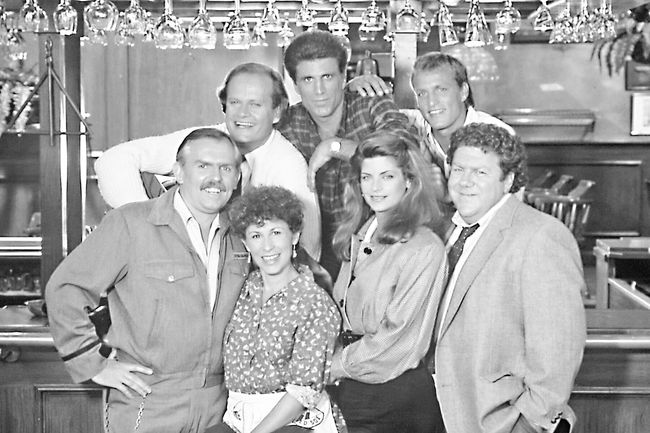
When no one except Diane (Shelley Long) has Thanksgiving plans, Carla (Rhea Perlman) agrees to host a Thanksgiving potluck at her house, leaving Norm (George Wendt) in charge of the turkey. Predictably, dinner is delayed when the turkey takes forever to cook, leaving everyone hungry and grumpy. As tensions rise among the motley crew, unexpected guests show up, the petty bickering starts, and the result is perhaps the most epic food fight in the history of television.
“The Mom and Pop Store,” Season 6, Episode 8 (1994)
In typical Seinfeld fashion, the show about nothing takes a comedic look at how Thanksgiving isn’t always what we expect. The episode becomes ridiculously complicated with mishaps and misunderstandings. Jerry (Jerry Seinfeld) tries to determine whether he’s actually invited to a pre-Thanksgiving party, George (Jason Alexander) tries to confirm that actor Jon Voight previously owned the convertible he wants to buy, Elaine (Julia Louis-Dreyfus) gets her boss a balloon-holding spot in the Macy’s Thanksgiving Day Parade, and Kramer (Michael Richards) tries to save a sketchy mom-and-pop shoe repair business.
“The One Where Underdog Gets Away,” Season 1, Episode 9 (1994)
“The One With the List,” Season 2, Episode 8 (1995)
“The One With the Football,” Season 3, Episode 9 (1996)
“The One With Chandler in a Box,” Season 4, Episode 8 (1997)
“The One With All the Thanksgivings,” Season 5, Episode 8 (1998)
“The One With Ross’s Sandwich,” Season 5, Episode 9 (1998)
“The One Where Ross Got High,” Season 6, Episode 9 (1999)
“The One Where Chandler Doesn’t Like Dogs.” Season 7, Episode 8 (2000)
“The One With the Rumor,” Season 8, Episode 9 (2001)
“The One With Rachel’s Other Sister,” Season 9, Episode 8 (2002)
“The One With the Late Thanksgiving,” Season 10, Episode 8 (2003)
Over the course of its 10-year run, Friends gave us 10 memorable episodes about Thanksgiving, making it impossible to choose a favorite. There’s the runaway Macy’s Thanksgiving Day Parade balloon in Season 1, Chandler in a box in Season 4, and the Geller Bowl sibling rivalry between Ross (David Schwimmer) and Monica (Courteney Cox) during a touch football game that derailed Thanksgiving in Season 3. Cameos by Brad Pitt in Season 8 and Christina Applegate in Season 9 were filled with quotable lines and laugh-out-loud moments, while the gang’s last Thanksgiving in Season 10 — reluctantly hosted by Monica and Chandler (Matthew Perry) — remains a poignant reminder of the passage of time. Finally, while it might not have been a Thanksgiving episode, Ross’ Season 5 meltdown over his stolen leftover Thanksgiving turkey sandwich with the gravy-soaked bread, known as the “Moist Maker,” remains the stuff of comedic legend.
Every Thanksgiving Friends episode served up plenty of laughs alongside the unforgettable (and sometimes inedible) Thanksgiving meal, reminding us that old friends are priceless — even when things don’t turn out the way we planned.
Credit: Aaron Rapoport/ Corbis Historical via Getty Images
Author Michael Nordine
May 16, 2024
Love it?42
The way we watch television is changing, and so is the way we measure viewership: 2023 was the first year in which viewers who no longer pay for traditional TV such as cable service outnumbered those who still do. Cord-cutting is increasingly the norm as people flock to Netflix, Hulu, and other streaming services. The small screen remains a favorite passive pastime all the same, with Nielsen ratings and other metrics showing why the following seven shows have proven so enormously popular with viewers around the world. All of them proved popular throughout their run, with individual episodes (often their finales) setting records for viewership.
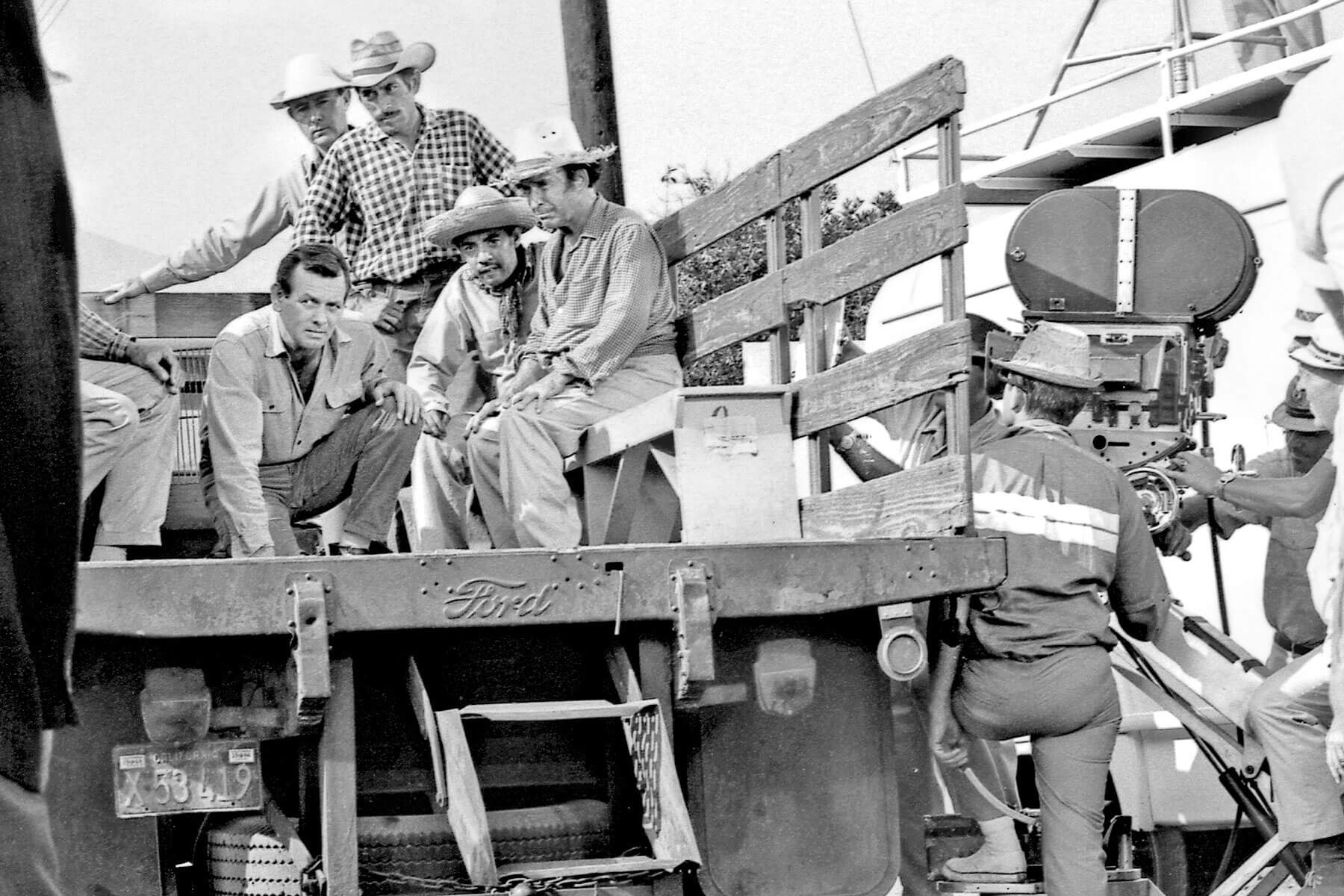
Before it was a Harrison Ford movie, The Fugitive was a wildly popular TV series. It took all 120 episodes — 90 broadcast in black and white, 30 in color — to reveal what really happened to the wrongly accused Dr. Richard Kimble (portrayed by David Janssen), and America was more than ready by the end. The series finale, “The Judgment,” set a record when 78 million people watched it, but The Fugitive’s place atop the ratings mountain didn’t last long. When the series ended in 1967, the show that eventually dethroned it was just five years from making its own debut on the small screen.
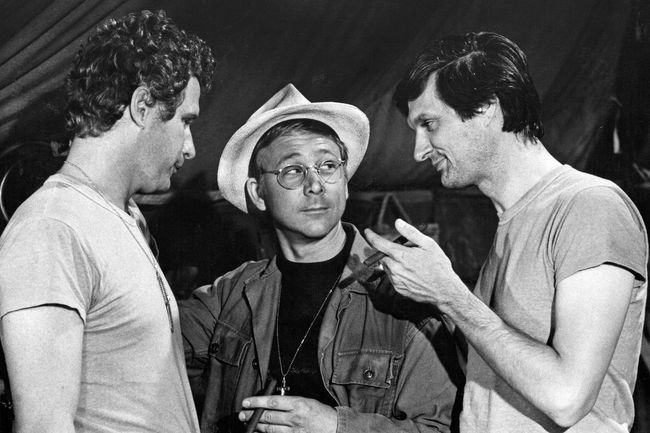
M*A*S*H aired 256 episodes throughout its 11 seasons, none of which drew more viewers than its record-shattering finale. When “Goodbye, Farewell and Amen” aired on February 28, 1983, around 105 million viewers were there to see how the beloved series ended — the most of any television broadcast in American history at that point, a record that stood until Super Bowl XLIV in 2010. Nearly 60% of American households helped make it the most-watched episode of any TV show by tuning in, a record unlikely to be broken in the streaming era.
Few series have become cultural phenomena to the same extent as Roots, the miniseries about slavery’s history and legacy based on Alex Haley’s novel Roots: The Saga of an American Family. In addition to critical acclaim and a slew of accolades — the show won a Golden Globe, a Peabody Award, and nine of the 37 Emmys for which it was nominated — Roots broke Nielsen ratings records during the eight consecutive nights on which it aired, and every episode still ranks among the 100 most-watched episodes of all time. Roughly 51% of all American households gathered around their television sets for the finale, and an estimated 140 million viewers watched the show overall. It seems to have been all anyone could talk about in January 1977: “Theaters and restaurants emptied out during the show,” wroteTIME magazine’s Frank Rich two years later. “Hundreds of colleges started Roots courses; the National Archives in Washington found itself flooded by citizens’ requests for information about their ancestors.” In addition to a 1979 sequel, Roots also inspired a 2016 remake.
Dallas was well known for its cliffhangers throughout its 13-year run, but none of them riled the country into a frenzy the way its third-season finale did. “A House Divided” premiered on March 21, 1980, and after it aired, everyone was asking the same question: “Who shot J.R.?” When that burning question was answered exactly eight months later, 76% of all television viewers in the U.S. were watching — meaning every other show broadcast combined for just a quarter of the night’s total viewership. That amounted to some 90 million people, a record that stood until the M*A*S*H finale. The cliffhanger’s massive success helped popularize the now-common practice of ending a season with unresolved questions, including the Simpsons spoof “Who Shot Mr. Burns?” It wasn’t just this one episode that drew viewers, however — Dallas was a ratings success throughout its run, with seasons 4 through 8 all ranked either first or second according to Nielsen.
It’s the place where everybody knows your name, and just about everyone in the country tuned in when Cheers aired the last of its 275 episodes. “One for the Road” received a Nielsen rating of 45.5, meaning 45.5% of all American televisions were tuned to the episode, with a total viewership of some 93 million. To this day, M*A*S*H is the only series finale to be seen by more people — even massive hits such as Seinfeld (76 million), Friends (52.5 million), and Game of Thrones (13.6 million) didn’t come close.
Traditional television viewership may be declining in the U.S., but it’s never been more popular in South Korea. Viewership records have been set and broken time and again over the last several years, as K-dramas have proved increasingly popular abroad as well. TV ratings are measured in terms of the percentage of households that tune in to a given episode, and the twisty relationship miniseries The World of the Married holds the current record in its home country. A full 28.37% of Korean homes (more than 14 million people) tuned in to the finale, breaking the previous record of 23.77% set by Sky Castle a year earlier.
South Korea is also responsible for Netflix’s most-watched series of all time: Squid Game, the global sensation that 142 million households pressed play on for a total of 1.65 billion viewing hours within four weeks of its release; the only other Netflix series to crack 1 billion viewing hours in that time frame are Wednesday and Stranger Things 4. Squid Game also won awards across the globe and has been renewed for a second season, which is expected to be wildly popular as well.
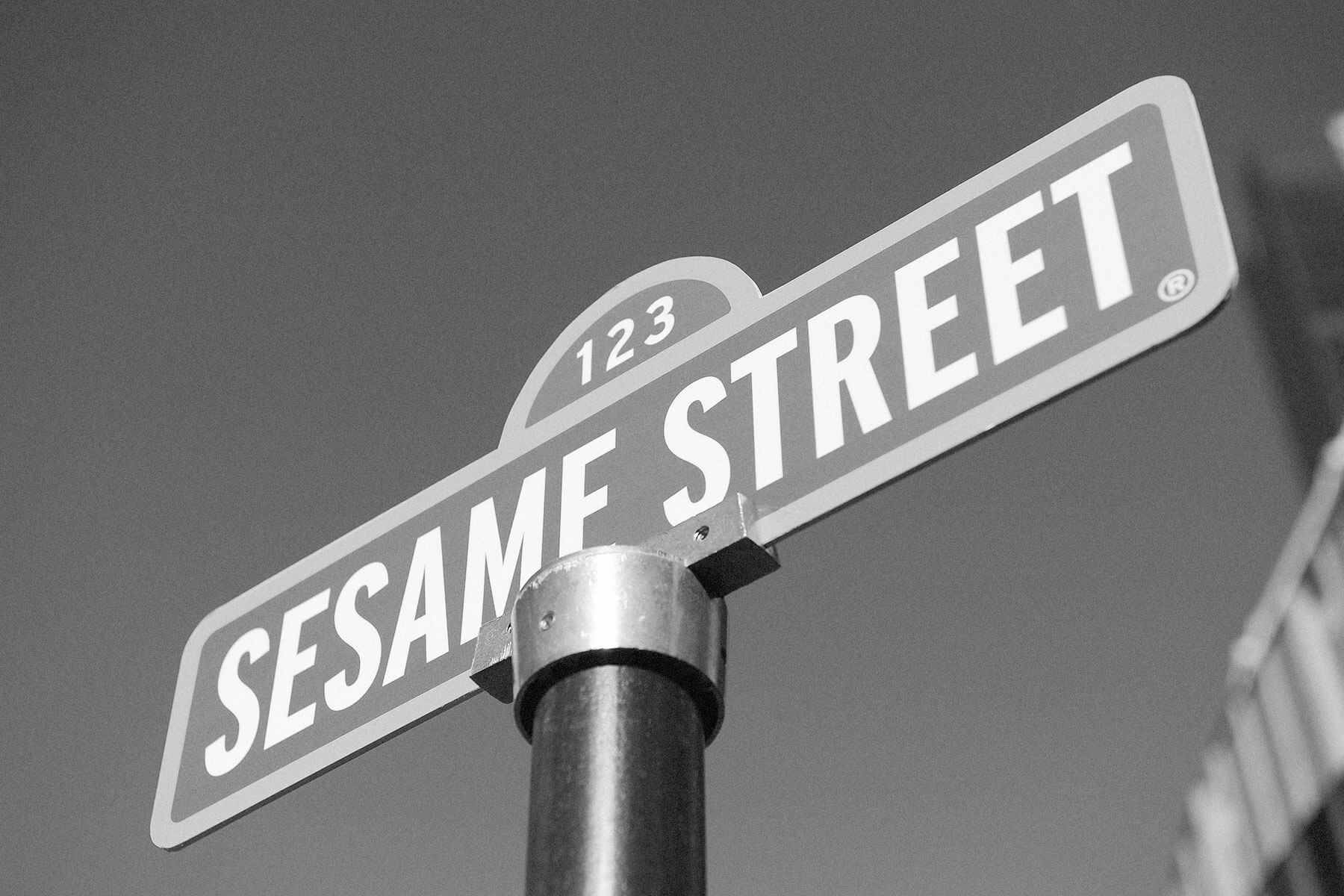
From its very first episode in 1969, Sesame Street captivated the imaginations of America’s youth, using research-based programming to reinvent children’s television. Created by Joan Ganz Cooney and Lloyd Morrisett in the late 1960s, the show aimed to not only entertain, but educate — and it did just that. It’s been called the “largest and least-costly [early childhood] intervention that’s ever been implemented” in the United States.
Through its diverse characters and cast members, the show reflected the real world, and its fast-paced storytelling, repetition, and humor helped impart valuable life lessons. Sesame Street quickly became more than just another TV show: It’s been a trusted companion for generations of families. Read on to learn more about the history of the show that, through its commitment to inclusivity and social change, has left a profound mark on society — and made Big Bird a star.
The seed that grew into Sesame Street was planted at a fateful Manhattan dinner party hosted by Joan Ganz Cooney, a producer with a background in education. At the time, Cooney was working for WNET/Channel 13, where she produced public affairs programming, including an Emmy Award-winning documentary about poverty in America. The guest list at the dinner party included Lloyd Morrisett, vice president of the nonprofit Carnegie Corporation. As the conversation turned to television, Morrisett shared that his young daughter was so mesmerized by TV that she would sit and stare at nothing but the test pattern. Morrisett, who was also a psychologist, wondered whether the medium could be used to teach children.
Inspired by the conversation, Cooney went on a three-month trip around the country to interview educators, psychologists, television producers, and more. The result was a study called “The Potential Uses of Television in Preschool Education.” It proposed a new kind of children’s television program — Cooney envisioned a fast-paced format similar to a sketch comedy show. She wanted to foster a strong connection between the show’s characters and the audience. And most of all, she wanted it to teach the young minds that would be watching, especially kids from lower-income and marginalized communities who often slipped through the cracks.
The yet-unnamed show went into development at the newly formed Children’s Television Workshop (now known as the Sesame Workshop). Morrisett helped raise the funds to make it happen, and in 1968, Cooney hired Jon Stone from the children’s show Captain Kangaroo to produce and direct the project. That summer, Stone brought a former colleague, a puppeteer named Jim Henson, to one of Cooney’s workshops. Together, Stone and Henson produced a pitch reel for the show featuring some of Henson’s Muppets, including Kermit the Frog and Rowlf the Dog. “Hey, Rowlf, why don’t you call your show ‘Sesame Street’?” Kermit says in the reel. “You know, like ‘Open Sesame’? It kind of gives the idea of a street where neat stuff happens.”
Photo credit: Hulton Archive/ Archive Photos via Getty Images
“Sesame Street” Is Born
Sesame Street debuted on November 10, 1969, and its brownstone-lined city street set and Henson’s colorful puppets became an immediate fixture in American homes. Kids and parents loved it; critics largely did too, even though there were some questions about whether a show tailored for short attention spans might lead to a generation that lacked focus. (That issue is up for debate, but many studies over the years have found that watching the show helped prepare children for school.) Additionally, despite Sesame Street’s legacy as a diverse and inclusive show, it initially faced criticism for its lack of representation of Latino people in its first couple of seasons. The show listened to its audience, and in its third season, added the characters Luis (Emilio Delgado) and Maria (Sonia Manzano), who became beloved cast members for decades. The show continues to embrace diversity and inclusion to this day.
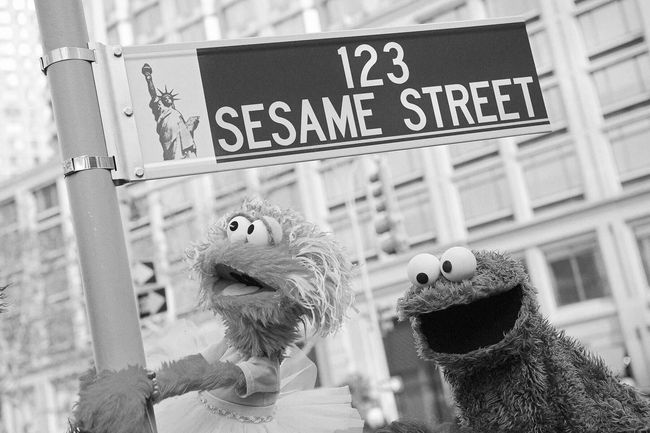
The biggest stars of Sesame Street were not the human cast members, however, but Henson’s beloved Muppets. The distinctive puppets had personalities and backstories all their own, and were created with specific educational goals in mind. Big Bird, for instance, is a 6-year-old preschooler, and was designed to help children develop reasoning skills. Bert and Ernie represent cooperation, and Cookie Monster, well, Cookie Monster just likes cookies — a relatable motive for any preschooler. New puppets have been added throughout the years — the Count arrived in season 4 to teach math skills, while the empathetic Elmo became a mainstay in 1980 — but most of the core characters remain fixtures on the show after more than 50 years.
During the show’s development, psychologists advised not to have the Muppet characters interact with the human cast; they believed mixing fantasy and reality would cause confusion. But test screenings showed that scenes featuring only human cast members scored low. In a last-minute attempt to improve the show before it debuted, the team went against the professional advice and remade the puppets so they could walk and talk with the human cast. Months before Sesame Street went on air, the show created what author Malcolm Gladwell has called “the essence of Sesame Street — the artful blend of fluffy monsters and earnest adults.”
Since its debut in 1969, Sesame Street has embraced music as a powerful tool for both education and entertainment. The show’s musical segments are not mere jingles; many have become iconic songs and cultural touchstones. “Rubber Duckie,” “C Is for Cookie,” and “Sunny Day” (the show’s theme song, also known as “Can You Tell Me How to Get to Sesame Street?”) have transcended generations. Musical guest appearances by stars from Stevie Wonder to Johnny Cash, Bruno Mars to the Chicks, and Ed Sheeran to Destiny’s Child, have enriched the show’s musical repertoire and helped it appeal to a broader audience.
Advertisement
Advertisement
Photo credit: Mathew Imaging/ FilmMagic via Getty Images
Lasting Impact
Now in its 54th season, Sesame Street has become part of the American cultural fabric. As of 2023, it has won more than 216 Emmy Awards, 11 Grammy Awards, and two Peabody Awards. It is broadcast in around 150 countries, and boasts more than 30 international versions. Even as one of the longest-running TV shows in U.S. history, the pioneering series remains iterative and collaborative, reflecting changes in the world not just in its story lines and characters, but also in the show’s format. In recent years, the show has introduced a character with autism, as well as one experiencing housing and food insecurity; it now also integrates modern technology, including a smartphone character named Smartie. Through all of the changes, Sesame Street continues to create an engaging and playful imaginative environment while staying true to its educational mission.
For all the formulaic sitcoms and talk shows that have run throughout the history of television, there are a number of times when audiences have witnessed true ingenuity. From memorable commercials to shocking plot twists, television events that may seem commonplace today once revolutionized the medium. Ever since the demonstration of the first television in 1926, the small screen has been a reflection of larger shifts in American society. With that in mind, here are five historic firsts in television history.
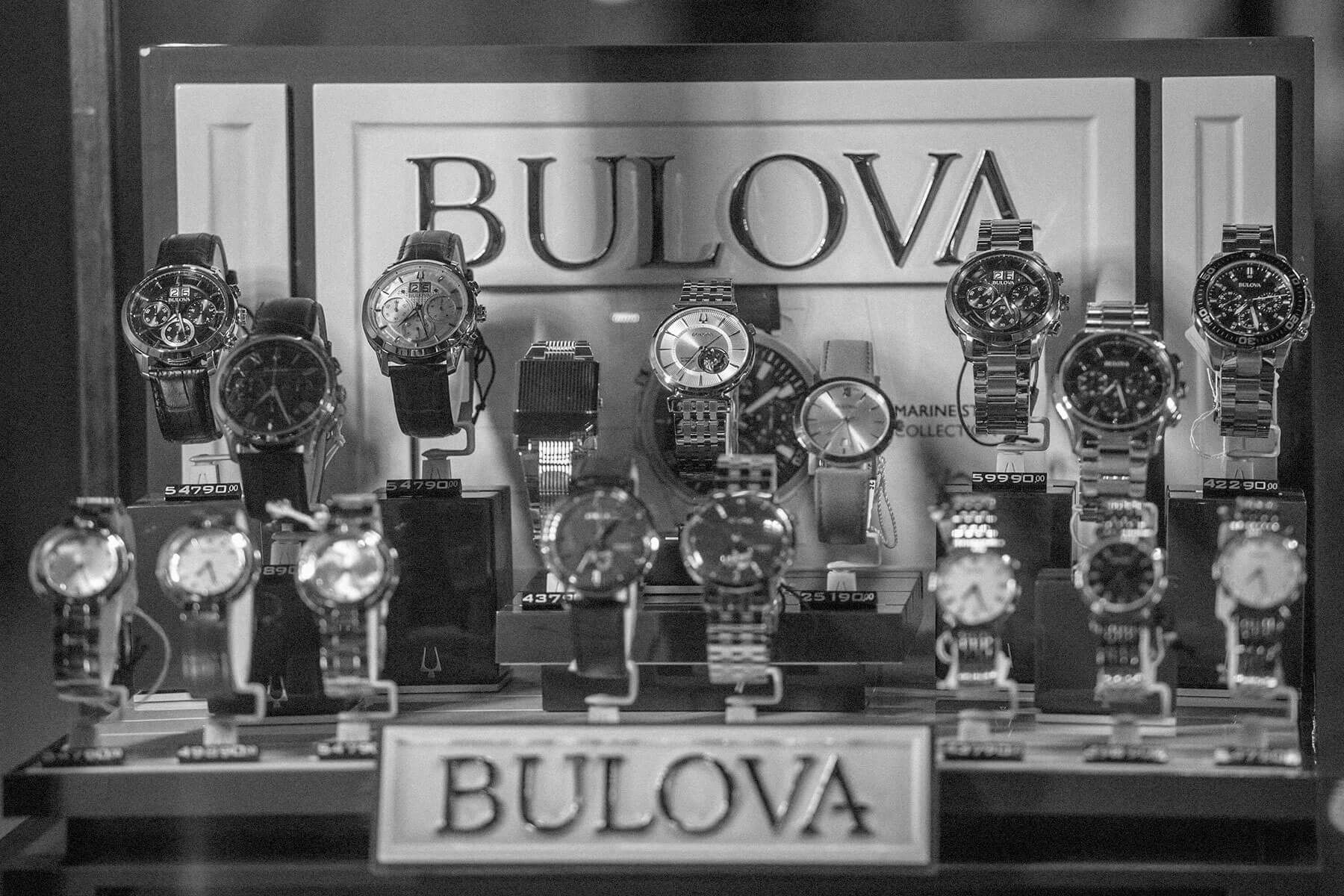
On July 1, 1941, at 2:29 p.m., viewers tuning in to the NBC-owned WNBT television station saw something they had never seen before. Before that day’s broadcast of the Brooklyn Dodgers vs. Philadelphia Phillies baseball game, the first authorized TV commercial hit the airwaves. The inaugural ad was produced by Bulova watches and ran for about 60 seconds, featuring visuals of a clock superimposed over a map of the United States with the accompanying voice-over, “America runs on Bulova time.”
The watchmaker paid just $9 to broadcast the advertisement ($4 for air fees and $5 for station fees), a far cry from the exorbitant advertising prices of today. WNBT was also the only station to advertise that day, though other networks soon followed suit. The Federal Communications Commission had previously implemented an advertising ban that forbade television commercials, though broadcasters still ran ads without authorization. The FCC finally issued 10 commercial licenses on May 2, 1941 — ushering in a new chapter in television history.
Photo credit: MAKSYM MALCEV/ iStock via Getty Images Plus
The First Laugh Track
Laugh tracks are an indelible part of sitcom television, and it all began in 1950 with a little-known program called The Hank McCune Show. The sitcom debuted on local stations in 1949 and centered around a fictional television variety show host. By the time the series made its network debut on September 9, 1950, it was accompanied by roaring laughter from a laugh track despite the lack of any live studio audience. One review from Variety magazine said, “Although the show is lensed on film without a studio audience, there are chuckles and yucks dubbed in… the practice may have unlimited possibilities.”
The laugh track was invented by mechanical engineer Charles Douglass, who was formerly a radar technician in the Navy. After leaving the military, Douglass created a device that came to be known as the “Laff Box.” A rudimentary version of Douglass’ invention debuted on The Hank McCune Show, though it took him three years to perfect his invention. Each 3-foot-tall Laff Box was handmade by Douglass and could hold 32 reels of 10 laughs apiece. By the 1960s, Douglass was supplying his much-coveted Laff Box to such iconic television programs as The Munsters and Gilligan’s Island.
Television spinoffs are standard practice today, and we have The Gene Autry Show to thank for kicking off the concept in 1950. The show delighted TV audiences, following the exploits of the titular singing cowboy and his trusted horse, Champion. When The Gene Autry Show wrapped up in 1956, the series was so popular that it inspired television’s first spinoff, a series called The Adventures of Champion, which ran for 26 episodes between 1955 and 1956. While the concept of a spinoff was unusual at the time, it became significantly more popular with the debut of The Andy Griffith Show in 1960. Starring Griffith himself, the hit series actually originated from a single episode of The Danny Thomas Show titled “Danny Meets Andy Griffith,” in which Griffith debuted the character of Sheriff Andy Taylor. The episode was a hit, and the concept earned a television run of its own.
Photo credit: Hulton Archive/ Hulton Archive via Getty Images
The First Televised Presidential Debate
Television has long played a key role in American politics, and few televised political events have a stronger impact than presidential debates, the first of which aired in 1956. Though neither President Dwight D. Eisenhower nor his challenger Adlai Stevenson participated in a televised debate themselves that year, both were represented by proxies, with Senator Margaret Chase Smith filling in for Eisenhower and former First Lady Eleanor Roosevelt representing Stevenson. The two women debated the issues live on-air on November 4, 1956, with Eisenhower coming out victorious in the election shortly thereafter.
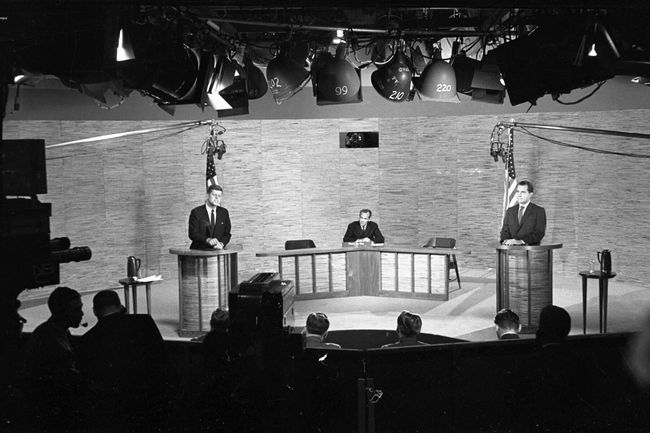
The first televised presidential debate between the actual candidates occurred four years later, with a CBS broadcast on September 26, 1960. This debate pitted Senator John F. Kennedy against Vice President Richard Nixon, and was the first of four televised debates in advance of that year’s election. Kennedy was widely considered the winner of the debate, which many have speculated was due to his charismatic presence on camera compared to Nixon, who declined to wear makeup and appeared visibly sweaty. Though Nixon fared better in future debates, this moment in TV history helped Kennedy gain a valuable early lead in the polls, which he maintained en route to winning the presidency.
In 1948, the sitcom Mary Kay and Johnny — starring real-life married couple Mary Kay and Johnny Stearns — made history by incorporating the actress’ pregnancy into the show, becoming the first TV show to depict a pregnancy and birth. When the couple’s son, Christopher, was born on December 19, 1948, Mary Kay was notably absent from the live taping. In response, Johnny wrote a 15-minute episode that featured him pacing around a hospital waiting room awaiting his son’s birth. Unfortunately, all but one full episode of Mary Kay and Johnny was lost in the 1970s, and the show’s impact was forgotten over time. It was a few years later that another sitcom, I Love Lucy, also depicted a pregnancy and birth, proving to be significantly more impactful given the show’s popularity.
When actress Lucille Ball — the biggest television star at the time — became pregnant in 1952, producers needed to figure out how to interweave her real changing appearance with her character on I Love Lucy. At first, network executives suggested coming up with methods for concealing Ball’s baby bump, such as having her hide behind chairs. But Desi Arnaz — Ball’s husband and co-star — found those suggestions insulting, and fought back. After a conversation between Arnaz, CBS, and advertiser Philip Morris, the latter signed off on a plan to incorporate Ball’s real-life pregnancy into the plot of the show.
While the word “pregnancy” remained forbidden, the show’s characters spoke using synonyms such as “expecting” in reference to Lucy’s storyline baby. The character’s pregnancy was revealed during a December 8, 1952, episode titled “Lucy Is Enceinte” — “enceinte” being the French word for pregnant. With Ball scheduled to deliver her actual child on January 19, 1953, CBS scheduled the pretaped birth episode for that very same evening. “Lucy Goes to the Hospital” was a major television event, attracting more than 44 million American viewers and helping pave the way for talking about other previously taboo topics on television.
Photo credit: Bettmann / Bettmann via Getty Images
Author Kevin McCaffrey
June 12, 2023
Love it?46
The first commercial televisions were released to the American public in 1938, and if TV was in its infancy in the ’40s, growing up through the 1950s and ’60s, the ’70s were kind of like an adolescence: The medium got a little edgier, experimenting with new approaches and pushing social boundaries. The decade marked a turning point for the small screen, ushering in the modern era of TV we know today. Here are five ways the 1970s changed television.
Photo credit: Bettmann / Bettmann via Getty Images
Prime Time Got Real
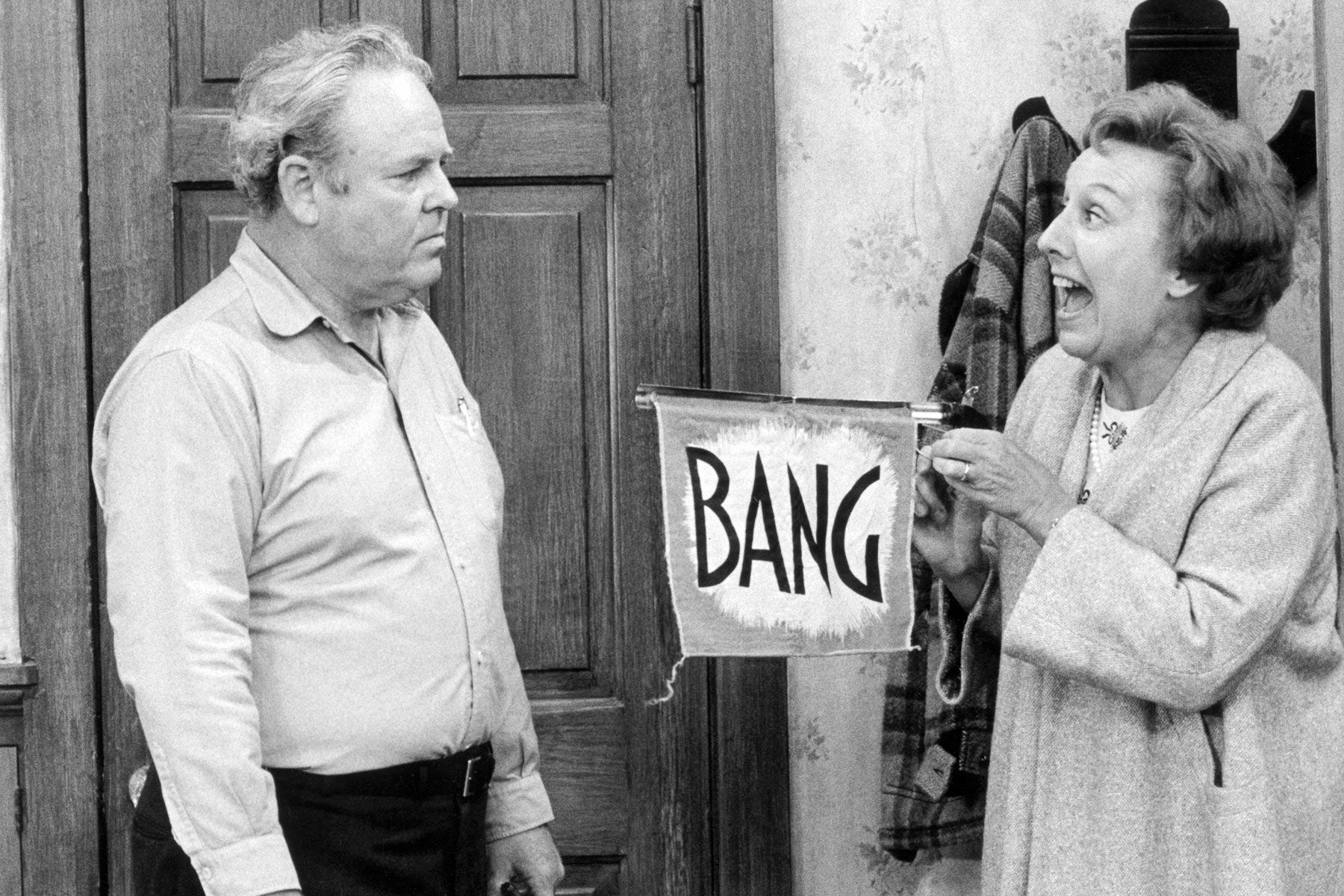
Compared to the wholesome, idyllic worlds created in 1960s TV shows such as The Andy Griffith Show, The Dick Van Dyke Show, and Leave It to Beaver, the shows of the ’70s were shocking in their realism, thanks in large part to writer and producer Norman Lear. He created a string of hit series such as All in the Family, Good Times, and Maude that were groundbreaking in their depictions of racial tensions, marital problems, and class struggles — all while being some of the funniest shows of all time. All in the Family starred a politically incorrect Archie Bunker espousing opinions and using language that had not been heard on “polite” TV before. The series was the top-rated show in the U.S. from 1971 to ’76, a record run at the time.
Photo credit: Hulton Archive / Archive Photos via Getty Images
Sunny Days Came to Children’s TV
In 1970, the National Educational Television network became the Public Broadcasting Service, and its new children’s show Sesame Street helped put PBS on the map. Throughout the decade, Sesame Street gave children and parents a kind of educational, wide-ranging program that had not been seen on screen before. From its inception, the children’s show depicted the most diverse cast in TV up to that point, with children, adults, and puppets of all backgrounds living together in an urban environment. For this reason, the show wasn’t initially universally accepted: A state commission in Mississippi voted not to air Sesame Street, although the decision was later reversed. Fifty years later, the lessons of Elmo, Big Bird, and the gang are still watched by nearly half of preschool-aged children in America.
Photo credit: Hulton Archive / Hulton Archive via Getty Images
Miniseries Got Big Ratings
The 1970s saw an explosion of a new kind of television production with the miniseries. Debuting on PBS on January 10, 1971, Masterpiece Theatre introduced British TV serials to the United States, frequently with stories that were based on novels and thus had a predetermined endpoint. Soon after, U.S. production companies started making their own versions of these limited-run series. Rich Man, Poor Man was one of the first American miniseries, based on a 1969 Irwin Shaw novel of the same name. The 12-hour miniseries aired on ABC over the course of six weeks in 1976. Meanwhile, 1977’s Jesus of Nazareth was so popular, it was even endorsed by the pope at the time. That same year saw the debut of Roots, a groundbreaking hit about a family’s journey through slavery; over its eight-night run, it drew more viewers than any drama in TV history.
Advertisement
Advertisement
Photo credit: Bettmann / Bettmann via Getty Images
War Met Comedy
It’s rare that a TV show adapted from an Oscar-nominated film goes on to be even bigger than the original movie, but that’s just what M*A*S*H did after debuting on CBS in 1972. Set during the Korean War, M*A*S*H was revolutionary for depicting a tragic subject as a comedy show, and it’s considered the first popular “dramedy.” It aired during the time of the Vietnam War and took an openly anti-war stance, but despite the potentially divisive political message, it reached a level of popularity that almost no TV show has seen since. The series finale brought in around 106 million viewers, still a record for a scripted show. In its 11-year run, M*A*S*H won 14 Emmys and a Peabody Award.
Photo credit: Diamond Images / Diamond Images via Getty Images
The NFL Came to Prime Time
When the Jets played the Browns on September 21, 1970, it marked the NFL’s full-time debut in prime time. The very first Monday Night Football broadcast featured all-stars not only on the field but in the booth, with famed commentators Howard Cosell, Keith Jackson, and “Dandy” Don Meredith calling the game. TIME magazine wrote that the banter between Cosell and Meredith came “close to upstaging the action on the field.” Monday Night Football’s highly rated national broadcasts eventually led to the league expanding to other weekly prime-time features, including NBC’s Sunday Night Football, and Thursday-night games on various networks. MNF remains one of the most highly rated prime-time shows each season.
Advertisement
Advertisement
Another History Pick for You
Today in History
Get a daily dose of history’s most fascinating headlines — straight from Britannica’s editors.