Since the establishment of the office in 1789, 45 people have served in 47 presidencies. Each president has brought their own brand of political discourse to the role, and historians tend to remember these leaders primarily for their major historical achievements and policy decisions.
But behind the presidents’ political legacies lie plenty of lesser-known details we don’t hear about as often, whether it’s a past life as an executioner, a penchant for skinny-dipping, or a fierce dislike of broccoli. Here is a surprising fact about every U.S. president.
Credit: Photo 12/ Universal Images Group via Getty Images
George Washington
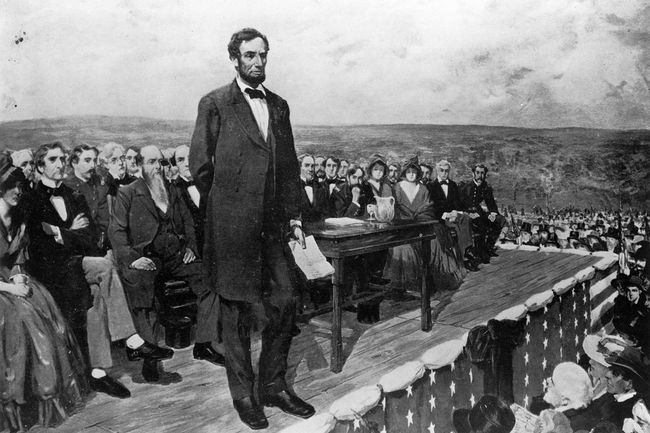
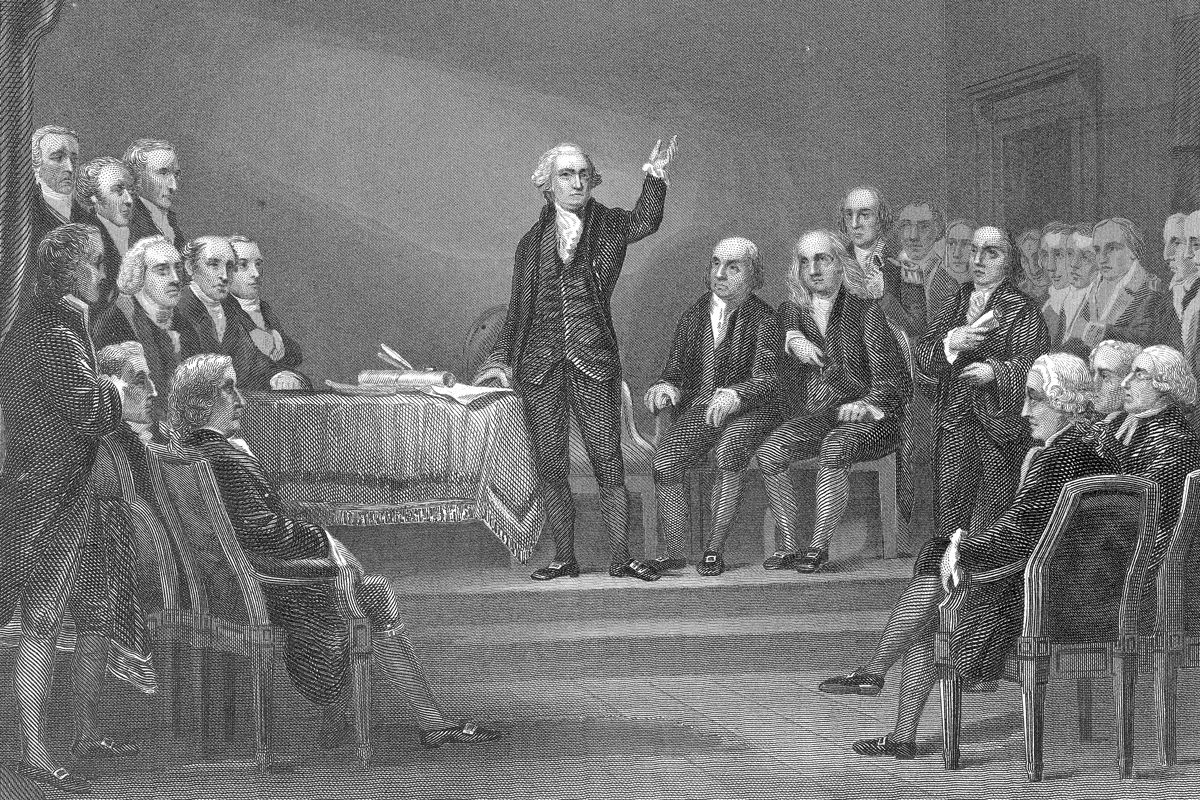
George Washington’s second inaugural address, delivered on March 4, 1793, was the shortest ever at less than two minutes long and only 135 words. (The average length of an inaugural address is 2,350 words.)
John Adams
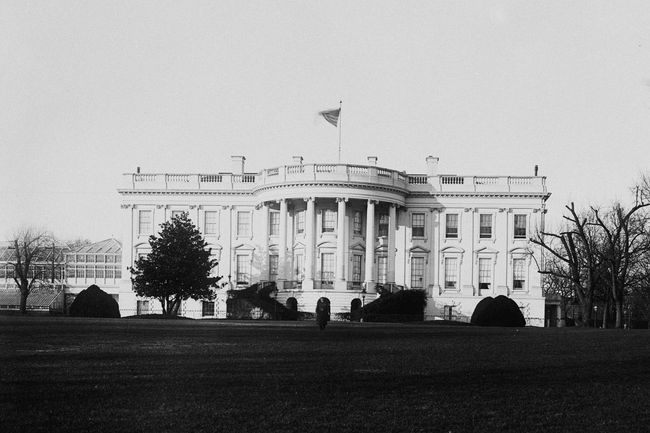
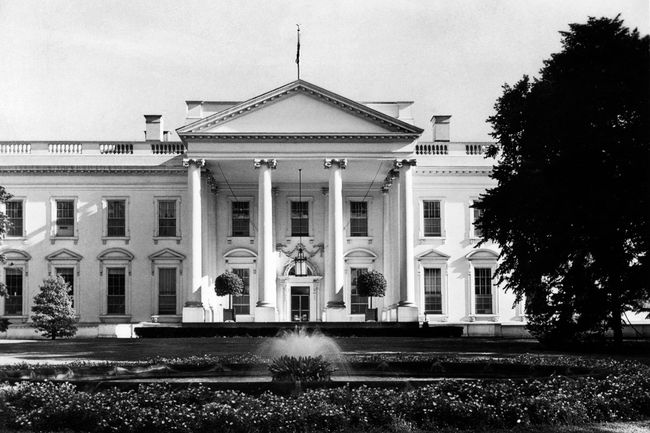
John Adams was the first U.S. president to inhabit the White House. He moved into the unfinished and largely unfurnished residence in November 1800, with only six rooms completed.
Credit: Buyenlarge/ Archive Photos via Getty Images
Thomas Jefferson
Thomas Jefferson helped popularize ice cream, French fries, and macaroni and cheese in America. He brought recipes from Europe that his staff prepared for guests at the White House.
James Madison
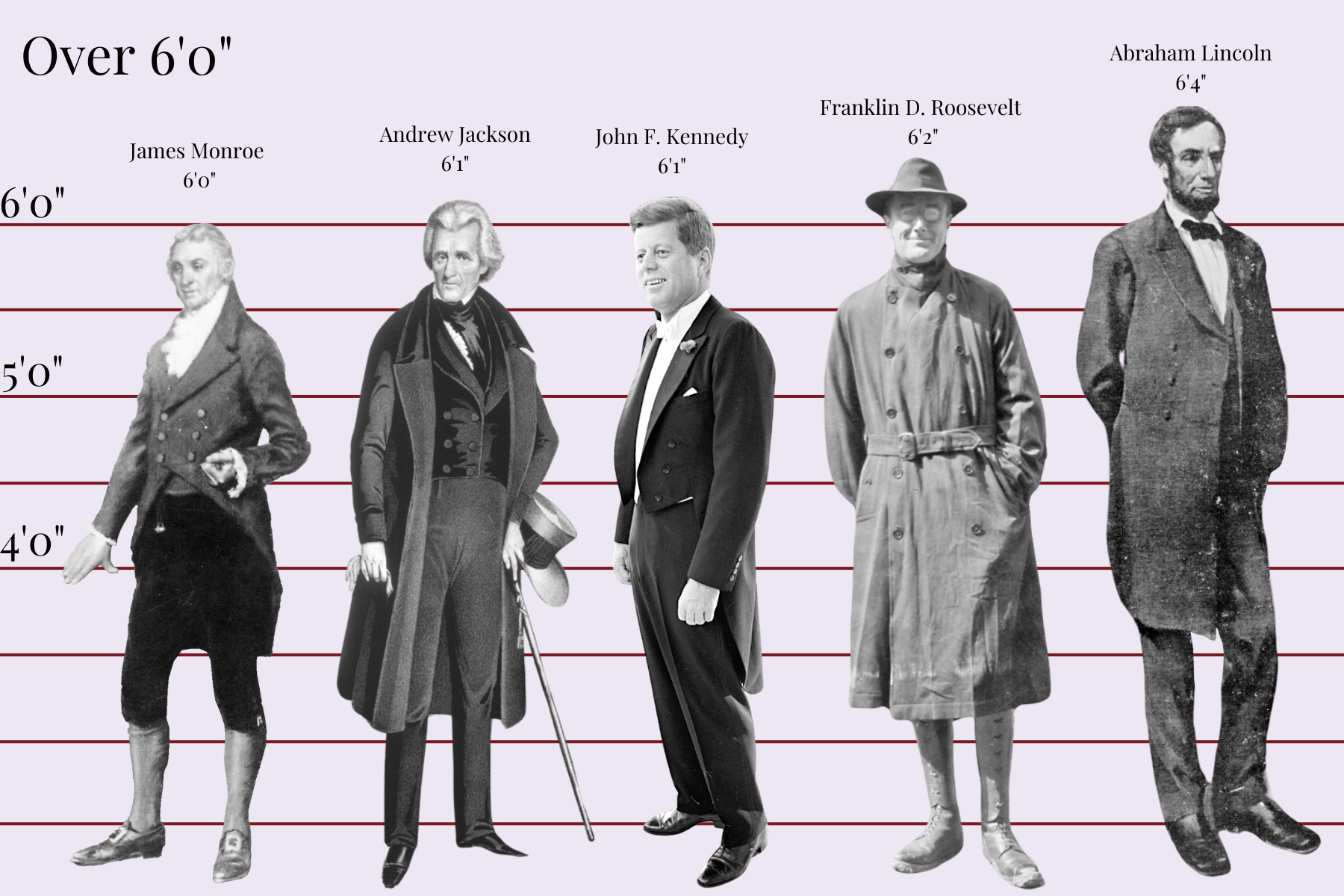
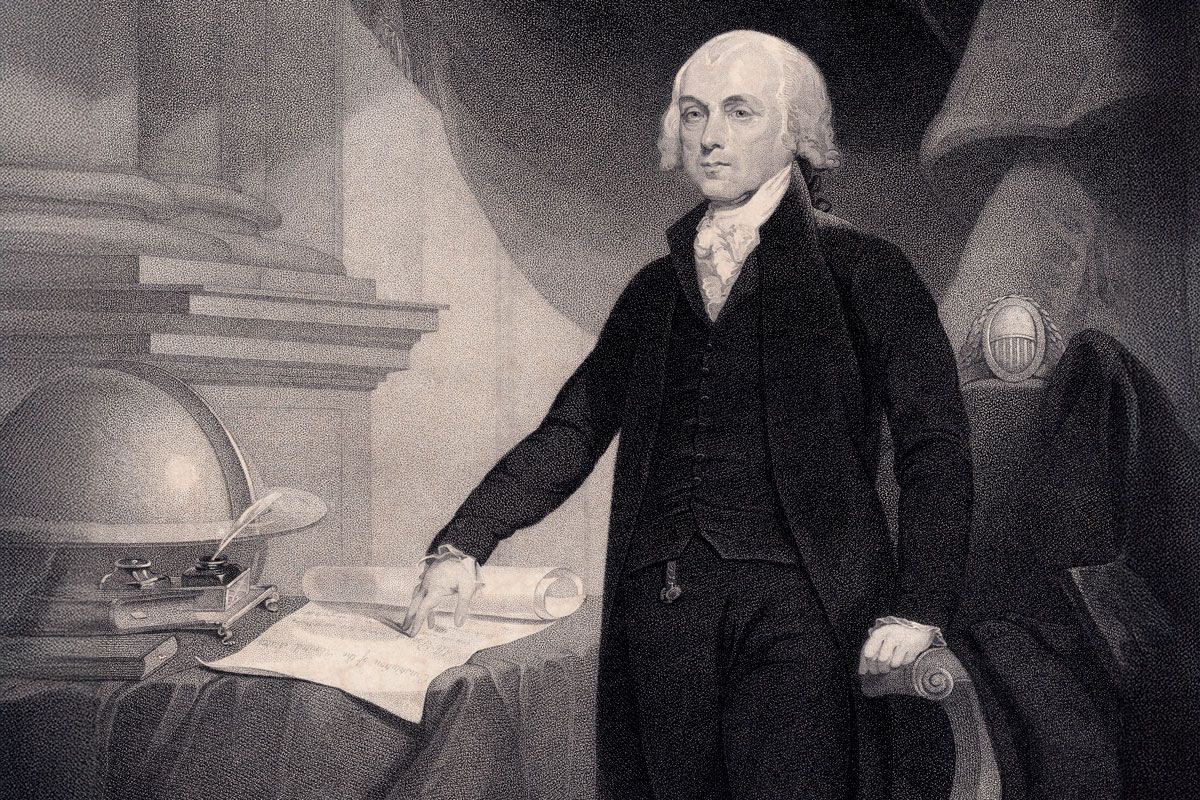
James Madison was the shortest president. He measured 5 feet, 4 inches (163 centimeters) tall and is estimated to have weighed about 100 pounds.
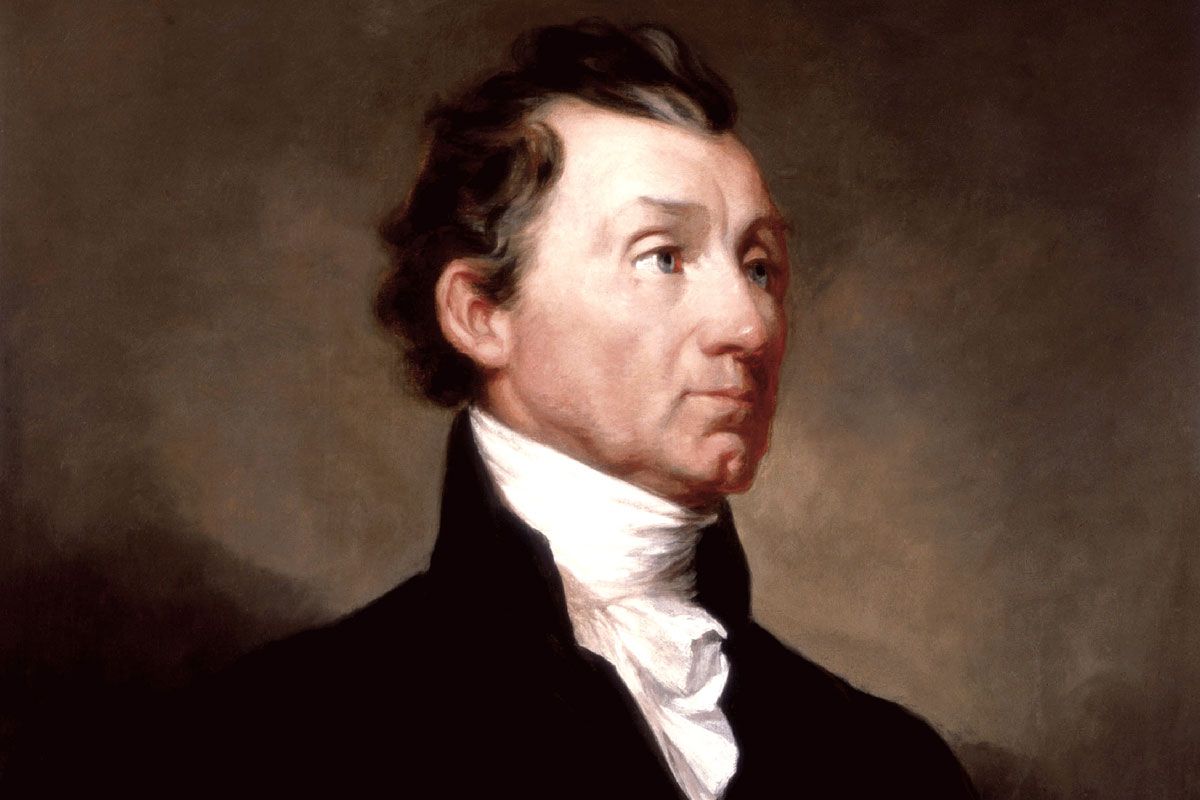
Monrovia, the capital of Liberia, was named after James Monroe, making it the only capital city outside the U.S. named for an American president.
John Quincy Adams
John Quincy Adams had a daily routine that involved early morning nude swims in the Potomac River. He maintained his habit of swimming in the Potomac into his late 70s.
Andrew Jackson was involved in at least a dozen duels during his lifetime (some put the number as high as 100), most of which were resolved without bloodshed. But Jackson did kill one opponent and was shot twice himself.
Martin Van Buren
Martin Van Buren was the first U.S. president who spoke English as a second language. He grew up in a Dutch community in upstate New York, and his first language was Dutch.
Advertisement
Advertisement
Credit: Bettmann via Getty Images
William Henry Harrison
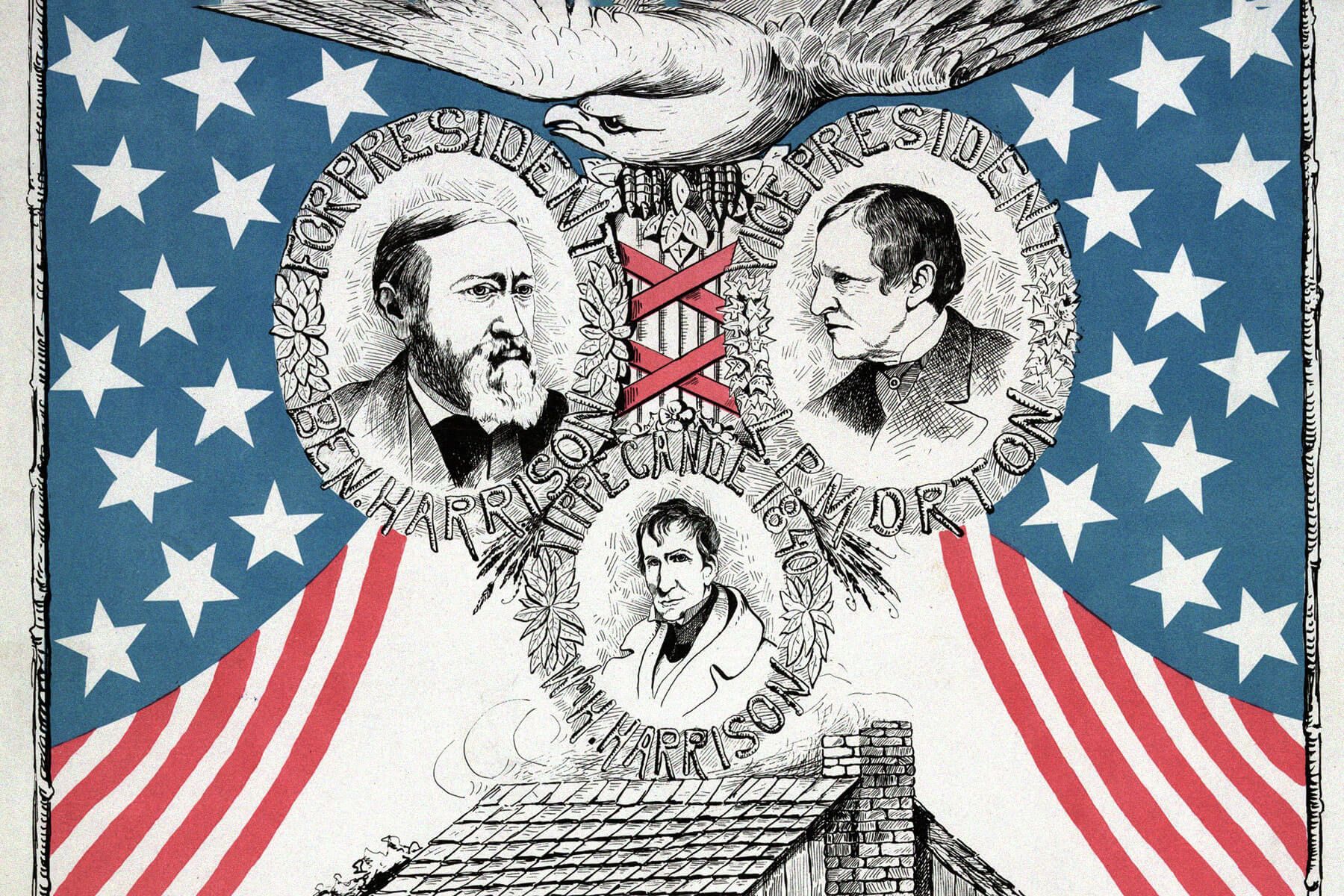
After only one month in the White House, William Henry Harrison became the first president to die in office, serving the shortest tenure in U.S. presidential history.
John Tyler
John Tyler fathered 15 children with two wives, more than any other president. His first child was born in 1815, when Tyler was 25, and his last in 1860, when the former president was 70.
Some of James K. Polk’s contemporaries considered him to be a rather boring man. This likely wasn’t helped by his wife, Sarah, who banned hard liquor and dancing at the White House.
Zachary Taylor
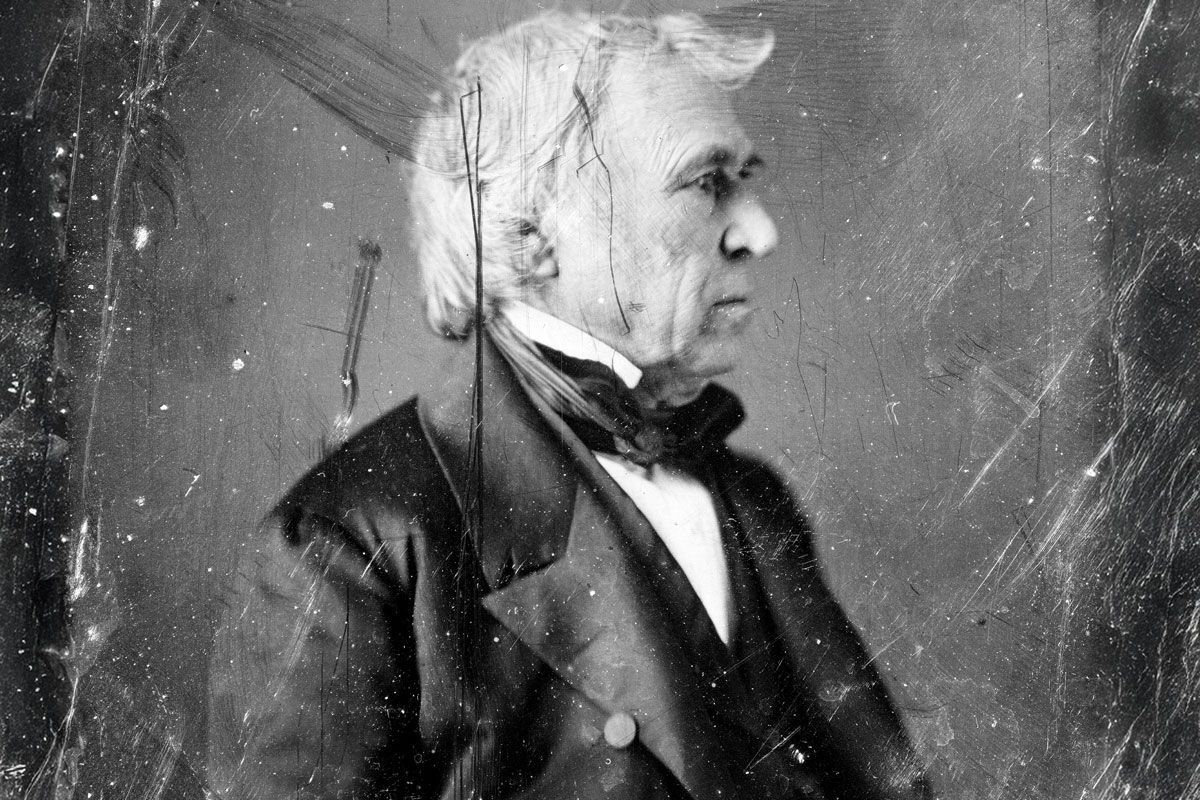
In 1848, the Whig National Convention nominated Zachary Taylor as president of the United States. Letters were sent to Taylor requesting his acceptance, but he didn’t respond — he had instructed the local post office not to deliver his mail to avoid postage fees, and didn’t get official word of his nomination for weeks.
Credit: Library of Congress Prints and Photographs Division Washington, D.C.
Millard Fillmore
Millard Fillmore came from a large, poor family and received little formal education until he was 18. When he became president, he and his wife, Abigail, established the first permanent library in the White House.
Franklin Pierce
Franklin Pierce was the first U.S. president to recite his inaugural speech entirely from memory — all 3,336 words of it.
Andrew Johnson was supposed to be assassinated on the same night as Abraham Lincoln, as he was serving as Lincoln’s vice president at the time. But his would-be assassin, George Atzerodt, lost his nerve and got drunk instead.
Ulysses S. Grant
Ulysses S. Grant’s real name was Hiram Ulysses Grant. He wound up with the moniker we know today due to a mistake by his benefactor on his application form to West Point, which he was never able to correct.
As part of his “Great Western Tour” in 1880, Rutherford B. Hayes became the first president to visit the West Coast while in office.
James A. Garfield
When President James A. Garfield was shot by an assassin on July 2, 1881, he was attended to by Charles B. Purvis — the first Black physician to treat a sitting president.
Advertisement
Advertisement
Credit: Education Images/ Universal Images Group via Getty Images
Chester A. Arthur
Chester A. Arthur appreciated the finer things in life. His administration spent $30,000 (around $2 million today) lavishly refurbishing the White House, and his love of clothing — he reputedly owned 80 pairs of trousers — earned him the nickname “the Gentleman Boss.”
Grover Cleveland
Grover Cleveland was the only president to officially serve as an executioner. As the sheriff of Erie County, New York, he performed the role of hangman on a handful of executions.
Photo credit: Library of Congress Prints and Photographs Division Washington, D.C.
Benjamin Harrison
Benjamin Harrison was the first president to have electric lighting installed in the White House, but he and his wife Caroline were afraid to touch the light switches for fear of electrocution.
William McKinley
William McKinley’s favorite pet was a double yellow-headed Mexican parrot that he named Washington Post and taught to whistle “Yankee Doodle Dandy.”
Credit: Culture Club/ Hulton Archive via Getty Images
Theodore Roosevelt
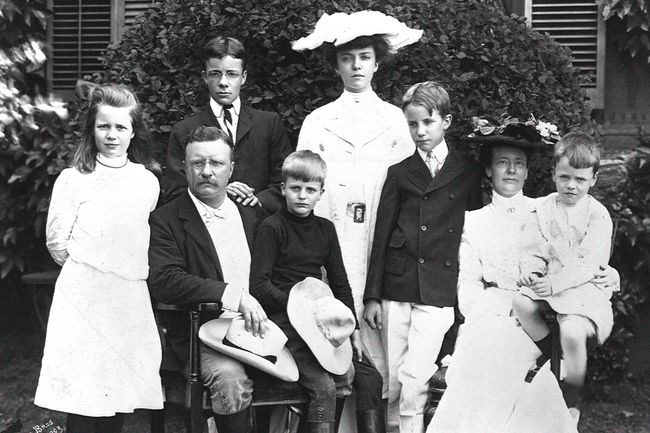
Teddy Roosevelt was disappointed with his official presidential portrait by artist Théobald Chartran, which his family jokingly said made him look like a “mewing cat.” Just before the end of his presidency, Roosevelt had the painting removed from the White House and burned.
William Howard Taft
In 1910, William Howard Taft became the first U.S. president to throw the ceremonial first pitch of a baseball season.
Considering it to be good for his health, Calvin Coolidge had his head rubbed with petroleum jelly every morning while he ate his breakfast in bed.
Herbert Hoover
While living in China, Herbert Hoover and his wife were caught up in the Boxer Rebellion, an uprising against foreigners that occurred in 1900. While they were trapped during the Siege of Tientsin, Hoover took a leading role in the defense, building barricades around residential areas.
Credit: Bettmann via Getty Images
Franklin D. Roosevelt
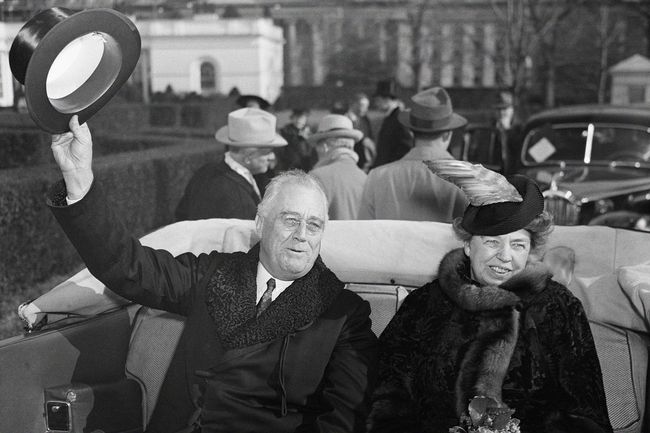
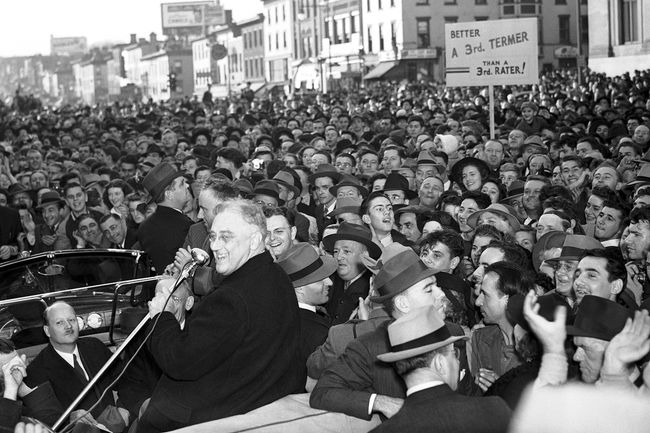
FDR suffered from a mild case of triskaidekaphobia, a fear of the number 13. He didn’t like Friday the 13th, wouldn’t travel on the 13th day of any month, and avoided hosting 13 guests at a dinner party.
Harry S. Truman
The “S” in Harry S. Truman’s name doesn't stand for anything — it’s simply the letter “S” and not an initial for a middle name. According to Truman, the letter was chosen as a compromise between the names of his grandfathers, Anderson Shipp Truman and Solomon Young.
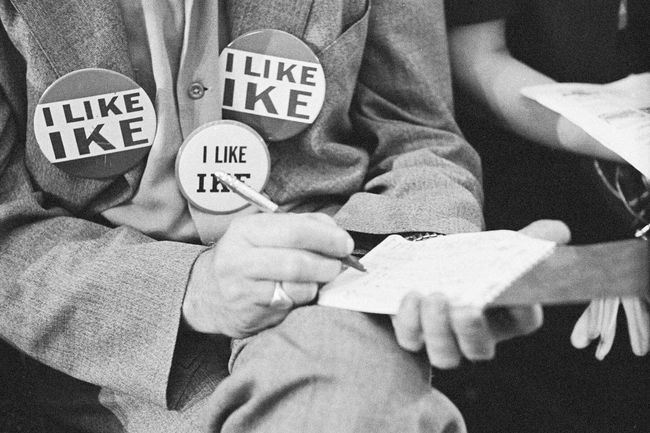
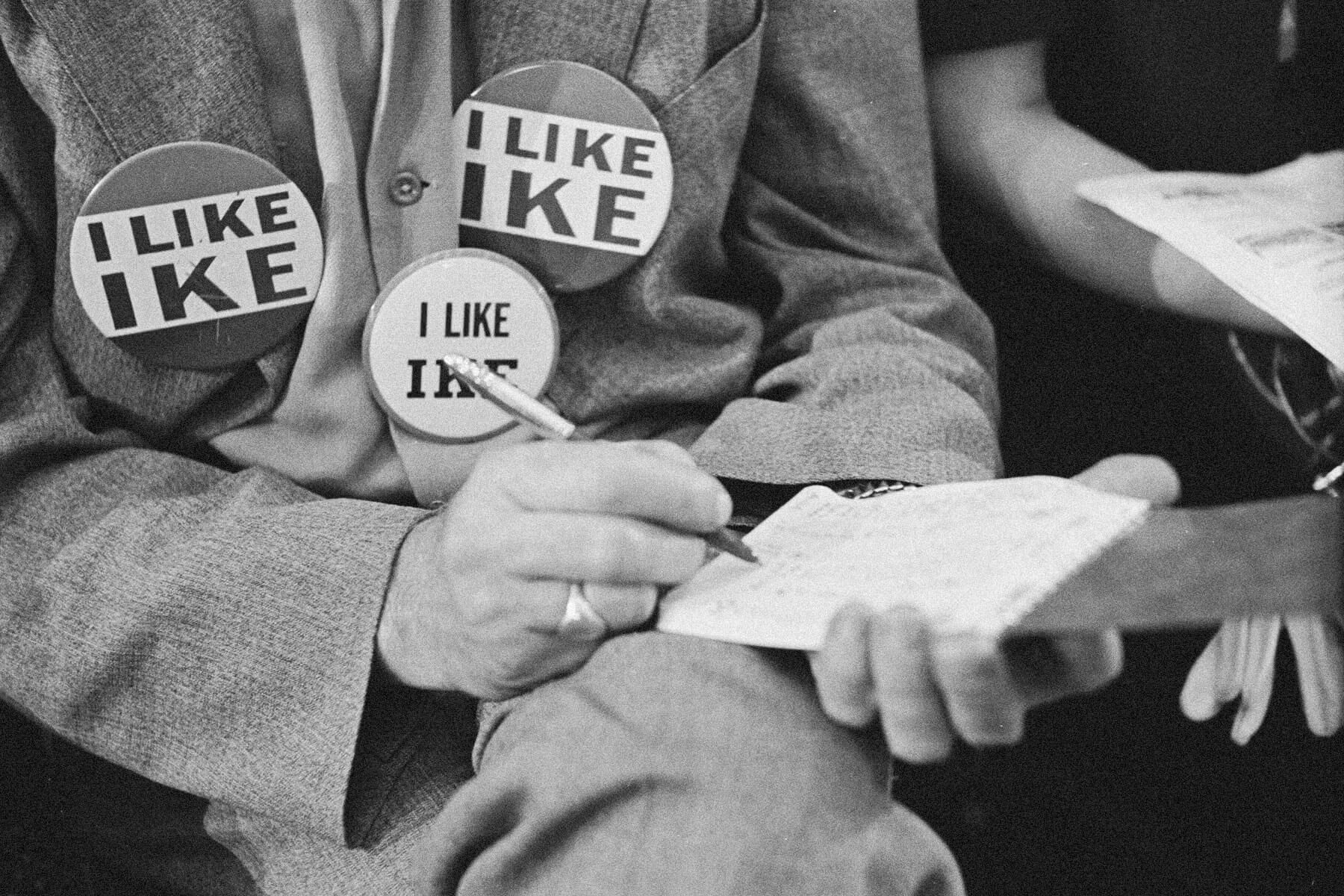
In 1954, Dwight D. Eisenhower had a putting green installed outside the Oval Office — but squirrels kept digging holes in it. Growing increasingly irate, he had his groundskeepers live-trap the squirrels, which were then released in nearby Rock Creek Park.
John F. Kennedy
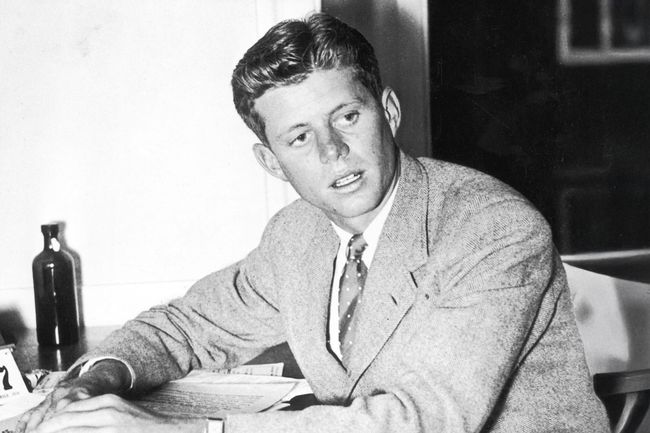
When JFK and his crew were stranded on an island during World War II, they carved a rough rescue message onto a coconut shell. Kennedy later had the coconut turned into a paperweight, which sat on his desk throughout his presidency.
Lyndon B. Johnson owned an amphibious car, which he used to prank people. Exclaiming to all on board that the brakes had failed, he’d head straight into a lake — at which point the terrified passengers would learn that the car could actually float.
Richard Nixon
Richard Nixon was a talented musician. He played five musical instruments — saxophone, violin, clarinet, accordion, and piano — and even composed a piano concerto.
While still in his late 20s, Gerald Ford worked as a fashion model. He even made it onto the cover of Cosmopolitan magazine.
Jimmy Carter
During a fishing trip in 1979, President Jimmy Carter was “attacked” by a swamp rabbit. He was in a small boat when the agitated rabbit swam toward him, possibly trying to escape a predator. The press had a field day with the story, dubbing it the “killer rabbit” or “banzai bunny” incident.
Credit: Bettmann via Getty Images
Ronald Reagan
Over the course of seven summers, the young Ronald Reagan was a lifeguard at Lowell Park on the Rock River. During that time, he saved 77 lives — a number he kept track of by cutting a notch in a log each time he pulled someone from the water.
George H.W. Bush
George H.W. Bush had a passionate dislike for broccoli. While reports that he banned it from the White House and Air Force One may have been exaggerated, Bush is on record as having said, “I'm president of the United States and I'm not going to eat any more broccoli.”
As a child, Barack Obama spent four years living in Indonesia. His family pets included a large turtle and an ape named Tata — and his stepfather secretly bred crocodiles in the house.
Donald Trump
Donald Trump’s Secret Service code name is Mogul, while Melania Trump is Muse. Both code names were selected during Trump’s first term as president.
While he was a student at the University of Delaware, Joe Biden was put on academic probation for a prank in which he sprayed the dorm director with a fire extinguisher.
Advertisement
Advertisement
I Tried U.S. Presidents’ Favorite Breakfasts and Here’s the Winner
Credit: ClassicStock/ Archive Photos via Getty Images
Author Bennett Kleinman
August 22, 2025
Love it?66
If you’re anything like me, you probably have a usual order at your local breakfast spot. Some folks opt for scrambled eggs and bacon, while others go for pancakes drenched in butter and maple syrup. (I personally prefer a sesame bagel with lox and cream cheese.) U.S. presidents through history were no different: While some POTUSes enjoyed a traditional breakfast of eggs, bacon, and coffee, others preferred morning meals that ranged from decadent to bizarre.
This gave us an idea: Choose seven of the more unusual presidential breakfasts and spend a week eating like the commander in chief. So that’s exactly what I did, and here’s what I learned.
Image courtesy of Bennett Kleinman
George Washington: Hoecakes and Hot Tea
The first breakfast I made was, appropriately, a favorite of the very first U.S. president, George Washington.According to his Mount Vernon estate, “Hoecakes were among George Washington’s favorite foods. He invariably ate them at breakfast… along with hot tea.” Hoecakes are a pancakelike dish made of cornmeal, and were originally standard fare among Native Americans before they became popular with colonial settlers.
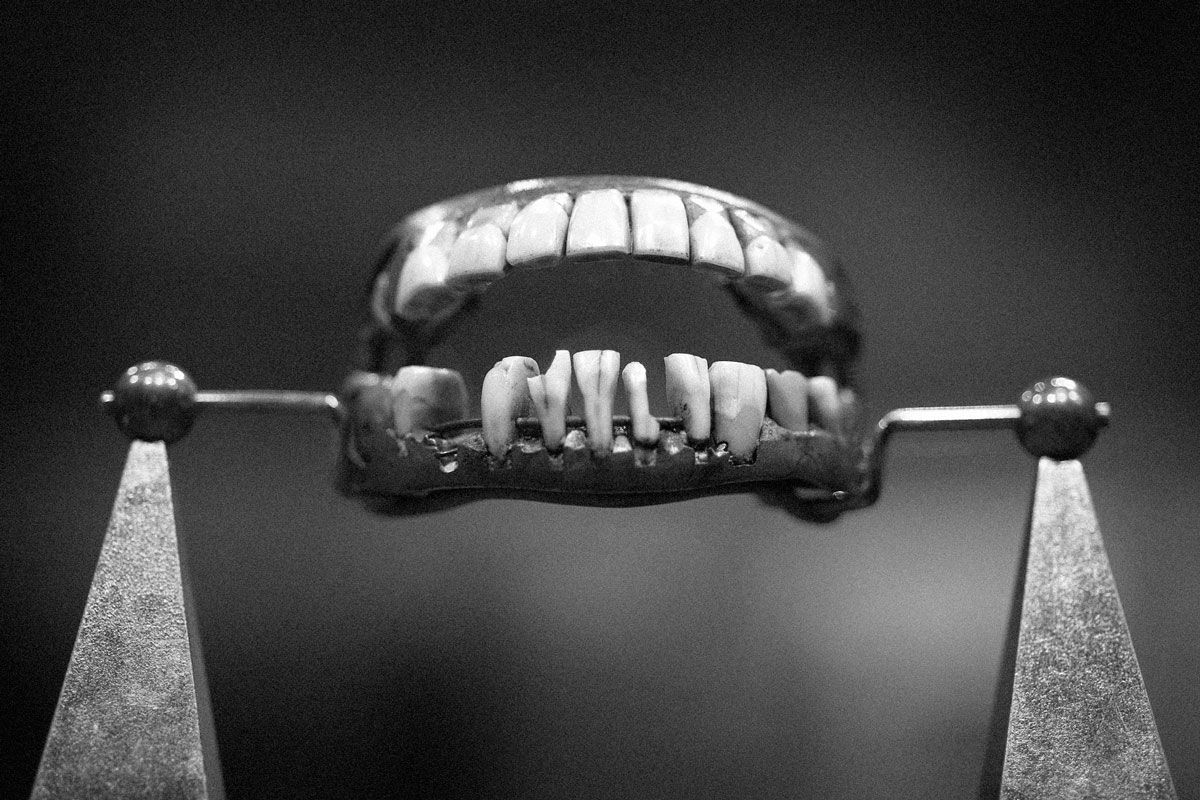
The dish was a staple of the Washington household, whose patriarch preferred hoecakes “swimming in butter and honey” — possibly because it made them softer and easier to chew, which would make sense given the president’s well-documented dental issues.
I went ahead and whipped up a plate of hoecakes based on a recipe by culinary historian Nancy Carter Crump in the book Dining With the Washingtons. While not as fluffy or airy as a typical pancake, the hoecakes were quite delicious. They boasted a rich corn flavor and pleasant crumbly texture, and drenching them with butter and honey made them all the more decadent.
As for the tea, I went with green tea — one of the many varieties preferred by the Washington family. George Washington reportedly drank three cups with breakfast, which I found to be a bit too much liquid for one sitting. But in terms of flavor, the tea acted as a nice, subtle compliment to the denser hoecakes.
Given Abraham Lincoln’s profound legacy and brilliant mind, I was surprised by the simplicity of his favorite breakfast. In fact, Honest Abe would sometimes skip meals altogether. According to President Lincoln’s Cottage — a historical museum in Washington, D.C. — the stress of the Civil War had a negative impact on the president’s eating habits. Lincoln’s private secretary John Hay once noted, “The pleasures of the table had few attractions for [Lincoln],” who “ate less than anyone I know.” When the 16th president did eat breakfast, it was usually nothing more than a single egg, one piece of toast, and a meager cup of coffee.
While it may be simple and somewhat bland, there’s nothing wrong with eggs, toast, and coffee in my book. There was no exact recipe for how Lincoln liked his meal prepared, so I went with a sunny-side up egg, sourdough toast (a popular type of bread in the mid-19th century), and black coffee, as there is no historical record of Lincoln preferring sugar or cream.
I certainly enjoyed what I’d consider to be a light breakfast, even if it didn’t fill me up. At the same time, though, I was amazed that Lincoln had enough energy to lead the country through one of its most tumultuous periods while eating bare meals such as this. I would definitely order Lincoln’s preferred breakfast at my local diner, but if I ever became president, I’d probably need a bit more fuel to start the day.
Advertisement
Advertisement
Image courtesy of Bennett Kleinman
Theodore Roosevelt: Fat Rascals
Not only did Teddy Roosevelt “speak softly and carry a big stick,” but he also woke up each morning with a hearty appetite. In researching his favorite dishes, I came upon a breakfast treat that I’d never heard of before: the fat rascal. According toWhat Was Cooking in Edith Roosevelt’s White House? by Tanya Larkin, one of the first lady’s “most treasured recipes” was for fat rascals, which are essentially flaky biscuits filled with dried currants. The Roosevelts enjoyed these biscuits for breakfast served alongside hard-boiled eggs and coffee.
That said, Teddy wasn’t your typical coffee drinker. As a child, he was given cups of coffee to ease his asthma, and developed an early love for the beverage. Roosevelt was said to drink a gallon of coffee per day, and was known to put as many as seven sugar lumps into each cup. One of his sons even described Teddy’s huge coffee cup as “more in nature of a bathtub.”
All told, I have mixed feelings about this breakfast. On one hand, the food was delicious. The fat rascals were quick to prepare and turned out flaky and perfectly buttery without being overly sweet, and the dried currants were a delightful touch. The hard-boiled eggs were a nice complement as well, providing a little bit of savory protein that I personally feel is essential in every breakfast.
The coffee, however, was far too sweet, and I’m amazed that Teddy consumed so much coffee and sugar each day. I had two cups of joe in the morning in an attempt to keep pace with the gallon a day that Teddy drank, and even that felt like enough sugar to last me a lifetime. However, maybe this explains why Roosevelt had a reputation for being so energetic — he may have had a constant sugar rush and caffeine buzz going.
William Howard Taft is known for being one of the physically largest U.S. presidents, and he had an appetite to match. According to former White House head housekeeper Elizabeth Jaffray, Taft came down for his morning meal a little before 8:30 a.m., and “as a rule he would eat two oranges, a 12-ounce beefsteak, several pieces of toast and butter, and a vast quantity of coffee, with cream and sugar.” However, there was one breakfast standard you’d never find him eating: According to Jaffray, “President Taft liked every sort of food with the single exception of eggs.”
Sitting down for Taft’s daily breakfast, I couldn’t help but feel as if I was about to participate in some sort of food challenge. It was a lot of food. As I took a few bites, I realized that my stomach wasn’t ready for such an early-morning culinary marathon, but I kept going. I scarfed down the steak, buttered toast, oranges, and sugary coffee, all while wondering how Taft was able to consume this breakfast daily. After I finished the meal, all I wanted to do was go back to bed — I can’t imagine how the president went to work in the Oval Office afterward.
Advertisement
Advertisement
Image courtesy of Bennett Kleinman
Woodrow Wilson: Grape Juice With Raw Eggs
America’s 28th president endured health issues while in office, struggling with his appetite and appearing quite frail at times. According toDinner With the President by journalist Alex Prud’homme, one doctor predicted that Woodrow Wilson wouldn’t last through his first term. In response, Wilson’s personal aide Cary Grayson, a former Navy doctor, stepped up in an effort to improve the president’s health and diet. This included one odd suggestion in particular: Grayson insisted Wilson drink “a glass of grape or orange juice with two raw eggs every morning, for strength.”
The president abided, though he compared the daily concoction to drinking “an unborn thing.” Given that review, it may not be entirely fair to call this drink Wilson’s “favorite” breakfast. But he still downed it each day, and so I had the chance to try it myself… Yippee.
During the preparation process, I chose to go with grape juice over orange juice. After I mixed in the raw eggs, it developed a lighter, purplish color that looked similar to a tasty fruit smoothie. But it was impossible to ignore the raw bits of egg that floated to the top and sat there almost mocking me. I really wasn’t excited to take a sip of this unusual beverage — but I did, and after a few swigs, I couldn’t help but agree with Wilson’s description.
While the flavor was surprisingly OK — it tasted more like grape juice than anything else — I was thrown off by the unsettling globs of albumin in each sip. My mind was far too aware of the unholy concoction I was drinking, and I couldn’t trick myself into thinking it was something more appetizing. In the end, I can safely say that I won’t be trying this breakfast again anytime soon.
Franklin D. Roosevelt: Jelly Doughnuts and Dark Roast
FDR had simple culinary tastes that were in line with those of the average American. According to former White House housekeeper Henrietta Nesbitt, some of his favorite meals included grilled cheese sandwiches, hot dogs, and fruitcake. When it came to breakfast, he preferred a combination of jelly doughnuts and dark roast coffee above all else. Roosevelt’s favorite type of doughnut was the German-style Berliner Pfannkuchen, which was fried, filled with jelly, and topped with powdered sugar. The doughnuts were produced in large batches by Nesbitt, and Roosevelt would take them up to his private residence to enjoy each morning.
Much like his cousin Teddy, FDR was also quite particular about his coffee. He strongly preferred a French dark roast, and to make sure that it tasted right, he often prepared the coffee himself. According toThe Presidents’ Cookbook by Poppy Cannon and Patricia Brooks, “A coffee maker was placed on the president’s breakfast tray so that he could regulate the brewing to his satisfaction.”
My baking skills are somewhat lacking, so instead of trying to make jelly doughnuts myself, I went to a trusted bakery down the block and picked up a fresh one. I did, however, buy some French dark roast coffee beans and brew them myself, just like FDR would have done.
This combination of doughnuts and coffee was a truly delicious way to start the day, and one that feels unequivocally American — ironic given it’s a German doughnut and French coffee. While the dark roast beans were a little more bitter than I usually like my coffee to be, they served as a nice complement to the sweetness of the doughnut.
Advertisement
Advertisement
Image courtesy of Bennett Kleinman
Harry S. Truman: A Shot of Bourbon
Last but not least, we jump ahead to the Truman administration. As noted in David McCullough’s Pulitzer Prize-winning biography Truman, the 33rd president kept a diary of his morning routine. In an entry from his seventh year in office, he wrote, “I eat no bread but one piece of toast at breakfast, no butter, no sugar, no sweets. Usually have fruit, one egg, a strip of bacon, and half a glass of skimmed milk for breakfast.”
What made Truman’s breakfast unique was the one special ingredient he regularly had in addition: a shot of bourbon. Truman enjoyed an ounce of Old Granddad or Wild Turkey each morning, which he consumed after a 2-mile walk to begin the day “to get the engine going.”
I’m not sure what was a bigger shock to my system — the early-morning shot of liquor or the lengthy walk. The booze made me a bit tipsy right off the bat, but that feeling soon faded, especially as the tasty food began to hit my stomach.
As for the meal, I consulted a White House breakfast menu from December 24, 1951, that listed grapefruit and a poached egg, so that’s what I went with. It was a pretty tasty and traditional breakfast, whiskey notwithstanding. All told, I’d definitely have Truman’s brekkie again, though I would maybe save the shot for after a long day of work.
While I enjoyed elements from all these breakfasts to some degree — Wilson’s juice and raw egg mix excluded — I’d say my favorite was the fat rascals that Teddy Roosevelt was so fond of. These flaky biscuits were downright delicious, and I’m sure I’ll make them again at my own leisure. As I mentioned, I’d prefer less sugar in my coffee than Roosevelt went for, but otherwise I was a big fan of Teddy’s favorite morning meal.
Credit: John Kobal Foundation/ Moviepix via Getty Images
Author Timothy Ott
July 30, 2025
Love it?21
A look through the life journeys of all 45 people who have served as U.S. president reveals a general blueprint for ascending to the highest office in the land. Many spent a sizable chunk of their early careers in the military and/or as lawyers, before climbing the political ladder with increasingly prominent roles that garnered the national attention and support needed to make a successful run at the White House.
Of course, there is no one set path that leads to the presidency. Many future commanders in chief navigated unusual first jobs or failed ventures along the way. Here are nine early roles held by people who eventually became known for calling the shots from the Oval Office.
Abraham Lincoln held down an array of jobs during his young adult years in the town of New Salem, Illinois, although the one that often stands out to contemporary eyes is his stint as a tavern owner. To be specific, the venue Lincoln co-owned with his militia colleague William F. Berry was a “grocery,” a store that sold alcoholic beverages to be consumed on the premises. Because a license was needed for such transactions, Lincoln is sometimes described as the only licensed bartender to become president. Unfortunately, Berry supposedly spent too much time indulging in the liquor stockpile, and Lincoln sold his share of the store to his co-owner after less than a year. But the business relationship came back to haunt the future president when Berry died two years later, leaving Honest Abe responsible for the grocery’s debts.
Although he became Lincoln's most celebrated Civil War general and springboarded from that role to the White House, Ulysses S. Grant largely struggled in most of his other professional endeavors. One such endeavor, as described in Kate Havelin's biography Ulysses S. Grant, was his attempt to farm the 60 acres of land in St. Louis, Missouri, that had been gifted to him by his father-in-law. The appropriately named "Hardscrabble" farm initially failed to produce anything of significant growth beyond its trees, which Grant chopped down and sold as firewood on the streets of St. Louis as his family's main source of income. By the time Hardscrabble finally began yielding quality crops, Grant was unable to capitalize due to an economic downturn and his own health problems, forcing him to sell the farm by the late 1850s.
Advertisement
Advertisement
Credit: Bettmann via Getty Images
Calvin Coolidge: Toy Maker
Unlike the previous presidents on this list, a 14-year-old Calvin Coolidge didn't need to support himself or a family while attending Black River Academy in Ludlow, Vermont. However, his father insisted on the fiscal lessons to be learned from employment, according to Hendrik Booraem's biography The Provincial, and so the elder Coolidge set up his son with a weekend job at the Ludlow Toy Manufacturing Company in 1886. It's unclear what specific duties the 30th president performed, but they likely included tasks such as sawing, gluing, and painting the wares. In his autobiography, Coolidge noted simply that he "came to know how toys and baby wagons were made" during his brief tenure at the factory.
Credit: Historical/ Corbis Historical via Getty Images
Harry S. Truman: Haberdasher
Upon returning home from World War I, Harry S. Truman teamed up with his Army buddy Eddie Jacobson to open a men's clothing store on the ground floor of the Glennon Hotel in Kansas City, Missouri. A popular meeting place for other veterans, the Truman & Jacobson Haberdashery initially enjoyed brisk business, with Truman handling sales and bookkeeping and Jacobson overseeing inventory. However, the good fortune dissipated with the onset of a recession in the early 1920s, resulting in the store's closure in September 1922. Similar to Lincoln, Truman was saddled with the financial burden after his former partner declared bankruptcy, finally settling his debts in 1935.
Advertisement
Advertisement
Credit: Bettmann via Getty Images
Richard Nixon: Frozen Orange Juice Executive
After graduating from Duke Law School in 1937, Richard Nixon landed a job with the Wingert and Bewley law firm in his hometown of Whittier, California. However, the legal position apparently didn't quite satisfy his professional ambitions, and Nixon soon added the role of president of a frozen orange juice venture called the Citra-Frost Company to his résumé. According to eyewitness accounts, Nixon spent much of his free time diligently cutting and squeezing oranges in an attempt to make his side business a success. However, he couldn't quite solve the problem of proper packaging in a time before the development of frozen juice concentrate, and Citra-Frost went bankrupt after an attempt at storing plastic juice bags blew up a refrigerated boxcar.
As told in Volume 1 of Robert Dallek's Lone Star Rising biographical series, a 17-year-old Lyndon B. Johnson spent part of 1925 aiding his lawyer cousin in San Bernardino, California, with the hope of getting a leg up on a fledgling legal career. When it became apparent that the cousin couldn't provide the professional assistance he sought, Johnson spent about a month working as an elevator operator, before heading back home to Texas. Johnson later returned to San Bernardino during the 1964 presidential campaign and demonstrated that he remembered his vocational training from four decades earlier by taking passengers up and down the same elevator he once oversaw.
Advertisement
Advertisement
Credit: Historical/ Corbis Historical via Getty Images
Gerald Ford: Football and Boxing Coach
After starring on a pair of national championship-winning football teams at the University of Michigan, Gerald Ford leaped at the chance to become an assistant football coach at Yale in 1935, with an eye toward earning his law degree from the esteemed institution. Things didn't initially go as smoothly as he'd hoped; the Yale administration denied his request to apply to the law school, believing he'd be too busy to juggle classes and professional responsibilities, before grudgingly allowing him to take a reduced course load in 1938. As part of his obligations, Ford also had to serve double duty as the school's boxing coach. As he recalled in Sports Illustrated in 1974, he took a crash course in the sport the summer before joining Yale by venturing "to the YMCA three times a week to get punched around by the Y's boxing coach." He wrote, "I didn't get good, but I got good enough to fool the Yale freshmen."
Ronald Reagan, of course, was a Hollywood actor before heading into politics, but even before that he was a celebrity in his hometown of Dixon, Illinois, for his exploits as a lifeguard. According to Anne Edwards' profile Early Reagan: The Rise to Power, the tall, athletic teenager embarked in 1926 on what became a regular summer gig on the banks of the Rock River, a tributary notorious for its strong undertow. Reagan frequently plunged into the water to pull out flailing swimmers, and afterward would carve a notch on a log to mark his success; by the end of seven summers, he had embedded 77 notches into the log. Reagan later referred to the experience in his autobiography as "one the best jobs I ever had," citing the figure of 77 lives saved as "one of the proudest statistics of my life."
Bill Clinton: Grocery Stock Boy/Comic Book Salesman
As he described to Conan O'Brien in 2017, Bill Clinton landed one of his first jobs at a local Hot Springs, Arkansas, grocery store at age 13. However, the store owner was suspicious of his stock boy's left-handed ways, thinking it a sign of demonic influence, and insisted on right-hand usage until Clinton awkwardly knocked over two glass jars of mayonnaise. The pair eventually smoothed things over, and the owner even let the young assistant sell his used comic books out of the store. But that particular venture didn't work out in the long run for Clinton, who lamented that he never should have parted with the classic comics that surely would fetch hundreds of thousands of dollars from collectors today.
Advertisement
Advertisement
Why Are U.S. Presidents Called ‘Commanders in Chief’?
Credit: HUM Images/ Universal Images Group via Getty Images
Author Tony Dunnell
July 9, 2025
Love it?19
One of the U.S. president’s most significant roles is serving as commander in chief, the top authority over all branches of the United States military. But where does this title come from, and what exactly does it entail?
The Founding Fathers used the term “commander in chief” when drafting Article II, Section 2 of the U.S. Constitution. It states: “The President shall be Commander in Chief of the Army and Navy of the United States, and of the Militia of the several States, when called into the actual Service of the United States.” In other words, as well as being the supreme governor of the affairs of the country, the president is also given ultimate control over the nation’s armed forces.
This wasn’t a new concept when the founders included it. Historical precedents for the role go back at least as far as the kings and emperors of ancient Rome, who held imperium, meaning supreme executive power in the Roman state, including both military and judicial authority.
The title itself predates the Constitution by decades. It was introduced in England by King Charles I in 1639, and the current king, Charles III, is still known as commander in chief. The title was also used in British military tradition to describe the highest-ranking military officer in a particular theater or region. The British general William Howe, for example, was given the rank of commander in chief during the American Revolutionary War.
The framers of the U.S. Constitution adopted the term “commander in chief” from England, but their intent behind the title wasn’t necessarily the same — they didn’t want anything akin to an all-powerful monarch. Instead, the decision to make the president commander in chief was based on both democratic principles and military necessity.
The Founding Fathers faced one particularly crucial challenge: ensuring effective military leadership while preventing the kind of concentration of power that could threaten democratic governance. They had seen the dangers of military rule in Europe, where standing armies could become tools of oppression — or, under the control of a powerful general, bring down the head of state (Napoleon being a prime example). By making the democratically elected president the commander in chief, they hoped that military power would always remain subordinate to civilian, democratic authority.
The founders also recognized the practical need for a unified command structure during wartime. Previous experience under the Articles of Confederation — in which decentralized military power made it hard to raise cohesive armies — had revealed numerous problems caused by a divided military authority, including a fragmented and ineffective national defense. Having a single commander in chief allowed for greater cohesion, rapid decision-making, and a far more coordinated strategy.
Advertisement
Advertisement
Credit: Photo 12/ Universal Images Group via Getty Images
Checks and Balances
The commander in chief plays a critical role in defending national interests. But the position can also blur the lines between civilian oversight and military authority. For this reason, constitutional scholars often find themselves debating how much power is inherent in the role of commander in chief. Does the president have exclusive control over military operations, as well as the ability to create military courts, direct and remove officers, and wield emergency wartime powers? Or are their powers as commander in chief as constrained as those of any other general and admiral? It’s a debate that raises its head time and again. Of course, there are some checks and balances built into the U.S. Constitution. Only Congress, for example, has the power to actually declare war, limiting the powers of the president even in their role as commander in chief.
Jefferson (left), Hoover (center), Buchanan (right)
Credit: UniversalImagesGroup via Getty Images (left), Bettmann via Getty images (center), FineArt/ Alamy Stock Photo (right)
Author Nicole Villeneuve
April 17, 2025
Love it?35
English has always been the dominant language of United States presidents, but many have also spoken other languages. Some presidents were well versed in classical tongues such as Latin and Greek — a standard component of education in colonial America for those who could access it — while others spoke languages such as French, German, and even Mandarin to varying degrees.
More than half of the 45 people who have served as POTUS (across 47 presidencies) are known to have spoken only one language: English. While determining fluency and proficiency can be difficult, 16 U.S. presidents are considered multilingual, meaning they spoke or competently understood three or more languages. Another five presidents were proficient enough in two languages to be considered bilingual. Here’s the full list of America’s most linguistically gifted commanders in chief.
John Quincy Adams, the sixth president of the United States and also the eldest son of President John Adams, was proficient in many languages. At 10 years old, he accompanied his father to France during the American Revolutionary War. While in Europe, Adams attended schools and became fluent in Dutch, German, and French. He was so skilled at the latter that at age 14, he joined diplomat Francis Dana in Russia as a secretary and translator for the French language commonly spoken by the Russian aristocracy. According to the Adams Presidential Center, the younger Adams also spoke Greek, Italian, Latin, Russian, and Spanish.
Theodore Roosevelt’s boundless energy and curiosity extended to his love of languages. Raised in a wealthy family, the 26th president was taught Latin, German, and French starting at age 13. (Secretary of State John Hay once described Roosevelt’s French as “lawless as to grammar.”) Roosevelt could also read Italian and Greek and was known to sing his children a Dutch lullaby, though he didn’t use the languages regularly otherwise.
Thomas Jefferson: English, French, Italian, Latin, Greek, Spanish
Thomas Jefferson was an avid learner, and his extensive personal library featured titles in numerous languages. According to his own travel notes from 1788, Jefferson spoke Italian, French, and Latin in addition to English. He also claimed to read and understand Greek and Spanish, the latter of which he said he learned in 19 days while reading a copy of Don Quixote on a 1784 sailing trip to France. John Quincy Adams, after dining with Jefferson in November 1804, recalled this anecdote and quipped that the nation’s third president was a teller of “large stories.”
James Madison: English, Latin, Italian, French, Greek, Hebrew
From around age 10, James Madison studied Spanish, French, Italian, Latin, and Greek at a prestigious Virginia school. Although it’s not likely he maintained fluency in all of his early languages, he was a skilled Latin translator. Later, at the College of New Jersey — now known as Princeton — he started learning Hebrew, and he furthered his studies after graduation.
Franklin D. Roosevelt: English, French, German, Latin
Starting when he was about 9 years old and for five consecutive years, Franklin D. Roosevelt traveled to Europe every summer with his family as they sought treatment for his father’s heart condition. It was there that he learned German, French, and to a lesser extent Latin, taught to him by governesses.
James A. Garfield: English, Latin, Greek, German, Hebrew
Before his political career, James A. Garfield was a respected Greek and Latin teacher at Ohio’s Western Reserve Eclectic Institute (now Hiram College). He continued his love of learning by later picking up German and Hebrew as well.
Rutherford B. Hayes: English, Latin, Greek, French
In 1837, when he was 15 years old, Rutherford B. Hayes took a similar educational path to many of his presidential contemporaries: He enrolled in a preparatory school, relocating from his hometown of Delaware, Ohio, to Middletown, Connecticut. At Isaac Webb’s Preparatory School, Hayes initially struggled to keep up in his classes, but soon succeeded in learning Latin and Greek. He also studied French on Saturday afternoons.
John Adams laid the groundwork for his language skills early on, studying Latin during his younger years at school in Braintree, Massachusetts. At just 15, he continued his studies at Harvard, where he also learned Greek. Later in life, after admitting some regret over not speaking French, the founding father took matters into his own hands: When he was sent to Paris during the American Revolution, he worked tirelessly to master the language, eventually becoming fluent and using it to help navigate rough diplomatic waters.
Martin Van Buren grew up speaking Dutch as his first language. Born in Kinderhook, New York, a predominantly Dutch area, Van Buren learned English in school as a child, and by the time he entered law school, he was fluent in both languages. He also studied Latin during his early schooling, but was not known to use it much later in life.
At Virginia’s Hampden-Sydney College, William Henry Harrison took a liking to learning Latin — primarily to satiate his interest in ancient Roman military history. While there, he also learned French, although he did not acquire the same proficiency as in Latin.
Compared to some of his early-19th-century contemporaries, James A. Polk started his education relatively late. At age 18, he convinced his parents to enroll him in a Presbyterian school near Murfreesboro, Tennessee. Though his formal education was scant up until that point, he quickly rose to the top of his class, learning Greek and Latin along the way. He later attended the University of North Carolina, where he even gave his commencement speech in Latin.
Advertisement
Advertisement
Credit: Bettmann via Getty Images
Herbert Hoover: English, Latin, Mandarin
Herbert Hoover is the only U.S. president known to have spoken Mandarin. He wasn’t entirely fluent, but his wife, Lou Henry Hoover, was. The couple lived in China for two years while Herbert Hoover worked as a mining engineer, and it’s been said they sometimes spoke Mandarin in the White House to prevent eavesdropping. (According to the Herbert Hoover Presidential Library and Museum, however, this popular tale isn’t true.) Hoover was also proficient in Latin, and he and Lou once spent five years translating a 16th-century Latin text into English.
James Buchanan followed a traditional classical curriculum. He attended the Old Stone Academy in Mercersburg, Pennsylvania, where he studied Latin and Greek. He later continued his studies at Dickinson College.
The College of William & Mary is the second-oldest institution of higher learning in the U.S. (after Harvard), and it was at this storied Virginia school that John Tyler received his classical language education. He entered the preparatory branch at age 12, excelling at his studies, including Latin and Greek.
James Monroe received a thorough Latin education at Virginia’s prestigious Campbelltown Academy, starting when he was about 11 years old. It was eclipsed by his French skills, however: As George Washington’s ambassador to France, he developed a deep knowledge and appreciation for the language during his time overseas, and he and his family often spoke French with their daughters while living in the White House.
Chester A. Arthur’s strong academic foundation earned him admission to Schenectady, New York’s Union College as a sophomore at just 15 years old. His father, a Baptist minister, had taught him Latin and Greek, and the 21st president remained able to converse in both languages throughout his life.
Woodrow Wilson’s time at Johns Hopkins University immersed him in the German academic tradition, which often meant reading primary sources in the language. Wilson once said he’d “worn out a German dictionary” writing a paper.
Jimmy Carter always maintained that he wasn’t fluent in Spanish, but the 39th president may have been selling himself short. After learning the language in the United States Naval Academy, Carter made an effort to continue using it — Southern drawl and all. He spoke it on the campaign trail, in speeches, and even at home with his wife, Rosalynn; each night, the couple took turns reading the Bible to each other in Spanish as practice.
While a freshman at Georgetown University, Bill Clinton chose German as his required language course. “I was interested in the country and impressed by the clarity and precision of the language,” Clinton wrote in his 2004 memoir My Life. He occasionally used it in speeches throughout his presidency.
George W. Bush studied Spanish growing up and, during his presidency, occasionally addressed the public in the language. Campaign spokesperson Sonia Colin confirmed in 2000 that while he may not have been completely fluent, he could “read and write conversationally.”
During his early childhood years living with his mother and stepfather in Indonesia, Barack Obama learned to speak Indonesian. Though he later said his fluency faded without practice, he retained enough knowledge to exchange occasional pleasantries over the years.
Credit: Cesare Ferrari/ iStock via Getty Images Plus
Author Tony Dunnell
March 6, 2025
Love it?102
In 1771, George Washington wrote, “I conceive a knowledge of books is the basis upon which other knowledge is to be built.” He was the first of many United States presidents who appreciated books and valued the power of reading. Throughout American history, presidents have found solace, inspiration, and intellectual stimulation in the pages of books both classic and contemporary, from famed historical works to novels that reveal the nature of the human experience.
Not all presidents, of course, have been voracious readers, but in large part the leaders of the United States have furthered their knowledge with books. Here are some of the U.S. presidents’ favorite reads.
Credit: Photo 12/ Universal Images Group via Getty Images
George Washington
Washington collected more than 1,200 publications over the course of his lifetime, and it’s hard to say for sure which book he valued the most. We know he read classics of fiction such as Don Quixote and The Life and Opinions of Tristram Shandy, as well as books about politics, warfare, and other practical matters.
One subject particularly close to the first president’s heart was agriculture. When asked to make an educated guess about Washington’s favorite book, historian Kevin Butterfield, executive director of the Fred W. Smith National Library for the Study of George Washington, named the English translation of Henri Louis Duhamel du Monceau’s Éléments d’agriculture(variously translated as The Elements of Agriculture or A Practical Treatise of Husbandry).
“I cannot live without books,” Thomas Jefferson wrote in a letter to John Adams in 1815. Jefferson was a voracious reader; James Madison once referred to him as a “walking library.” Jefferson was instrumental in rebuilding the Library of Congress after British forces burned it down — along with the Capitol Building — during the War of 1812. He offered his personal library to Congress, agreeing to accept whatever payment was offered. Historians don’t know whether the nation’s third president had one single favorite book, but he was especially fond of Laurence Sterne’s 1768 novel A Sentimental Journey Through France and Italy.
Other writers that were close to Jefferson’s heart include the classical historians Tacitus and Thucydides; the ancient Greek poet Homer; classic Greek tragedians such as Sophocles and Euripides; the Roman poets Virgil and Horace; and the English poets and playwrights William Shakespeare and John Milton.
Advertisement
Advertisement
Credit: Education Images/ Universal Images Group via Getty Images
Abraham Lincoln
Abraham Lincoln was an avid reader throughout his life, reading widely in subjects ranging from classical literature to world history. “A capacity, and taste, for reading,” he once said, “gives access to whatever has already been discovered by others.” The book Lincoln read most frequently was likely the King James Bible, which he could quote from freely. He was also a fan of Shakespeare and the Scottish poet Robert Burns.
Credit: Mara Vivat/ Corbis Historical via Getty Images
Harry S. Truman
Harry S. Truman was another great reader. Once, when asked by an editor of his memoirs if he liked to read himself to sleep at night, Truman answered, “No, young man, I like to read myself awake.” He was a dedicated student of history, and some of his most-read volumes included Plutarch’s Lives, Julius Caesar’s Commentaries, and Edward Gibbons’ The History of theDecline and Fall of the Roman Empire. The 33rd president also enjoyed the works of Robert Burns, English poet Lord Byron, and William Shakespeare (especially Hamlet, King Lear, and Othello).
Advertisement
Advertisement
Credit: Fox Photos/ Hulton Archive via Getty Images
Dwight D. Eisenhower
In 1966, Dwight D. Eisenhower wrote a letter in which he clearly highlighted the two most influential books in his life, other than the Bible. These were On War by Carl von Clausewitz (an influential treatise on military strategy published in 1832) and The History of the United States by George Bancroft. Ike was also a big fan of Mark Twain, and particularly liked Twain’s novel A Connecticut Yankee in King Arthur's Court. To relax, Eisenhower enjoyed reading Western novels full of cowboys and cattle drives on the American frontier.
Thanks to the John F. Kennedy Presidential Library and Museum, quite a bit is known about Kennedy’s favorite books. He read a lot as a child, with novels such as Treasure Island by Robert Louis Stevenson, The Jungle Book by Rudyard Kipling, and Peter Pan by J.M. Barrie ranking among his favorites. As an adult, he read most, if not all, of the books written by Winston Churchill and was also greatly influenced by Pilgrim's Way (also known as Memory Hold-the-Door), an autobiographical memoir by the Scottish writer John Buchan. Beyond nonfiction, Kennedy was a big fan of Ian Fleming, the creator of James Bond, and From Russia With Love was one of his top reads. JFK and Fleming even met at a party in Washington, D.C., for the newly elected president.
Advertisement
Advertisement
Credit: Bettmann via Getty Images
Jimmy Carter
Jimmy Carter wrote 32 books in total, many of which were bestsellers, covering topics such as foreign policy, religious theory, art, historical fiction, and poetry. Unsurprisingly, Carter was also very well read — but one particular book stood out. When he was running for president in 1976, Carter was asked to name his favorite book. His answer was 1941’s Let Us Now Praise Famous Men, a nonfiction work on the daily lives of Depression-era tenant farmers, with text by author James Agee and black-and-white portraits by photographer Walker Evans. Carter explained how the book spoke to him personally, saying, “That was the way I grew up.”
In various interviews, Ronald Reagan mentioned a couple of books — other than the Bible — as being his favorites. When he was 11, he read That Printer of Udell's, a 1902 work of fiction by Harold Bell Wright that tells the story of a homeless wanderer called Dick Falkner. Reagan later stated, “I found a role model in that traveling printer whom Wright had brought to life. He set me on a course I’ve tried to follow unto this day. I shall always be grateful.” Later, Reagan became a big fan of the novels of Tom Clancy. While president, his endorsement of The Hunt for Red October, which he called “the perfect yarn,” helped launch Clancy onto the bestseller lists.
Credit: North Wind Picture Archives/ Alamy Stock Photo
Author Timothy Ott
January 7, 2025
Love it?71
Every four years, a new United States presidential administration commences with an inauguration ceremony on the western front of the U.S. Capitol in Washington, D.C. Held on January 20, or January 21 if the traditional date falls on a Sunday, the inauguration begins around noon with the vice president-elect reciting the oath of office.
That’s followed by the only constitutionally mandated component of the inauguration, the president’s oath of office, typically administered by the chief justice of the United States. The president-elect repeats the words: “I do solemnly swear (or affirm) that I will faithfully execute the office of president of the United States, and will to the best of my ability, preserve, protect, and defend the Constitution of the United States.”
The president then delivers their inaugural address, followed by a luncheon in the Capitol’s Statuary Hall, and a parade that takes the chief executive and their party to the White House. The evening’s events include varying numbers of official and unofficial balls, held in hotels and government buildings throughout the city.
While the roots of these traditions go back to the very first U.S. presidential inauguration — that of George Washington in 1789 — the events of that particular day were noticeably different from what transpires now. In fact, the ceremonies surrounding this landmark moment of American history weren’t even formalized until just a few days before it all unfolded.
A Military Procession Escorted George Washington to New York City
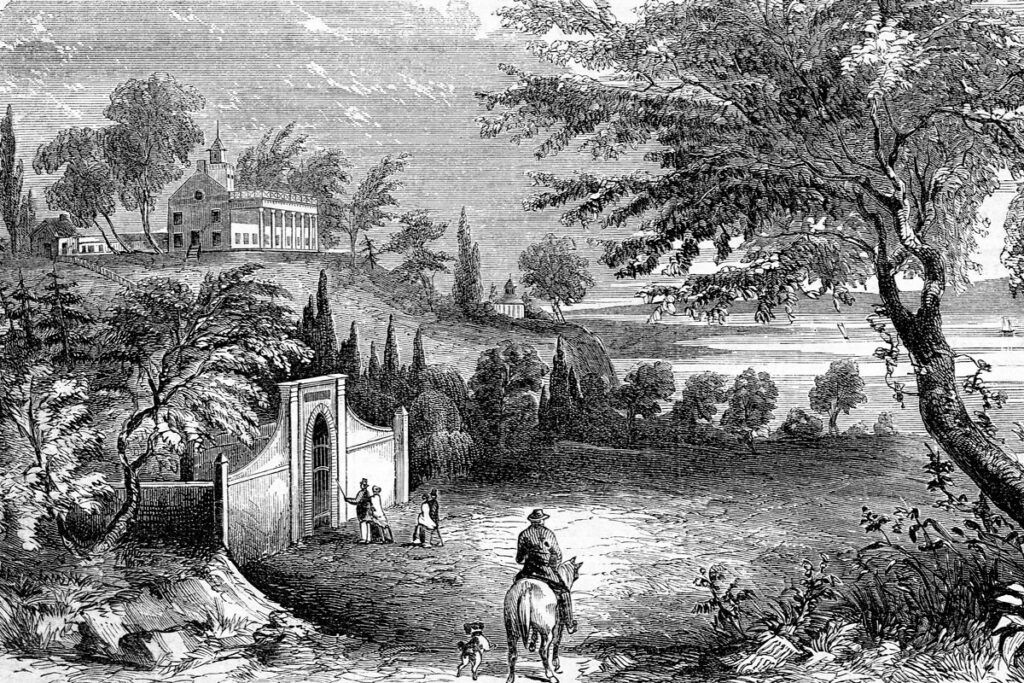
Following a week’s journey from his beloved Virginia plantation Mount Vernon, which saw him feted by residents of every town he passed through, Washington arrived at his new home in what was then the federal capital, New York City, on April 23, 1789. His wife, Martha Washington, who was still tending to business at Mount Vernon, did not join him for another month.
With the president’s safety secured, a joint committee of the Senate and House of Representatives met to hammer out details of where the inauguration would take place, who would administer the oath of office, and seating arrangements. On April 25, Congress adopted the committee’s recommendations for ceremonies to be held five days later.
At sunrise on the determined day of April 30, a military salute was discharged at Fort George near the southern tip of Manhattan. At 9 a.m., church bells sounded throughout the city for approximately half an hour, summoning their congregants for a morning service.
Meanwhile, Washington, who’d had barely any downtime since adjusting to his accommodations in a three-story brick building on Cherry Street, dressed in a Connecticut-made brown broadcloth suit, adorned with gilt buttons engraved with the arms of the United States, as he awaited the military procession that would escort him to Federal Hall on Wall Street.
The escorts arrived around noon and set off with the president in his coach about half an hour later. Numbering some 500 men in total, the procession included two companies of grenadiers, a company of light infantry, members of the Senate and House committees, and the Spanish and French ministers.
Within 200 yards of Federal Hall, the procession split into lines on either side of the street, its participants presenting arms and lowering flags as Washington and his party passed between them on foot and entered the federal building.
Inside the Senate Chamber, Washington was greeted by his vice president, John Adams, and members of both the Senate and House of Representatives. At about 2 p.m., Adams informed Washington that it was time to take the oath of office, and the gathered congressmen escorted the president to a canopy-covered balcony decorated with red and white curtains.
Before a crowd of spectators gathered on the streets below, and on the roofs and balconies of neighboring buildings, Washington placed his right hand on an open Bible supplied by St. John’s Masonic Lodge of New York and repeated the oath of office administered by the chancellor of New York, Robert R. Livingston. After the president finished by kissing the Bible, Chancellor Livingston turned to the crowd and ignited a celebratory roar by proclaiming, “It is done; long live George Washington, president of the United States.”
Washington Delivered a Low-Key but “Touching” Address
With all elected representatives back in the Senate Chamber, Washington stood before them to read the nation's first presidential address. The speech was originally written with the help of his aide David Humphreys, but Washington ultimately eschewed that lengthy draft in favor of a far shorter version crafted by James Madison.
With his usual self-effacing manner, the president revealed his feelings of inadequacy over his ability to handle the role of president, and requested no payment for his services. Still, he left no doubt about his grasp of the tasks that faced the country in the days to come: "The preservation of the sacred fire of liberty and the destiny of the republican model of government are justly considered as deeply and perhaps finally staked on the experiment entrusted to the hands of the American people," he said.
To the distinguished figures present, the man of the moment seemed surprisingly nervous. Massachusetts Representative Fisher Ames noted the president's manner as "grave, almost to sadness; his modesty, actually shaking; his voice deep, a little tremulous, and so low as to call for close attention." But the congressman also described it as a "very touching scene," the address producing "emotions of the most affecting kind upon the members."
Afterward, Washington, Adams, and the assembled congressmen proceeded to St. Paul's Chapel for a service overseen by Reverend Samuel Provoost, the episcopal bishop of New York and chaplain to the Senate.
The Celebrations Concluded With Fireworks Over Manhattan
After dining alone at the Presidential Mansion, Washington again journeyed out to watch a show of fireworks from the homes of Chancellor Livingston and his old Revolutionary War comrade Henry Knox. Boston merchant John May described the fireworks over Lower Manhattan as "well executed" and "greeted with tumultuous applause," but he seemed especially impressed by the lighting displays of various buildings.
"The Spanish Ambassador's house was illuminated so as to represent Wisdom, Justice, Fortitude, Sun, Moon, Stars, Spanish Arms, etc.," May wrote in a letter the following day. "Federal Hall also presented a fine appearance. The likeness of our Hero [Washington], illuminated, was presented in the window of a house, at a little distance. The best likeness I have yet seen of him, so much like him that one could hardly distinguish it from life — excepting for the situation, over a beer-house, a place he never frequents."
At about 10 p.m., the tired president retreated to his carriage in an attempt to return to his new home. However, the crowded streets forced him to abandon his ride and complete his task on foot, a sure sign that there would be little time to rest with the world watching his every move as the first president of the United States of America.
Credit: Consolidated News Pictures/ Archive Photos via Getty Images
Author Tony Dunnell
December 5, 2024
Love it?62
Throughout the history of the United States presidency, the office has been the recipient of all manner of curious and unexpected gifts from both foreign dignitaries and American citizens. And we’re not just talking flowers and boxes of chocolates. Some gifts have been extravagant beyond belief, such as the numerous jewel-encrusted swords, goblets, and crowns presented to various U.S. presidents. Others have been less lavish but equally fascinating, whether for their uniqueness or for being downright strange.
Due to the Foreign Gifts and Decorations Act of 1966, most of these treasures are not kept by the president — many are transferred to the National Archives by the Gift Unit (Grinch-like as that may be) — but it’s the thought that counts. Here are six of the most interesting and bizarre gifts given to U.S. presidents.
One of the cheesiest gifts ever presented to a U.S. president must be the one given to Thomas Jefferson on New Year’s Day in 1802. The citizens of Cheshire, Massachusetts, gave the president a gigantic wheel of cheese, dubbed the “mammoth cheese,” which measured more than 4 feet in diameter and weighed an estimated 1,235 pounds. Given to Jefferson in honor of his republican ideals and his support of religious liberty, the cheese was engraved with the words, “Rebellion to tyrants is obedience to God” — an incongruously weighty inscription to put on a dairy product, no matter its size.
A Painting by Winston Churchill Given to Franklin D. Roosevelt
In 1943, after attending a conference of world leaders in Marrakech, Morocco, British Prime Minister Winston Churchill created an oil-on-canvas painting of the Kutubiyya Mosque. He then gifted the painting to U.S. President Franklin D. Roosevelt, who was also attending the conference, as a symbol of the special relationship between the two allied nations. “Tower of the Koutoubia Mosque”was the only painting known to have been done by Churchill — a talented and prolific amateur painter — during World War II. The painting, regarded as Churchill’s most important work, was later acquired by the actress Angelina Jolie, who then sold it at auction in 2021 for £8.2 million (more than $10 million) — a record for a Churchill painting.
Two grains of rice may sound like a pretty awful gift, but that’s exactly what President Richard Nixon found when he opened a plush blue velvet box that had arrived from the Pakistani artist S. Nabi Ahmed Rizvi. Alongside the pair of grains was a magnifying glass. When Nixon examined the rice more closely through the glass, he discovered that the artist had painted portraits on each grain: one of Nixon as a young man in the Navy, and one of Nixon as president. The portraits later took center stage in the 1993 art exhibition “To the President: Folk Portraits by the People,” presented by the National Portrait Gallery.
It’s not every day that one receives a giant, venomous, flesh-eating lizard as a gift, but that’s exactly what happened to President George H.W. Bush in 1990. He was gifted a Komodo dragon, named Naga, by President Suharto of Indonesia. Having a potentially aggressive, 9-foot-long, 200-pound lizard roaming the corridors of the White House wasn’t ideal, so Bush regifted Naga to the Cincinnati Zoo, where it lived a highly productive life, fathering 32 offspring that were given to other zoos.
In 2003, President George W. Bush was given a rather strange gift from the Argentine President Néstor Kirchner: 300 pounds of raw lamb meat. Bush, being a rancher, would surely have appreciated the meaty offering, especially as Argentina is known for producing exceptional beef and lamb. But once the president had accepted the gift on behalf of the nation, the lamb was passed along to the General Services Administration, as it was too perishable for housing at the National Archives. First Lady Laura Bush was also presented with a gift: a far more practical Patagonian wool poncho.
President Barack Obama received plenty of intriguing gifts from foreign dignitaries, including a gem-encrusted horse sculpture (worth almost half a million dollars) from King Salman of Saudi Arabia and a Ping-Pong table from British Prime Minister David Cameron. But he received arguably his strangest gift while visiting Australia’s tropical north — a region known for its crocodiles — in 2011. Obama was presented with free crocodile insurance, worth about $10 Australian dollars, which would have paid out $50,000 Australian dollars (around $32,000 USD) if the president had been eaten by a crocodile. After receiving the unique gift, Obama jokingly declared, “My wife, Michelle, will be relieved.”
Advertisement
Advertisement
All the U.S. Presidents, in Order of How Long They Served
The length of a U.S. president’s term can vary widely; many have served for two full terms while others’ time in office was cut short by circumstance or tragedy. From the shortest term of just one month, held by William Henry Harrison, to Franklin D. Roosevelt’s unprecedented 12 years in office, each presidency reflects the challenges of its era. This list of how long every U.S. president spent in office offers a unique view of the continuity and change in American leadership.
Only one U.S. president has ever served for more than two full terms. Franklin D. Roosevelt’s unique tenure was driven by the extraordinary challenges of his time. Elected initially in 1932, Roosevelt led the country through the Great Depression, implementing the ambitious economic and social reforms known as the New Deal to address widespread poverty and unemployment. He ran for reelection in 1936 and won in a landslide victory as the public continued to support his efforts to address the economic crisis. In 1940, with World War II looming, he successfully ran for a third term. He was reelected yet again in 1944 with the country at war, though he died less than three months after being inaugurated for his fourth term. The 22nd Amendment was ratified in 1951, limiting future presidents to two terms, effectively preventing any future leader from serving as long as FDR did.
– Franklin D. Roosevelt: 12 years, 1 month (4,422 days)
The following presidents served two full terms, each holding office for eight years. Before the 22nd Amendment formally established term limits for the role, most presidents chose to follow the precedent set by George Washington, who stepped down voluntarily after two terms to uphold democratic principles. Between 1796 and 1940, only four two-term presidents attempted to pursue a third term — Ulysses S. Grant, Grover Cleveland, Woodrow Wilson, and Theodore Roosevelt — but they were unsuccessful in gaining their party’s support.
- Thomas Jefferson: 8 years (2,922 days) - James Madison: 8 years (2,922 days) - James Monroe: 8 years (2,922 days) - Andrew Jackson: 8 years (2,922 days) - Ulysses S. Grant: 8 years (2,922 days) - Grover Cleveland: 8 years (2,922 days) - Woodrow Wilson: 8 years (2,922 days) - Dwight D. Eisenhower: 8 years (2,922 days) - Ronald Reagan: 8 years (2,922 days) - Bill Clinton: 8 years (2,922 days) - George W. Bush: 8 years (2,922 days) - Barack Obama: 8 years (2,922 days) - George Washington: 8 years (2,865 days)
Some presidents served more than four years, but did not complete two full terms due to a variety of circumstances. Abraham Lincoln and William McKinley were assassinated during their second terms, while Harry S. Truman, Theodore Roosevelt, Calvin Coolidge, and Lyndon B. Johnson initially assumed the presidency midterm after the deaths of their predecessors, and were later elected to another term. Richard Nixon, on the other hand, resigned during his second term amid the Watergate scandal, making him the only president to voluntarily step down from office.
- Harry S. Truman: 7 years, 9 months (2,840 days) - Theodore Roosevelt: 7 years, 5 months (2,728 days) - Calvin Coolidge: 5 years, 7 months (2,041 days) - Richard Nixon: 5 years, 6 months (2,027 days) - Lyndon B. Johnson: 5 years, 2 months (1,886 days) - William McKinley: 4 years, 6 months (1,654 days) - Abraham Lincoln: 4 years, 1 month (1,503 days)
Credit: Library of Congress/ Archive Photos, Archive Photos via Getty Images
One Full Term
These presidents completed a single four-year term in office, but did not serve a second term, whether by choice or defeat. Their time in office was often marked by the political challenges of those four years, or they faced strong opposition to their reelection bids. Some presidents, such as John Quincy Adams, who served nine terms in Congress after his presidency, and Jimmy Carter, who was awarded the Nobel Peace Prize for his dedication to humanitarian work, are remembered for their post-presidential contributions as much as their time in the Oval Office. For each of these one-term presidents, the brevity of their tenure left a distinct mark, highlighting the unpredictable nature of American politics.
- John Quincy Adams: 4 years (1,461 days) - Martin Van Buren: 4 years (1,461 days) - James K. Polk: 4 years (1,461 days) - Franklin Pierce: 4 years (1,461 days) - James Buchanan: 4 years (1,461 days) - Rutherford B. Hayes: 4 years (1,461 days) - Benjamin Harrison: 4 years (1,461 days) - William Howard Taft: 4 years (1,461 days) - Herbert Hoover: 4 years (1,461 days) - Jimmy Carter: 4 years (1,461 days) - George H.W. Bush: 4 years (1,461 days) - Donald Trump: 4 years (1,461 days and counting; began a second, nonconsecutive term in January 2025) - John Adams: 4 years (1,460 days) - Joe Biden: 4 years (currently serving; will be 1,461 days at the end of term)
These presidents served less than a full term due to a range of circumstances, including assassination, fatal illness, resignation, or unsuccessful efforts to secure their own term after assuming office following the death or resignation of their predecessor. Despite their brief service, they all made notable contributions during their time in office, and those who stepped in for a predecessor helped maintain the stability and continuity of the nation’s leadership during times of sudden transition.
- John Tyler: 3 years, 11 months (1,430 days) - Andrew Johnson: 3 years, 10 months (1,419 days) - Chester A. Arthur: 3 years, 5 months (1,262 days) - John F. Kennedy: 2 years, 10 months (1,036 days) - Millard Fillmore: 2 years, 7 months (969 days) - Gerald Ford: 2 years, 5 months (895 days) - Warren G. Harding: 2 years, 4 months (881 days) - Zachary Taylor: 1 year, 4 months (492 days) - James A. Garfield: 6 months, 15 days (199 days) - William Henry Harrison: 1 month (31 days)
Being the president of the United States is no easy task. The day-to-day responsibilities and weighty decisions of the presidency are enough to turn anyone gray, and the role typically draws more criticism than praise. With so much pressure involved, even the most dedicated commander in chief needs some respite from the job. It’s only natural, then, that throughout the history of the White House, the private lives of American presidents have been filled with a wide array of hobbies.
Some of these activities have been fairly common, such as reading, horseback riding, fishing, painting, and of course, golf. Others, however, are not necessarily what you’d expect from a person holding the highest office in the land. Here are some of the more surprising hobbies of U.S. presidents.
Beyond extensive reading and writing, John Quincy Adams enjoyed a wholesome morning routine in which he would wake between 4 a.m. and 5 a.m. and set off on a 2-mile walk. In the summer months, this walk included taking a daily dip in the Potomac River, wearing nothing apart from his large sideburns. (Adams was the first U.S. president to have facial hair.) According to legend, a female reporter named Anne Royall was keen to talk with the president, so she went to the river while he was bathing in the buff, sat on his clothes, and refused to move until he granted her an interview. This likely never occurred, however — the oft-repeated story unfortunately has no basis in fact.
Before he became president, Abe Lincoln was a dedicated wrestler. The 6-foot-4 future president may have fought as many as 300 matches, and legend has it he lost only once. For his efforts, he was posthumously inducted into the Wrestling Hall of Fame in 1992, as an "Outstanding American" in the sport. Honest Abe gave up wrestling before he became president in 1861, after which he was more often found reading and telling jokes. After moving into the White House, Lincoln’s wife, Mary Todd Lincoln, was asked about her husband’s hobbies, to which she simply replied: “cats.” Lincoln became the first president to keep cats as pets at the White House when he was given two kittens that he named Tabby and Dixie, and by most accounts he was entirely devoted to them.
Calvin Coolidge was roundly mocked by opponents and the press when news broke of his peculiar hobby: riding a mechanical hobby horse. The electric horse — a barrel-shaped contraption made of wood, metal, and leather — was installed in the White House for the president’s exercise. Coolidge, who loved riding actual horses, became rather fond of the mechanical version. He rode it three times a day both for exercise and as a stress reliever (and, one might assume, for pleasure). The mechanical horse even had two variable gaits: “trot” and “gallop.”
John F. Kennedy Collected Model Ships and Scrimshaw
JFK loved the sea and sailing, a passion reflected in his collection of model ships. He had numerous ships in his personal collection, from Chinese war junks to 18th-century French frigates, some of which were on display in the Oval Office. He also collected scrimshaw — intricate scrollwork, engravings, and carvings done in bone or ivory, often created by sailors on whaling ships in the 18th and 19th centuries. He kept pieces scattered around the Oval Office, including some on his desk. His favorite item of scrimshaw was a custom-made piece featuring the presidential seal, given to him as a Christmas gift from his wife, Jacqueline Kennedy, in 1962. When JFK was buried, Jackie Kennedy placed the piece in her husband’s coffin.
During his presidency, Richard Nixon liked to blow off steam by going bowling. He could often be found at the bowling alley in the Old Executive Office Building, across the street from the White House. He later had a one-lane alley built in the White House basement, beneath the North Portico entrance. In 1971, The New York Times reported that Nixon had an average bowling score of 165 and a respectable high score of 229.
Credit: Steve Liss/ The Chronicle Collection via Getty Images
Bill Clinton Is Obsessed With Crossword Puzzles
Most people know that Bill Clinton plays the saxophone, a talent he famously demonstrated on The Arsenio Hall Show. But the 42nd president also has a more sedate hobby: crossword puzzles. In 2002, he wrote a letter to Will Shortz, the editor of the renowned New York Times puzzle, saying, “Keep the crosswords coming. Even when I can’t finish them, they’re the only part of the Times that guarantees good feeling!” Later, in 2017, he helped create a crossword puzzle for the Times. “When I was president,” he once recalled, “I worked no telling how many hundreds and hundreds of crossword puzzles. I find it very relaxing. For a moment, you take your mind off whatever you’re doing.”
Advertisement
Advertisement
Another History Pick for You
Today in History
Get a daily dose of history’s most fascinating headlines — straight from Britannica’s editors.