



Credit: Culture Club/ Hulton Archive via Getty Images
Author Timothy Ott
April 9, 2026
Love it?136
Falling between the heyday of the Western Roman Empire and the onset of the Renaissance, the Middle Ages have an unflattering reputation as something of a backward epoch of human civilization. Wars raged across Europe, serfs toiled in backbreaking service to feudal lords, and diseases wiped out villages with little hope of preventing the next outbreak.
While the negative connotations may not be entirely fair, few would dispute that medieval citizens lived in more primitive conditions than their modern counterparts, and that the day-to-day necessities for survival were markedly different. As such, the era produced certain professions that filled important needs of the time but seem quite unusual in hindsight. Here are six of the strangest.
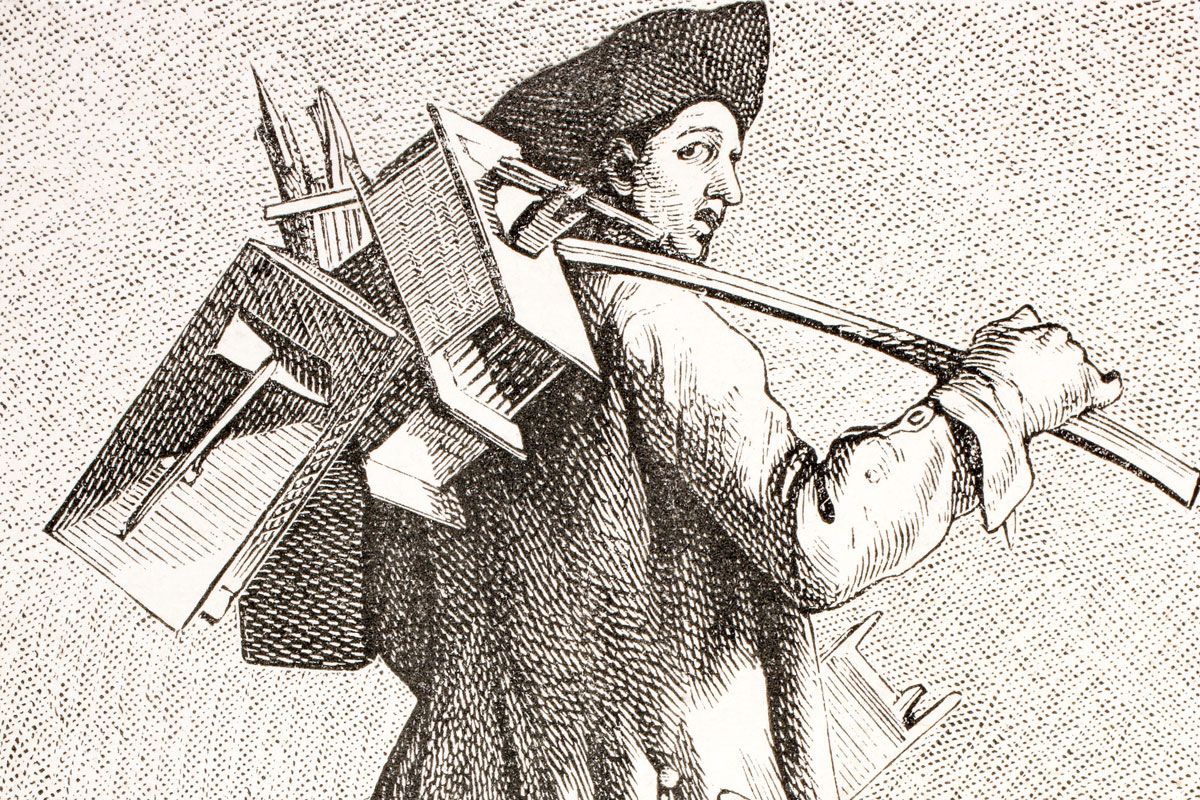
Although the widespread belief that rats were the main carriers of the bubonic plague has largely been debunked, these critters nevertheless did spread disease in medieval urban centers and otherwise proved legitimate pests by feasting on food supplies. Thus gave rise to the era’s version of the exterminator, the rat catcher.
Known to travel from town to town with a few of their rodent victims suspended from a stick, skilled rat catchers deployed methods that included setting traps in infested areas and unleashing dogs or ferrets on their quick-footed targets. It’s worth noting that while rat catchers were in demand in the Middle Ages, the profession reached its pinnacle in the crowded streets of Victorian London, with practitioners such as Jack Black achieving renown for their prowess in the field.
Regularly used by the Romans before fading from the public record, the treadwheel crane enjoyed a revival during the Middle Ages as a means for constructing the magnificent cathedrals and palaces that still mark the European landscape today. This device was operated by one or two people walking in what was essentially a giant hamster wheel, with a rope that wound around the wheel axle used to lift stone blocks weighing thousands of pounds.
Contrary to what may seem intuitive, the job of the treadwheel worker was not as physically taxing as, say, that of the hod carrier who bore heavy loads as they scaled the scaffolding of a developing structure. Furthermore, this particular task provided a source of employment for blind people, who wouldn't be spooked by working at the great heights these cranes sometimes reached. Nevertheless, the heavy wheel could be difficult to control, and serious injury could result if it malfunctioned or the operator had the misfortune of losing their balance.
Advertisement
Advertisement
Credit: Culture Club/ Hulton Archive via Getty Images
Pardoner
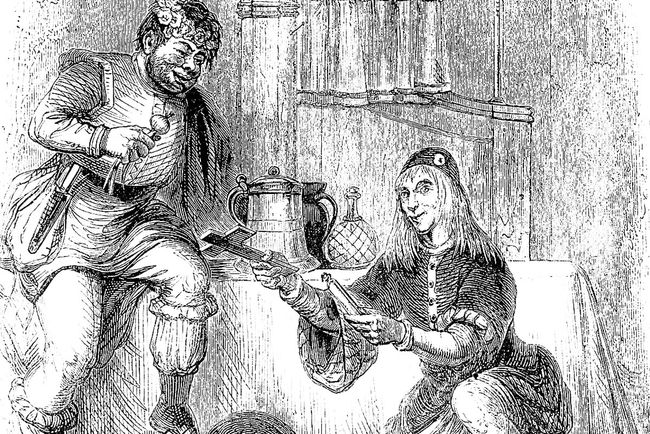
Leveraging the concept of indulgences, in which a practitioner of Catholicism receives a lesser punishment for sins by demonstrating acts of atonement or providing a monetary donation, the medieval Catholic Church began assigning pardoners to essentially serve as door-to-door salesmen of these spiritual boosters. While this arrangement suited the needs of both parish and parishioners, it also enabled a system in which corrupt officials and frauds padded their pockets by doling out as many indulgences as possible.
The infamy of this profession prompted Geoffrey Chaucer to write about its contradictions in a chapter in The Canterbury Tales, and reformist Martin Luther later decried the system as a basis of his Ninety-five Theses. It would be a half-century, however, before Pope Pius V eliminated the job market for pardoners by abolishing the sale of indulgences for good in 1567.
While the medieval period didn't offer its inhabitants anything close to the one-stop shopping options of the internet age, it at least provided a convenient solution for those in dire need of simultaneously dealing with a toothache and getting a haircut. The emergence of the barber-surgeon came about after clerics, who handled an array of surgical and medical procedures by the early Middle Ages, were forbidden from drawing blood by the Fourth Lateran Council of 1215. Barbers were trained to pick up the slack due to their experiences with razors, and many became adept at bloodletting, pulling teeth, and even amputation. The proliferation of these practitioners led to the formation of England's barber-surgeon trade guild in 1540, although the special skills required by the medical side of the profession resulted in the separation of these titles by the early 1800s.
“Fulling” is the process by which cloth fibers are condensed and strengthened for transformation into wearable garments, a practice that dates back to at least ancient Egypt and remains in use today. Although it generally involves the folding and mashing of cloth in a soapy liquid, the medieval means for undertaking this activity were somewhat less benign. A medieval fuller was required to stomp around on a cloth pile submerged in a vat of stale urine, which was deemed the rinsing liquid of choice due to its high levels of ammonium salts being ideal for removing grease and softening the fabric. Since the process could take several hours, that meant an extended period of time huffing and puffing and breathing in the fumes from the bodily waste splashing about below.
A medieval court could be entertained by an array of jesters, jugglers, and acrobats, but nestled under that general umbrella of entertainers was a subset of performers who earned a living by breaking wind. Such was the case with an English gentleman known as Roland the Farter, who, according to the 13th-century Liber Feodorum (Book of Fees), regularly performed a dance at King Henry II's annual Christmas pageant that ended with the delivery of “one jump, one whistle, and one fart.”
Roland was rewarded handsomely for his proclivities, receiving a manor in Suffolk and up to 100 acres of land. But lest you think this was just one individual with a distinctly unique skill set, there are also records of a contemporary collection of flatulists, known as braigetori, who were enjoying similar acclaim in Ireland. Indeed, this was a profession that endured even as the Middle Ages gave way to the high-minded civilizations that followed. Joseph Pujol became a celebrity in France in the late 19th and early 20th centuries for his riotous rear-end performances under the moniker of Le Pétomane, while Paul Oldfield, aka Mr. Methane, recently farted his way into Guinness World Records for his lengthy career in the field.
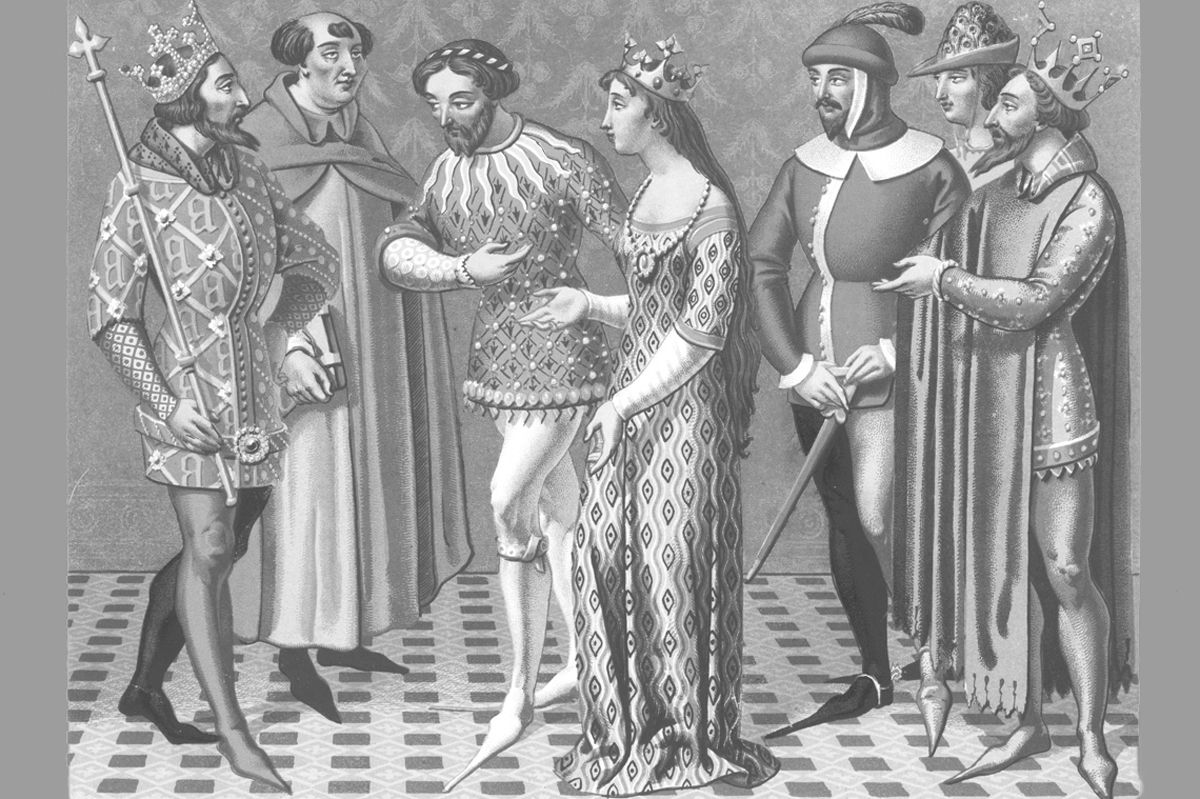
If you could travel back in time to the medieval period, you’d soon see some fashion trends that are a far cry from today’s typical clothing. Depending on what century you arrived in — Europe’s medieval period lasted approximately from the fifth century to the 15th century — you might see an array of fanciful hats, from Robin Hood-style bycockets to towering cone-shaped hennin hats worn by wealthy ladies. Sleeves, too, were particularly flamboyant: Puffed-up bombast sleeves made male biceps look larger, while women of status wore long, hanging bliaut sleeves that trailed to the ground.
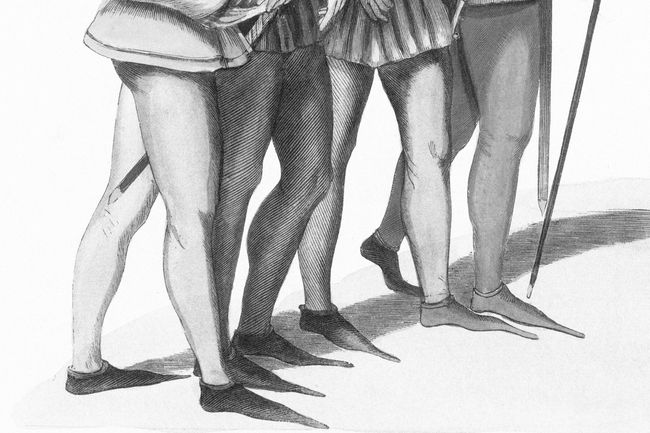
It was certainly an era of weird and wonderful fashion trends, and perhaps none is more peculiar to our modern eyes than the fad of wearing extravagantly pointed footwear. These pointy shoes were known as cracows or poulaines, both names referring to the origin of the footwear in Krakow, Poland, where it first emerged around 1340. The trend spread across Europe during the 14th century, and became particularly in vogue in England following the wedding of King Richard II and Anne of Bohemia in 1382, during which Anne sported a pair of poulaines.
But what was the reasoning behind this fanciful footwear? Why did pointy and highly impractical shoes become all the rage? Here, we consider the rise of cracows, and why this seemingly silly accessory became the style du jour in the late medieval period.
Credit: Florilegius/ Universal Images Group via Getty Images
The Social Hierarchy of Pointy Shoes
Fashion is often about social display; this is true now and was perhaps even more so back in the Middle Ages. Medieval society was highly stratified, and clothing was one of the most obvious ways for a person to demonstrate their social status, whether through towering hats, billowing sleeves, or pointy shoes. When poulaines became popular, it was among the higher classes, who soon found that shoe length could correlate directly with social rank.
Only the nobility and wealthy merchants could afford to purchase such extraordinarily long shoes — and the longer and more costly they were, the more wealth and status they displayed. It was not uncommon for the points to extend 4 inches (10 centimeters) beyond the toe, with the extending area stuffed to keep it rigid. In a text from 1394, a monk from Worcestershire, England, claimed that some people wore shoes with pointed toes “half a yard [45 centimeters] in length, thus it was necessary for them to be tied to the shin with chains of silver before they could walk with them.”
It was very expensive to have such elaborate shoes made, so it was only the lords and, to a lesser extent, ladies of medieval Europe who could afford to wear them. This was especially true for the more lavish — and lengthier — varieties of pointy shoe, which were made by specialist master shoemakers for a pretty penny.
The fact that lengthy poulaines were highly impractical and hard to walk in didn’t seem to bother their fancy owners, who were willing to suffer for fashion. Researchers from Cambridge University found that cases of bunions increased significantly in the late medieval period, and placed the blame squarely with the rise in poulaine shoes.
Pointed shoes weren’t only an ostentatious display of wealth; they were also seen as phallic. According to the London Museum, extravagantly long shoes were favored by young men, some of whom would stand on street corners wiggling their shoes suggestively at people walking by. And if the shoes had bells sewn to the ends of them, it indicated that the wearer was available for intimate acts.
This didn’t please the Catholic Church, which saw the pointy shoes not only as symbols of vanity and excessive pride, but also as a corrupting force that could only lead to deviance and sin. Eventually, there was a crackdown on cracows. As early as 1362 — before Anne of Bohemia had even popularized the shoes in England — Pope Urban V tried to ban them completely. Later, in 1463, the English Parliament under Edward IV passed a law banning anyone lower in rank than lord from wearing shoes with points longer than 2 inches. Anyone found breaking the law could be fined, and cobblers were strictly prohibited from selling overly pointed shoes to people of insufficient status.
All of the controversy made wearing pointy shoes far less fun than it used to be, and by 1475, the poulaines trend was largely at an end. Yet for one spectacular moment in history, people did indeed wear incredibly silly pointy shoes in what was a complex display of status, wealth, misplaced manliness, and the occasional ringing of foot-based bells on street corners.
Credit: duncan1890/ DigitalVision Vectors via Getty Images
Author Bess Lovejoy
January 22, 2026
Love it?26
The concept of feudalism is probably a familiar one if you’ve encountered a medieval fantasy epic: Picture a stone castle overlooking fields of peasants tilling the soil while armored knights ride out at dawn. But what does the term actually mean, and how did feudalism work in practice?
Feudalism is a term used to describe how power, land, and obligation were organized in much of medieval Europe. At its core, it refers to a system in which land was the main source of wealth and political authority, and control of that land was tied to personal relationships of loyalty and service.
In this arrangement, a monarch was considered the ultimate owner of all the land in their kingdom. The ruler granted large estates, called fiefdoms, to nobles in exchange for allegiance and military support. Those nobles could then distribute portions of their land to lesser nobles (such as knights), creating a layered hierarchy of obligation known as vassalage.
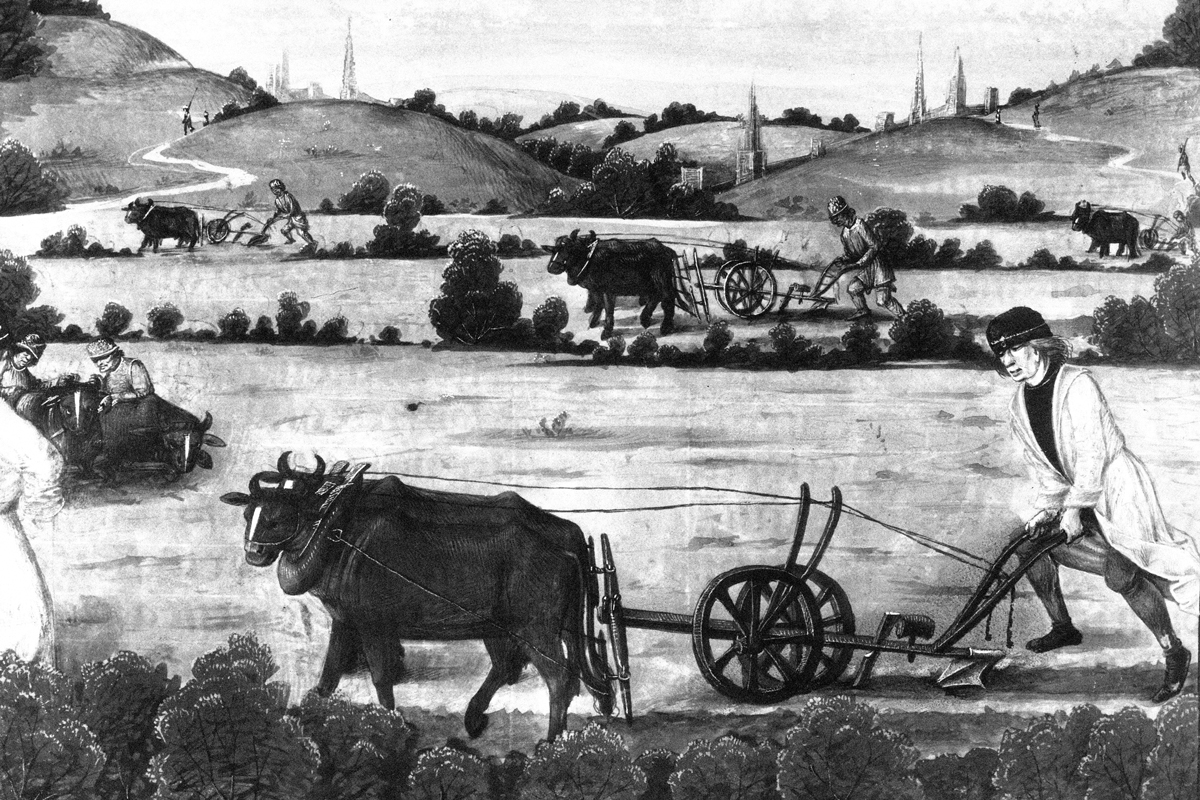
At the bottom of this structure were peasants and serfs, who worked the land and provided labor or goods in return for protection and the right to live on the estate. Power was exercised largely at the local level, rather than through a strong centralized government. For instance, a king might grant land to a duke, the duke to a knight, and the knight would then draw income and labor from the peasants who worked that land, creating a chain of obligation that ran downward while authority flowed upward.
Credit: Hulton Archive via Getty Images
It Started With the Fall of Rome
Europe’s feudal structure developed gradually in the centuries after the collapse of the Western Roman Empire around 476 CE. As Roman authority weakened, Western Europe experienced political fragmentation and repeated invasions by Germanic peoples, whose social structures emphasized personal loyalty to a leader rather than obedience to the laws of a centralized state.
Over time, Roman legal traditions blended with Germanic customs centered on allegiance and service. In an era marked by resourceinsecurity, warfare, and limited state power, people increasingly turned to powerful local lords for protection. In return, they offered these lords labor, military service, or political loyalty, reinforcing the link between landholding and authority.
Despite its association with the Middle Ages, “feudalism” is not a medieval term. The word derives from the Latin feudum, meaning land granted in exchange for service, which was a term used in the Middle Ages to describe a type of property arrangement. But medieval people did not describe their society as “feudal.” It wasn’t until the 16th and 17th centuries that scholars studying medieval legal documents began using the term to explain how land, power, and obligation had seemingly functioned during this period.
By the 18th and 19th centuries, historians and philosophers had expanded the term “feudalism” into a broad model for medieval society (with some differences in interpretation), often depicting it as a rigid hierarchy stretching from monarch to peasant.
Advertisement
Advertisement
Credit: Heritage Images/ Hulton Fine Art Collection via Getty Images
Why Historians Debate the Term Today
Many historians now argue that the notion of feudalism oversimplifies medieval reality. Laws, customs, and power structures varied widely from region to region, and medieval society did not operate under a single, uniform system. For example, in some areas monasteries controlled land, collected rents, and ran courts; in others, particularly urban centers, merchant guilds often held real political influence. Some later scholars also tended to emphasize the importance of landholding arrangements at the expense of other forces that shaped society and daily life, such as trade, the church, and political institutions.
As a result, feudalism is often described as a historiographic construct — a framework created by modern thinkers to impose order on a complex past. Still, the term remains useful as shorthand for a world in which land, loyalty, and power were tightly linked, and political authority was fragmented rather than centralized. In other words, feudalism may not describe a single medieval system so much as a later attempt to explain how society held together, insofar as it did at all during this turbulent period in history.
Credit: Universal History Archive/ Universal Images Group via Getty Images
Author Timothy Ott
October 29, 2025
Love it?53
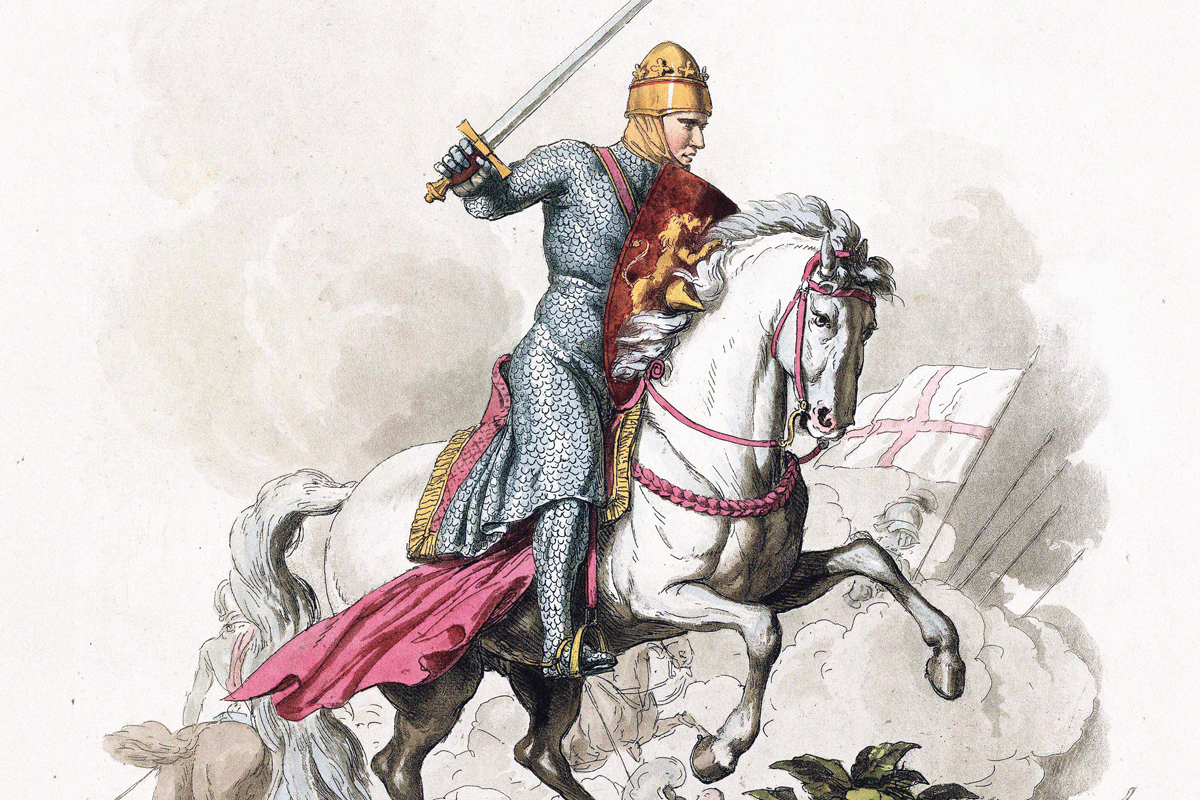
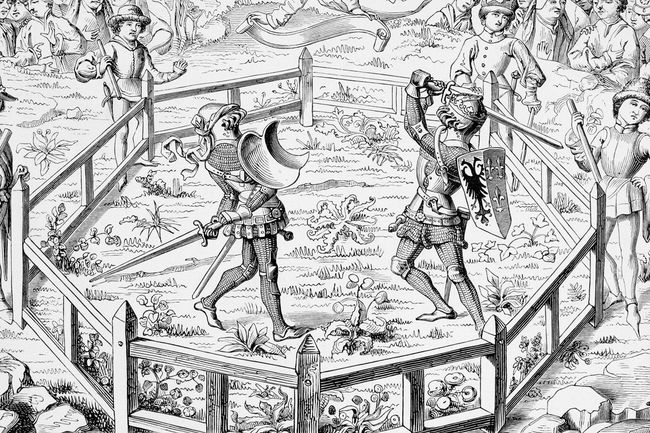
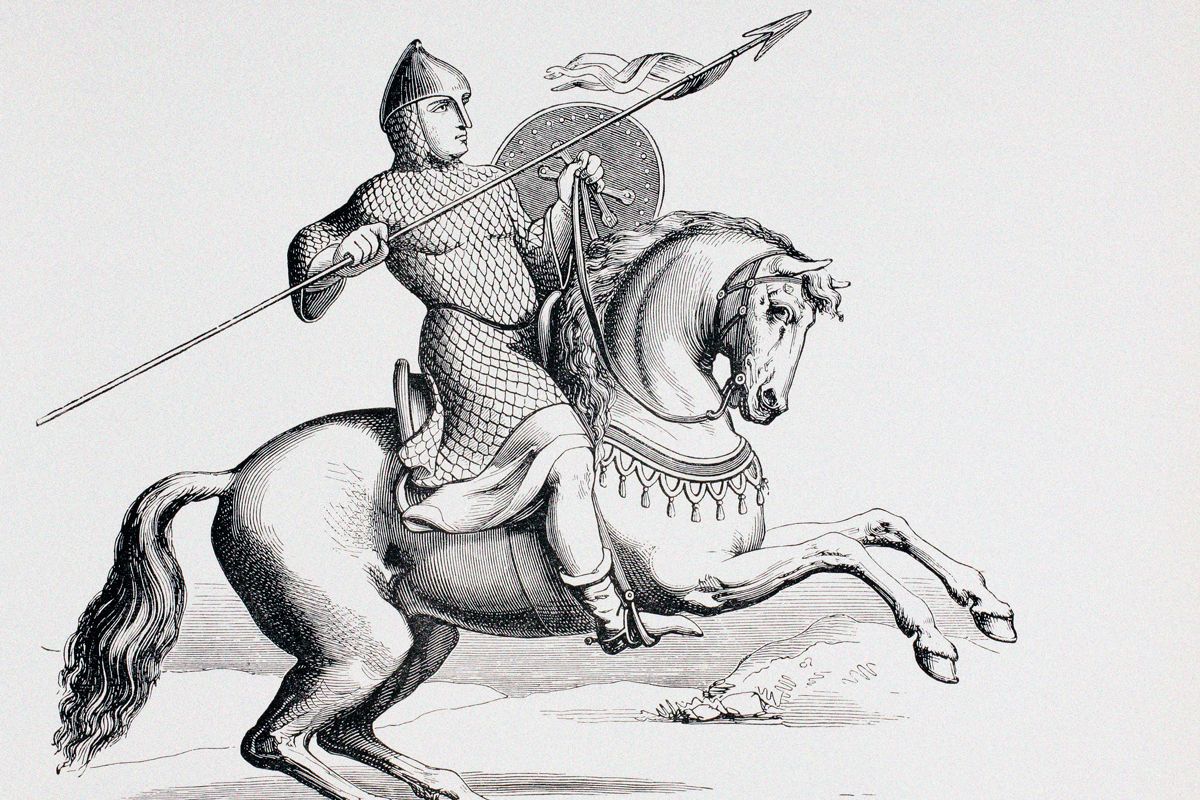
Medieval knights, those armed and armored men (or in some rare cases, women) on horseback, thrived throughout Europe in the days before kings depended on standing armies to enforce their sovereignty. Renowned for their martial prowess and romanticized for their adherence to the moral code of chivalry, these warriors have been celebrated in fiction and the public imagination since the days when they were still an active fighting force.
And yet, like the modern-day movie star or professional athlete, these extolled individuals lived a life that was less glamorous than perception would have us believe. While there were indeed times when a knight would graciously woo a fair maiden or toast to a resounding battlefield victory with fellow soldiers, their hours were often occupied by more mundane activities. Here’s a taste of what everyday life was like for knights in the Middle Ages.
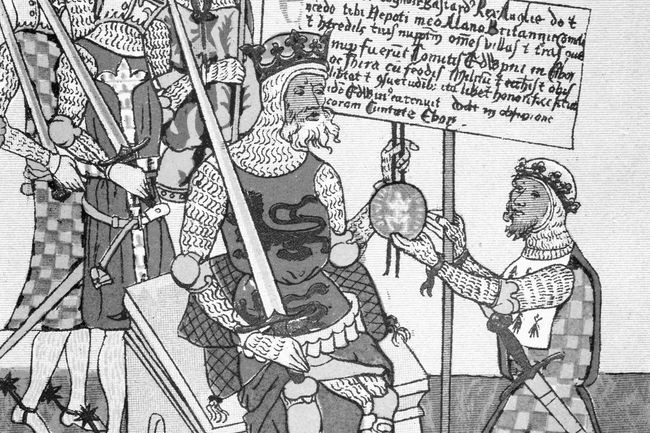
As part of the medieval feudal system, knights often received a plot of land (known as a fief) from a king or another powerful noble in exchange for a period of military service, typically lasting 40 days out of a year. Such service might have required the knight to ride into a pitched battle, where they would attack enemies with a broadsword, lance, or mace. A knight might also have taken part in the siege of a castle or fortified town, or in a raid intended to destroy enemy villages and crops.
Despite the glory that could be attained from battlefield exploits, some knights ducked this service by paying a fee known as scutage. This arrangement worked out well for both sides; a busy knight could avoid having to leave behind their family and affairs, while their lord could use the money to hire mercenaries who were more enthusiastic about fighting.
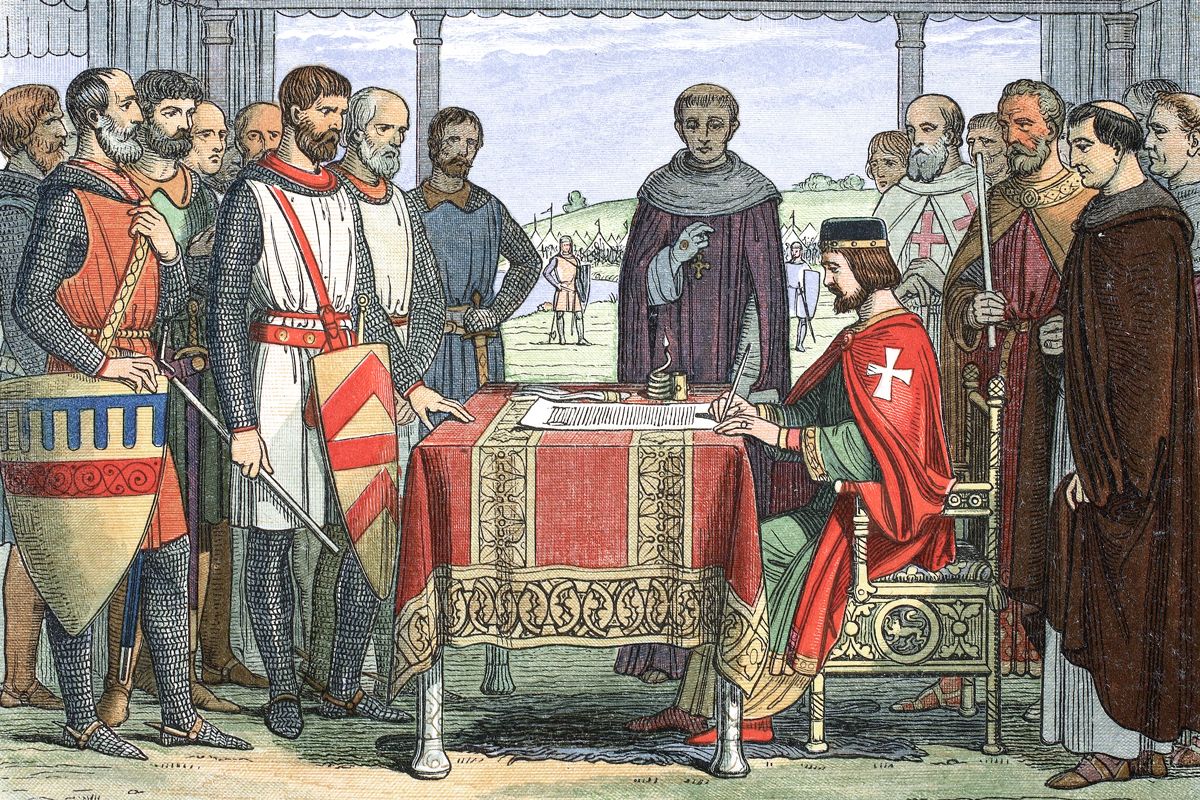
Along with armed protection, a knight was often required to provide civil and administrative duties to their lord. As explained in A Chronicle History of Knights, this may have entailed supplying political or military advice, witnessing the signing of documents, or serving as an ambassador.
A knight might also have served as a judge in a lord’s court or handled judicial responsibilities themselves by mediating disputes between the serfs under their watch and meting out punishment.
Like modern professional athletes, knights had to keep in fighting shape to prepare for the call to battle. As such, they regularly partook in drills to sharpen skills involving weaponry and horsemanship. Training equipment included the pell, a sturdy wooden post that withstood sword strikes, and the quintain, a rotating horizontal arm that served as a target for a thrusted lance. Additionally, activities such as wrestling and grappling helped knights keep their muscles strong and prepare for up-close personal combat.
Another means for demonstrating battle-ready skills came via participation in a tournament. These popular exhibitions typically featured knights competing in two main events. In the joust, two knights rode toward each other on horseback, each seeking to knock their opponent to the ground with a lance. In the melee, participants split into two teams and attacked each other in a massive brawl, with blunted weapons and designated neutral zones being the only real differences between these mock skirmishes and the real ones.
A strong performance could result in a financial windfall for a knight, in the form of the armor, horse, and a ransom from the opponent "captured" in a melee. A low-ranking knight could also impress one of the powerful nobles in attendance and wind up with a more prominent station in life. Conversely, an unsuccessful knight could lose a lot of money or sustain a serious injury in these exhibitions.
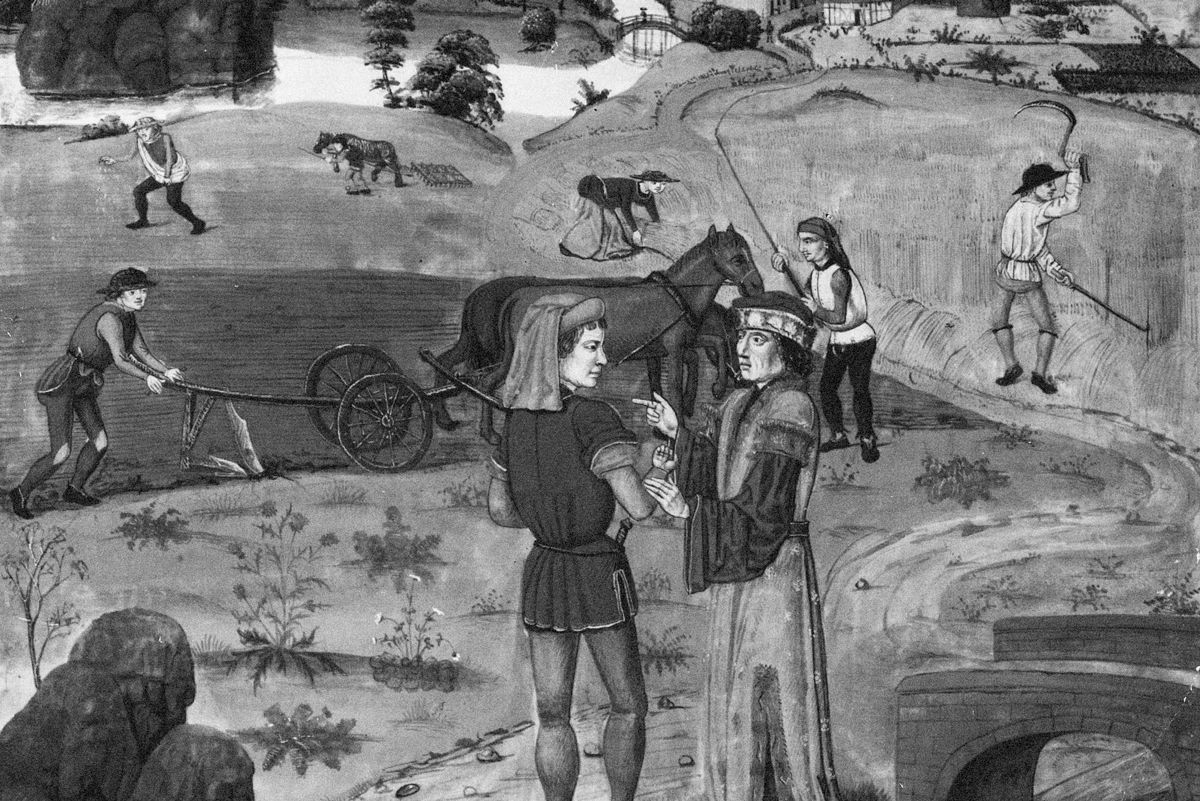
According to Life of a Medieval Knight, a large chunk of the fief-holding knight's time was devoted to land management. While actual field work was the jurisdiction of the peasant laborers, the knight ensured that crops were planted and harvested on time, that livestock were properly attended to before slaughter, and that income-generating facilities such as mills and bakeries were operating smoothly.
Such oversight was crucial, as a knight depended on a high level of production from their holdings to meet the expenses of their position. By the 15th century, a set of armor cost a quarter of a knight's annual income, while a reliable warhorse could eat up an entire year's worth.
Religion played a prominent role in the life of the knight. Many of these warrior members of the nobility had younger siblings who pursued careers as men and women of faith, and Christianity took an increasingly prominent role in official knight dubbing ceremonies in Europe as the Middle Ages progressed.
In turn, a respectable knight displayed their piety by regularly attending church. Many supported the church by sponsoring feasts and celebrations to mark important Christian holidays such as Christmas or Easter, or by supplying land and funds for infrastructure improvements.
Some knights joined one of the religious military orders, which required followers to adhere to monastic vows of poverty, chastity, and obedience. Among the better-known orders were the Knights Templar, which formed in the 12th century with the mission of protecting Christian pilgrims to Jerusalem, and the Knights Hospitallers, which surfaced around the same time and was devoted to providing shelter and medical care for travelers.
Of course, all work and no play makes a knight a dull boy, and many enjoyed the chance to have some fun when opportunity allowed. One popular form of recreation was hunting, which doubled as a social event with family members, other nobles, and servants joining the efforts to track down wild boar and deer. The hunt also enabled the knight to demonstrate lessons learned in falconry, a favorite pastime of medieval nobility. Carrying a falcon or hawk on a gloved wrist, the owner would send their prized bird in pursuit of smaller prey with the flick of their arm.
Even with the onset of darkness or cold weather, the knight had options. Those seeking to scratch a competitive itch could focus on games of chess or backgammon. Others could enjoy the pleasures of reading, perhaps a tale about a gallant knight of yore such as Lancelot or Gawain, or take in the music and poetry provided by a traveling minstrel.
The Middle Ages weren’t just shaped by monarchs and wars — they were lived by everyday people whose names appear in the records they left behind. Parish registers, royal charters, tax rolls, and literature give us a glimpse into the history of common names in medieval England and other parts of Europe and what they meant to the people who carried them.
Some of the most valuable insights about what people were called, and why, come from medieval books created specifically to record names. One example is the local Liber Vitae (Latin for “Book of Life”), which listed individuals — often clergy or benefactors — remembered in the prayers of religious communities. These books were relatively rare and typically associated with major monastic centers in England, such as Durham and Winchester, where they served both spiritual and administrative purposes. TheDurham Liber Vitae, which was updated over a span of 700 years, documents a wide variety of Anglo-Saxon and Norman names.
Other sources of medieval names, such as the 14th-centuryYork Registers, document naming trends among the clergy and nobility. Together with legal records and monastic rolls, these texts reveal how names reflected faith, status, region, and tradition. The names below give us a look at how people in the Middle Ages expressed their religious beliefs, honored their ancestors, and signaled their social standing — all through the names they gave their children.
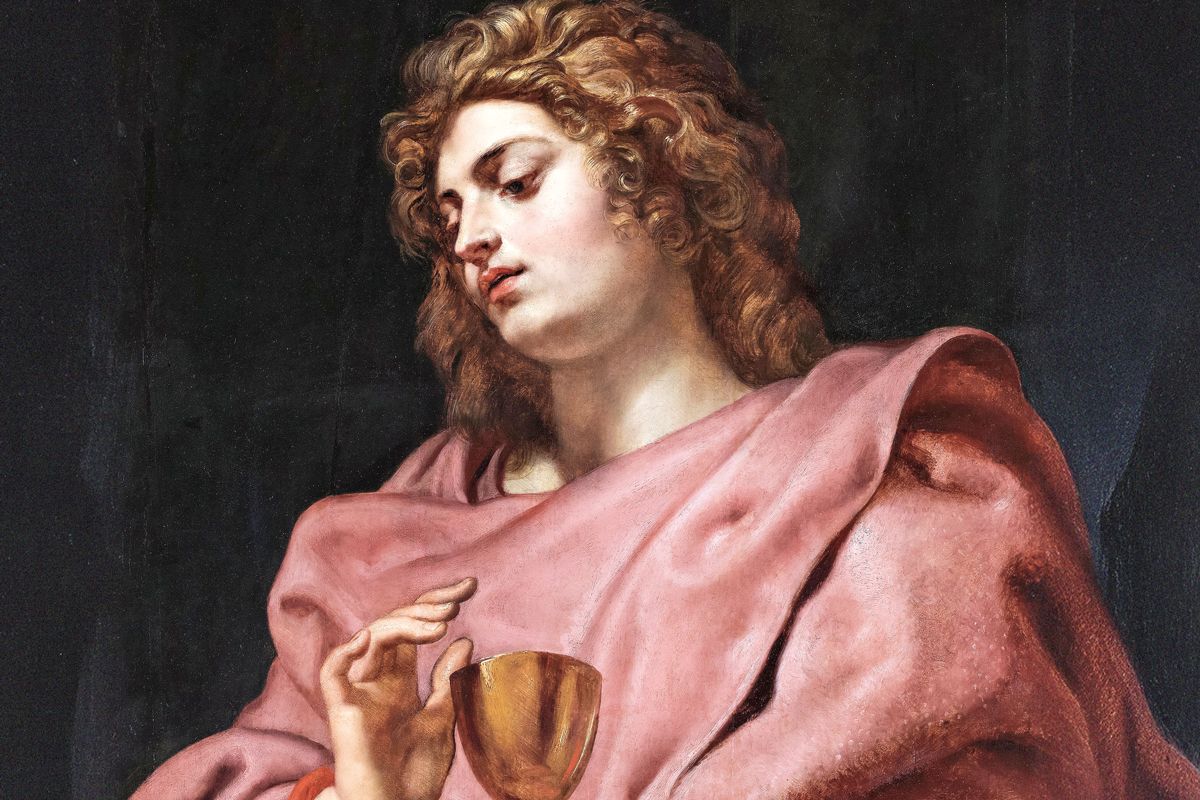
The spread of Christianity throughout medieval Europe had a tremendous influence on naming practices. Biblical names and those honoring saints were popular — and in many regions, they were even required for baptism. Here are some of the most common examples.
John John, the Latin form of the Greek name Joannes, was one of the most widely used male names in medieval Europe. It originates from the Hebrew name Yochanan, meaning “God is gracious,” and gained prominence through early Christian texts and the popularity of biblical figures such as John the Baptist and John the Apostle. The name was embraced by kings, popes, clergy, and commoners, making it a universal choice across social classes. There were many variations of this popular medieval name, including Johan (Germanic and Scandinavian regions), Jean (French), Giovanni (Italian), and Juan (Spanish).
Thomas Thomas, the Greek form of the AramaicTa’oma’, meaning “twin,” became a common name throughout medieval Europe due to its biblical roots — most notably St. Thomas the Apostle. Its popularity grew further after the 12th-century martyrdom of St. Thomas Becket, archbishop of Canterbury. The name was used widely by both clergy and commoners. Medieval variations included Tommaso (Italian), Tomás (Spanish), and Thomasse (French).
Margaret Margaret was a popular name for girls across medieval Europe. It originates from the Greek margaritēs, meaning “pearl,” and entered Latin as Margareta through early Christian usage. The name was associated with purity and virtue, especially due to the widespread veneration of St. Margareta of Antioch and St. Margaret of Scotland. Some of the medieval variations of this beloved name included Marguerite (French), Margherita (Italian), Margarita (Spanish), Margarethe (German), and Margit (Hungarian).
Agnes Agnes comes from the Greek hagnē, meaning “pure” or “chaste.” It was a classic name among Christian families, inspired by St. Agnes of Rome, a young martyr celebrated for her steadfast faith and innocence. Her story made the name especially popular among parents seeking a model of virtue for their daughters. Medieval variations included Ines (Spanish and Portuguese), Agnès (French), and Agnese (Italian).
Throughout the Middle Ages, warriors and kings provided naming inspiration, reflecting ideals of power, bravery, and nobility. These names were chosen not just for their meanings, but also to honor heroic figures and royal lineage, shaping the way individuals were perceived in society.
William William rose to prominence after the Norman Conquest of 1066, thanks to William the Conqueror. It derives from the Germanic name Willahelm, meaning “resolute protector.” The name became a symbol of power and legitimacy throughout Norman-ruled lands. There were many medieval variations, including Guillaume (French), Wilhelm (German), Guilherme (Portuguese), and Guglielmo (Italian).
Richard Richard, from the Latin Ricardus, was a strong and noble name meaning “brave ruler.” It originates from the Old High German Ricohard, combining ric (meaning “power, ruler”) and hard (“brave, hardy”). Its popularity soared due to figures such as Richard the Lionheart, whose legacy of leadership and valor made the name especially popular. Medieval variations included Richart and Rikard in the French and Germanic regions.
Henry Henry, from the Latin Henricus, was a royal favorite throughout medieval Europe. It comes from the Old High German name Heimirich, meaning “home ruler.” A name popular among future kings and high-ranking nobles, it conveyed authority and stability. Some medieval variations included Heinrich (German), Henri (French), Enrique (Spanish), and Enrico (Italian).
Geoffrey Geoffrey, from the Latin Galfridus, was a distinguished name of Norman origin. Its roots lie in the Germanic Gaufrid or Walfrid, meaning “God’s peace.” Though less common today, the name Geoffrey (and its variations) was widely used in medieval records and literary circles, largely due to the influence of the Welsh cleric Geoffrey of Monmouth, whose writings helped popularize the name and its legendary associations, particularly with the Arthurian tales. Medieval variations included Geoffroi (French), Goffredo (Italian), Gofraid (Old Irish/Scottish), and Jofré (Catalan).
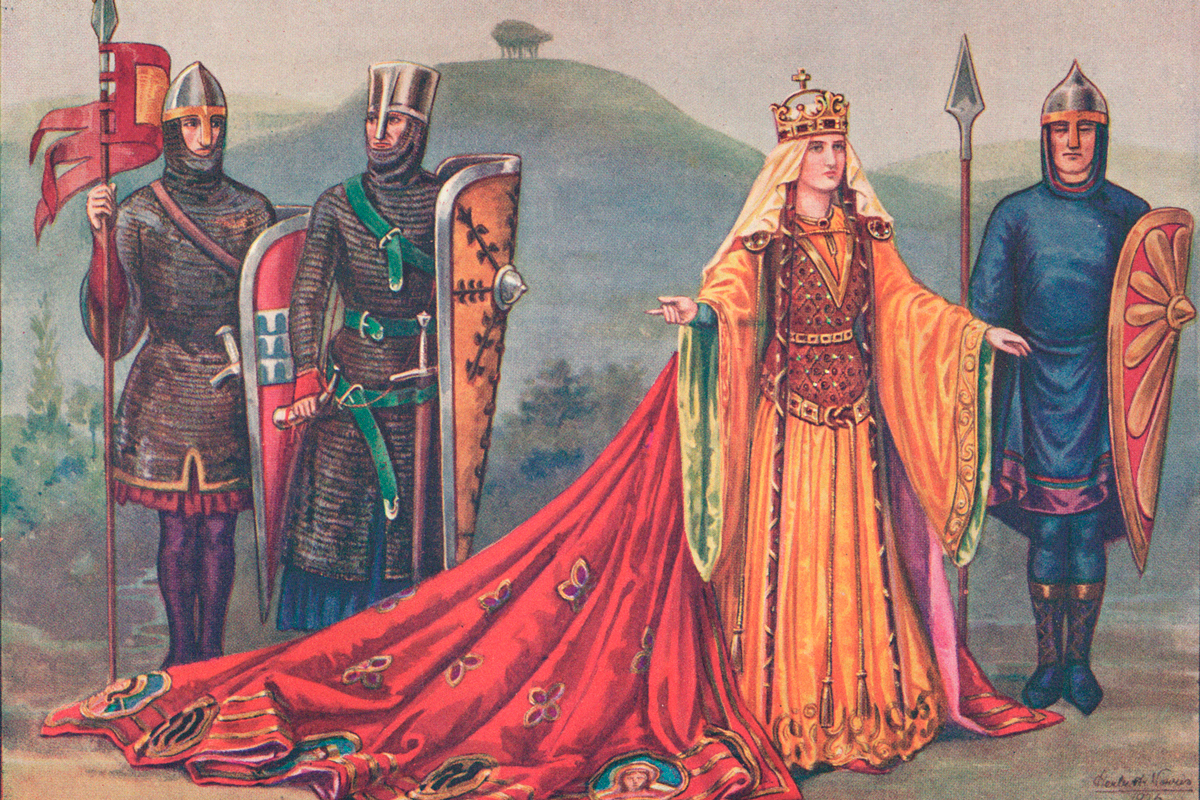
Though women were often excluded from political power, many female names during the Middle Ages reflected strength and elegance. Several prominent women of the era, whose names were closely tied to royal courts and political influence, helped shape naming trends that persist to this day.
Mathilda Mathilda (or Matilda) comes from the Latin Matildis, which traces back to the Germanic elements maht (“might”) and hild (“battle”), meaning “mighty in battle.” The name was widely used among medieval royalty and nobility, notably by Empress Matilda, daughter of Henry I of England and a central figure in the 12th century. It conveyed strength and high status, making it a favorite in aristocratic circles. Medieval variations included Matildis (Latin), Mahaut (Old French), and Mechthild (German).
Eleanor Eleanor, derived from the earlier Alienor, rose to prominence in medieval Europe following the fame of Eleanor of Aquitaine, queen of both France and England in the 12th century. The name came to symbolize noble grace and royal authority. Its origin is likely linked to the Provençal name Aliénor, possibly a form of Helen, though its exact roots remain uncertain. Eleanor became widely used across France, England, and parts of the Iberian Peninsula. Medieval variations included Aliénor (French), Alianor (Old French), and Ellinor (Middle English).
Alice Alice, from the Old French Aalis, traces its roots to the Old High German name Adalheidis, meaning “noble kind.” Brought to England by the Normans, Aelis was favored among the aristocracy and frequently appeared in courtly literature and historical records. Over time, it evolved into the Middle English name Alice, which became common in both noble and common households. Medieval variations included Aelis (Old French) and Alis (Middle English).
Beatrice Beatrice, from the Latin Beatrix, meaning “she who blesses,” rose to prominence in medieval Italy. The name was popular among noble families and gained lasting literary significance through Beatrice Portinari, the muse of Dante Alighieri. Immortalized in La Vita Nuova and The Divine Comedy, she cemented the name’s association with virtue and idealized femininity. Medieval variations included Beatriz (Spanish and Portuguese) and Béatrice (French).
Credit: North Wind Picture Archives/ Alamy Stock Photo
Author Tony Dunnell
April 17, 2025
Love it?57
The term “Dark Ages” conjures images of a bleak, backward world, a period of human history marked by ignorance, barbarity, and intellectual stagnation. The term is typically used to refer to the era spanning roughly from the fifth to 10th centuries, but at times has referred to the entire Middle Ages, from the fall of the Western Roman Empire in 476 CE all the way to the beginning of Europe’s Renaissance in the 15th century.
But were these centuries really so dark? Was the period — sandwiched between the advanced societies of classical antiquity and the cultural rebirth of the Renaissance — truly one of stark cultural regression? The reality of the “Dark Ages” is far more nuanced and complex than this pejorative label would suggest, and the term perhaps reveals more about the perspectives of later historians than the actual lived experiences of medieval people.
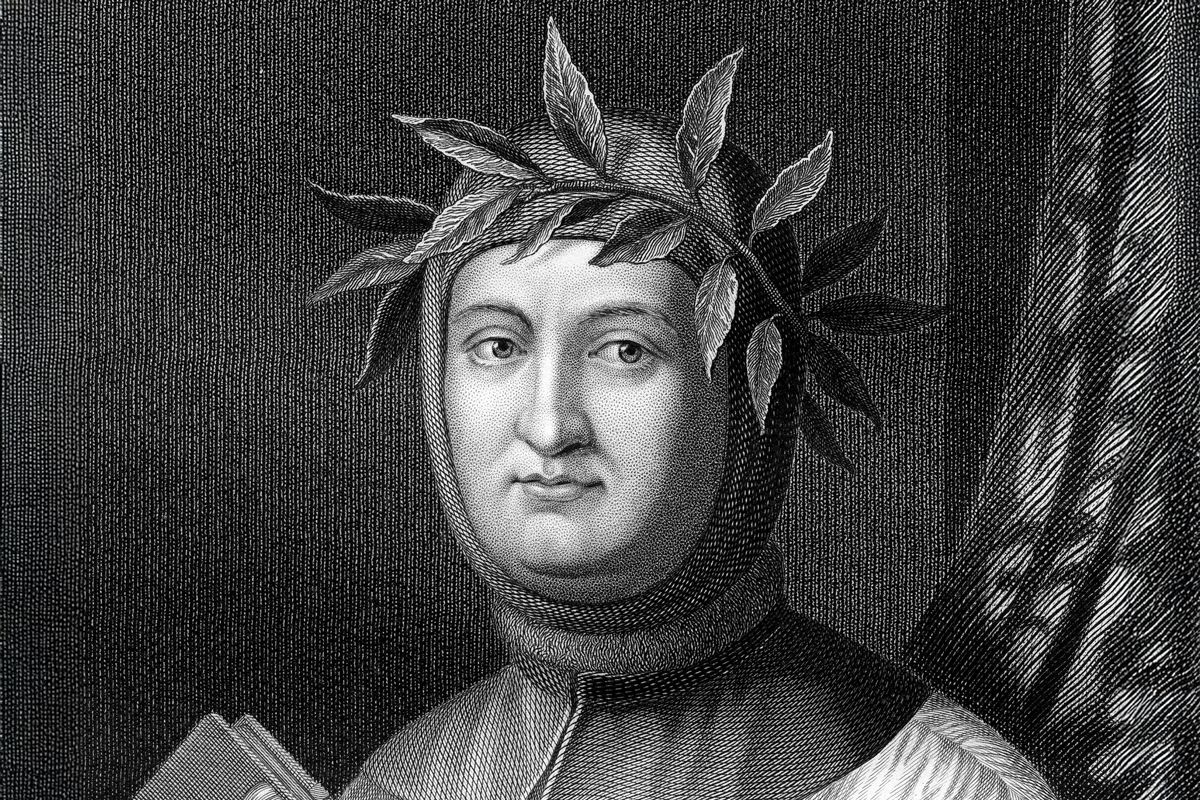
The concept of the “Dark Ages,” if not the term itself, is associated with one name more than any other: Francis Petrarch, a 14th-century Italian scholar, poet, and humanist who was regarded as the greatest scholar of his time. He saw classical antiquity as an age of light due to its cultural achievements, while what followed — including the time in which he lived — was an age of darkness. “This sleep of forgetfulness will not last for ever,” he wrote. “When the darkness has been dispersed, our descendants can come again in the former pure radiance.”
Petrarch was so influential in his time that the humanist attitudes of 15th-century Italy — attitudes that led directly to the Renaissance — would not have been possible without him. It’s no surprise, then, that his concept of a long dark age took hold in both popular and academic circles, and remained a potent and widely accepted idea for centuries to come.
It’s worth noting that historians have also used the term “Dark Ages” to refer to something more specific and less pejorative. In his work Annales Ecclesiastici, the Italian cardinal Caesar Baronius (1538-1607) coined the term “Dark Ages,” albeit in its Latin form, saeculum obscurum. But Baronius was using the term to refer specifically to the scarcity of written documents around the 10th and 11th centuries relative to earlier periods.
This was not a moral judgment, but a statement of fact: There were indeed fewer written records from this period. The Romans were excellent record keepers, so when the empire fell there was a notable decline in historical texts and documents for several hundred years afterward. The Early Middle Ages have been seen by historians as “dark” simply because it’s difficult to know what happened.
Contrary to popular belief, the so-called “Dark Ages” were not a time of complete intellectual stagnation. In Rome’s absence, and with Europe lacking a large kingdom or other political structure as a centralizing force, the Christian church grew to fill the void. Monasteries became crucial centers of learning and literacy, and monks became patrons of the arts. Universities developed, and learning continued apace. In the Arab world, meanwhile, this period coincided with the Golden Age of Islam — around the eighth to 13th centuries — a time of significant scientific, economic, and cultural progress.
While later historians wrote of the “Dark Ages” as a time of intellectual and social decline in Europe, in reality the period saw many advancements. Innovations such as crop-rotation, the heavy plough, and the horse-collar changed agriculture forever, while power generation was revolutionized with the implementation of water and windmills. Gothic architecture emerged, musical notation was refined, and European battlefields saw the first use of cannons and heavily armored cavalry. Groundbreaking advances in mathematics, astronomy, and medicine were also made during these centuries.
Advertisement
Advertisement
Credit: Print Collector/ Hulton Fine Art Collection via Getty Images
New Terms for This Era
Most modern historians now reject the pejorative “Dark Ages” label, although it continues to be used in popular culture. Typically, the term “Early Middle Ages” is now used to describe the era, or, in a wider sense, the “medieval era.” Another term, “Migration Period,” is sometimes used to refer to the early medieval period of Western European history, when so-called “barbarian” peoples — including the Huns, Goths, Vandals, Bulgars, Alani, Suebi, and Franks — moved into the former Western Roman Empire.
Archaeological evidence continues to reveal a much more complex picture of early medieval life — one of innovation, cultural richness, and significant social development — further consigning the term “Dark Ages” to the pages of academic history. While the period certainly had its challenges, it was far from the uniformly bleak and intellectually barren time that historians once portrayed. It was, in fact, a crucial transitional era that bridged classical antiquity and the Renaissance, laying the groundwork for developments that shaped the future.
Advertisement
Advertisement
Did People in the Middle Ages Really Believe the Earth Was Flat?
The Middle Ages lasted for about 1,000 years, from the collapse of Roman civilization in the fifth century to the beginning of the Renaissance era. Despite it being such a long stretch of time, people of the era tend to get thrown together into one group when it comes to our common perception of them. And, in general, they tend to get a bad rap. Our medieval ancestors are often portrayed as unwashed, uneducated, and generally uncouth ruffians. These stereotypes, however, are either gross exaggerations or outright misconceptions.
One commonly held idea about the Middle Ages is that most people believed the Earth was flat, and thus you could easily fall off the edge of the world if you sailed too far. But this is yet another misconception foisted upon the people of the medieval period. As it turns out, folks in the Middle Ages were not nearly as ignorant of basic geographical and astronomical facts as we tend to believe.
Not only did most educated people in the Middle Ages know the Earth was round, but this knowledge also had been common among scholars since antiquity. The spherical nature of the Earth was well established in ancient times, particularly through Greek astronomy.
Aristotle provided convincing proof of Earth’s roundness in the fourth century BCE, including the observations that ships disappear hull-first over the horizon and that Earth casts a round shadow on the moon during lunar eclipses. Later, around 240 BCE, the ancient Greek polymath Eratosthenes even calculated Earth’s circumference with remarkable accuracy. This knowledge was preserved and transmitted through the Roman Empire and into medieval times through texts and scholarly traditions.
Of course, many people in the Middle Ages were uneducated. Public education was scarce at best, and illiteracy was widespread — literacy rates in Western European countries during the Middle Ages were generally below 20% (and were often far below that). Still, it is likely that even uneducated people knew that the Earth was round, simply because this information would have filtered through society to become common knowledge.
Credit: adoc-photos/ Corbis Historical via Getty Images
Medieval Scientific Knowledge
Medieval scholars not only accepted the idea of a spherical Earth but also incorporated this knowledge into their own scientific and philosophical works. The medieval monk and scholar known as the Venerable Bede explicitly described the Earth as spherical and even explained how this affected the length of days in different regions. “The reason why the same days are of unequal length,” he wrote circa 723 CE, “is the roundness of the Earth, for not without reason is it called ‘the orb of the world’ … It is, in fact, a sphere set in the middle of the whole universe. It is not merely circular like a shield [or] spread out like a wheel, but resembles more a ball, being equally round in all directions.”
By the 13th century, the Earth’s spherical shape was regarded as established scientific fact, with influential scientists, thinkers, and clergymen such as Thomas Aquinas, Roger Bacon, Albertus Magnus, and Johannes de Sacrobosco all agreeing with this premise. So where did we get the idea that medieval scholars rejected classical knowledge and widely regarded the Earth to be flat?
The misconception gained a foothold in the 19th century, partly due to Washington Irving’s popular 1828 biography of Christopher Columbus. Today, Irving’s A History of the Life and Voyages of Christopher Columbus is regarded as historical fiction based loosely on the life of Columbus. But when it was released, it popularized the now-debunked story that Columbus’ voyage faced opposition from Catholic scholars who believed the Earth was flat. (In reality, the debate centered on the Earth’s size, not its shape.)
The myth was further entrenched in the public consciousness by inaccurate histories such as John William Draper’s History of the Conflict Between Religion and Science (1874) and Andrew Dickson White’s History of the Warfare of Science With Theology in Christendom (1896). These works incorrectly (and self-servingly) promoted the myth as part of their broader argument about an alleged historical conflict between science and religion.
These narratives, though historically inaccurate, proved compelling and highly persistent — so much so that their incorrect portrayals of medieval scientific beliefs endure to the present day. But while it’s true to say that medieval Europeans held many beliefs that modern people would consider unscientific, their understanding of the Earth’s shape was not one of them.
Credit: Universal History Archive/ Universal Images Group via Getty Images
Author Kristina Wright
July 24, 2024
Love it?59
Even if you’re not from the U.K., you’re likely familiar with the titles of British nobility from countless movies and TV shows. Known as the peerage system, this noble hierarchy consists of five ranks today: duke, marquess, earl, viscount, and baron. The title of earl — the oldest in the peerage system — dates back tothe end of the early medieval period, during the reign of King Canute (or Cnut) in the 11th century. It is equivalent to the rank of count in other European countries and has no feminine form, so a female with this title is known as a countess.
In the peerage system, nobles are often referred to by their titles rather than their surnames. These titles typically correspond to the names of an estate, earldom, or territory associated with the noble family. For example, Richard Neville, known as the “Kingmaker” for his pivotal role in the Wars of the Roses, was best known by his title, the Earl of Warwick.
Today, there are around 190 earls in the U.K., but while the title still carries prestige, the role is mostly ceremonial, with few formal responsibilities. Yet during the Middle Ages, earls were powerful leaders who wielded considerable influence over their territory and the kingdom at large. Here are a few of the duties that English earls were once expected to manage.
During the early medieval period, before the creation of the titles of duke and marquess in 1337 and 1386, respectively, earls were the highest-ranking members of the nobility, second only to the royal family. Earls were appointed by the ruling monarch and were responsible for governing large areas of the kingdom. The lands they oversaw could include several shires (counties), collectively known as a “fief” or “earldom.”
Earls acted as royal governors, representing the king in their territories. They oversaw their estates, enforced royal laws throughout the earldom, made judgments in county courts, and collected fines and taxes for the crown from the people living on their lands. Earls were entitled to a share of the money they collected on behalf of the crown, so their lands served as a source of great wealth as well as power.
After the Norman Conquest in 1066, William the Conqueror began to make changes to the traditional system of nobility. He sought to limit the power of earls by ending their judicial control and tax-collecting responsibilities. They were also restricted to overseeing a single county and many of their former duties were taken over by the county sheriff.
The United Kingdom’s upper house of Parliament, known as the House of Lords, has its roots in a body of government from Anglo-Saxon England (the period of English history before the Norman Conquest) called the witan. Named for the Anglo-Saxon phrase “witenagemot,” or “meeting of the wise men,” the witan was made up of noble lords, including earls and barons, as well as religious officials such as abbots and bishops. This group served as a council of advisers to the king (England did not have a ruling queen until Mary I was crowned in 1553). The king would call on the witan to get support for decisions such as granting land, making new laws, or levying taxes.
In the 14th century, two distinct houses of Parliament were established. The House of Commons was made up of representatives from the towns and counties, while the House of Lords was composed of religious leaders, known as lords spiritual, and nobles, including earls and other members of the peerage, known as lords temporal. Before the Norman Conquest, the title of earl was not automatically hereditary, and the territory that defined an earldom was not permanent. By the reign of King Richard II in the 14th century, earldoms were either hereditary or life appointments, and by the 15th century, the vast majority of lords temporal in the House of Lords had inherited their titles. This tradition continued for centuries, and it wasn’t until 1999 that nobles’ automatic right to inherit a seat in Parliament was abolished.
In Anglo-Saxon England, a role known as ealdorman served as a high-ranking court official responsible for enforcing the king’s laws within a local shire. The office of ealdorman evolved into the title of earl, a word of Scandinavian origin that was introduced during the reign of the Danish King Canute (Cnut) in the 11th century. Earls assumed many of the leadership duties of the role: They were tasked with keeping the peace, exercising justice, and raising armies in the king’s name. Under the feudal system, earls granted small parcels of land to knights and vassals in exchange for military services. Knights helped enforce the laws, defending landholdings and seizing other nearby lands, and could become lords themselves.
After William the Conqueror reduced the size of earldoms, earls took on the role of military governors over smaller, more strategic areas of land. They were responsible for overseeing coastal areas and vulnerable borders, and had the authority to imprison lawbreakers. In later centuries, the number of earls and earldoms were reduced through extinction of titles and sale of land. By the 1800s, the role of earl was increasingly focused on social obligations, helping to facilitate important alliances for the crown and strategic marriages between nobles. Despite the reduction in formal responsibilities and landholdings, earls and other members of the British peerage continued to hold a substantial amount of power through personal wealth and political influence as members of Parliament.
Credit: Heritage Images/ Hulton Archive via Getty Images
Author Tony Dunnell
June 13, 2024
Love it?155
It’s no secret that medieval Europe had some issues when it came to public health. Towns were particularly unsanitary places due to the absence of sewage systems and the practice of throwing trash and human waste into the streets. These crowded areas were notoriously stinky. It’s perhaps for this reason that a common misconception exists regarding medieval people: that they were always dirty and paid little attention to personal hygiene. This stereotype is particularly prevalent in regard to the peasantry, who are often portrayed in popular culture as thoroughly unclean and rife with all manner of parasites, plagues, and putridity.
But were the Middle Ages really so dirty? While it’s true that the vast majority of people in that era had no access to anything near our 21st-century standard of hygiene, they knew the importance of keeping clean. Towns and villages were typically built near sources of fresh water, or were supplied by wells or, in the case of some larger cities such as London, by water carried in through lead pipes. People, therefore, could — and in many cases would — bathe on a regular basis. Indeed, there are numerous literary references and works of art from the medieval period that depict people taking baths, which for many was part of a daily routine.
Contrary to the image of the unwashed medieval peasant, even the most underprivileged members of society practiced basic hygiene. They typically had a jug, basin, or trough of water from which they regularly washed their hands and face. It was common to wash one’s hands before and after meals, especially since hands were still the primary instrument for eating. (The use of forks was not commonplace in Europe until the 18th century.) People also brushed their teeth regularly. Out in the countryside, fresh hazel twigs were used as toothbrushes, and when those weren’t available, people used linen cloths. There was no toothpaste, but sea salt and ground herbs such as cloves were used while brushing to help keep mouths fresh and teeth clean.
Wooden bathtubs were typically found in the houses of wealthier members of society, who would bathe fairly regularly. Commoners in rural areas didn’t always have bathtubs, but would take dips in the river, or — when nothing else was available — a handy horse trough. Since many citizens worked in sweaty manual labor, they bathed quite frequently, often every day. In the towns, bathing was done at public baths, which were especially common during the late Middle Ages. These bathhouses were often connected to bakeries, using excess heat from the ovens to warm the water. Medieval public baths weren’t for the shy, as men and women bathed naked together. Perhaps unsurprisingly, considering the amount of nude flesh on display, bathhouses often had an illicit side to them, doubling as brothels.
Advertisement
Advertisement
Credit: Buyenlarge/ Archive Photos via Getty Images
Don’t Forget the Soap
Yes, people used soap back in the medieval period. Soap was available as a trade good in Europe as early as the ninth century CE, and could also be made at home. Numerous soap-making recipes exist from the Middle Ages, often including ingredients such as ashes from an oak tree, tallow (animal fat), lime (heated to become quicklime), salt, and flour. The soap was scented using fresh herbs such as sage and thyme. Shampoo didn’t exist, so most people simply washed their hair with water. The more well-off citizens, however, washed their hair with a mixture similar to soap, made from ashes and egg whites and scented with herbs and flowers. People also brushed their hair with combs, but not only for cosmetic reasons. Fine-toothed combs were used as delousing implements, specifically designed to remove lice from the hair.
Credit: Heritage Images/ Hulton Fine Art Collection via Getty Images
Doing the Laundry
Of course, taking a nice bath is fairly pointless if all your clothes stink. Medieval people were well aware of this and tried to keep their clothing clean. While heavier outer garments might have received only an occasional brushing, undergarments and household linens were frequently laundered. Advice books from the Middle Ages recommended that underwear should be changed every day. Those who could afford it sent their laundry to a washer, who scrubbed and beat the dirt out of linens in a large wooden tub or in the river. To help clean and deodorize fabrics, a plant called soapwort, or herbs such as marjoram, could be added to the water. And to keep those whites nice and bright, people washed their linens in chamber lye — a mixture that included wood ash and urine, the latter carefully gathered from chamber pots.
Court jesters are frequently portrayed as cartoonish figures dressed in colorful pointed hats and jangling bells. Though their qualities have often been caricatured over time, court jesters were indeed real, and they played a significant role at courts across Europe during the Middle Ages and Renaissance era.
The roots of the court jester can be traced back to the comedic actors, or balatrones, of ancient Rome. Due to Rome’s periodic censorship crackdowns on these outspoken actors, many became roving performers, traveling throughout the empire in search of new audiences and opportunities. These roving comics may have helped lay the groundwork for medieval jesters, and contributed to the growing popularity of comedic folly across Europe.
Historical references to what we now know as jesters became more frequent between the 12th and 15th centuries. At the time, they were commonly known as “fools”; the word “jester,” from the Middle English “gestour,” meaning “entertainer,” became more common throughout the 15th and 16th centuries. The jester’s primary function was to serve and entertain royalty through stories, music, juggling, acrobatics, magic tricks, and other humorous acts. One famously funny figure even made a living out of flatulence. In the late 12th century, King Henry II of England gave a fool named Roland le Petour (Roland the Farter) 30 acres of land for visiting the royal court each year on Christmas Day to jump, whistle, and, yes, fart.
While the jester’s clownlike reputation speaks to its primary role as a playful performer, their position at court was more complex. They not only entertained with great skill, but also were often intelligent and trusted advisers who could critique political decisions, social norms, and behaviors of the nobility under the guise of humor — a significant departure from the “fool” image they have in contemporary culture. Jesters were also expected to assist with household chores and partake in more serious matters, including accompanying soldiers to the battlefield in times of conflict. Beyond their entertainment duties for the troops, they would also be tasked with distracting the opposition, and delivering sometimes-dangerous messages across enemy lines.
One of the jester’s most distinctive features is their unique clothing, but it wasn’t always as flamboyant as depicted today. In the early medieval period, they often wore hooded hats with donkey ears, then later, a monk’s cowl draped over their head and shoulders. By the 1600s, jesters were more likely to be seen in what’s now regarded as the iconic pointed hat, the jagged tunic, bells, and a scepter (known as a bauble).
While the role was most often fulfilled by men, there were also female jesters. Mathurine de Vallois, who served in the French court for Henry III, Henry IV, and Louis XIII, was known for her elaborate Amazonian costume. Jane Foole, also known as Jane the Fool, is another well-known jestress who served the English court during the reigns of Henry VIII, Edward VI, and Mary I. While information on Jane is scarce, depictions in portraits show her outfitted not in typical jester clothing, but in nice, if plain, attire; she is also shown with a shaved head and a tight-fitting cap, an unusual style for women at the time.
Advertisement
Advertisement
Credit: Culture Club/ Hulton Fine Art Collection via Getty Images
By the 17th century, the role of court jesters began to evolve. Live theater was in the midst of a boom, and jesters largely transitioned from court entertainers to theater actors and comedians. Notable performers included Richard Tarlton, beloved jester of Queen Elizabeth I, who not only became an accomplished actor, but also is believed to have inspired Yorick, the fictional jester of the king of Denmark referred to in William Shakespeare's Hamlet. By the 18th century, even as they continued to appear in popular culture, jesters all but died out as a court institution in Europe. As court performers transitioned to earning their own livelihoods and fame, they helped pave the way for generations of comedians, performance artists, and satirists to come.
Advertisement
Advertisement
Another History Pick for You
Today in History
Get a daily dose of history’s most fascinating headlines — straight from Britannica’s editors.