



The History of the Humble Lunch Box
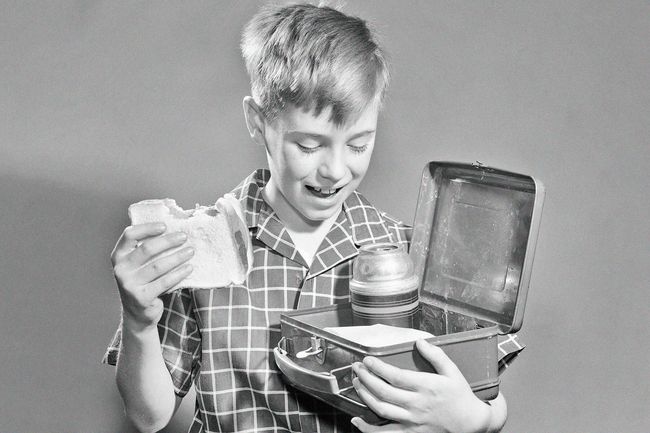
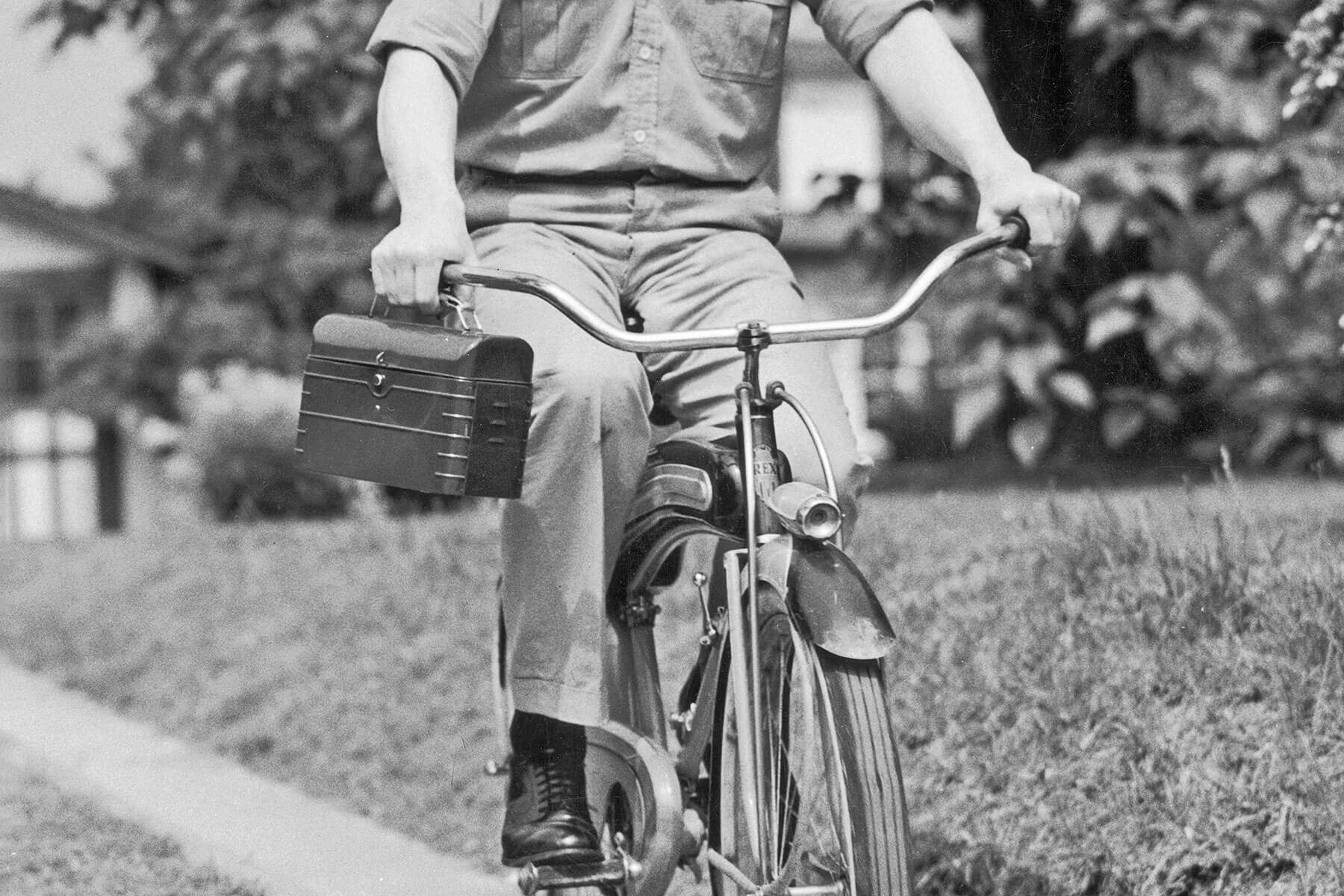
In the 1880s, plain metal lunch pails were a practical way for workers to transport and protect their midday meals. The utilitarian containers weren’t marketed for children, but it wasn’t long before parents, taking a cue from workers’ lunch pails, started reusing the metal tins used to hold cookies or tobacco for kids’ school lunches.
In the early 20th century, it was common for children who lived in rural areas to pack their lunch, while kids in urban areas who lived closer to school would go home to eat. The first lunch box specifically designed for kids, which made its debut in 1902, was shaped like a picnic basket and featured lithographed images of children playing. In 1935, the Milwaukee-based company Geuder, Paeschke & Frey produced the first character-licensed “lunch kit,” a metal, oval-shaped, lithographed tin secured with a loop of wire that served as the handle. The tin featured a new cartoon character named Mickey Mouse — and the lunch box as we know it was born.
A Pop Culture Phenomenon
The 1950s marked a major turning point for the evolution of the lunch box, as the humble container became a means of portable self-expression. In 1950, Aladdin Industries saw an opportunity to expand its lunch box sales by taking its signature plain steel box, applying red enamel, and embossing it with a decal of Hopalong Cassidy, a fictional cowboy on a popular TV series. The product was a hit, and competitor American Thermos soon followed suit by releasing its own cowboy lunch box, featuring full-color images of Roy Rogers on all sides. The company sold 2.5 million Roy Rogers lunch boxes in 1953, a huge increase in sales.
By the mid-1950s, other manufacturers jumped into the metal lunch box market, competing for the licensing rights to popular TV shows. The lunch box business grew to encompass a wide variety of entertainment tie-ins, making themed lunch boxes popular with both children and collectors. Though the original plain metal kits were intended to be used year after year by adults, bringing pop culture themes to children’s lunch boxes meant that kids would want a new one at the start of every school year. This planned obsolescence meant more money for manufacturers, who were further inspired to introduce additional styles and designs, such as lunch boxes with matching thermoses.
More from our network




Make Way for Plastic
The lunch box business continued to boom, with 120 million lunch boxes sold between 1950 and 1970. In 1962, Aladdin Industries added stamped designs to their containers, giving their line of lunch boxes a unique 3D effect. As the cost of licensing rights became prohibitive, Aladdin introduced novelty domed lunch boxes with generic themes, such as pirates. It was around this time that manufacturers also started looking for alternatives to metal. Vinyl lunch boxes had a short run, but the cheaper material made them far less durable than metal lunch boxes. While themes such as Barbie and the Beatles did well, vinyl never came close to replacing metal.
Starting in 1972, molded plastic lunch boxes were added to the mix, offering consumers a wider range of options. The plastic lunch boxes were not only lighter and cheaper to make, but also allowed for greater variations in designs and sizes — though plastic, like vinyl, still couldn’t compete with the durability and visual appeal of metal containers. Lunch box usage also started to wane as more kids opted for hot cafeteria food, and by the late 1980s, the era of the classic metal lunch box came to an end. While Mickey Mouse was the first licensed character to be featured on a lunch box, the last themed metal lunch box, manufactured in 1987, featured Sylvester Stallone’s Rambo.

The Market for Vintage Lunch Boxes
Even beyond their heyday, though, lunch boxes were such a significant part of American culture throughout the 20th century that they retained a place in our collective memory — and have earned a spot in museum collections, too. In fact, the Lunch Box Museum in Columbus, Georgia, is solely dedicated to the classic containers, displaying over 3,000 lunch boxes and 1,000 thermoses, from early miners’ pails to a Return of the Jedi-themed lunch box from the mid-1980s. The Smithsonian National Museum of American History maintains a smaller exhibit called “Taking America to Lunch.” That display highlights dozens of objects from the museum’s collection of lunch boxes and beverage containers from the 1890s to the 1980s.
Vintage lunch boxes found in attics and antique stores also can command hefty price tags from collectors. The 1935 oval metal Mickey Mouse lunch pail is valued up to $2,000, while a 1954 Superman lunch box could go for as much as $13,000. The value of a particular lunch box is determined by its condition; collectors are most interested in dent-free, scratch-free, rust-free containers. And having the lunch box’s matching thermos increases the overall value as well.

The Lunch Box of the 21st Century
Though the popularity of traditional lunch boxes has waxed and waned over the decades, there has been increased awareness in recent years about the environmental impact of single-use lunch packaging. As a result, reusable and eco-friendly lunch containers have gained popularity. Consumers now have the option of a soft-sided lunch box — made of vinyl, polyester, and foam, which is a better fit for children’s backpacks — or international innovations such as bento boxes from Japan and tiffin containers from India.
Contemporary lunch box design is focused on a combination of style, substance, and food safety. Made from an array of materials, including hard and soft plastic, stainless steel, and sturdy canvas, new lunch boxes boast everything from built-in refreezable gel to easy-to-clean waterproof containers with drink holders. With such a wide variety of sizes, colors, designs, and personalization options, children and adults can express their individuality through their food containers. Even Mickey Mouse and Barbie are still around, and as popular with nostalgic adults as with young children.