



Ancient Egypt was an industrious civilization, with extensive trade networks, a highly productive agricultural economy, and ambitious construction projects that ranged from ship building to monumental architecture. It existed for more than 3,000 years, expanding from a scattering of hunter-gatherer settlements to become one of the greatest empires in the world, famed for its hieroglyphic writing, advanced mummification, and, of course, the pyramids.
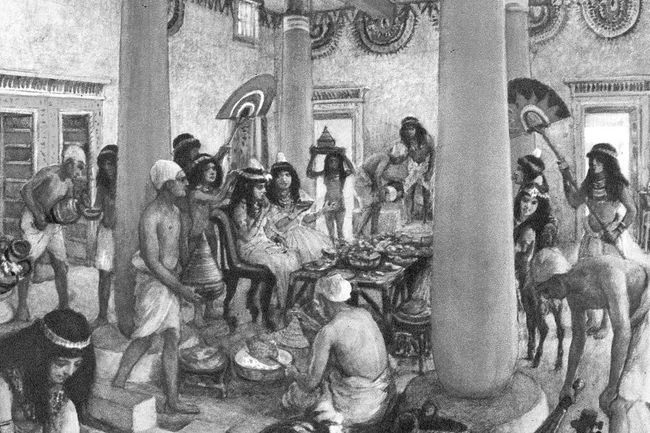
In order to fuel such industry, one thing was highly important: a solid breakfast. Luckily for the Egyptians, the fertile Nile River Valley provided abundant crops, helping transform Egypt into one of the most powerful agrarian civilizations of the ancient world. Annual flooding of the Nile created fields so fertile that in a good season, Egypt produced enough food to feed every person in the country with ease and still have a surplus.
So, there was little excuse for a laborer to skip breakfast, or for a pharaoh’s first meal of the day to be anything short of satisfactory. Here’s a look at what ancient Egyptians consumed in the morning before a long day in the Land of Ra.
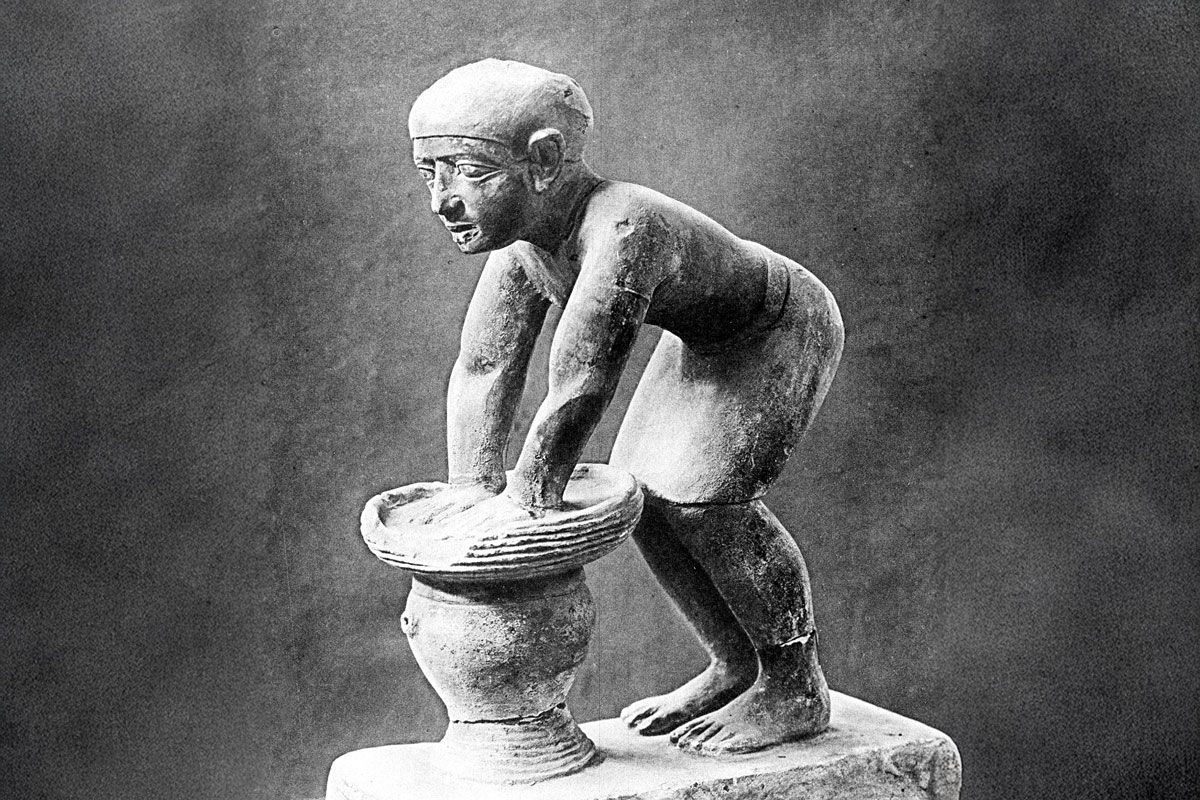
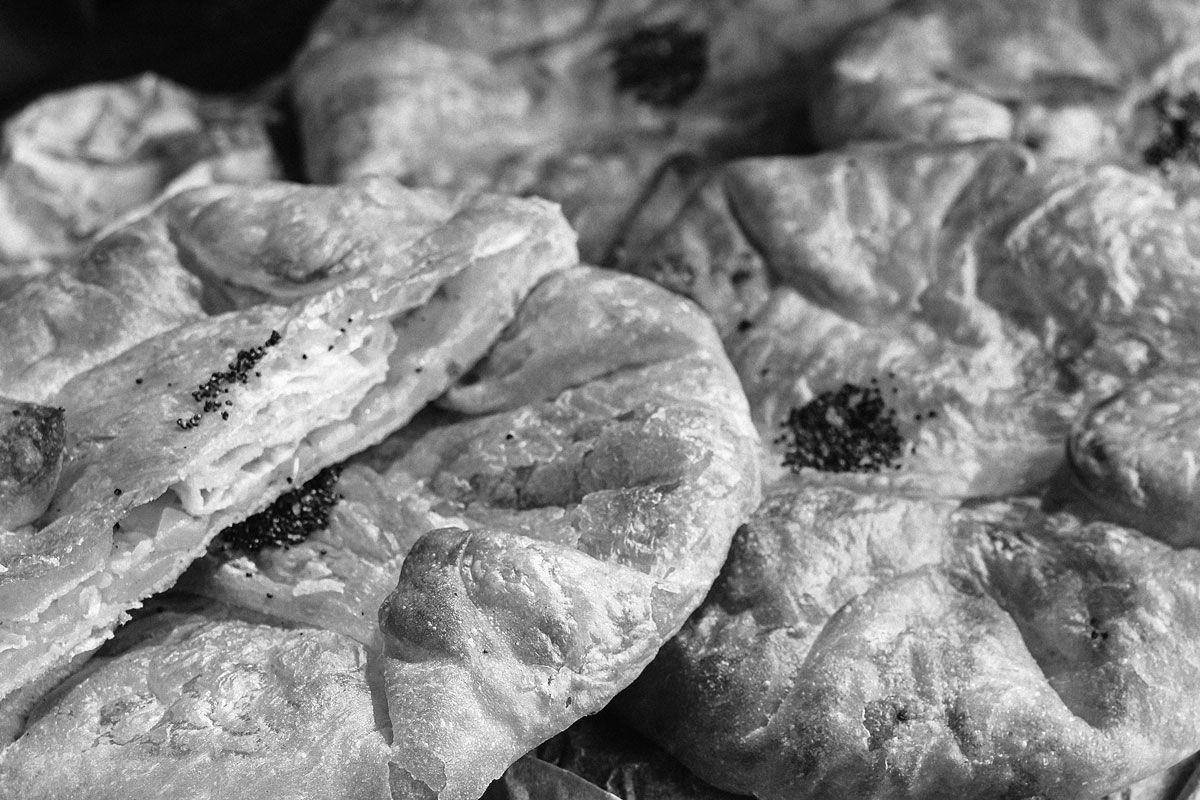
Bread was a fundamental staple of the ancient Egyptian diet. According to William Rubel in Bread: A Global History, more bread-related artifacts have been found from ancient Egypt than from any other period. The Egyptians made their bread from emmer wheat, one of the first crops domesticated in the region. Emmer is a hulled wheat, making it more difficult to turn into flour than other varieties. It was ground on flat stones called querns and then baked in ovens.
Despite the popularity of bread in ancient Egypt, archaeologists have discovered one notable drawback. During the bread-making process, airborne sand often got into the mix, resulting in widespread dental problems caused by the abrasive nature of sand and grit in this common breakfast food.
Advertisement
More from our network
History Facts is part of Inbox Studio, an email-first media company. *Indicates a third-party property.
Bread for breakfast seems totally normal to our modern sensibilities — but beer for breakfast? Not so much. In ancient Egypt, though, beer was a primary source of nutrition, consumed daily by the working classes. (The upper class typically favored wine.) Unlike modern brews, the beer of ancient Egypt was often opaque, thick, and more like a soup or gruel.
Made from barley or emmer wheat, the beer was typically quite low in alcohol content, around 3% to 4% — but still enough to start the day with a spring in one’s step. (Beer prepared for religious festivals and celebrations was normally of better quality and had a higher alcohol content.) The beverage was also sometimes issued as payment, and laborers — including those who built the pyramids of Giza — were provided with a daily ration of about 10 pints.
Advertisement
Advertisement
Credit: Tessa Bunney/ Corbis News via Getty Images
Green Onions
What goes well with bread and beer for breakfast? Green onions, of course. In ancient Egypt, a simple breakfast of bread, beer, and green onions was fairly typical, providing enough energy for a laborer to get through much of the day. Green onions, also called scallions, were among the most common vegetables in ancient Egypt, and were valued for more than just their flavor and nutritional value. The Egyptians believed that onions warded off evil spirits, protected against the evil eye, and also cured most ailments, making them a fine way to start the day.
Credit: Duane Braley/ Star Tribune via Getty Images
Garlic
As they did with green onions, the ancient Egyptians regarded garlic as having culinary, medicinal, and protective qualities. Garlic formed part of the daily diet of many Egyptians, and was considered a key food for maintaining and increasing strength. Because of this, it was given to workers involved in heavy labor, including those who built the pyramids. It’s uncertain whether the Egyptian elites consumed garlic with such frequency, but historians do know that it was used in rituals. Well-preserved garlic cloves were also discovered in the tomb of Tutankhamun.
Egypt is the world’s top producer of dates today, yielding around 1.7 million tons annually. And dates were just as popular back in ancient times. They could be eaten fresh or dried for preservation, and the fruit’s high sugar content made it an ideal sweetener. Dates were sometimes baked into bread, and may occasionally have been added as a flavoring agent in beer — providing some necessary sweetness to counteract the green onions and garlic. When dates weren’t available, figs could serve a similar role in any ancient Egyptian breakfast.
While most ancient Egyptians used dates and figs as sweeteners, those who could afford it used honey. Ancient beekeepers collected honey by making cylindrical hives out of mud and clay, which they kept on rafts to allow for seasonal movement along the river. Wealthier Egyptians could afford this superior sweetener, which they would eat for breakfast with their bread, or use to sweeten beer and cakes. Honey nut cakes, made with tiger nuts (a type of tuber), were particularly popular among the aristocracy.
The ancient Egyptians also valued honey for its medicinal qualities, using it to treat wounds and soothe coughs. And, when mixed with garlic and the âfai plant, honey was considered highly effective at keeping ghosts at bay, making it the perfect breakfast ingredient for anyone looking for a little extra protection for the day.
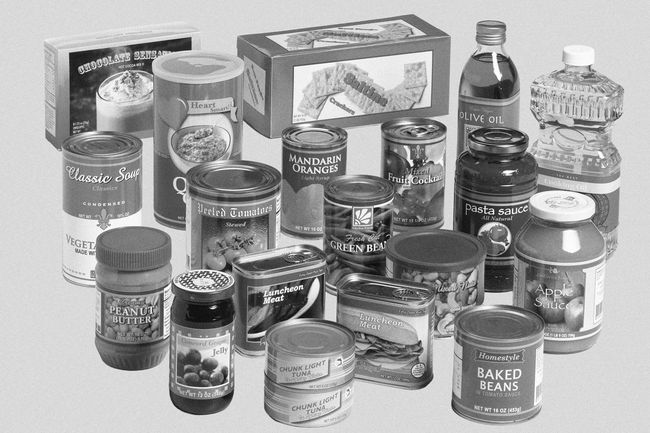
Take a look around your kitchen and chances are you’ll spot a few brand names you’ve known your whole life. From Keebler cookies to Campbell’s soup, certain monikers feel like part of the family.
Food branding — the use of a distinctive name or mark to identify a product — emerged in the late 19th century as industrialization made large-scale food production and packaging possible. Before then, most foods were sold in bulk, with no consistent labeling. Branding introduced the idea of reliability and reputation, allowing consumers to recognize and trust particular producers.
A few food and drink companies, however, had already established identities long before branding became widespread. Some of these brand names predate the industrial era itself and have remained in continuous use for centuries. How many do you have in your pantry?
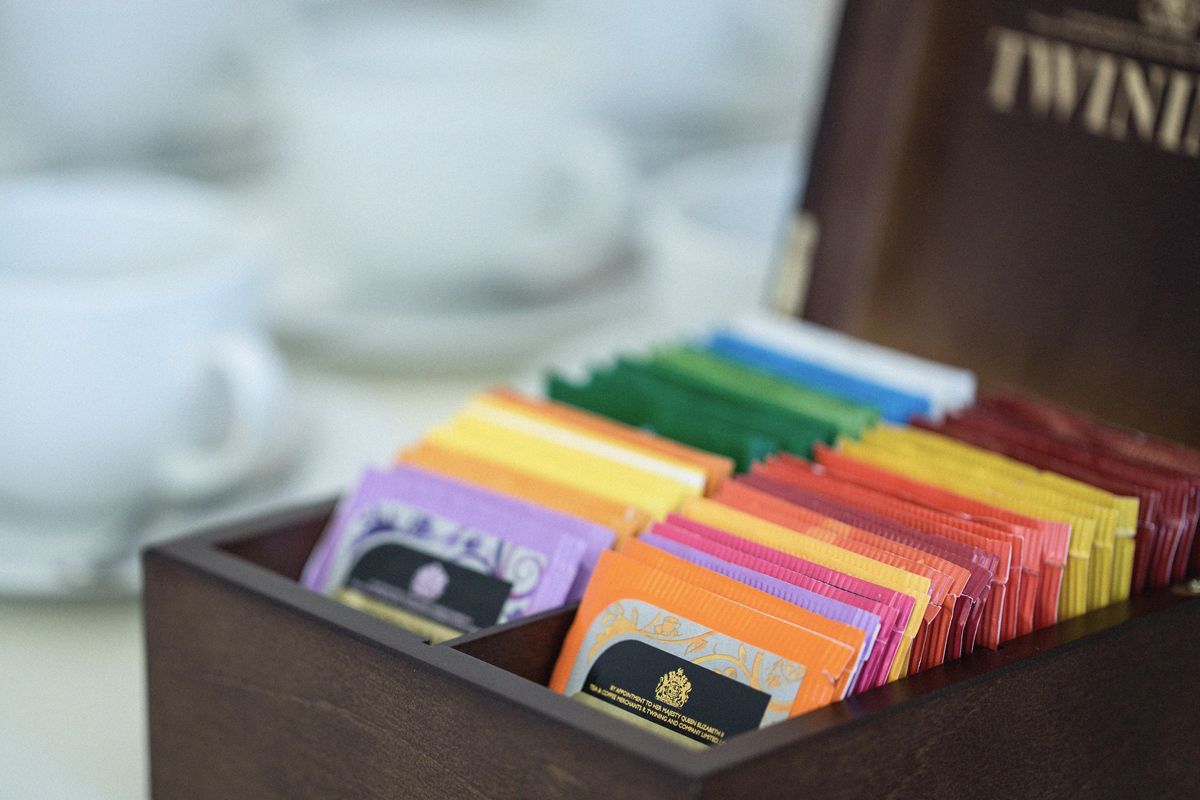
In 1706, English merchant Thomas Twining opened Tom’s Coffee House in London and began offering fine-quality tea alongside the typical coffee and hot chocolate, in the hopes of standing out from the competition. Social convention prohibited women from visiting coffeehouses, so Twining expanded his business in 1717 to include a coffee and tea shop where women could buy their tea directly.
The Twinings Tea logo, created in 1787, is recognized as the oldest continuously used unaltered corporate logo in the world, and the company has operated from the same address — 216 Strand in London — since its founding. It was acquired by Associated British Foods in 1964, though members of the Twining family are still involved in its operations.
Advertisement
More from our network
History Facts is part of Inbox Studio, an email-first media company. *Indicates a third-party property.
Perhaps surprisingly, the baking chocolate in our favorite homemade desserts owes its name to its founder, not its use. Baker’s Chocolate began in 1764 in Dorchester, Massachusetts, when Irish immigrant John Hannon, a chocolate maker, and physician James Baker established a small mill on the Neponset River to grind cacao beans into drinking chocolate. When Hannon disappeared on a cocoa-buying voyage in 1779, Baker assumed full control and began marketing the product under his name.
In 1823, the company was formally incorporated as Walter Baker & Company, named for Baker’s grandson Walter. At the time, chocolate was consumed primarily as a beverage — Baker’s didn’t start manufacturing sweetened chocolate bars until 1849. The company went through multiple ownership changes during the 19th and 20th centuries but continued producing chocolate under the Baker’s name, which remains in use today as part of the Kraft Heinz Company.
The company now known as King Arthur Baking traces its origins to 1790, when Boston merchant Henry Wood founded Henry Wood & Company to import and distribute flour. In 1896, the company — by then operating as Sands, Taylor & Wood — introduced its own flour brand under the name King Arthur Flour at the Boston Food Fair.
The company relocated to Norwich, Vermont, in the late 20th century and officially adopted the name King Arthur Flour Co. Employee-owned since 2004, the company updated its name to King Arthur Baking Company in 2020, maintaining continuity of its 19th-century brand name while reflecting its broader range of baking products.
Keebler began in 1853 when German immigrant Godfrey Keebler opened a small bakery in Philadelphia. From there, he took on business partners and eventually incorporated under the name Keebler-Weyl Baking Company. In 1927, the business became part of the United Biscuit Company of America, which went on to adopt the Keebler brand name for all of its products in 1966. But it wasn’t until 1969 that the first Keebler elf — dubbed J.J. Keebler — was introduced in a television commercial. In 1936, Keebler-Weyl became the first commercial baker of Girl Scout Cookies; today, a division of Keebler, Little Brownie Bakers, continues the tradition.
The company now synonymous with tomato soup began in 1869 in Camden, New Jersey, as a partnership between Joseph A. Campbell, a fruit and vegetable merchant, and Abraham Anderson, a commercial canner and packer. The business was initially called Anderson & Campbell and produced canned tomatoes, vegetables, and jellies. In 1895, the company introduced its first jar of ready-to-eat beefsteak tomato soup. Two years later, in 1897, chemist John T. Dorrance developed the firm’s condensed soup process, allowing it to be packaged in cans, and the following year the company introduced its iconic red-and-white soup can label. In 1922, the name changed to The Campbell Soup Company, and in 2024 it became The Campbell’s Company.
At the recommendation of his uncle, Charles A. Pillsbury invested in a struggling Minneapolis flour mill in 1869. The business thrived under his management and he expanded operations along the Mississippi River, renaming the company Charles A. Pillsbury and Co. In 1889, the company was purchased by an English financial syndicate and merged with other holdings to become the Pillsbury-Washburn Flour Mills Company, Ltd. The Pillsbury family eventually regained ownership in the 1920s and incorporated the business as the Pillsbury Flour Mills Company in 1935. Ownership changed hands in subsequent decades and the historic company was acquired by General Mills in 2001.
The Quaker Oats story began in 1877, when Henry Seymour and William Heston founded the Quaker Mill Company in Ravenna, Ohio, and trademarked the Quaker Oats name and image of a Quaker man to distinguish their oats from competitors. The struggling mill was bought a few years later, in 1881, by entrepreneur Henry Parsons Crowell, who turned the brand into a national name with the first magazine ad campaign for a breakfast cereal.
In 1888, the Quaker Mill Company joined six other oat producers to form the American Cereal Company, which pioneered modern packaging and marketing. By 1891, Quaker was printing recipes — such as Oatmeal Bread — right on its boxes, another industry first. The company officially became The Quaker Oats Company in 1901, and a century later, after a 2001 acquisition by PepsiCo, the name evolved to Quaker Foods and Beverages.
Advertisement
Advertisement
10 Defunct Fast-Food Restaurants That People Used To Love
There’s something timeless about fast food: the neon-lit parking lots, the scent of grilled burgers and deep-fried chicken, the thrill of unwrapping something hot and delicious. The experience is as satisfying today as it was 50 years ago.
Americans’ love affair with fast food began with White Castle, the first chain fast-food restaurant, founded in 1921 in Wichita, Kansas. Famous for its small “slider” burgers, standardized production, and spotless kitchens, White Castle created the template for fast food as we know it — and it’s still going strong today, with 345 locations across the U.S.
A few decades later, McDonald’s took the concept nationwide, opening its first franchised restaurant in 1955. Today, Mickey D’s operates more than 13,000 U.S. locations and 28,000 internationally, serving billions of burgers, fries, and shakes in more than 100 countries. Along the way, dozens of other fast-food chains emerged, but not all stood the test of time.
From burger empires to roast beef innovators and seafood specialists, here are 10 defunct fast-food restaurants that once ruled the roadsides and mall food courts before disappearing (or nearly so). How many of these vintage chains have you visited?
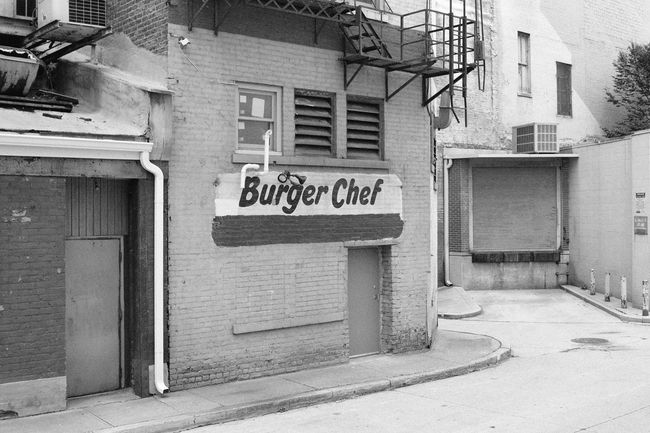
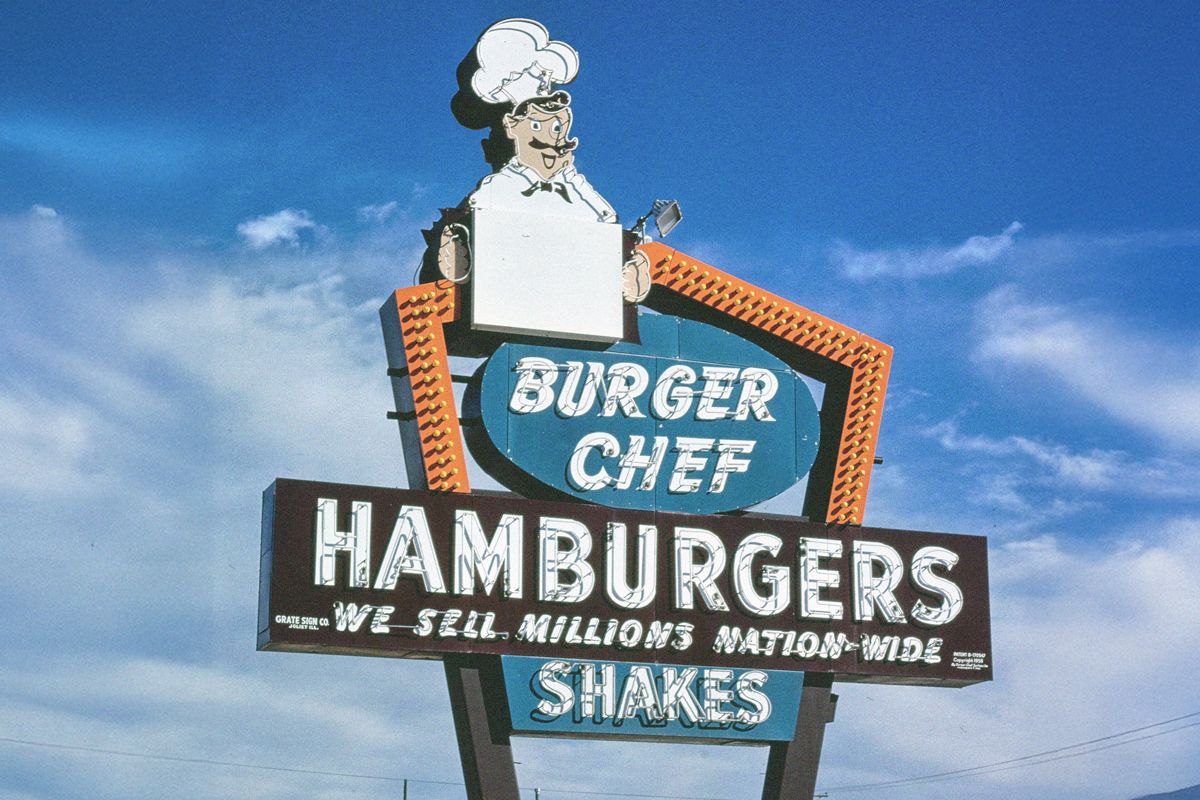
At its peak in the 1970s, Burger Chef was one of America’s largest fast-food chains, boasting more than 1,200 locations across 38 states. Founded in 1958, it earned a loyal following for its flame-broiled burgers, creative advertising, and its Funmeal, a kids’ combo that debuted before McDonald’s introduced the Happy Meal.
The chain’s reputation took a hit after a tragic incident in 1978 in which four employees disappeared in an unsolved murder. This tragedy, combined with growing competition from Burger King and McDonald’s and some corporate missteps, caused the chain’s decline, and it was eventually sold to Hardee’s in 1982.
Advertisement
More from our network
History Facts is part of Inbox Studio, an email-first media company. *Indicates a third-party property.
With more than 3,000 locations across 19 states and several countries, Red Barn was once a major player in the fast-food landscape. Established in Ohio in 1961, this beloved dining spot was memorable for its barn-shaped buildings and its jingle, “When the hungries hit / Hit the Red Barn.” The chain pioneered salad bars and self-service beverage stations long before they became industry standards, and it introduced the cartoon characters Chicken Hungry, Big Fish Hungry, and Hamburger Hungry.
Despite it being one of the first chains to have a self-serve salad bar and introducing a double-decker burger (Big Barney) years before the McDonald’s Big Mac, corporate mergers and rising competition in the 1970s led to Red Barn’s bankruptcy in 1986.
Burger Queen was founded in 1956 in Winter Haven, Florida — two years after Burger King’s debut — serving burgers, fries, milkshakes, and later, fried chicken, breakfast, and salad bar items. At its peak, the chain had more than 200 U.S. locations and a cartoon mascot, Queenie Bee, introduced in 1971.
But legal battles with Burger King and Dairy Queen complicated growth, and the chain rebranded as Druther’s in 1980 to better reflect its broader menu. After forming an equity partnership with Dairy Queen in the late 1980s, most Druther’s locations became Dairy Queen franchises, leaving only one independent Druther’s in Campbellsville, Kentucky.
Founded in 1969 in Columbus, Ohio, this restaurant was named after English actor Arthur Treacher and capitalized on the British pop culture craze with its fast-food take on fish and chips. At its height, the chain had 826 locations across the U.S., many featuring something that hadn’t been seen before in the fast-food world: a baked potato bar.
Unfortunately for the chain, the 1970s “Cod War” between the U.K. and Iceland sent fish prices soaring, while changing consumer tastes and declining interest in fried seafood further hurt profits. By the late 1980s, most locations had closed or been rebranded. Today, only three stand-alone Arthur Treacher’s restaurants remain.
Launched by Bresler’s Ice Cream Company in 1954 in Chicago, Henry’s Hamburgers once rivaled McDonald’s, with more than 200 locations across 35 states. Known for its “10 burgers for a dollar” deal, as well as 15-cent burgers, 10-cent fries, and colorful signage, it was a family favorite during the fast-food boom.
But inconsistent franchise oversight, failure to modernize for drive-thru trends, and declining sales doomed the brand by the mid-1970s. Today, a single Henry’s remains in Benton Harbor, Michigan — and has offered drive-thru service since 1988.
Founded in 1967 in Springfield, Ohio, Rax Roast Beef quickly became a formidable rival to Arby’s — expanding to more than 500 locations across 38 states by the mid-1980s. Known for its roast beef sandwiches and buffet-style salad bars, Rax aimed to elevate fast food with upscale decor and a diverse menu.
However, a misguided rebrand featuring the controversial “Mr. Delicious” mascot and an expanded menu that included pizza and Chinese food led to confusion and declining sales. Bankruptcy filings and ownership changes followed, and by the 1990s, most locations had closed. Today, only six Rax restaurants remain: one in Illinois, one in Kentucky, and four in Ohio.
Sandy’s got its start in 1958 in Peoria, Illinois, when a group of local entrepreneurs were denied a McDonald’s franchise. With Scottish-themed branding, a tartan-clad mascot named Sandy, and signature items such as the “Big Scot” burger, the chain emphasized thrift, speed, and friendly service. At its height, Sandy’s boasted more than 240 locations across 20 states.
In 1972, the chain merged with Hardee’s, and by 1979, the Sandy’s name was phased out — though a few independent franchises carried the brand into the 1980s under names such as Zandy’s and Bucky’s.
Wetson’s, founded in Levittown, New York, in 1959, grew into a regional hamburger chain with 72 locations at its peak in the 1960s and early 1970s. The brand was known for its budget pricing, the “Big W” signature sandwich, and clown mascots named Wetty and Sonny — plus slogans such as “Look for the Orange Circles.”
As national chains such as McDonald’s and Burger King expanded into the New York market, though, Wetson’s steadily lost ground. By the mid-1970s, it had merged with Nathan’s Famous — after which most Wetson’s locations were closed or rebranded.
Promising healthier fast-food options, D’Lites offered lower-calorie burgers, diet shakes, and other healthier takes on drive-thru favorites long before wellness culture went mainstream. After the first location opened in Norcross, Georgia, in 1978, the chain rode the early ’80s fitness craze to expand rapidly, reaching more than 100 locations across 19 states.
Overexpansion and high costs eventually led to bankruptcy in 1986. By 1987, most locations were either closed or acquired and converted into Hardee’s locations, as Hardee’s sought to grow quickly in the same regions. Short-lived though it was, D’Lites helped pioneer the idea that fast food could be healthier.
Credit: Tom Kelley/ Archive Photos via Getty Images
Pup ’n’ Taco
Founded in 1956 as a drive-in stand in Pasadena, California, Pup ’n’ Taco served an unusual but much-loved menu of hot dogs, tacos, burgers, pastrami sandwiches, and tostadas. The first fast-food restaurant officially named Pup ’n’ Taco opened in Pasadena in 1965, and at its peak the chain had 108 locations, mostly in Southern California and also in Albuquerque, New Mexico.
In 1984, Taco Bell (then part of PepsiCo) acquired 99 of the Pup ’n’ Taco locations, largely for their real estate, which effectively ended the chain. A few stores in New Mexico survived the deal under the name Pop ’n’ Taco, two of which lasted until 2013.
Credit: Museum of the City of New York/ Archive Photos via Getty Images
AuthorBess Lovejoy
September 17, 2025
Love it?81
Few traditions feel as universal as gathering around a frosted cake, lighting candles, and singing “Happy Birthday.” While the ritual seems timeless, the story of why we eat cake on our birthdays stretches back thousands of years — winding through ancient temples, Roman banquets, German children’s parties, and American kitchens.
The word “cake” comes from the Old Norse kaka, but cakes in the ancient world looked quite different from today’s airy, sugar-laden desserts. Early cakes were dense, breadlike creations sweetened with honey, enriched with eggs or cheese, and flavored with nuts, seeds, or dried fruits such as raisins or figs. Archaeological and textual evidence shows that cakes were baked in Mesopotamia more than 4,000 years ago, and the Roman writer Cato described cakes wrapped in leaves and served at weddings and fertility rites.
But cakes weren’t just food — they were often sacred offerings. The Greeks presented honey cakes and cheesecakes to their gods, sometimes decorated with candles. One common offering to Artemis, goddess of the moon and the hunt, was the amphiphon, a round cheesecake topped with glowing candles meant to mimic the moon. Romans, too, baked cakes for religious purposes, including the libum, a mixture of cheese, flour, and egg baked on bay leaves as an offering to household gods. In these early forms, cakes linked the human and divine, symbolizing gratitude, fertility, or cosmic cycles.
Advertisement
More from our network
History Facts is part of Inbox Studio, an email-first media company. *Indicates a third-party property.
Though cakes were plentiful, birthdays were only inconsistently celebrated in antiquity. While there’s some evidence for these annual celebrations in ancient Sumer, they weren’t common in ancient Greece. The Romans were the first to mark personal birthdays, though only for men — women’s birthdays weren’t celebrated until the Middle Ages. Roman citizens honored relatives and friends with feasts, and men turning 50 received a special cake made with wheat flour, nuts, honey, and yeast.
Still, birthday cake traditions were limited and inconsistent during ancient times. For centuries, cakes remained associated with weddings, festivals, and offerings to the gods rather than private anniversaries.
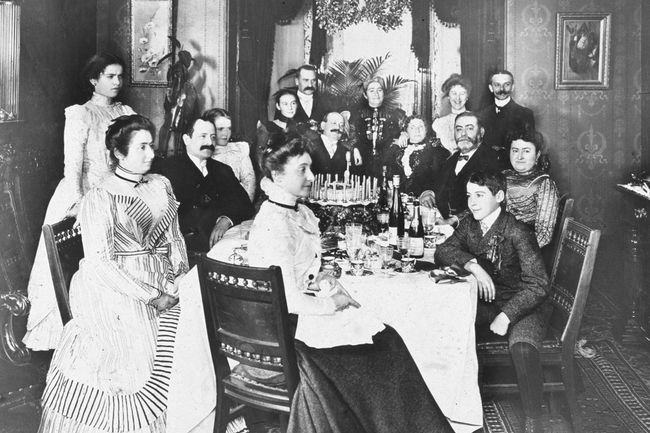
The modern birthday cake owes its clearest debt to 18th-century Germany. There, children’s birthdays were marked with Kinderfeste — festive gatherings that included a sweet cake crowned with candles. Each candle represented a year of life, plus one extra for the year to come, a tradition that still survives. The candles were lit in the morning, replaced throughout the day, and finally blown out in the evening after dinner. Much like today, children were encouraged to make a wish as the smoke carried their hopes skyward.
This ritual blended ancient practices, such as Greek candlelit offerings and Roman birthday cakes, into something recognizably modern: a sweet centerpiece, flames to mark the passage of time, and the magical moment of blowing out candles.
Even with Kinderfeste in Germany, birthday cakes weren’t for everyone, as the food was considered a luxury treat. For most of history, cakes required expensive ingredients such as refined sugar, fine flour, and butter. They were labor-intensive to make and decorated with painstaking artistry. In the early 19th century, American cookbook author Catharine Beecher suggested apple bread pudding as a child’s birthday treat — simple, hearty, and inexpensive. However, children’s birthday parties weren’t common celebrations in the U.S. until after the Civil War.
The Industrial Revolution played a decisive role in democratizing cake. As ingredients became cheaper and more widely available, bakeries could mass-produce cakes and sell them at affordable prices. And for home cooks, birthday cakes reached new heights of extravagance by the early 20th century. In 1912, the popular Fannie Farmer Cookbook included a full-page photo of a “Birthday Cake for a Three-Year-Old,” complete with angel cake, white icing, candied rose petals, sliced citron leaves, and sugar-paste cups for candles. These elaborate confections reflected both rising prosperity and a more ambitious form of cake decorating.
Today’s birthday cakes are often simple — such as a frosted sheet cake with a name piped across the top (a tradition that began around the 1940s) — but the symbolism has a long and rich history. Cakes mark abundance, indulgence, and festivity. Candles represent the passage of time, each flame a year lived, each puff a wish cast into the unknown. The act of gathering around the cake, singing together, and celebrating life’s milestones connects us across centuries to ancient rites of gratitude and hope.
From moonlit cheesecakes for Artemis to a 3-year-old’s angel cake in Fannie Farmer’s kitchen, birthday cakes tell a story about how humans celebrate time, community, and the sweetness of life. Every slice is part of a lineage that is both sacred and ordinary — proof that sometimes the simplest rituals carry the deepest history.
Credit: Debrocke/ClassicStock/ Archive Photos via Getty Images
AuthorTony Dunnell
August 27, 2025
Love it?33
Humans are superstitious creatures by nature, with many strange habits that seem entirely illogical. We avoid walking under ladders or opening umbrellas indoors in fear of bad luck. We knock on wood to prevent disappointment. We shun the number 13 and we can’t quite decide whether black cats are good or bad omens. None of these actions makes much practical sense, and the same is true for a range of superstitions involving food.
Food is a necessity that keeps us functioning and alive, but eating is also a cultural experience, rich with symbolic gestures, long-held traditions, and curious rituals. These include plenty of superstitions believed to bring luck, prosperity, health, wealth, and a range of other supposed benefits. And while modern science may dismiss these practices as mere folklore with no logical basis, there are plenty of common food-based superstitions we just won’t let go.
Here are six superstitions involving food, all of which demonstrate the human desire to find greater meaning or significance in the otherwise simple and essential acts of cooking, eating, and sharing meals.
According to one common food superstition, if you accidentally spill salt, you should immediately throw a pinch of it over your left shoulder. The origins of this strange belief aren’t entirely clear. It possibly dates back to the ancient world, including the Romans and Sumerians, when salt was a highly prized commodity and therefore spilling it was frowned upon.
Later, during the Renaissance, Leonardo da Vinci created one of his most famous works, “The Last Supper,” in which Judas Iscariot is portrayed knocking over a container of salt with his elbow, suggesting that the connection between spilled salt and bad luck was well established by that time. But why do we throw the spilled salt over our left shoulder? The common belief today is that the devil and evil spirits are said to lurk over the left shoulder, and the pinch of jinx-reducing salt is destined for their eyes.
Advertisement
More from our network
History Facts is part of Inbox Studio, an email-first media company. *Indicates a third-party property.
In the American South, eating black-eyed peas on New Year’s Day is a common tradition and superstition said to bring luck and prosperity throughout the year ahead. When enslaved Africans brought black-eyed peas to America, the beans were initially used as food for livestock and enslaved people only. Black-eyed peas gained wider acceptance during the Civil War, when they were one of the few foods left untouched by Union troops, who considered them animal feed. Southerners therefore managed to survive on black-eyed peas during the winter, and so began the association with good luck and prosperity, and the tradition of eating them on New Year’s Day.
Breaking the wishbone of a cooked chicken or turkey is a common Christmas practice in the United Kingdom and a Thanksgiving tradition in the United States. Objectively, it’s a very strange thing to do, no matter how much luck might be up for grabs: It involves making a wish while pulling the bird bone in two with another person, and the person who gets the bigger piece will have their wish granted.
The origins of this peculiar superstition are debatable. One common theory goes all the way back to the ancient Etruscans, who saw birds as potent oracles. They extracted wishbones from chickens, dried them in the sun, and then touched the bones as a form of divination. The Romans picked up this practice later, by which time the bone was being snapped in half, possibly to double its power. The Romans then introduced the concept to Britain, and it eventually found its way to the Americas via English settlers.
It’s hard to say whether the superstition really has such a long and storied history with a direct link all the way back to the Etruscans. We do know that the wishbone-breaking tradition as we know it today existed at least as early as the 17th century or early 18th century, when the bone was known as a “merrythought.” The term “wishbone” first appeared a century or so later.
Statistically, about one in every thousand eggs has a double yolk. So, if you regularly crack open and cook eggs, there’s a chance you’ll come across one at some point. For the superstitious, an egg with two yolks is widely considered a sign of impending good luck. It’s not known where or when this superstition emerged, but the reasoning behind it is clear to see. Eggs have long been associated with life, rebirth, and potential, making a double yolk a natural candidate for a symbol of abundance, prosperity, and good luck. Double yolks are sometimes regarded as a sign of an upcoming marriage, or that a woman will soon become pregnant with twins.
The superstitious tradition of blowing out candles on birthday cakes has surprisingly ancient origins. Some historians believe it goes as far back as the ancient Greeks, who may have made cakes adorned with lit candles to honor Artemis, the goddess of the hunt and moon. This, in turn, was adopted by the Romans, who helped spread the tradition.
In modern Europe, the ritual of celebrating birthdays with a cake and candles — as we do today — has been around since at least the 18th century. One of the first documented accounts comes from the 1746 birthday party of Count Ludwig Von Zinzendorf, a German bishop, who had a massive cake covered in candles. At this point, in Germany at least, the act of extinguishing the candle flames was seen as a way to carry desires up to the gods — not dissimilar to how we blow out candles and make a wish today.
The tradition of eating a dozen grapes on New Year’s Eve comes from Spain, and while the origins are still debated, it dates back to at least the 1880s. According to some historians, the Spanish bourgeoisie decided to imitate the French New Year’s celebration of drinking champagne by skipping the middleman and going straight for the grapes. Others suggest the tradition began as a shrewd marketing tactic by grape growers who had a surplus harvest to unload in the early 1900s.
Either way, the ritual caught on: By eating one grape at each of midnight’s 12 clock chimes, you are destined for a lucky year, with each grape representing one of the 12 forthcoming months. The custom soon spread throughout Latin America, in countries as diverse as Cuba, Mexico, Puerto Rico, Argentina, and Peru. Some Latino populations in the U.S. have also maintained the grape-eating superstition.
Credit: Historical/ Corbis Historical via Getty Images
AuthorNicole Villeneuve
March 19, 2025
Love it?79
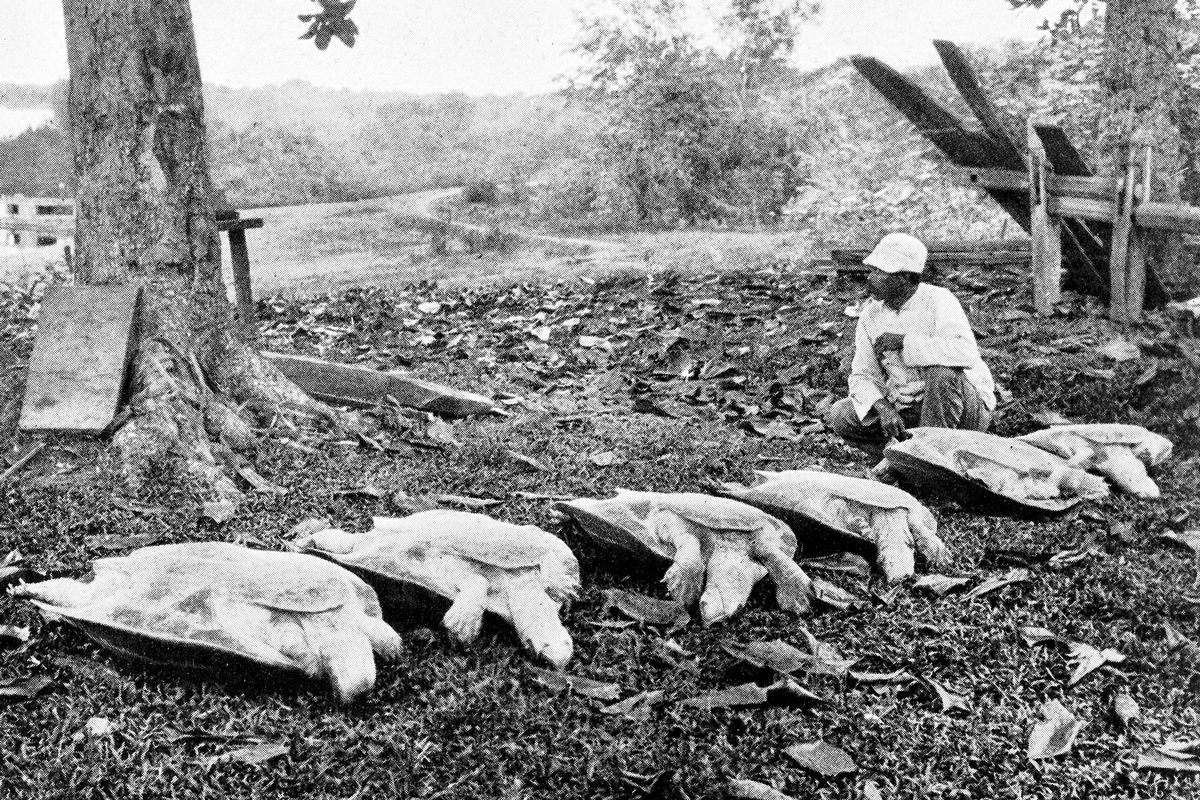
From the mid-18th century until the mid-20th century, turtle soup was one of the most luxurious dishes in European and American cuisine. It frequently appeared on the tables of wealthy families and was served at dinners held by prominent politicians. While turtle soup is still considered a delicacy in some parts of the world, it has become all but obsolete in America. But why, exactly, did this dish enjoy more than 200 years as a prized culinary staple?
The first Europeans to eat turtle were not aristocrats, but sailors and explorers in the late 17th century. The green sea turtles found in the Caribbean Sea and Atlantic Ocean were initially seen as merely suitable sustenance for long journeys at sea. But as Indigenous peoples of the Caribbean islands taught European seafarers more about turtles, the simple food became seen as “exotic” and desirable. It caught the attention of the upper class in Europe, and before long, turtle meat became a coveted luxury on the continent.
By the early 18th century, Britain’s taste for turtle had extended to the American colonies, and while recipes for turtle casseroles and other dishes were prominent in cookbooks from the era, turtle soup was the most popular. Turtle’s delicate, veal-like taste and rich, gelatinous texture made it ideal for slow-simmered broths and stews.
Advertisement
More from our network
History Facts is part of Inbox Studio, an email-first media company. *Indicates a third-party property.
With demand for turtle soup surging, overfishing quickly became a problem. The Caribbean sea turtle population rapidly began depleting in the early 1800s. In the U.S., diamondback terrapins from the country’s eastern shores became a popular substitute for sea turtles. Abraham Lincoln even served terrapin stew at his second inauguration in 1865. The dish, according to an 1880 edition of The Washington Post, was “an important part of any Washington dinner laying claim to being a pretentious affair.”
By the turn of the 20th century, “mock” turtle soup, made with calf’s head instead of turtle meat, had become almost as beloved as the real thing. But the appetite for real turtle soup remained, and overharvesting of turtle populations continued, particularly as canned turtle soup became an increasingly mainstream product.
Advertisement
Advertisement
Credit: Buyenlarge/ Archive Photos via Getty Images
The Fall of a Delicacy
When Prohibition started in 1920 and the manufacture, sale, and transportation of alcohol was banned in the U.S., a key ingredient of turtle soup, sherry, was no longer available. What’s more, without alcohol sales, many of the country’s fine dining establishments — the very ones that helped keep turtle soup flourishing among the upper class — struggled to remain open. As they gradually closed, with them went the once-ubiquitous terrapin treat.
In 1973, the Endangered Species Act made it illegal to kill sea turtles in U.S. waters — bad news for turtle soup fans but good news for sea turtles. By 2019, their population had rebounded, increasing by 980%. Even though a vintage recipe for turtle soup remained in a reissue of the classic American cookbook The Joy of Cooking as late as 1997, the hearty dish all but disappeared from menus and dining tables by the 1980s.
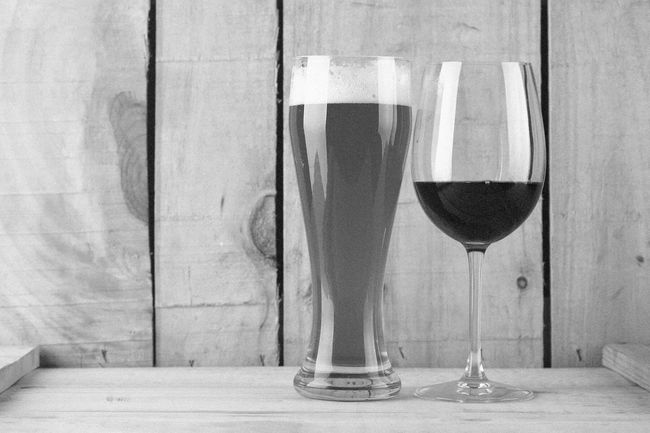
Whether you’re enjoying a glass of cabernet with a meal or downing IPAs with friends, you’re taking part in the multifaceted, multicultural act of alcohol consumption that dates back many thousands of years.
Indeed, although the dangers of excessive drinking are well known, and even small amounts of alcohol are now believed to come with health risks, imbibing has been part of the fabric of human existence since the dawn of recorded time. Some anthropologists argue that alcohol featured prominently in social customs that facilitated the rise and progression of civilizations. Others suggest that civilization itself was formed as a result of people settling in one area to domesticate crops for the production of alcohol.
Because spirits such as whiskey or vodka involve a more complex distillation process, beer and wine (and wine’s less-prominent cousin, mead) are the earliest forms of alcohol, left over from a time before any of humanity’s famous names, wars, or inventions etched themselves into history. Which sets up the ultimate bar debate: Which of these two ancient libations is older?
Early Humans Likely Discovered Alcohol by Accident
To let some of the air out of the suspense, we’ll note that it’s difficult to pinpoint when people first began drinking wine or beer, since proto-versions of both drinks can be formed with little to no human intervention.
Ethanol, or drinking alcohol, is created through the fermentation process that takes place when sugar meets yeast. In the case of beer, that occurs when a grain such as barley is exposed to moisture and its starches are converted into sugar, priming this component for catalyzation by deliberately introduced or naturally appearing yeast. Similarly, crushed or even overripe fruits with high sugar content including grapes or figs will naturally begin to ferment, creating the basis for wine.
It’s likely that early humans (or even animals) stumbled upon the intoxicating effects of fermented grains and fruits, and maybe even figured out how to replicate the experience by leaving their collected wares out in the elements for too long. We can only speculate on the concoctions that may have been experimentally produced by pre-Neolithic people, although they were almost certainly different from the beers and wines that emerged under more controlled conditions in later epochs.
Advertisement
More from our network
History Facts is part of Inbox Studio, an email-first media company. *Indicates a third-party property.
Unsurprisingly, such conditions were well established by the civilizations that introduced writing and other major advancements in math and science: the ancient Mesopotamians and Egyptians.
Along with the 5,000-year-old remnants of barley beer discovered at the Godin Tepe ruins in modern-day Iran, evidence of a Sumerian drinking culture has surfaced in the cuneiform receipts of beer sales as well as in the “Hymn to Ninkasi,” an ode to the Sumerian beer goddess, which includes a recipe for brewing. Grain-rich beer provided nutritional benefits for Bronze Age drinkers, and may have been safer to consume than the water from rivers, which could be contaminated with animal waste.
Beer also figured prominently into the lives of Egyptians around the same time; it’s believed that workers on the pyramid of Giza received more than 10 pints per day in rations, while even children consumed low-alcohol varieties.
Meanwhile, non-native wine grapes were grown in both areas, although wine was typically reserved for the palates of royalty and priests. The Egyptians were the first known culture to document their winemaking, and left behind records of the process to go with jars of their handiwork in the burial chambers of rulers and other prominent figures.
A 9,000-Year-Old Wine-Beer Hybrid Was Found in China
Of course, humans lived in settlements for thousands of years before these celebrated civilizations emerged, and alcohol played a part in many such early cultures.
Thanks to the discovery of drinking vessels in prehistoric Andean sites, archaeologists believe that the popular South American maize-based beer known as chicha may have been around since 5000 BCE. Going back even further, the detection of wine residue in jars and grape pollen in the soil around two sites near Tbilisi, Georgia, dating to around 6000 BCE showed that the residents of these former villages were among the earliest known wine producers.
To date, the earliest confirmed chemical evidence of an alcoholic concoction is neither specifically beer or wine, but something of a combination of the two: As detailed in a 2004 paper, an examination of 9,000-year-old pottery jars from the Jiahu Neolithic site in northern China revealed the residue of a fermented beverage of rice, honey, and fruit.
Meanwhile, ongoing discoveries continue to push the beginnings of boozy beverages even further and further into the past.
While it was once thought that humans domesticated grapevines no earlier than 8,000 years ago, a 2023 study of the DNA of more than 3,500 vine samples showed that wine grapes were domesticated in the Caucasus region of Western Asia and Eastern Europe as far back as 11,000 years ago. Table grapes were also domesticated in the Middle East around that same time, and it was these crops that were crossbred with wild versions to launch the wine varieties that became popular throughout the continent.
The idea of an 11,000-year-old wine is certainly impressive, but the archaeological record suggests the possibility of an even older brew: In 2018, a Stanford University research team found the 13,000-year-old remains of starch and plant particles called phytolith, which result from wheat and barley beer production, at a Natufian gravesite near modern-day Haifa, Israel. Although critics believe the evidence points to breadmaking, the Stanford team contends that both bread and a thick, grog-type beer were created at this site.
For now, we’ll give the edge in this battle of seniority bragging rights to beer. But with more discoveries sure to pop up in the coming years, it's likely this debate will be revived — and continue past many a closing hour.
Credit: Universal History Archive/ Universal Images Group via Getty Images
AuthorTimothy Ott
January 16, 2025
Love it?43
Most of us don’t give a whole lot of thought to the habit of finishing a satisfying meal with a dessert of something sweet — we’re too busy savoring the delectable mouthfuls of cake, custard, or ice cream.
Yet this is a clear culinary tradition that many people follow. While some may elect to eat sweets before a main course, and others simply dig into pie or brownies at any time of the day, most adhere to the standard operating procedure of dessert after the main course at lunch or dinner. But how and when did this order come about? Why do we eat sweets after a savory meal, and not the other way around?
To start somewhere close to the beginning, the craving for sweets is biological. Our hominid ancestors realized they derived more energy from ripe fruit with a higher sugar content than unripe fruit, and humans evolved with a hardwiring that connected sweetness to pleasurable feelings.
This primal need perhaps explains why sweets have traditionally featured into religious ceremonies for many cultures. As described in Michael Krondl’s Sweet Invention: A History of Dessert, Mesopotamian cooks prepared cakes as an offering to the goddess Ishtar. Similarly, Hindus throughout India have presented a sugar and milk concoction known as pedha to deities such as Kali for more than two millennia.
At times, the ritual of serving sweet dishes at distinct intervals has translated to something similar to the modern idea of dessert. After a day of fasting in celebration of Krishna’s birthday, Hindus traditionally indulge in treats such as bhog kheer, a pudding, or shrikhand, a sugar-flavored yogurt. In Turkey, the end of fasting at Ramadan means an opportunity for celebrants to sink their teeth into baklava, a beloved pastry.
Of course, the preparation and consumption of sweets has long been a part of secular mealtimes as well. The Deipnosophists, a work from the third-century Greek writer Athenaeus of Naucratis, describes an array of honey-coated fare served over a series of lavish banquets. However, the now-commonplace notion of specifically relegating such sweeter foods to the end of a meal has its origins in France.
Advertisement
More from our network
History Facts is part of Inbox Studio, an email-first media company. *Indicates a third-party property.
Credit: Culture Club/ Hulton Archive via Getty Images
Diners in Medieval France Enjoyed Meal-Ending Sweets
According to Sweet Invention, the term "dessert" appears in French cookbooks as far back as the 14th century; the French loanword is the noun form of the verb desservir, meaning "to remove what has been served." In the Late Middle Ages, dessert was distributed after the dishes of the main meal had been cleared, although these edibles weren't necessarily of the sweet variety.
The serving that followed dessert and concluded the meal, known as the issue, was more likely to consist of sweet foods such as fruit or spiced candies. Both the dessert and issue fell under the category of entremets, smaller portions that appeared between or after the main courses.
For European diners of the Late Middle Ages, it was common to see dishes of meat and cakes served together as the main course; there was little attempt to separate these foods of radically different tastes and textures. This remained the case even after sugar became more widely available on the continent, and influential Renaissance-era Italian cooks began showering all varieties of meals with healthy doses of the valuable commodity.
Advertisement
Advertisement
Credit: Heritage Images/ Hulton Fine Art Collection via Getty Images
Desserts Emerged as a Distinct Course in the 17th Century
By the 17th century, there was a growing distinction between sweet and savory courses among French culinary practitioners, and with it arrived the modern notion for the proper way to end a meal. Dessert even earned an entry in the 1690 edition of the Dictionnaire Universel, defined as "the last course placed on the table... Dessert is composed of fruits, pastry, confectionery, cheese, etc."
Recipe books of the era also devoted increasing quantities of print to instructions for pastries, jams, and fruit dishes. However, the preparation of these meal-ending foods fell under a different jurisdiction than that of the chefs in charge of the main courses. Desserts were handled by confectioners who worked in the kitchen’s "office," or pantry.
Although the office initially was considered a subordinate branch of the kitchen pecking order, its confectioners came to be considered artisans in their own right thanks to the sculptural desserts served at the ostentatious dinners of King Louis XIV and other royals. Dessert as an art form arguably reached its peak in the early 19th century with the creations of French chef Antonin Carême, who built massive replications of pyramids, temples, and fountains out of sugar mixtures.
The French Revolution Led to Modern Dining Customs
The guidelines for dessert were changing even as Carême was producing his classically inspired pièces montées. The fall of the ruling class with the French Revolution meant that the chefs who once toiled in palace kitchens became unemployed. While some were able to find wealthy benefactors, others spurred the transformation of the public dining house by launching new eateries around Paris.
These restaurants introduced the concept of service à la russe, in which each customer ordered individual dishes to his or her liking, delivered one course at a time. Meanwhile, the rise of cafés and tea houses throughout the city further popularized the concept of single-portioned desserts.
By the arrival of the 20th century, the habit of dessert to polish off a meal, whether at home or a restaurant, had taken root in the country. And given France's powerful influence on culinary customs, it wasn't long before this sweet finishing touch at mealtime became standard across the rest of Europe, as well as on the other side of the Atlantic.
As far as ephemera is concerned, few things are as temporary as snack foods from the past. Snacking itself is an evanescent experience, a fleeting moment of between-meal indulgence or an inattentive nosh during a spectator event. But snacks are also a major part of American culture; snacking has doubled since the late 1970s, and according to the 2024 USDA survey “What We Eat in America,” 95% of American adults have at least one snack on any given day.
The idea of snacking has distinctly 20th-century origins. Eating between the traditional three meals per day was frowned upon during the 19th century, and proto-snack street foods of the time (such as boiled peanuts) were considered low class. But the Industrial Revolution, combined with a more enterprising spirit around the turn of the 20th century, created business opportunities for packaged, transportable foods, which were often marketed as novel expressions of modern technology.
As the nascent snack market emerged and grew, companies introduced countless products with varying degrees of success. Some, such as Cracker Jack (which debuted in 1896) and Oreos (which debuted in 1912 as a nearly exact imitation of the earlier Hydrox cookies), endure to this day. But history is littered with the wrappers of discontinued snacks. Here are some long-gone treats we’d love to see make a comeback.
The Schuler Candy Company made this distinctive chocolate and cherry candy bar from 1913 to 1987. Each Cherry Hump bar contained two cherries, cordial, and fondant, and was double-coated in dark chocolate. In an unusual final step in their production, the bars were aged for six weeks, in order for the runny cordial and thicker fondant to meld and reach a cohesive state. Despite the cohesion achieved by aging, the filling of the candy bar still contained a more liquid texture than other candies, and this ended up being its undoing.
When Schuler became a subsidiary of Brock Candy Company in 1972, Brock sought to update the production and distribution methods of Cherry Humps, and chose bulky high-volume pallet shipments instead of the previous method of fanning out multiple shipments to smaller distribution lots. What made sense on paper for efficiency was disastrous in practice for a product as fragile as Cherry Humps: The candy often arrived at its destination badly damaged, with visibly sticky packaging from leaking cordial.
Instead of shoring up the candy’s packaging to protect it, or adjusting the shipping method, Brock changed the candy’s recipe to make it sturdier. The new recipe did away with the enticingly juicy cordial and fondant filling, instead setting firmer cherries in a layer of dense white nougat. There was no more gooeyness to speak of, and in turn, no more of the candy’s signature appeal. Sales steadily declined and Cherry Humps were discontinued.
Advertisement
More from our network
History Facts is part of Inbox Studio, an email-first media company. *Indicates a third-party property.
Introduced at the beginning of the 1960s, Baronet was a vanilla creme sandwich cookie Nabisco advertised in a memorable (if repetitive) jingle as being made with milk and “country good” eggs. The appeal of Baronet cookies was in their approximation of a homemade treat: The shortbread wafers had a natural buttery flavor, and they sandwiched a filling that Nabisco claimed tasted “just like the icing on a cake.”
While they might sound like a vanilla equivalent of Nabisco’s much more famous Oreos, Baronet cookies weren’t as sweet, and they had a less ornate design than Oreos, with gently scalloped edges and embossed lines radiating from the center of the cookie. They also tended to be a little more economical than Oreos.
Though today’s grocery store shelves are stocked with an amount of Oreo variants that stretches the imagination, the cookie was known for decades in a single variety: the classic chocolate wafers with vanilla creme. But when Oreos were introduced in 1912, this wasn’t the only version available; there was also a version with a lemon creme filling.
Sometimes referred to as lemon meringue, this chocolate-lemon combination is an unusual one for today’s palette, as orange tends to be the more common citrus to pair with chocolate. Then again, perhaps the chocolate-lemon combination was unusual for the early-20th-century palette as well: By the 1920s, the lemon filling was discontinued. Still, considering the sometimes bizarre reaches of today’s Oreo flavor offerings, it’s surprising the chocolate-lemon combination hasn’t made a comeback.
Tato Skins were a potato chip snack introduced by Keebler in 1985. Unlike most potato chips, they were made from dehydrated potato flakes (as opposed to potato slices), which made them somewhat similar to Pringles. But what differentiated Tato Skins from every other potato chip was right there in the name: The ingredients included the skin of the potato, in order to give the snack a taste that approximated a baked potato. The chips even had a rough “skin side” when flipped over.
Tato Skins initially came in three flavors: cheddar cheese and bacon, sour cream and chives, and “baked potato” (i.e., no seasoning other than salt), with a barbecue flavor added to the lineup in 1987. By 2000, though, the chips had been discontinued — perhaps a victim of cuts during a turbulent era of acquisition and sale from 1996 to 2000. While Keebler’s Tato Skins division was purchased by a company that reintroduced the snack as TGIFridays Potato Skins later in 2000 (thanks to a licensing deal with the eponymous restaurant chain), the newer version was formulated differently from the original.
Jell-O Pudding Pops were frozen pudding on a stick, first test-marketed on a regional basis in 1978 and introduced nationally during the early 1980s. They were developed by Jell-O parent company General Foods in order to respond to changes in eating patterns during the era. Desserts had been losing ground to portable afternoon snacks, so Pudding Pops were a way to reconfigure General Foods’ Jell-O Pudding as a portable snack. Accordingly, Pudding Pops were originally available in four classic pudding flavors: chocolate, vanilla, banana, and butterscotch. They had a smooth texture that was similar to a Fudgesicle, but with a slightly richer creaminess.
The product was a huge success from a sales standpoint. Five years after entering the market, Pudding Pops were bringing in around $300 million in annual sales. But there was trouble on the back end: Since Jell-O was generally a dry goods company, its manufacturing and distribution processes were not originally equipped to handle frozen foods. As a result, Pudding Pops required added expenditures all along the supply chain, and the snack didn’t reach profitability targets despite the encouraging sales figures.
By 1994, Pudding Pops had vanished from the freezer aisle. In 2004, Jell-O licensed Pudding Pops to Popsicle, a seemingly ideal partnership for solving the previous supply chain issues. However, Popsicle changed the formulation, using its own molds for the signature narrow and rounded-off Popsicle shape, rather than the wider and flatter shape of the original Pudding Pops. Despite the potential for the relaunched product to take advantage of a market for nostalgia, the Popsicle-branded Pudding Pops never caught on, and were discontinued in 2011.
The ancient Babylonians, who lived in modern-day Iran, Iraq, Turkey, and Syria as far back as the early second millennium BCE, were among the earliest human civilizations. They pioneered such concepts as written language, legal justice, and mathematics, and the culinary arts are no exception: The world’s earliest written recipes survive today in the form of ancient Babylonian tablets dating to around 1730 BCE. The tablets were unearthed in the 1920s, but were initially thought to be medical texts. It wasn’t until the 1980s that researchers finally deduced that the artifacts actually comprised an early cookbook — in fact, it’s considered to be the oldest surviving cookbook in the world.
I was curious to see how these early recipes tasted — especially compared to contemporary dishes — so I set out to recreate a couple of them and try them myself. One of the three tablets contains a summary of 25 recipes for various stews and broths, while the other two describe those recipes in more detail. But the tablets still lack critical specifics, such as exact ingredient amounts and cooking times. The translation for one recipe, for instance, simply says, “Meat is not used. You prepare water. You add fat…” and so on, which would have been hard to replicate. Luckily, a team at Yale University used the information on the tablets, along with their scholarly knowledge of ancient Babylon, to compile several modern recipes that are considered accurate interpretations of those ancient meals.
Using their findings, I prepared two of the recipes at home: a lamb and beet stew, and a vegetarian broth whose name has been translated as “unwinding.” (Though it’s unclear why it’s called “unwinding,” experts suggest it could have been a dish people ate to relax.) Despite the ancient nature of these recipes, it wasn’t difficult to compile the ingredients, or at the very least suitable substitutes.
Lamb and Beet Stew
The primary dish I made was a lamb stew. Lambs were among several animals that were domesticated in ancient Mesopotamia, and were a key component of cuisine in the region. Mesopotamia was also an agricultural hot spot that came to be known as the Fertile Crescent — referring to the area’s rich, fertile soil — so it comes as little surprise that the lamb stew contained plenty of fresh veggies as well.
Credit: Original photography by Bennett Kleinman
Ingredients
1 pound diced lamb leg
½ cup rendered fat (we used cow fat instead of sheep fat)
½ teaspoon salt
1 cup beer
½ cup water
1 small chopped onion
1 cup chopped arugula
1 cup spring onions
½ cup cilantro
1 teaspoon cumin
1 pound diced red beets
½ cup chopped leek
2 cloves garlic
Coriander seed, cilantro, and kurrat (we used spring onion) for garnish
For this dish, I had to make a few minor adjustments given the ingredients I had available. The recipe as written called for an Egyptian leek called kurrat, which is known for having a mild onion and garlicky flavor. Given the similar flavor profile, spring onions are a suitable alternative, so I used those instead.
The dish also calls for beer, which was a major component of Babylonian culture. It was difficult, of course, to find a beer that would have been exactly like the ones drunk by the ancient Babylonians, but I looked for an option that was as close as possible. Most of the beer recipes archaeologists have uncovered from ancient Babylon are made with barley. Tate Paulette, the author of In the Land of Ninkasi: A History of Beer in Ancient Mesopotamia, writes that “there’s no evidence for the use of hops” in Babylonian beer, unlike in modern beers. He also notes that early beers often included “date syrup, and additional flavorings,” giving them a sweetness. Brew Your Own magazine, meanwhile, points out that many ancient beers were sour in nature. Taking all this into account, I selected a fruity and sour ale to roughly replicate the taste profile of Babylonian beer.
The cooking process for this dish was rather simple, and not unlike how you’d prepare any modern stew. The major difference was how heat was applied — while cooks in ancient Babylon would’ve used an open flame, I used an electric stovetop.
Advertisement
More from our network
History Facts is part of Inbox Studio, an email-first media company. *Indicates a third-party property.
The “unwinding” recipe is a broth thickened by barley-based bread. The broth contains many similar ingredients to the lamb stew, including salt, scallions, cilantro, garlic, and leeks. In addition, toasted and crushed barley seeds are formed into a dough, baked, and added to the broth. This bread, mind you, isn’t like the loaves we enjoy today. It had a hard, crunchy shell, akin to bread that’s partially gone stale. Also, the inside was crumbly as opposed to the soft and pillowy texture of modern baked breads.
Credit: Original photography by Bennett Kleinman
Ingredients
14 ounces barley seeds
¾ cup warm water
½ teaspoon salt
½ ounce spring onion
¼ ounce cilantro
2 cloves garlic
3 ½ ounces leek
2 tablespoons untoasted sesame oil
6 ¼ cups water
Creating the broth was a bit more complicated than the stew, as it required making a sourdough bread, which took multiple days. First, I soaked the barley seeds overnight, then crushed them into dust, mixed them with warm water to form dough, and let the mixture sit for 12 hours. The next day, I baked the dough for 20 minutes before removing and letting it sit on the counter to cool. Then I got to work preparing the broth, which proved to be extremely simple. After letting the mixture simmer for an hour, I crumbled the bread into the broth, resulting in a thicker texture.
Advertisement
Advertisement
The Result
After a simple yet lengthy cooking process, it was time to enjoy these classic Babylonian dishes. Both dishes were reminiscent of some stews and soups that you’d eat today, but the spices and seasoning were less complex, which created a less interesting flavor profile overall. Still, they were pretty tasty and filling.
Credit: Original photography by Bennett Kleinman
I can say with confidence that the lamb and beet stew is something I’d gladly cook and eat again, though it wasn’t without its flaws. The lamb, beets, and herbs complemented each other quite nicely in terms of flavor, with the beets providing a natural sweetness that counteracted the earthiness of the meat. The textures were also on point, as the mix of chewy lamb and crunchy root vegetables worked out well.
However, some of the bites I took were too sweet, as there was a lack of earthy spices to even things out. Some simple seasoning would have done wonders in balancing out the recipe, including a bit more salt or some black pepper. However, black pepper is native to Southeast Asia, and it didn’t make its way to Mesopotamia until Asian traders brought it to the region. (It’s unclear exactly when this occurred, but records show that black pepper made its way from India to Egypt around 1500 BCE via trade routes that would have passed through Mesopotamia.) Still, the stew was a warm and delicious dish that would be perfect for a camping trip or cold day.
Credit: Original photography by Bennett Kleinman
The broth, on the other hand, was passable albeit rather uninteresting. It contained hints of onion and garlic, and the crumbled barley bread helped to thicken the otherwise thin consistency. There was nothing unpleasant about eating this dish, but little to excite the palate either. It was simply a vegetable stock with a bit of semistale bread mixed in. So while “unwinding” may be a good choice if you’re looking for something light and easily digestible, it isn’t a complex culinary delight like the lamb and beet stew.
In summary, I was surprised by how familiar the cooking process was to the low-and-slow dishes that I frequently make in my kitchen. It’s also fascinating to think just how similar these flavors from 4,000 years ago are to our recipes today. Despite the simple flavor profile, both of these dishes were warm and filling, making them especially good for cooler days.
Advertisement
Advertisement
Another History Pick for You
Today in History
Get a daily dose of history’s most fascinating headlines — straight from Britannica’s editors.