


Why Do Men’s and Women’s Shoes Have Different Sizes?

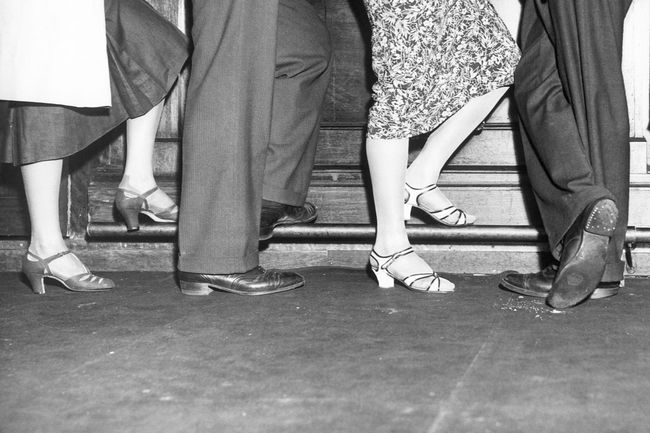
  • Close-up of people’s shoes at a bar
Close-up of people’s shoes at a bar
Credit: FPG/ Retrofile RF via Getty Images
Author Tony Dunnell

January 29, 2026

Love it?

If you’ve ever tried on a pair of shoes in your size that didn’t even come close to fitting, it could be because they were labeled for the opposite sex. Men’s and women’s shoes have completely different sizing systems in the United States (unlike most of the world, where sizing is unisex). A women’s size 8 foot, for example, is roughly equivalent to a men’s 6.5 in U.S. sizing. This seemingly arbitrary system leaves many shoe-hunters scratching their heads. Why do we have different numbers for men’s and women’s shoes? Why not just use the same sizes for everyone, regardless of gender? 

Credit: H. Armstrong Roberts/ClassicStock/ Archive Photos via Getty Images 

The First Shoe Sizes

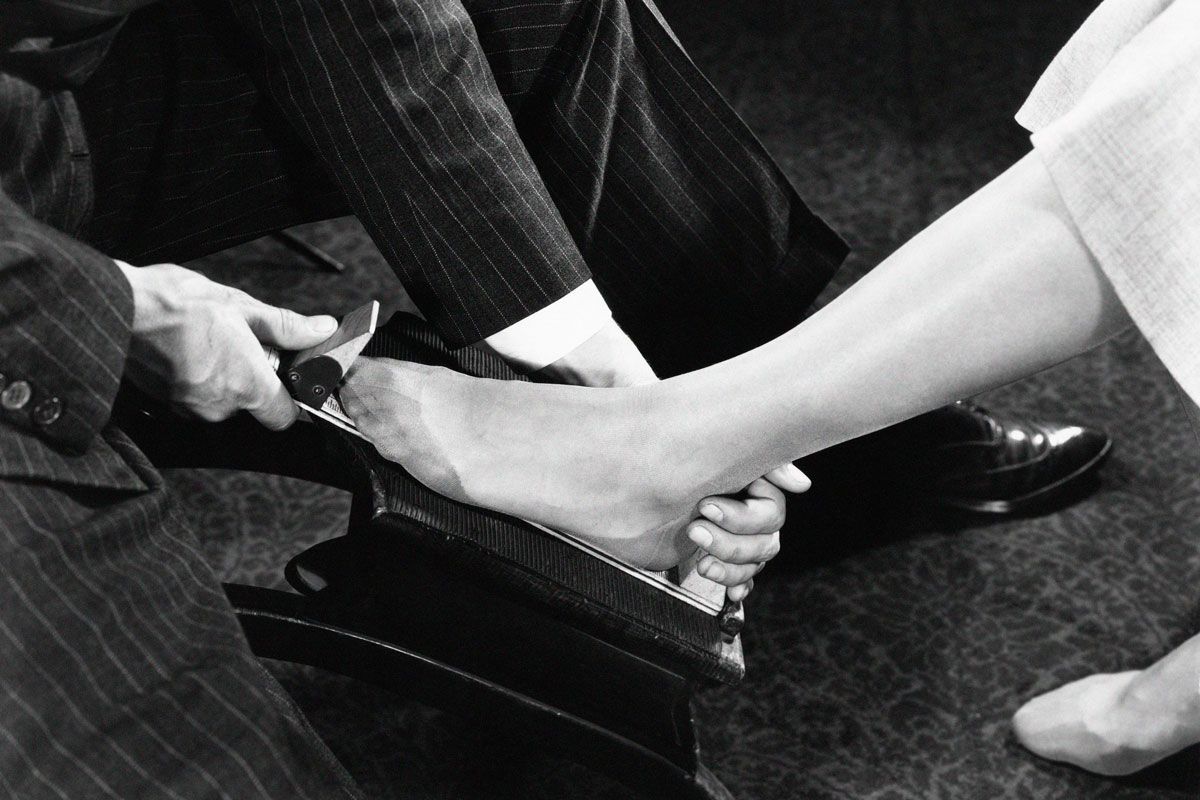
Though the first known description of a shoe-sizing system appears as early as 1688 in England, it wasn’t until the 19th and early 20th centuries that concerted efforts at shoe standardization took place. Manufacturing was becoming increasingly industrialized, and shoemakers were transitioning from custom-made footwear to mass production — which required standardized sizing systems. 

In the United States, the first detailed sizing system was introduced by New York businessman Edwin Simpson in the 1880s. He based his sizes on the existing barleycorn system in the U.K.: The British standard for an inch was historically measured as three barleycorns laid end to end, and had long been used to measure bespoke shoes. 

Each full U.S. shoe size increases by one-third of an inch (a barleycorn), so to turn a foot measurement into a size number, you multiply the foot length by three (to count how many of those one-third-inch measurements fit) and then subtract a fixed amount: 22 for men’s shoes and 21 for women’s shoes. For example, a man who wears a size 9 typically has a foot about 10 and one-third inches long, because 9 plus 22 is 31 (the barleycorn measurement), and 31 divided by 3 is 10.333 inches.

This subtraction keeps the size numbers small and convenient instead of having much larger sizes such as 30 or 40. The slight difference in how much is subtracted for men’s versus women’s sizes accounts for historical differences in how the sizes were set up. The details of who determined these subtraction amounts has been lost to history, but the resulting sizes are still used to this day.

Simpson’s measuring system was adopted by the Retail Boot & Shoe Dealers’ National Association about a decade later, providing the first nationwide shoe-sizing guidelines. By the 1920s, standardized measuring devices such as the RITZ Stick and the Brannock Device were adopted by stores across the country, further cementing standardized shoe sizes. 

You may also like

Why Do Shirts Have Collars? 

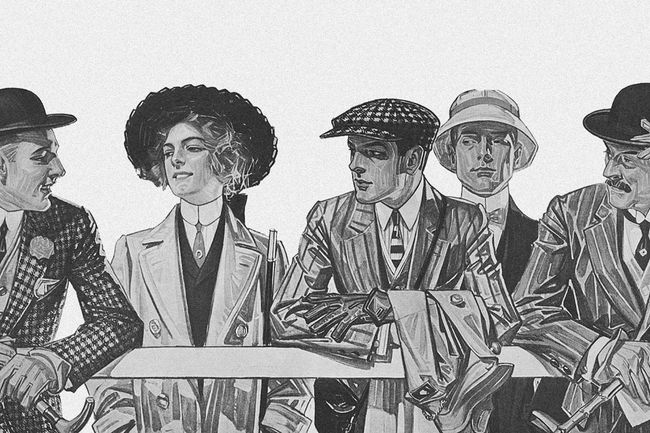
  • Ad for menswear, 19th century
Ad for menswear, 19th century
Credit: Heritage Images/ Hulton Archive via Getty Images
Author Tony Dunnell

December 18, 2025

Love it?

As we go about our daily lives, we tend to take the existence of many simple things for granted, rarely considering how or why they came to be. Take, for example, the humble shirt collar. Most of us own a shirt with a collar, along with other tops — such as the ubiquitous T-shirt — that have no collar at all. So, why do some shirts have collars? What purpose do they serve and when did they first appear? To answer these questions, we need to take a journey across five centuries, starting with the medieval clergy.

Credit: Photo 12/ Universal Images Group via Getty Images 

Clerical Collars

Before the 15th century, there were no shirt collars at all — shirts were simple undergarments with open, round, or scoop necklines, and long sleeves made of linen or hemp. Collars first appeared in the Western world sometime during the mid-to-late 15th century as simple standing bands of fabric around the neckline. And it wasn’t the nobility who introduced the style, but rather men of faith. Members of the clergy often wore stiff tunics with high necks. Adding a collar to the shirt worn beneath the scratchy tunic helped prevent the tunic’s stiff neck from aggravating the skin. 

Among the clergy, these collars became the only visible part of the shirt — a small yet distinct strip of fabric emerging from the neckline. While they likely originated for purely practical reasons, the distinctive collars became symbols of humility and purity — although it wasn’t until the 19th century that Scottish Reverend Donald McLeod invented and popularized the clerical collar (informally known as a dog collar) worn by ministers today. 

You may also like

Why Are Men’s and Women’s Buttons on Opposite Sides?

  • Classic button-up shirt
Classic button-up shirt
Credit: Angelo DeVal - Fashion and Clothing/ Alamy Stock Photo
Author Tony Dunnell

October 29, 2025

Love it?

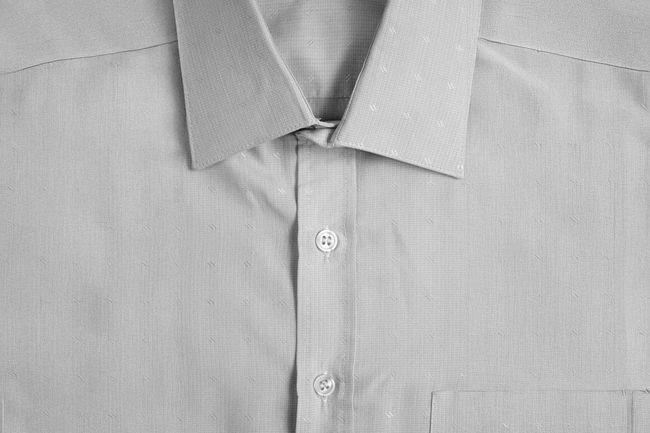
If you’ve ever tried putting on a shirt that was designed for someone of the opposite gender, you may have noticed something peculiar: The buttons are on the “wrong” side. Men’s shirts button left over right, with buttons running down the right side and buttonholes on the left. Women’s shirts do the opposite, buttoning right over left. 

Before the rise of buttons, garments were typically laced together or fastened with brooches or clasps. Buttoned closures for garments became prevalent in the 13th century with the advent of the reinforced buttonhole — and the two opposing button configurations for men and women have existed for centuries. But why? Here’s a look at some of the theories behind this long-standing design choice. 

Credit: Universal History Archive/ Universal Images Group via Getty Images 

Buttons and Battle 

Historians don’t know for sure why men’s and women’s buttons are on opposite sides, but some of the most common explanations involve military considerations. According to the authors of The Art of Chivalry: European Arms and Armor From the Metropolitan Museum of Art, medieval breastplates were formed of two separate and overlapping plates. To ensure that an enemy’s lance point would not slip between the plates, they were pieced together with the left plate overlapping the right, “since it was standard fighting practice that the left side, protected by the shield, was turned toward the enemy,” the authors point out. For this reason, they argue, “men’s jackets button left to right even to the present day.” 

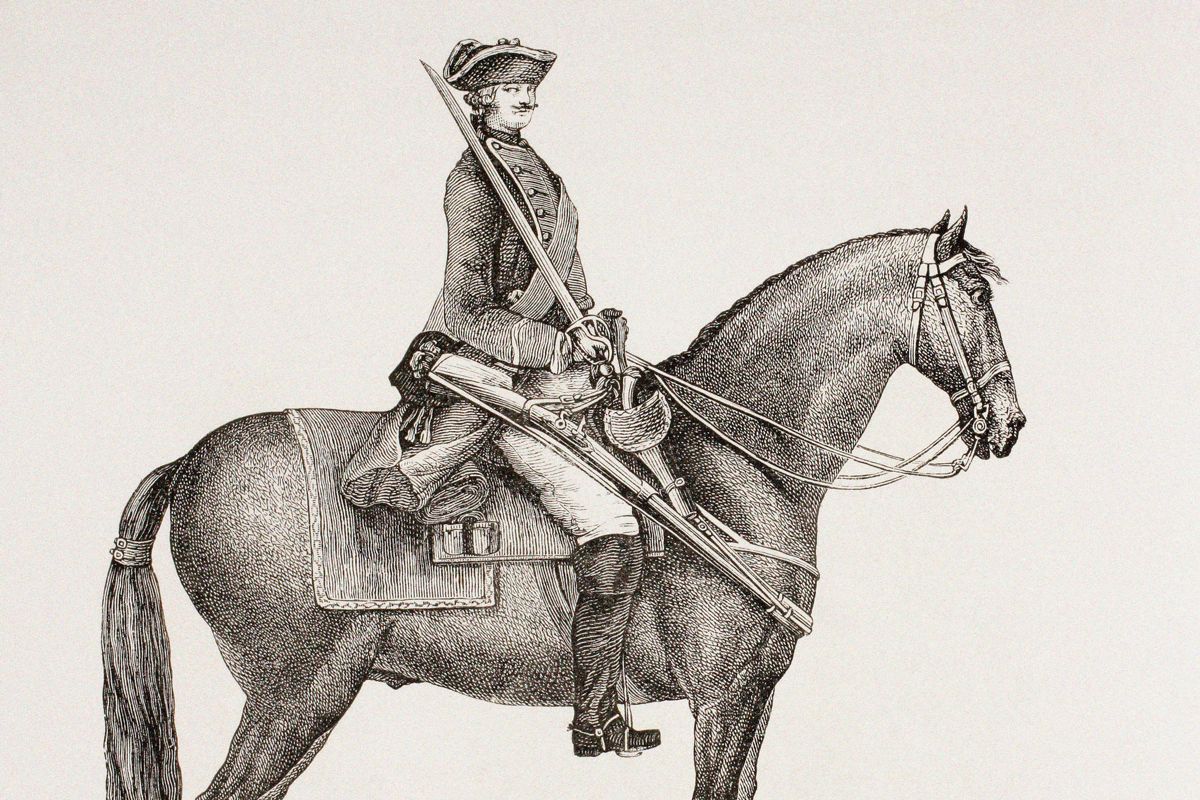
Others have made similar observations. Due to the predominance of right-handedness (about 90% of humans are right-handed), swords were typically worn on the left side, so they could be drawn with the dominant right hand. According to Paul Keers in A Gentleman’s Wardrobe, men’s shirts and jackets were deliberately designed to button left over right “to avoid catching the pommel of one’s sword in the opening, when drawing it right-handed.” 

From avoiding the piercing blows of lance tips to smoothly drawing weapons, there is some logic to the soldierly need for buttoning left over right. But there’s no definitive evidence to support these military theories — and while they might explain the need for buttons on the right, they don’t supply any answers as to why women’s buttons are on the opposite side.   

You may also like

Why Do Jeans Have Rivets?

  • Young adults wearing jeans
Young adults wearing jeans
Credit: FPG/ Archive Photos via Getty Images
Author Nicole Villeneuve

August 6, 2025

Love it?

You’ve probably noticed them without giving them a second thought. Those tiny metal studs near the front pockets of your jeans are easy to overlook, but they’ve been a fixture of the garment for more than a century. So why are they there? Sure, they add to denim’s rugged, familiar charm — but they also tell the story of how jeans became some of the most useful pants in history. 

Credit: H. Armstrong Roberts/ClassicStock/ Archive Photos via Getty Images 

The First Rivets

By the late 19th century, what we now call jeans — then more commonly known as waist overalls — had become the standard uniform of hard labor in the United States. Gold miners, railroad workers, farmers, and teamsters (the people who drove horse-drawn wagons) all relied on the garment’s sturdy material to endure long days of physically demanding work. 

These early work pants were primarily made from cotton duck canvas; denim was used only occasionally until it overtook canvas sometime in the late 1800s, and the word “jeans” itself didn’t catch on until the 1950s and ’60s. While the heavy canvas held up well, the pants didn’t always. Pockets in particular were known to pull away under the weight of tools and repeated strain. For all their toughness, early jeans still came apart quickly. 

In 1870, a tailor named Jacob Davis in Reno, Nevada, was tasked with solving that very problem when a customer asked if there was a way to make her husband’s work pants last longer. Davis borrowed an idea from some of his other projects. He’d been using rivets — small metal fasteners — on the horse blankets and wagon covers he often made for teamsters. Noticing some leftover rivets on the table, he was struck by an idea: Why not use them to reinforce the pockets of work pants?

The solution was simple, but it worked. The pants held up, and word spread. By 1872, Davis realized he might be onto something big, but without the time or money to properly pursue a patent, he reached out to his fabric supplier in San Francisco, a successful dry goods wholesaler named Levi Strauss. The men partnered up, and on May 20, 1873, they received a patent for an “Improvement in Fastening Pocket Openings.” 

You may also like

5 of the Most Famous Dresses in History

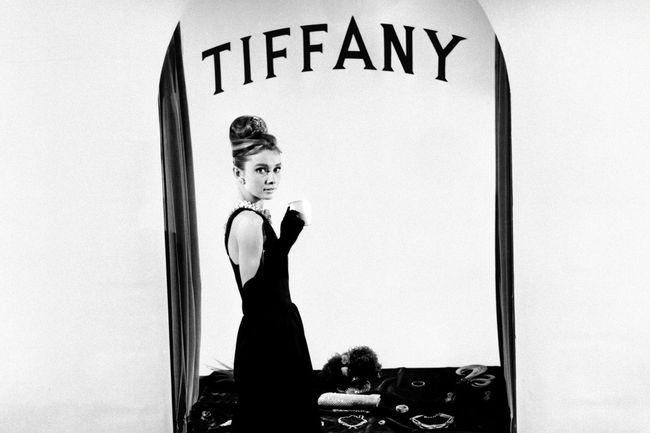
  • Audrey Hepburn in “Breakfast at Tiffany’s”
Audrey Hepburn in “Breakfast at Tiffany’s”
Credit: Collection Christophel/ Alamy Stock Photo
Author Tony Dunnell

July 23, 2025

Love it?

Rose Bertin, an 18th-century French dressmaker often referred to as the world’s first fashion designer, once told her most famous client, Queen Marie Antoinette, “There is nothing new except what has been forgotten.” 

Some gowns, however, steadfastly defy the passage of time and refuse to be forgotten. They are destined to remain fresh in the public consciousness, no matter how many years pass or how many trends come and go. Such dresses have transcended mere fashion to become enduring symbols of power or romance, tragedy or transformation, capturing moments in history in finely crafted fabric and thread. 

Here’s a look at five iconic gowns from history, from the elaborate wardrobes of prerevolutionary France to the heights of Hollywood royalty. 

Credit: The Picture Art Collection/ Alamy Stock Photo

Marie Antoinette’s Court Dresses

Marie Antoinette was the epitome of excess in prerevolutionary France. Her name became synonymous with profligacy, promiscuity, and the decline of moral authority within the French monarchy, and her legendary quote, “Let them eat cake,” is widely known even today — despite there being no evidence that she ever uttered the words. 

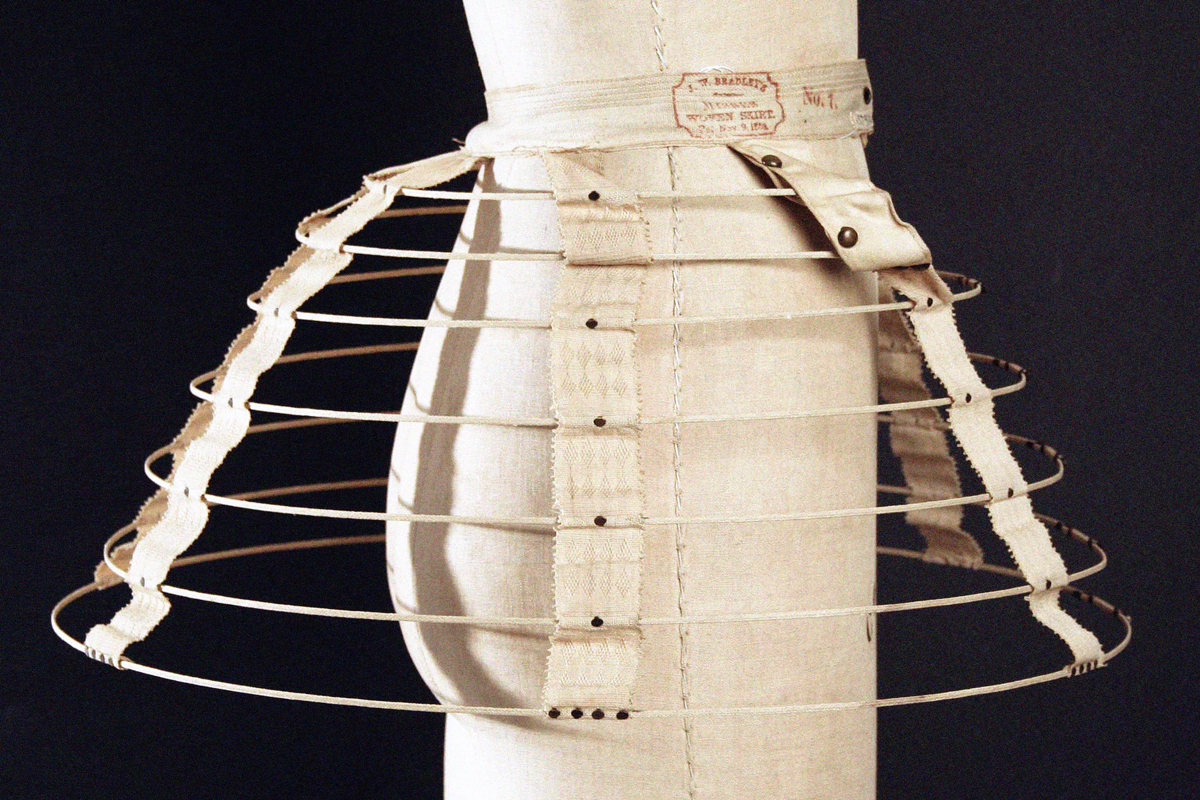
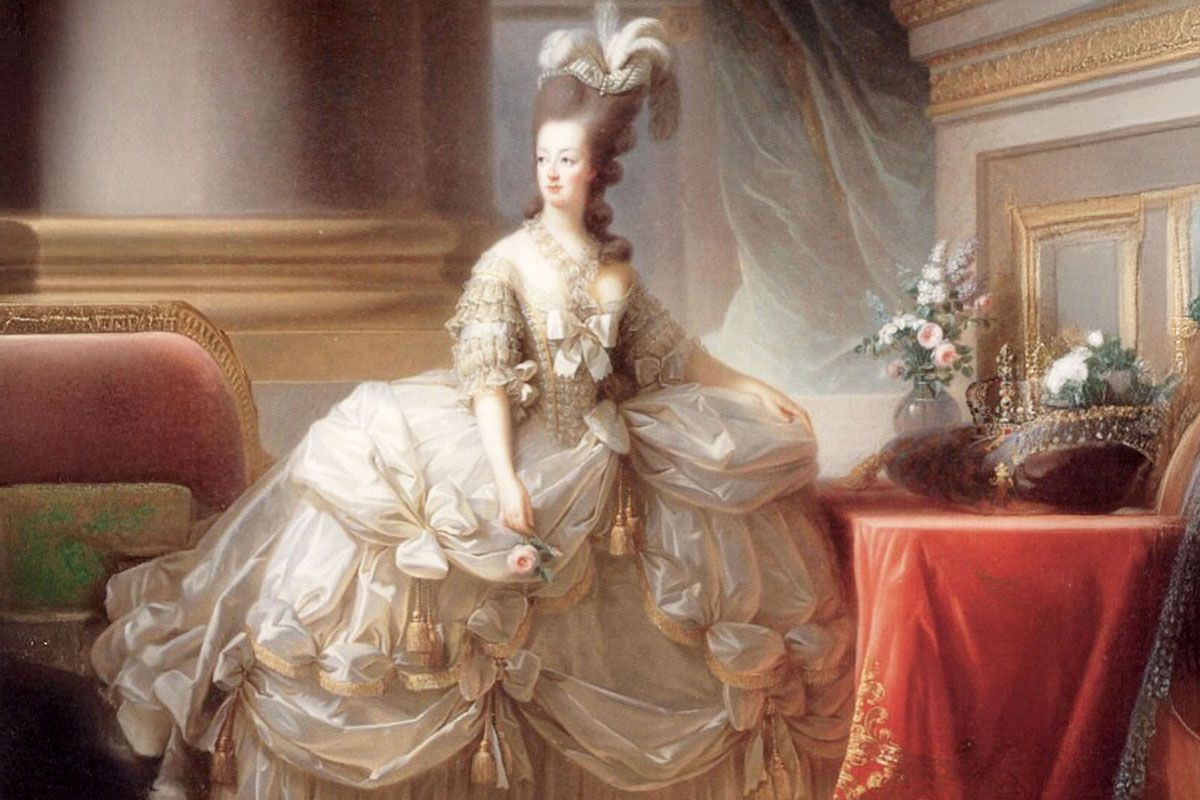
The French queen’s reputation for frivolity was only heightened by her magnificent court gowns. There was no holding back when it came to her dresses, which were often constructed using panniers — hoop skirts that added volume around the hips — giving her gowns impressively impractical width. Combined with luxurious silk garments, large box pleats, bodices, ribbons, bows, frills, and jewelry, the finished look was nothing short of glorious — and, for the increasingly irate revolutionaries, entirely inappropriate. Today we can still admire the splendor of Antoinette’s court dresses in various contemporary portraits, perhaps none more iconic than “Marie Antoinette in Court Dress” by French painter Elisabeth Louise Vigée Le Brun. 

You may also like

Why Did People Used To Wear Monocles? 

  • Joseph Chamberlain wearing monocle
Joseph Chamberlain wearing monocle
Credit: ullstein bild Dtl./ ullstein bild via Getty Images
Author Tony Dunnell

May 27, 2025

Love it?

In the world of eyewear, few accessories have captured the imagination quite like the monocle. Widely regarded today as an eccentric throwback from an earlier age, the monocle began life as a fairly simplistic and imperfect device for correcting eyesight. But something odd happened during the 19th century: The unassuming corrective lens began taking on an entirely new significance as a powerful symbol of class, intellectual prowess, and cultural identity. 

But why did this simple optical device evolve into a status symbol? And why did people start wearing monocles in the first place, when spectacles — those of the two-lens variety — had been around since the 13th century? Here’s a close look at why people used to wear monocles, and why the curious eyepiece ultimately went out of fashion. 
Credit: Sepia Times/ Universal Images Group via Getty Images 

The Origins of the Monocle

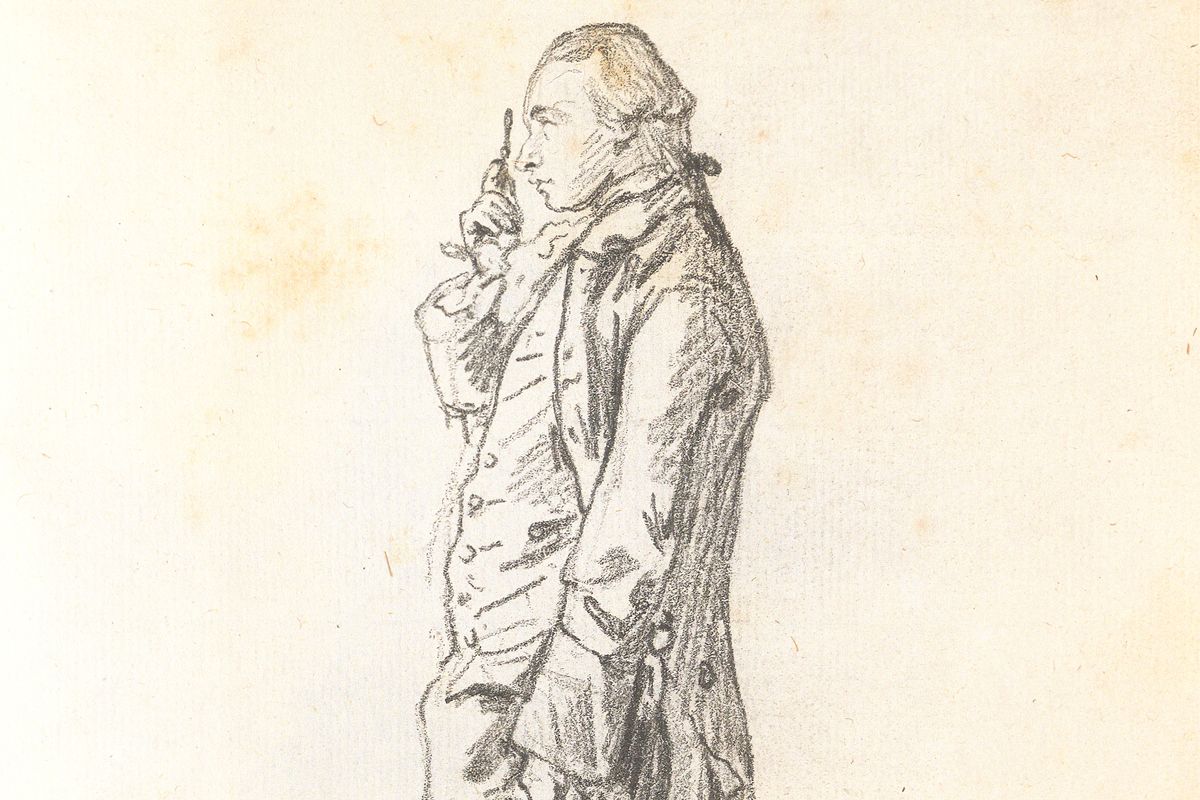
The origin of the monocle is somewhat blurry. It likely developed from the “quizzing glass,” which was a magnifying lens on a handle that was held up to the user’s eye to aid in reading or inspecting objects. The monocle, of course, did away with the handle altogether, and was instead held in place by the eye socket itself. 

Monocles helped with reading small print and other tasks requiring near vision. They also had the benefit of allowing both hands to be used freely (unlike the quizzing glass) while also being easy to carry, slipping comfortably into a top pocket. 
Monocles, however, have one obvious issue: They correct vision in only one eye. This might be fine for someone with anisometropia, in which only one eye needs correcting, but virtually all monocle users require optical correction in both eyes
This issue was being discussed by medical practitioners as far back as the early 1800s — and their comments were often critical. An anonymous German treatise published in 1824 stated, “The monocle with which a single eye is used must be avoided because it disturbs the balance of binocular vision.” The same year, London optician William Kitchener warned, “This pernicious plaything will most assuredly in a very few years bring on an imperfect vision in one or both eyes.” 

You may also like

How Did Victorian Women Get Dressed?

  • Dresses with crinolines, 1850
Dresses with crinolines, 1850
Credit: Heritage Images/ Hulton Archive via Getty Images
Author Nicole Villeneuve

May 27, 2025

Love it?

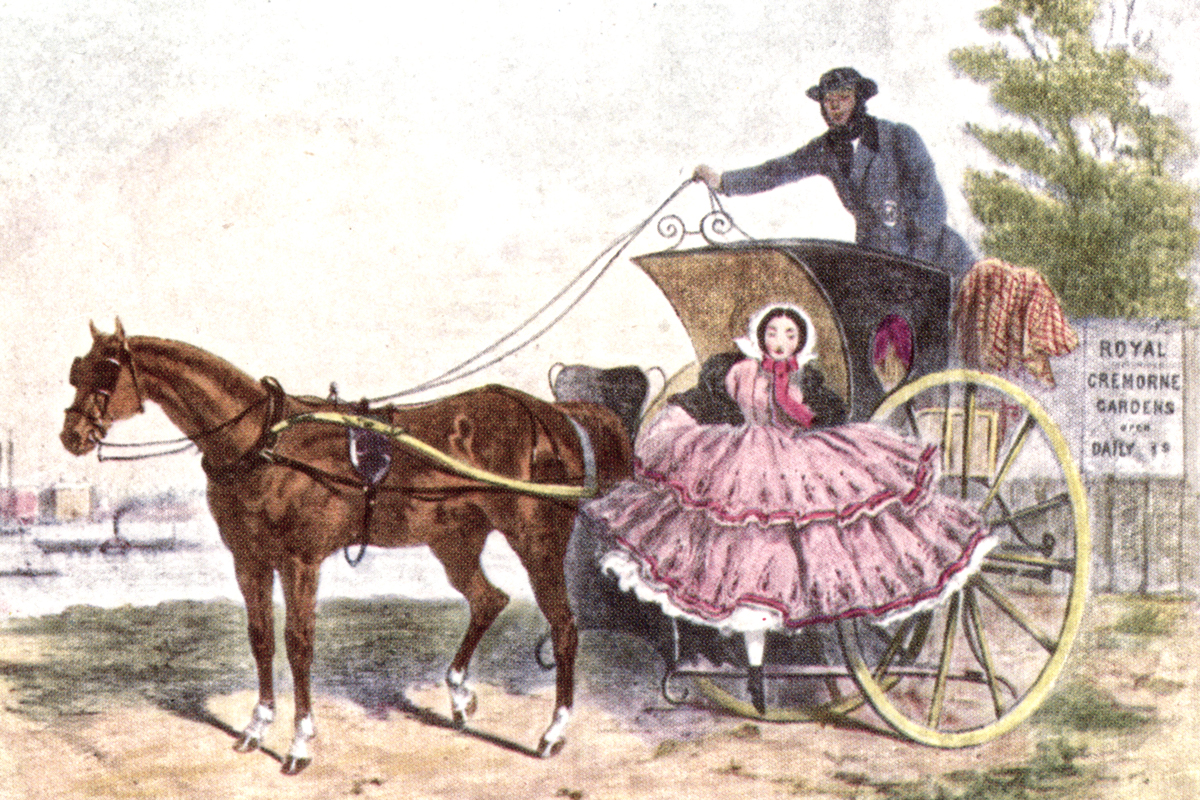
Victorian fashion, like many aspects of British society during Queen Victoria’s reign, was defined by order, structure, and formality. Though styles evolved throughout the decades, from the voluminous bell skirts of the 1850s to the bustle-heavy silhouettes of the 1880s, some fundamentals remained consistent — namely, the numerous layers that made up a women’s daily garb. It makes you wonder: Just how long did it take Victorian women to get dressed? And how were they able to manage the various tasks of daily life — to say nothing of simply sitting down — while wearing such cumbersome attire?

Credit: Bettmann via Getty Images 

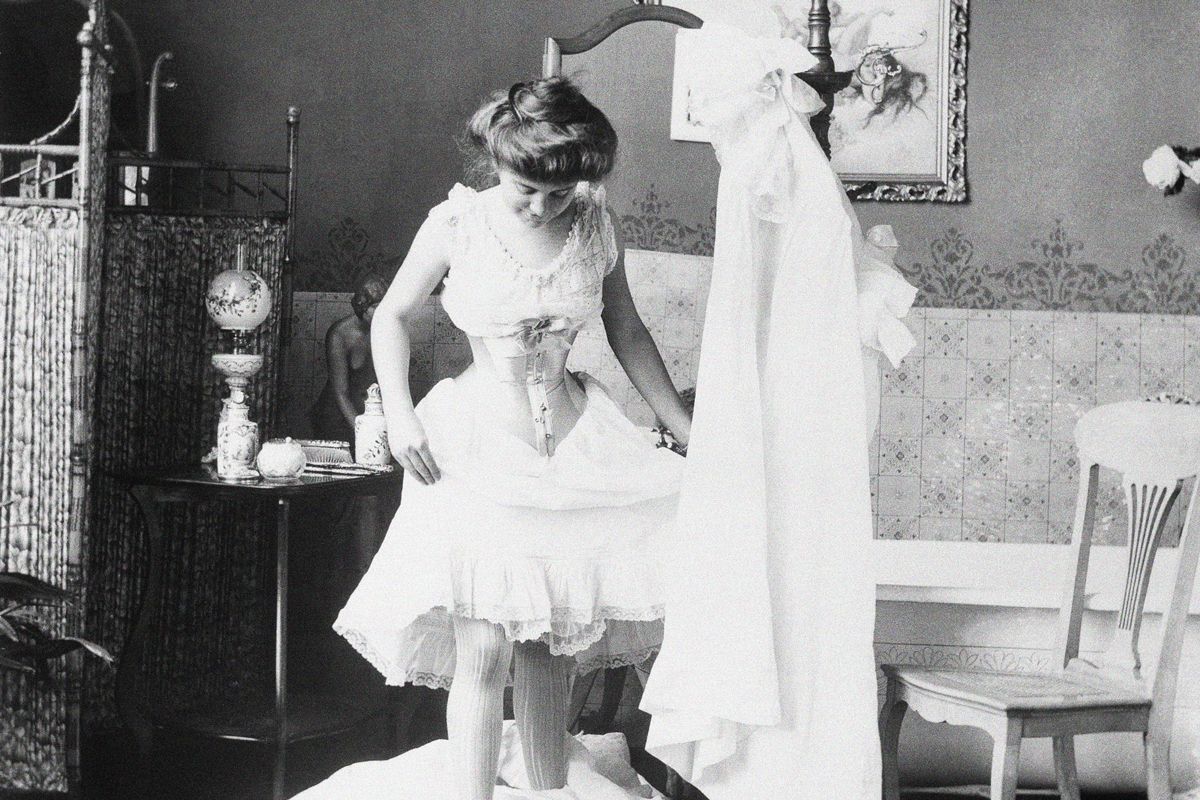
The dressing process typically began with undergarments. These included drawers, which in the 19th century consisted of two entirely separate legs joined only at the waistband; a chemise (also known as a shift), a loose underdress typically made of cotton or linen to protect the outer garments from sweat and protect the skin from the corset; and stockings held up by ribbon garters or, later in the 19th century, clips. Shoes — often boots — were also put on at this stage of getting dressed, because once the corset and other garments went on, it became a trickier task.

Corsets were, of course, central to the Victorian silhouette, cinching the waist to emphasize the bust and hips. Early corsets laced up the back using a single long lace threaded through hand-stitched holes, which wore out easily and had to be completely unlaced and re-laced each time. That began to change in 1828 with the invention of metal eyelets, which allowed tighter lacing without damaging the fabric. 

Then in the 1850s, the slot-and-stud front-opening busk became more common. With studs on one side and matching slots on the other, women could fasten the corset while keeping the back lacing mostly in place, loosening it enough just to fasten it in the front. The corset could then be slipped on, hooked closed in the front, and then tightened by reaching behind and pulling — no need to step into it or rethread the laces daily.

You may also like

5 Retro Photos From the Swinging ’60s

  • Dancers at Cromwellian Club, 1966
Dancers at Cromwellian Club, 1966
Credit: Pictorial Press Ltd / Alamy Stock Photo
Author Nicole Villeneuve

January 16, 2025

Love it?

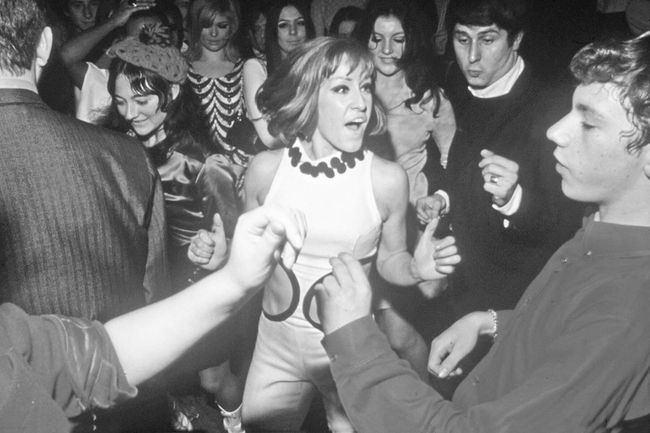
The Swinging ’60s were a period of whirlwind of change in the United Kingdom — bold, colorful, and bursting with possibility. At the dawn of the decade, Britain was still shaking off the postwar doldrums, with austerity lingering and life defined by staid convention and cautious optimism. But as the country entered an era of economic growth and prosperity, a sense of freedom and opportunity also emerged. By the end of the 1960s, London had transformed into a global hot spot of youth, freedom, and creativity, where music, fashion, and art collided in a cultural revolution that reverberated around the world.

As a generation of young people — resulting from the postwar baby boom — emerged free from war and its looming shadow, they embraced individuality. Not content to follow the old rules, they set out to rewrite them entirely: Music became their driving force, with bands such as the Beatles leading the charge. Fashion transformed too, with Mary Quant’s daring designs embodying the era’s exuberance. London was alive with energy, and the city spent the better part of the decade reinventing itself. Here are five photos from the era that illustrate what it was like to live through the Swinging ’60s.

Credit: Trinity Mirror / Mirrorpix/ Alamy Stock Photo

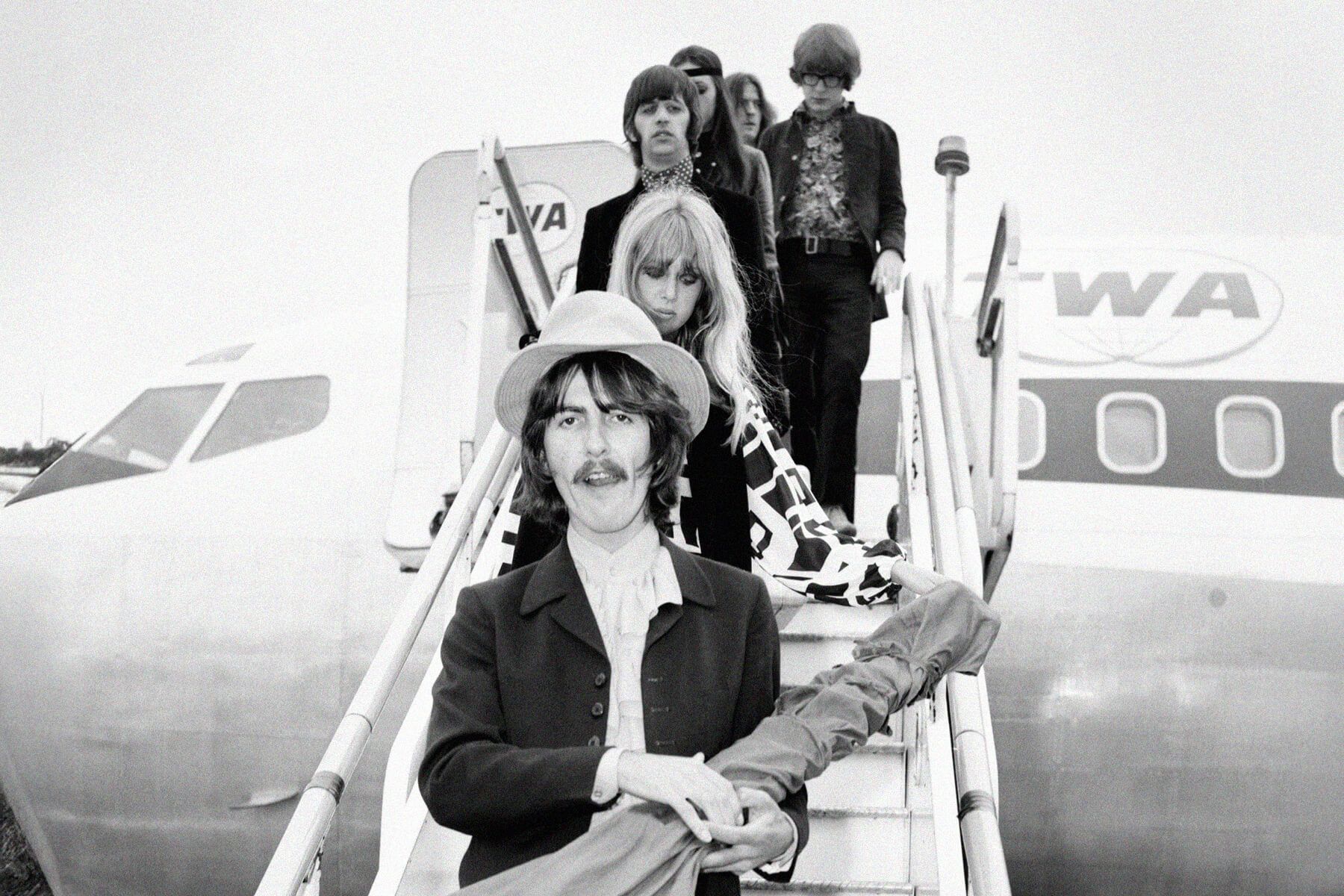
George Harrison’s Sitar (1968)

Few things capture the cultural imprint of 1960s London quite like the Beatles. Their meteoric rise to fame coincided with the youth-driven revolution that defined the era. The Fab Four were more than just a band; they were an unstoppable force that touched everything from fashion to philosophy. The Beatles were known to experiment with new sounds, particularly Eastern influences, and guitarist George Harrison’s introduction of the sitar into their music marked a pivotal moment. 

This photo, taken in June 1968 at Heathrow Airport, shows George and Pattie Harrison, Ringo Starr, Maureen Starkey, and Beatles assistant Mal Evans returning to England from California after Harrison filmed scenes for the Ravi Shankar documentary Raga. Shankar, a renowned Indian composer and musician, was a major influence on Harrison, and Harrison can be seen carrying his own sitar off the plane. Years earlier, in 1965, the Beatles became the first Western rock band to use the sitar on a commercial recording when they released the song “Norwegian Wood (This Bird Has Flown).” It inspired fellow musicians to explore new sonic landscapes, paving the way for the Rolling Stones, Pink Floyd, and others to adopt the psychedelic sound that formed the soundtrack of the Swinging ’60s.

You may also like

The Evolution of Hemlines Through History

  • Pleated skirts circa 1966
Pleated skirts circa 1966
Credit: Roger Viollet Collection via Getty Images
Author Nicole Villeneuve

October 30, 2024

Love it?

Worn by both men and women in early civilizations such as Egypt and Rome, skirts and dresses gradually transformed into quintessential symbols of femininity in the Western world. For centuries, these garments reached the floor as a mark of modesty, but practicality and changing tastes occasionally nudged hemlines higher, such as with the “walking dress” and its ankle-skimming hem, which emerged by the mid-1800s. By the late 19th century, it wasn’t unheard of to see a skirt hit midcalf, a look that forecasted the more dramatic shifts that started in the early 1900s. 

While we tend to think of the evolution of hemlines as a simple upward trajectory, getting shorter as society evolved and fashion became more daring, their history is much more nuanced. Hemlines have risen and fallen several times in the last 100 years. And though the popular “hemline index” theory suggests that skirt lengths rise in times of economic prosperity and fall during downturns, that’s an oversimplification of the story. Far from a one-way trend, hemlines have been a dynamic reflection of fashion, function, and symbolism through the years. Here are a few of the most significant changes in the 20th century.

Credit: Kirn Vintage Stock/ Corbis Historical via Getty Images

1920s: The Flapper Era

The 1920s marked the first major departure from traditional floor-length skirts. Following World War I, the Roaring ’20s brought economic stability to the U.S. — and a newfound sense of empowerment and liberation for women, who had won the right to vote in 1920. Women enjoyed vibrant social lives even in the depths of Prohibition, frequenting speakeasies and private clubs and dancing the night away. It was a time when the restrictive clothing of the past just would not do; hemlines shot up, at first to just below the knee, and by the mid-1920s, even creeping above. The new dress style also did away with the tightly corseted fashions of earlier decades, ushering in a less-structured “Garçonne” look (an androgynous or “tomboy” style) that was free of curves and had dropped waists, loose fits, and a straighter silhouette.

You may also like

Why Did People Wear Ruff Collars in Elizabethan Times?

  • Procession of Queen Elizabeth I
Procession of Queen Elizabeth I
Credit: Heritage Images/ Hulton Archive via Getty Images
Author Nicole Villeneuve

October 24, 2024

Love it?

The ruff collar is one of the most recognizable symbols of Elizabethan fashion. Picture Queen Elizabeth I, her head surrounded by a crisp, fanlike collar, or William Shakespeare, the most famous author of the time, whose own likeness and theatrical productions depict the prominent garment. Though the collar began as a modest ruffle on a shirt, it went on to become an elaborate piece of its own. In 16th-century England, it would have been hard to miss the sight of these towering, fluted sculptures circling the faces of the English elite. But why did people wear these stiff, awkward garments?

Credit: Universal History Archive/ Universal Images Group via Getty Images

Like many sartorial choices of the time, ruff collars signified more than just taste; they were statements of status, wealth, and power. In the first half of the 1500s, English men exposed just a hint of a collar of their shirt, ruffled up from underneath their doublets. By the mid-1500s, however, Spanish fashion began to infiltrate England, and the exaggerated collar worn by Spain’s aristocracy was adopted by the English as well.

You may also like