



The Most Popular Things Traded on the Silk Road
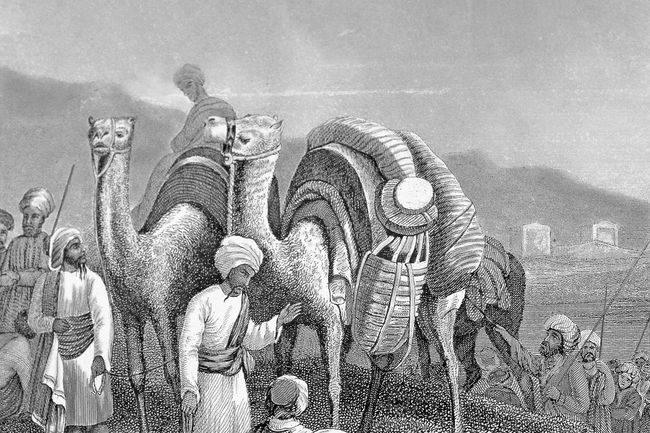
Though it’s often thought of as a single trail, the Silk Road was actually a vast network of trade routes spanning multiple centuries and continents, connecting cultures as far as 6,000 miles away from each other. The network started around 138 BCE, when Han dynasty China sent out an envoy to make trading connections with other Asian countries. Over the next two centuries, trade routes extended westward through the Indian subcontinent, the Syrian desert, and the Arabian Peninsula, all the way to Greece and Rome. Some of these connections were made over land, but many were made by sea, too. This vibrant network lasted around 1,500 years, ending in 1453 CE when the Ottoman Empire closed off trade with the West — but not before the global exchange of goods and ideas changed the course of history. Here are seven of the most influential and sought-after things that were traded on the Silk Road.
Silk and Other Textiles
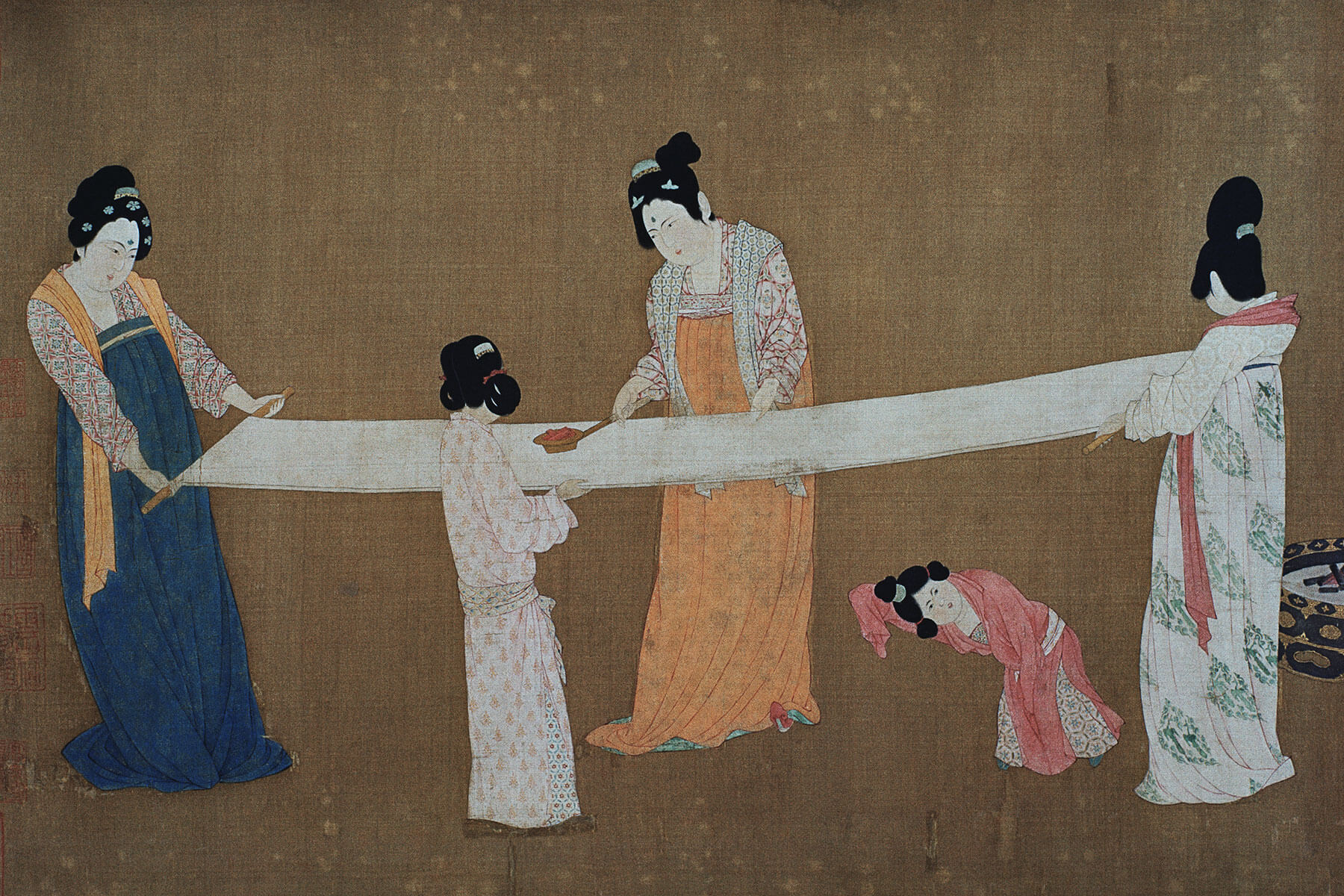
Craftspeople in China had been raising silkworms and working with silk for thousands of years before the luxurious textile became a valuable commodity. Silk was so prized in ancient Rome that one 19th-century German geographer named the Silk Road after the coveted material. Silk reached India in the second century BCE, and in the third century CE, Persia became a major silk-trading hub that connected Europe to East Asia. The trade route spread the popular textile around the world, paving the way for the complex woven patterns of Byzantium and Iran. Silk production, however, remained a closely guarded secret in Asia even after Byzantine Emperor Justinian I had silkworms smuggled over in bamboo tubes.
Silk wasn’t the only fiber that changed hands along the Silk Road, however. Hemp, cotton, and wool were all popular items as well. The cultural exchange also included finished fabric and weaving techniques. Different types of clothing traveled between nations, too; trousers, which made horseback riding easier, originated in Mongolia, and various sorts of woven belts evolved throughout the era.
More from our network






Paper
It’s easy to take paper for granted now, but in the early days of the Silk Road, it was a new technology for many cultures. Early writing appeared on clay, bone, wax, and parchment, which was made from animal skins and was labor-intensive to create. The first known paper, made from mulberry fibers and other discarded materials, appeared in China during the Han dynasty (25 to 220 CE). Buddhist monks started sharing religious writing on paper because it was durable and easy to transport. It spread through religious communities first and eventually hit trade routes.
Paper was extraordinarily useful — merchants both sold it and used it themselves for recordkeeping — so it spread quickly. It was a popular item in its own right, as well as a means to convey other valuable commodities, such as scientific ideas and literature. Many regions set up their own paper industries; Baghdad, for example, became known for producing stationery. Paper production eventually reached Europe via Sicily and Spain, but Chinese paper remained a valuable export because it was considered higher quality.

Gunpowder
Gunpowder is a carefully measured mix of potassium nitrate, charcoal, and sulfur, designed to burn quickly and trap enough gas to propel an object, be it a firework or a cannonball. It was a later addition to Silk Road trade routes, and its exact history is unclear, though it’s believed to have originated in China, where it was in use by the 10th century CE — and possibly a few centuries earlier — for signaling and fireworks. Its use in weaponry originated in China, too, starting between the 10th and 12th centuries CE, with a precursor to a gun made out of a bamboo reed. Full-fledged guns evolved by the end of the 13th century, and soon moved westward. Guns and gunpowder reached the Middle East by 1304 CE, and were introduced to Europe, including England and France, by the end of the 14th century CE.

Spices and Tea
Spices are among the oldest goods to make their way along the Silk Road; cinnamon was being traded throughout Asia as early as 2000 BCE. Many plants had limited distribution at that time, so specific seasonings became especially prized — nutmeg and cloves, for example, grew only in the Moluccas, a small group of Indonesian islands known at the time as the Spice Islands. Traders often made up dazzling stories about the origins of spices to drive up their intrigue and value. Spices such as cinnamon, cardamom, and ginger were so prized that the word “spice” is even derived from the Latin word for “special wares.” Around the turn of the second century CE, Alexandria, Egypt, then under Roman rule, became an important spice-trading hub, and soon the tasty goods spread northward to Greece. Spices reached northern Europe via Genoa and Venice starting around the 11th century.
The Silk Road saw a robust tea trade, too. Camellia sinensis, the plant that grows tea leaves, originated in Southeast Asia (roughly where China, India, and Myanmar meet today) and has been part of Chinese culture since at least as far back as the 10th century BCE. Its first trips on the Silk Road were eastward to Japan and Korea, where the plant began to be cultivated. Over the next several centuries, these East Asian nations developed a culture and ritual around both brewing and drinking tea. Associated pottery, such as teapots, followed tea as it spread to India, the Middle East, North Africa, and Europe.

Glass and Porcelain
If you’ve ever heard porcelain goods referred to as “china” — as in “china dolls” or “fine china” — it’s because porcelain was a distinctly Chinese art for many years. Sculpted from a special clay only available in a certain region of China at the time of the Silk Road, porcelain stood out from other ceramics for both its durability and its translucent white color. The form that became best known in the West was developed during the Yuan dynasty, which spanned the 13th and 14th centuries CE. The classic blue-and-white wares became prized collector’s items, especially in the Islamic world, and inspired similarly styled ceramics in other regions.
Glassware, meanwhile, traveled in the other direction. Glassblowing techniques, particularly with soda-lime glass, developed in the Mediterranean and Middle East starting around 3500 BCE, and examples of that work dating back to the first millennium BCE have been found in East Asia. Roman glass, such as purple glass mosaic bowls, was especially prevalent — Romans loved silk, so they may have swapped the glass for Chinese silk. While Chinese craftspeople produced glass beads in the first few centuries BCE, it was chemically distinct from Western imports. Romans worked with soda-lime glass, the most commonly made type of glass today, which isn’t particularly durable. Imagine keeping it intact for 5,000 miles!

Horses
Horses, originally traded by Mongolian nomadic peoples, were a boon along the Silk Road, enabling traders to expand their networks, even over difficult terrain. They were also, conveniently, both a practical and luxury good, showing both high status and military might, and if you were trading them, they literally transported themselves. Horses were very much in demand in China — they were often traded for silk — and “heavenly horses,” a large breed of horse from a region in Central Asia, were particularly culturally significant. A Han dynasty expedition to acquire these horses even opened up an eastern stretch of the Silk Road between 200 BCE and 200 CE.

Knowledge
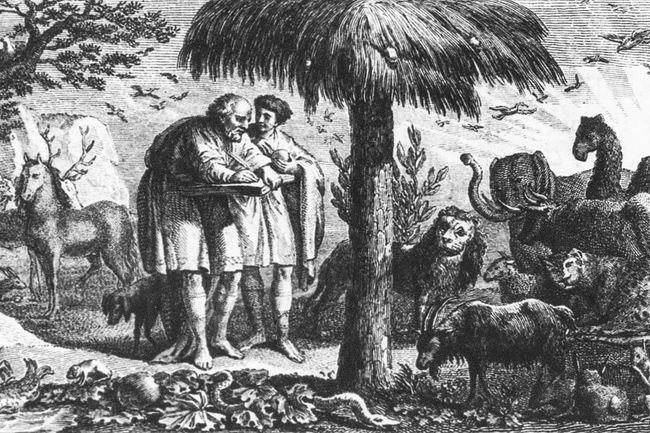
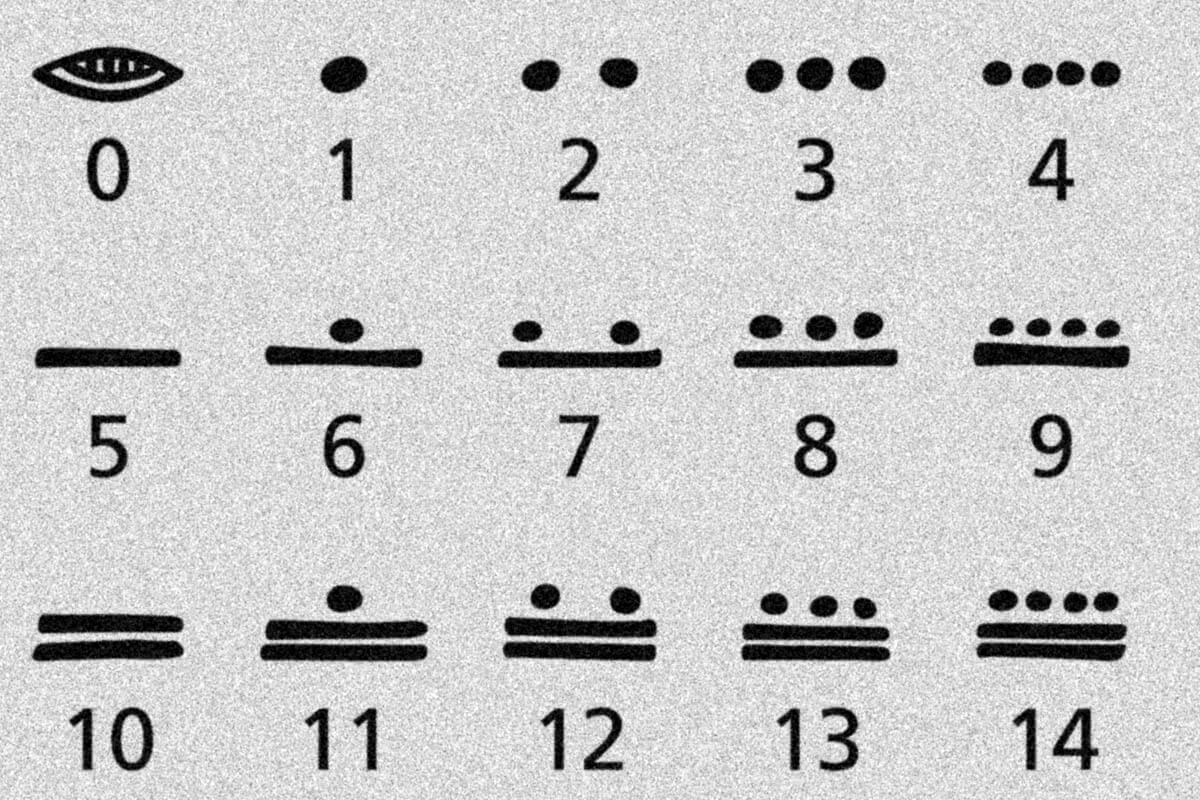
The global exchange of ideas was just as impactful as the exchange of physical goods along the Silk Road. Astronomy, used for navigation, spread from India and ancient Iran. The Islamic Golden Age from the eighth century through the 13th century CE marked innovations in mathematics that we take for granted today — including the base 10 number system and decimal fractions — and it drew heavily from Greek and Indian knowledge. Science scholarship in Baghdad and Cairo also led to major advancements in medicine, enabled by knowledge, materials, and traditions from other civilizations. Alchemy was a spiritual precursor to some very real modern science, and led to discoveries in chemistry that eventually spread westward to Europe from scholars in the Middle East and India.
As goods exchanged hands, so did the knowledge of how to use and create them. Some crops, such as grapes, traveled eastward, while others, such as rice, traveled westward, along with information on how to cultivate them. Different metalworking techniques, including types of armor, spread as craftspeople traveled to sell their wares. Bakers from Central Asia opened shops in China and became part of the evolution of Chinese cuisine. And religious traditions, including Judaism, Buddhism, Zoroastrianism, Christianity, Islam, and local folk traditions, spread and influenced one another as missionaries traveled the vast Silk Road.