


The Difference Between St. Valentine and Cupid

  • Valentine’s Day card
Valentine's Day card
Kean Collection/ Archive Photos via Getty Images
Author Nicole Villeneuve

February 8, 2024

Love it?

Each year on February 14, romantic partners exchange affectionate cards and sugary-sweet chocolates, all in the name of St. Valentine — and all while the iconic image of Cupid takes center stage. But who are these figures, and how did they converge for this sentimental holiday? From Cupid’s roots in Greek mythology to St. Valentine’s Christian symbolism, here’s how these two figures became the unlikely faces of love and Valentine’s Day. 

Photo credit: Fototeca Storica Nazionale./ Hulton Archive via Getty Images

Who Is St. Valentine?

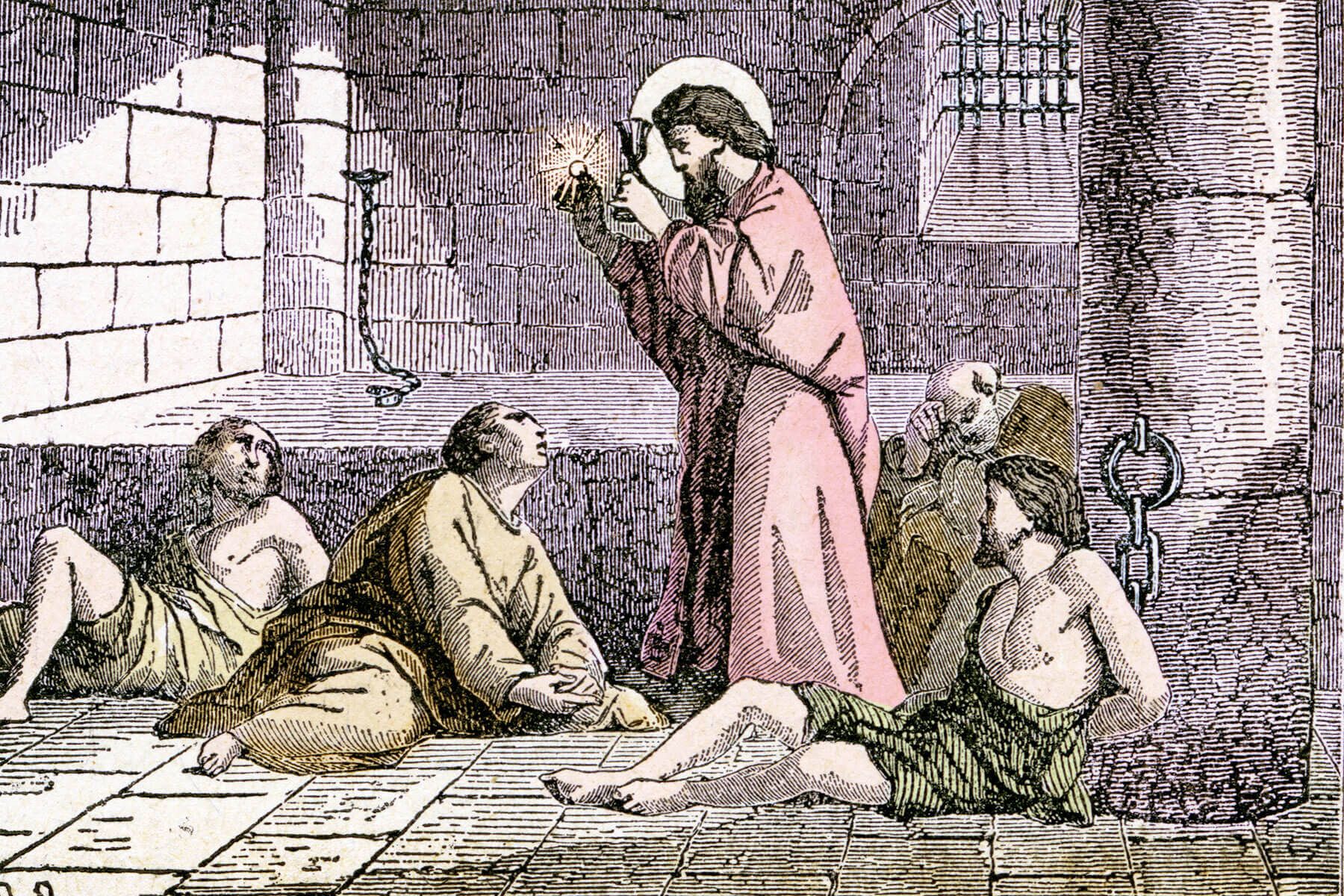
The exact origin of the saintly namesake of Valentine’s Day is murky. According to one belief, St. Valentine was a third-century Roman priest who defied the Roman Empire’s stance against men marrying at a young age (it was thought that they should instead serve as soldiers). Valentine continued to perform marriages in secret, leading to his execution on February 14. Another belief portrays St. Valentine as a compassionate man who helped free persecuted Christians in ancient Rome. According to legend, he healed the local jailer’s blind daughter and, before his death, sent her a note signed, “from your Valentine.” Whether these were two separate figures or just one isn’t entirely clear, nor is whether they were actually historical characters and events or just myths. In records from the medieval era, for instance, there is no connection between St. Valentine and love or marriage. But regardless of how the figure became linked with romance, the association between St. Valentine and love has remained strong.

You may also like

6 Little-Known Facts About Greek Mythology

  • Statue of Athena
Statue of Athena
Bettmann via Getty Images
Author Paul Chang

September 13, 2023

Love it?

From Theseus’ battle with the minotaur to the epic siege of Troy, tales from Greek mythology have gripped humanity’s imagination for millennia. Likely originating with the Minoan civilization on the island of Crete (around 3000 to 1100 BCE), these stories portray the adventures and foibles of gods and heroes. The ancient Greeks looked to these myths — which were passed down orally for centuries before being transcribed — to explain everything from earthquakes to the creation of the universe. Though our scientific understanding of the world has progressed since ancient times, Greek mythology continues to shape and inspire many aspects of our culture to this day, from business to entertainment to sports. For a quick look at the history of this fascinating body of stories, here are six facts about Greek mythology.

Photo credit: Hulton Archive/ Archive Photos via Getty Images

The Amazons Were Based on the Real Warrior Women of the Steppe

The Greek myth of the Amazons — a race of warrior women descended from Ares, the god of war — has inspired countless works of art, including the character of Wonder Woman. According to the myths, these warriors lived in a city called Themiskyra composed entirely of women, located on the Black Sea. Until recently, scholars believed that the Amazons were the stuff of fiction — but a growing body of evidence suggests that the stories were inspired by real-life female warriors who roamed the grasslands of the Eurasian Steppe on horseback and wielded bows and arrows. While these women differed from the Amazons of legend in some specifics (for example, they lived alongside men), leading experts now believe that ancient Greek encounters with these warriors gave rise to the legend that spread across the world.

Photo credit: Hulton Archive/ Hulton Fine Art Collection via Getty Images

Greek Mythology’s Most Famous Author May Have Never Existed

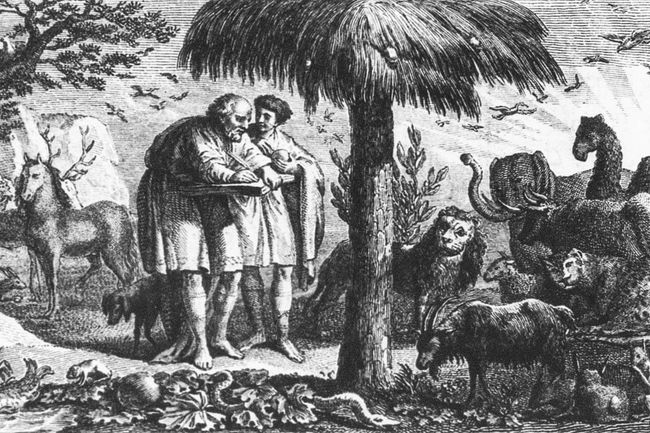
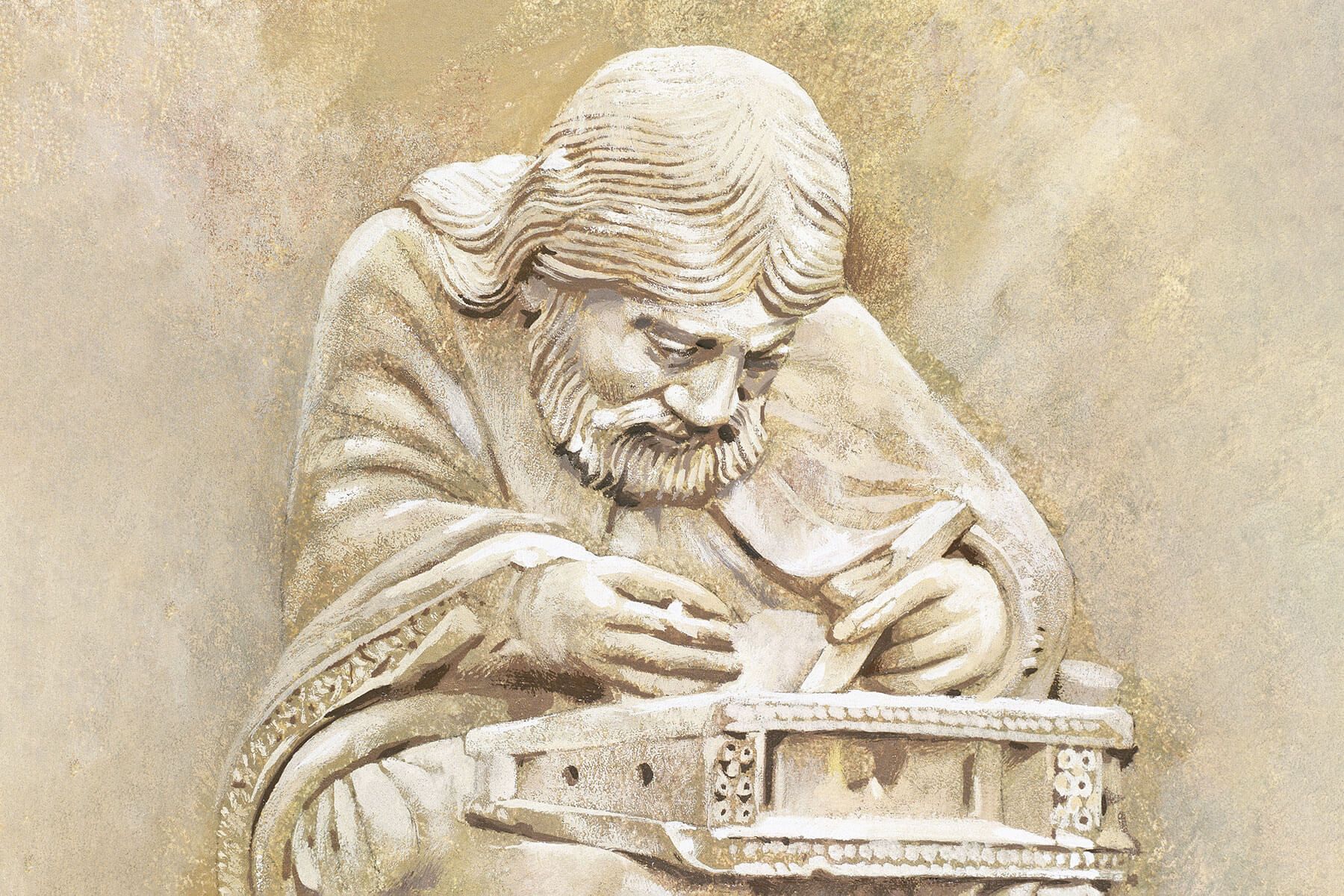
Credited as the author of theIliadand theOdysseytwo of Greek mythology’s most important texts — Homer has been viewed as a towering literary figure for much of history. Traditionally, he was thought to have lived in the eighth or ninth century BCE, and was described as being blind and, by some accounts, illiterate (dictating his poems to a literate assistant for transcription). However, since the 18th century, scholars have questioned whether Homer even existed. Some academics, such as the American classicist Milman Parry, have suggested that Homer’s epic poems were the result of oral stories told by various poets and folk singers being compiled into singular texts. Other scholars have questioned historical inconsistencies throughout the poems that could imply parts of the text were written in different time periods. This debate has inspired an entire field of study around Homer’s identity, known as the “Homeric Question.” While Homer’s existence is uncertain, one thing is for sure: The Iliad and the Odyssey continue to transfix and entertain readers to this day.

You may also like

5 Myths About the Egyptian Queen Cleopatra

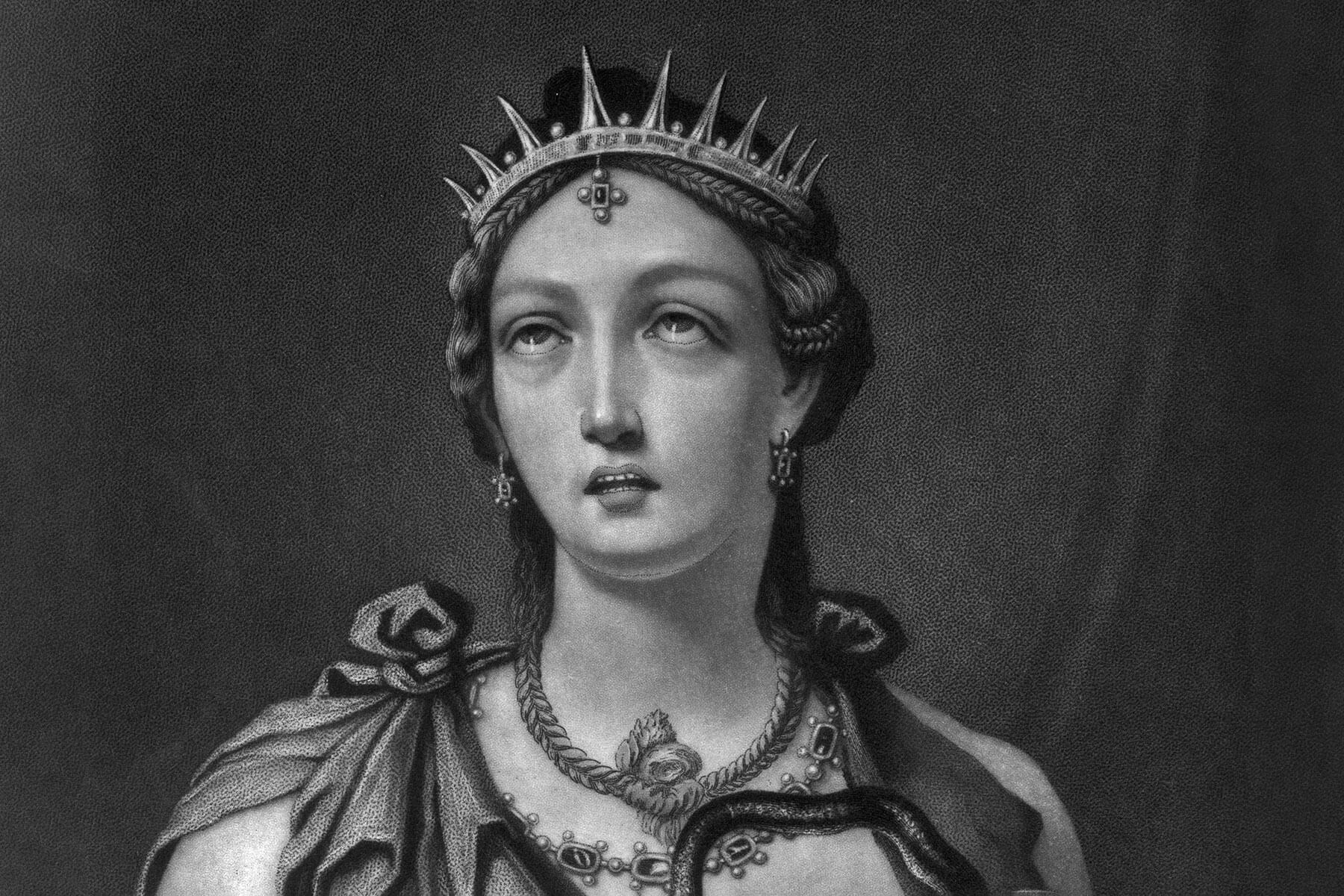
  • Egyptian Queen Cleopatra
Egyptian Queen Cleopatra
Credit: Hulton Archive via Getty Images
Author Kristina Wright

August 3, 2023

Love it?

Though she’s one of the most famous leaders of the ancient world, Cleopatra’s life is still shrouded in mystery. Cleopatra VII Thea Philopator ruled Egypt for 22 years as a powerful queen, and while her legacy is filled with tales of a goddess incarnate who seduced men to get what she wanted and had no problem killing anyone who got in her way (even her own siblings), much of this image is thanks to Hollywood and other pop culture depictions of the Egyptian queen. Actress Elizabeth Taylor famously played her in the big-budget 1963 film Cleopatra, and there have been numerous other portrayals of this enigmatic leader in art, fiction, and film — most of them filled with anachronisms and exaggerations and lacking in historical accuracy.

What historians do know is that when Cleopatra’s father, Ptolemy XII, died in 51 BCE, 18-year-old Cleopatra was named his successor. Over the course of her reign, she ruled alongside two of her brothers and her oldest son. She envisioned herself as the sole ruler of Egypt, however, and formed alliances with two of Rome’s most powerful generals in order to protect and maintain her power. In 47 BCE, she bore a son by Julius Caesar, nicknaming him Caesarion, or “little Caesar,” despite his illegitimacy. A few years later, in 44 BCE, Cleopatra’s relationship with Caesar came to an abrupt end when the Roman leader was assassinated, forcing her to develop new strategic alliances to secure her reign.

The Egyptian queen found a new political and romantic partner in Caesar’s friend and ally Mark Antony. With Antony, Cleopatra continued her political alliance with Rome, and they had three children together. However, Caesar’s adopted son Octavian declared war on the pair, leading to their untimely deaths. Cleopatra died in 30 BCE at age 39, as the last Egyptian queen and next-to-last Egyptian pharaoh. (Octavian had the last pharaoh, Cleopatra and Caesar’s 17-year-old son Caesarion, put to death just days later.) Octavian went on to become the first Roman emperor, dubbed Augustus Caesar, embracing his role as Caesar’s heir and ending the Ptolemaic kingdom.

It has been over 2,000 years since Cleopatra’s death, but her fascinating life still captures the imagination. Here are five popular myths about the Egyptian queen that separate the truth from the legend. 

Photo credit: Hulton Archive/ Hulton Royals Collection via Getty Images

Myth: Cleopatra Was Ethnically Egyptian

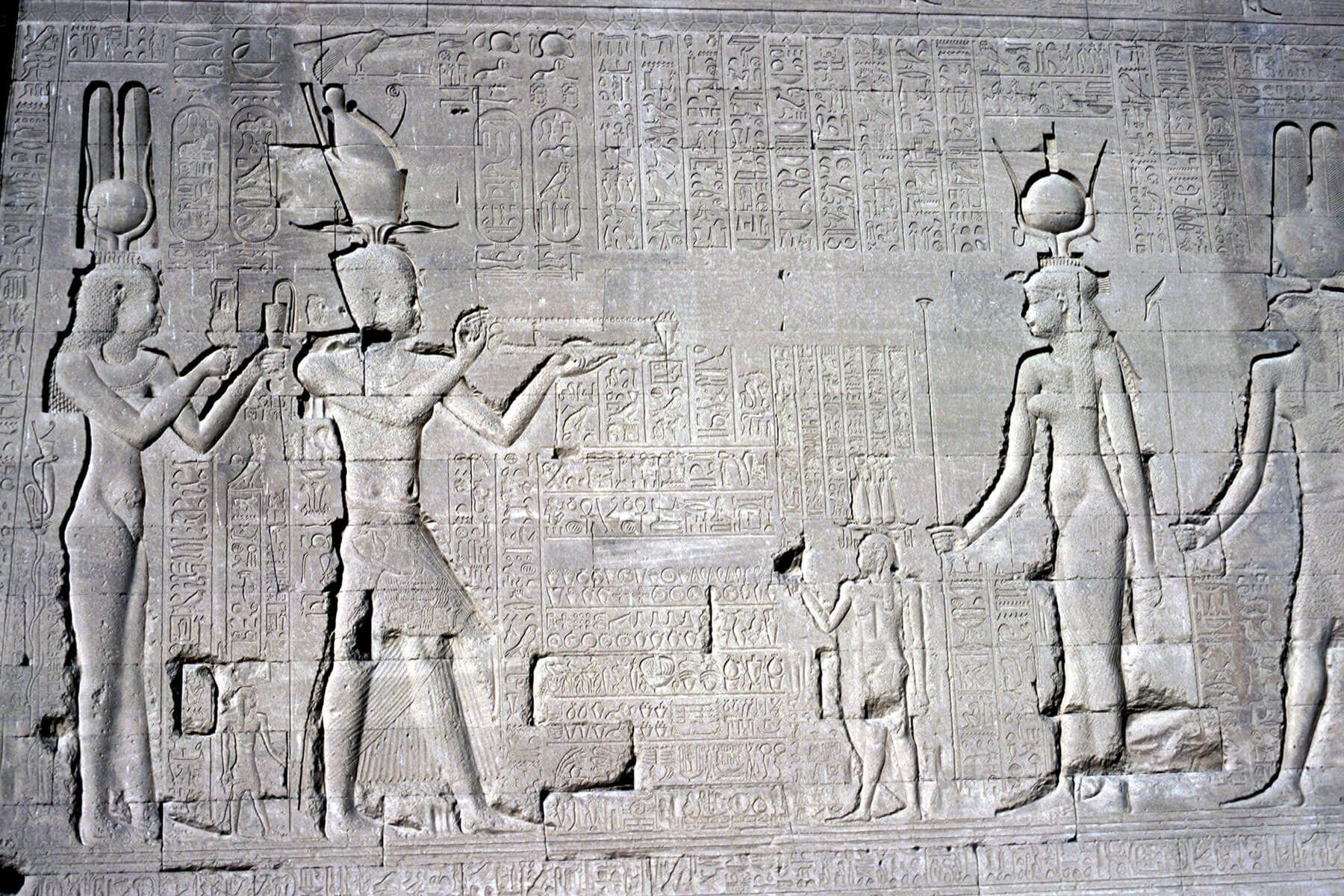
Cleopatra is one of the best-known figures in Egypt’s history , but she wasn’t ethnically Egyptian. Though she was born in Alexandria, Egypt, around 69 BCE, Cleopatra’s lineage is traced to Macedonian Greece. She was the daughter of Ptolemy XII, a descendant of Ptolemy I Soter, a Macedonian general who served under Alexander the Great and founded the Ptolemaic dynasty that ruled in Egypt. Historians aren’t certain about the identity of Cleopatra’s mother, but theories suggest Cleopatra was the daughter of either Ptolemy’s first wife, Cleopatra V; his second wife, whose name is unknown; or a concubine.

Photo credit: Print Collector/ Hulton Archive via Getty Images

Myth: Cleopatra Wasn’t Prepared to Be Queen

Little is known about Cleopatra’s life before she became queen, but as a member of Ptolemaic royalty, she was highly educated and received a well-rounded Hellenistic education that included rhetoric, philosophy, astronomy, music, and Greek literature. She spoke around nine languages (Egyptian, Greek, Latin, Syrian, Arabic, Hebrew, Ethiopian, Persian, and Aramaic) and was the first of the Ptolemaic line to learn the Egyptian language. Praised for her intellect, she was knowledgeable in a wide variety of subjects, including economics, military strategy, law, and linguistics.

You may also like

The Most Popular Things Traded on the Silk Road

  • Silk Road camels resting
Silk Road camels resting
UniversalImagesGroup via Getty Images
Author Sarah Anne Lloyd

August 3, 2023

Love it?

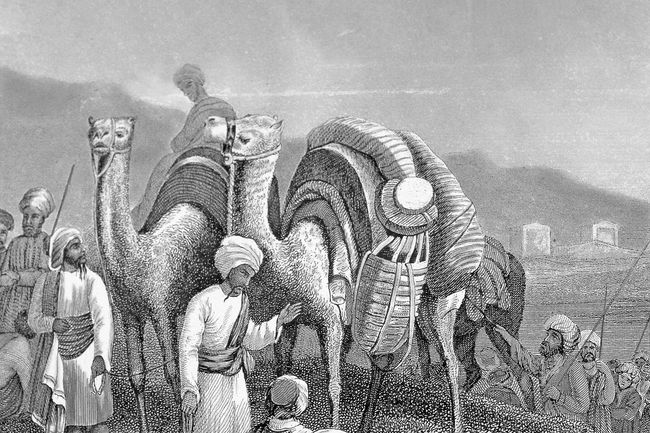
Though it’s often thought of as a single trail, the Silk Road was actually a vast network of trade routes spanning multiple centuries and continents, connecting cultures as far as 6,000 miles away from each other. The network started around 138 BCE, when Han dynasty China sent out an envoy to make trading connections with other Asian countries. Over the next two centuries, trade routes extended westward through the Indian subcontinent, the Syrian desert, and the Arabian Peninsula, all the way to Greece and Rome. Some of these connections were made over land, but many were made by sea, too. This vibrant network lasted around 1,500 years, ending in 1453 CE when the Ottoman Empire closed off trade with the West — but not before the global exchange of goods and ideas changed the course of history. Here are seven of the most influential and sought-after things that were traded on the Silk Road.

Photo credit: Burstein Collection/ Corbis Historical via Getty Images

Silk and Other Textiles

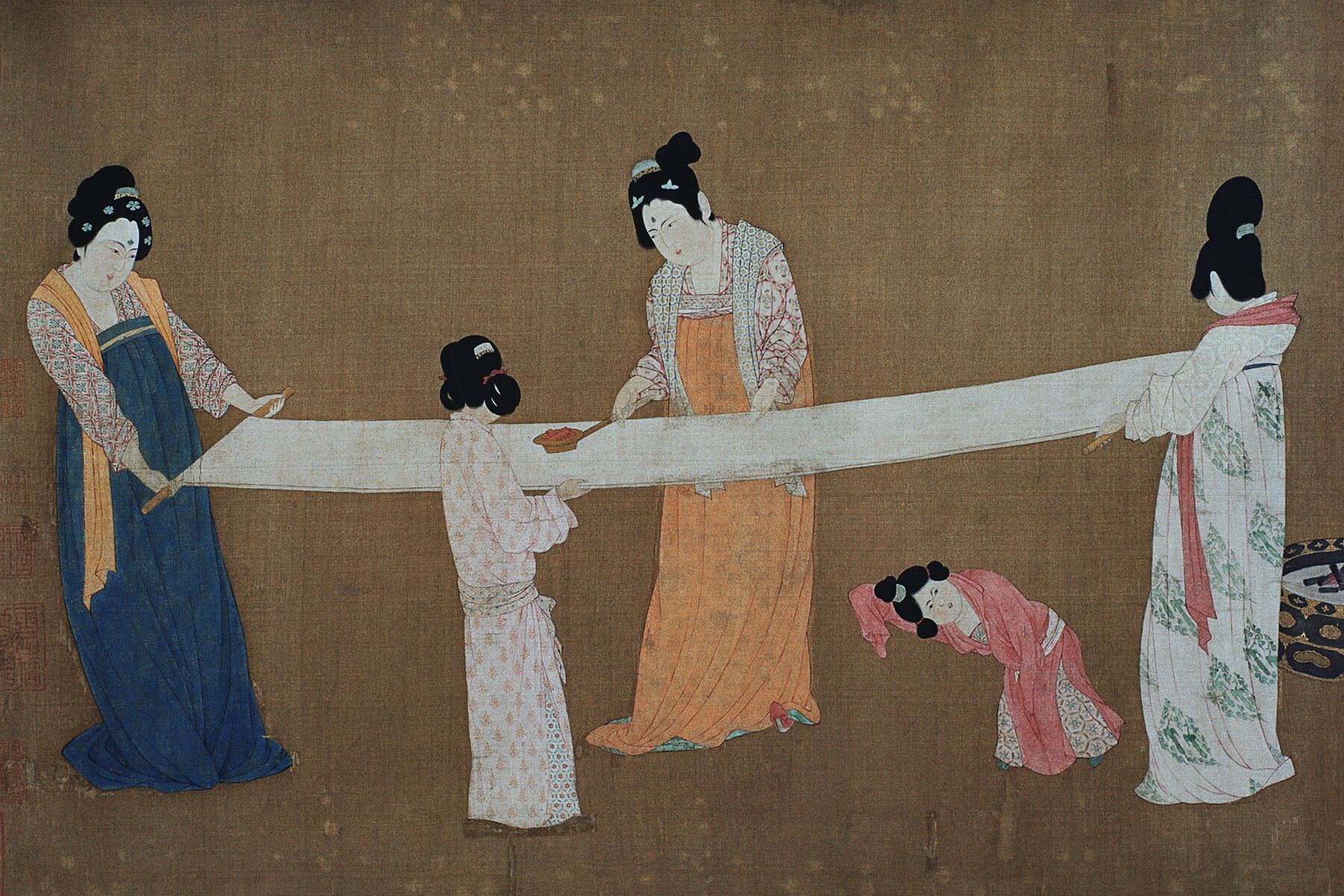
Craftspeople in China had been raising silkworms and working with silk for thousands of years before the luxurious textile became a valuable commodity. Silk was so prized in ancient Rome that one 19th-century German geographer named the Silk Road after the coveted material. Silk reached India in the second century BCE, and in the third century CE, Persia became a major silk-trading hub that connected Europe to East Asia. The trade route spread the popular textile around the world, paving the way for the complex woven patterns of Byzantium and Iran. Silk production, however, remained a closely guarded secret in Asia even after Byzantine Emperor Justinian I had silkworms smuggled over in bamboo tubes.

Silk wasn’t the only fiber that changed hands along the Silk Road, however. Hemp, cotton, and wool were all popular items as well. The cultural exchange also included finished fabric and weaving techniques. Different types of clothing traveled between nations, too; trousers, which made horseback riding easier, originated in Mongolia, and various sorts of woven belts evolved throughout the era.

You may also like

6 Amazing Breakthroughs Made by the Ancient Greeks

  • Aristotle
Aristotle
Historical/ Corbis Historical via Getty Images
Author Darren Orf

July 19, 2023

Love it?

For more than two millennia, the ideas of the ancient Greeks have spurred some of humanity’s greatest achievements. Philosophy, drama, science, and mathematics sprung from that particular peninsula in the Mediterranean. The work of the Greek scholars propelled Muslim thinkers during the Islamic Golden Age, and the European rediscovery of their ancient texts ignited the Renaissance and sustained the Enlightenment, giving way to new scientific advancements and even new ways of living and governing. These are six amazing breakthroughs from ancient Greece, born from some of history’s greatest minds.

Photo credit: Ipsumpix/ Corbis Historical  via Getty Images Plus

Pythagoras’ Theorem Formed the Foundation of Geometry

Pythagoras of Samos is arguably the most famous mathematician from ancient Greece (and there were a lot of them), and that’s because nearly every person at some point in their educational journey is taught his eponymous theorem. Expressed as a2 + b2 = c2, the Pythagorean theorem states that the sum of the squares of the two legs of a right triangle is equal to the square of the hypotenuse. In ancient times, this proved the existence of irrational numbers and formed the cornerstone of what became Euclidean geometry (more on Euclid later), which plays a very real role in construction and navigation today. Some of the world’s smartest minds have set out to provide proofs of the Pythagorean theorem, including Albert Einstein (he was 12 at the time), and new proofs are still being discovered to this day. Simply put, the world would be a very different place without Pythagoras’ triangular insight.

You may also like

7 Facts That Reveal the Wonder of the Ancient Maya

  • Maya Archeological site
Maya Archeological site
PHAS/ Universal Images Group via Getty Images
Author Darren Orf

July 11, 2023

Love it?

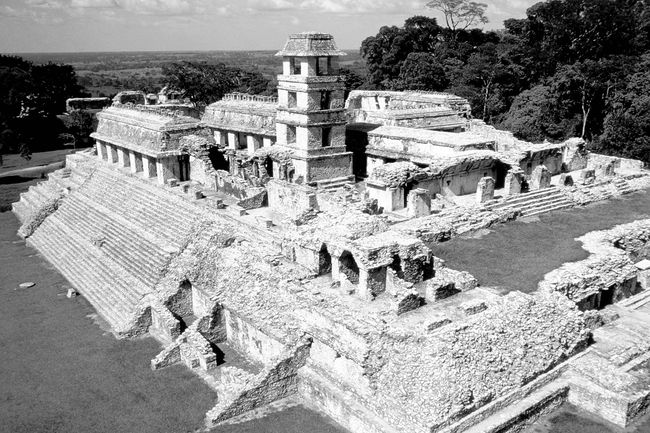
For thousands of years — beginning around 1800 BCE — the Maya flourished throughout Mexico and Central America, primarily calling modern-day southern Mexico, Guatemala, Belize, and parts of Honduras and El Salvador home. One of the great civilizations of ancient Mesoamerica (along with the Olmecs and Aztecs), the Maya created a sophisticated society with advanced mathematics, architecture, and writing. Today, the Maya peoples make up one of the largest Indigenous populations in the Americas.  Here are seven facts that explore the complexity and wonder of this ancient culture.

Photo credit: PeterHermesFurian/https://www.istockphoto.com/vector/maya-numerals-black-and-white-numeral-system-of-maya-civilization-gm1358106234-431831323?phrase=maya+math iStock

The Maya Were Skilled Mathematicians 

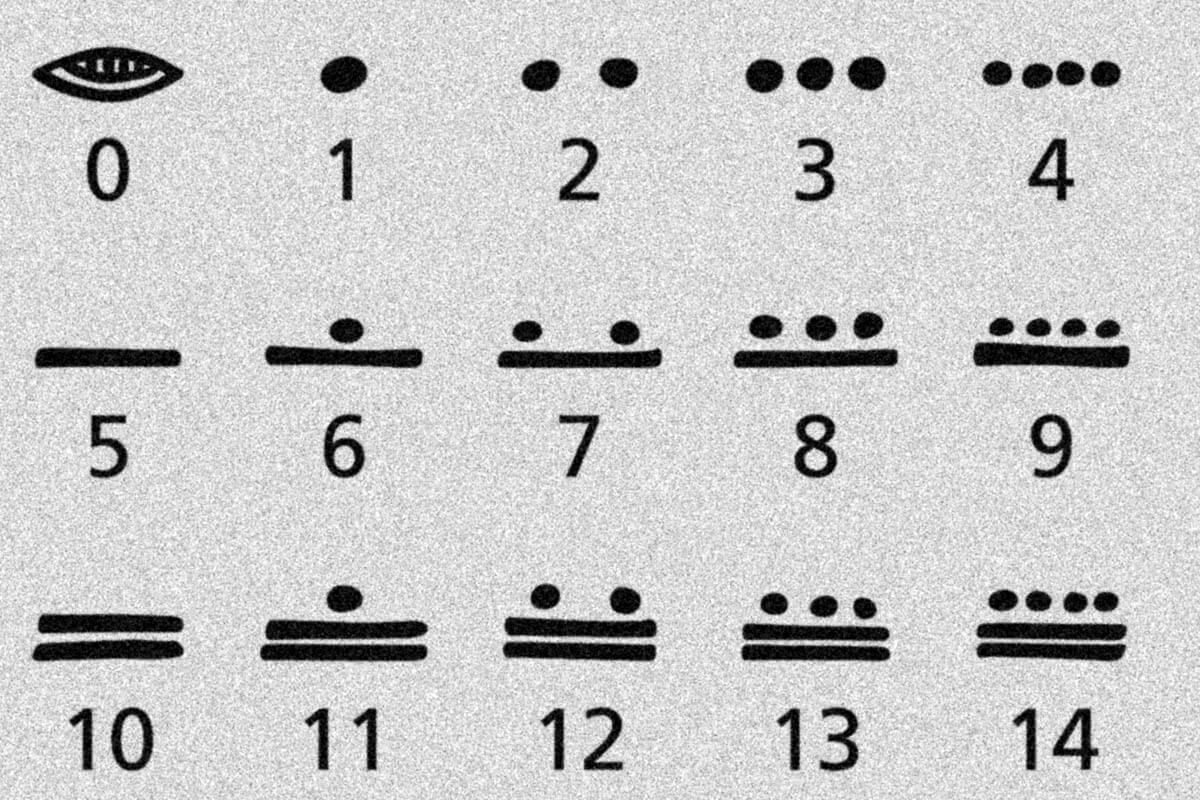
The numerical system used by the Maya, as well as many other Mesoamerican cultures, was a vigesimal (or “base 20”) system. While our modern “base 10” system uses 1, 10, 100, 1,000, and so on, the Maya used 1, 20, 400, 8,000, etc. The Maya system was much more effective for counting than the confusing system of numerals used in the Roman Empire, and the Maya also devised the concept of zero (perhaps around the year 36 BCE), a major mathematical accomplishment. The Maya leveraged their mathematical skills to build impressive cities, chart astronomical movement (using little more than geometry and some sticks), and develop their famous calendar. Speaking of which…

You may also like

7 Facts About the Seven Wonders of the Ancient World

  • Lighthouse of Alexandria
Lighthouse of Alexandria
Universal History Archive/ Universal Images Group via Getty Images
Author Adam Levine

July 11, 2023

Love it?

The first list of the wonders of the world was compiled by the ancient Greek writer and poet Antipater of Sidon in the second century BCE, and it included seven extraordinary landmarks around the Mediterranean and modern-day Middle East. Since then, these ancient marvels have been a subject of study, fascination, and awe. The Seven Wonders of the Ancient World were stunning achievements of sculpture and architecture, built with such intricacy and at such a massive scale that in some cases historians remain baffled as to how ancient civilizations were able to create them. Most of the wonders have been lost to time — only the Great Pyramid of Giza remains in any substantial form — but they still capture the imaginations of generations of people who look to them as a source of beauty and inspiration. Here, we take a brief tour around the ancient Mediterranean and Middle East with seven facts about the ancient wonders of the world.

Photo credit: Bettmann via Getty Images

The Great Pyramid of Giza Is the Largest Compass Ever Built

If you happen to find yourself lost in the deserts of Egypt, you might want to seek out the Great Pyramid of Giza to find your way home. The four corners of the Great Pyramid are aligned with the four cardinal directions, and with such a high degree of accuracy that experts are still trying to puzzle out how the ancient Egyptians pulled it off. The pyramid’s alignment is accurate within one-fifteenth of a degree, a measure that’s difficult to achieve even with modern technology, and especially for a structure so massive (in its prime, the Great Pyramid stood 481 feet tall). Historians theorize that ancient engineers may have used shadows cast by the sun or the location of stars in the night sky to orient the massive structure. However, to this day, the exact method the Egyptians used to pull off this stunning feat of architecture and engineering remains a mystery.

You may also like