


The fax machine was invented while people were traveling the Oregon Trail.

  • Alexander Bain
Alexander Bain
Chronicle / Alamy Stock Photo
Author Adam Levine

June 26, 2023

Love it?

While the fax machine may conjure up images of corporate offices in the 1980s and ’90s, its history actually goes further back than that — much further than you would think, in fact. The earliest version of the fax machine was patented in 1843, the same year the first large-scale wagon train traversed the Oregon Trail. 

At the time of the Great Emigration of 1843 — when an estimated 1,000 pioneers set out from Independence, Missouri, heading westward — the American West remained an uncharted frontier, while the Industrial Revolution was rapidly modernizing Britain and the eastern United States. Case in point: The original version of the fax machine was created in 1843 by Scottish engineer and clockmaker Alexander Bain, who made use of the telegraph technology that had been invented the previous decade. The “facsimile machine” (which was later shortened to “fax”) worked by attaching a stylus to a clock pendulum that sent information along a telegraph line, which was recreated by a similar device at the other end. Bain’s machine could only transmit images of text, but it laid the groundwork for a series of innovations that led to the modern fax machine.

Pants were considered uncivilized in ancient Greece and Rome.

  • Vercingetorix and Julius Caesar
Vercingetorix and Julius Caesar
Niday Picture Library / Alamy Stock Photo
Author Sarah Anne Lloyd

July 24, 2023

Love it?

Though it’s nearly ubiquitous today, wearing pants was considered highly uncivilized in ancient Greece and ancient Rome, where tunics and cloaks, such as togas and chitons, were the norm. The anti-pants sentiment had little to do with clothes themselves, and was more a result of xenophobia toward the cultures that traditionally wore them. Ancient Greek texts deride pants on Persians and Scythians, two groups who were frequently at war with Greece, and in ancient Rome, pants were associated with the Gauls, who fought Rome in the Gallic Wars. 

Even academic texts are full of trouser trashing. In his treatise De aere aquis et locis (Air, Waters, and Places), written around the fourth or fifth century BCE, famed Greek physician Hippocrates belittled the Scythian people by calling them “the most impotent of men,” in part “because they always wear trousers and spend most of their time on their horses.” In the early second century CE, Roman historian Tacitus wrote that Roman general Aulus Caecina Alienus offended the public when he rode through Italy wearing trousers in 69 CE. And in the fifth-century-BCE text The Histories, ancient Greek historian Herodotus quoted a “wise man” giving advice to the king of Lydia about conquering Persia, which, he said, had “no luxury and no comforts.” As evidence, he pointed out that they “wear trousers of leather”— a pretty high-priced item today. (For the record, the pants-wearing Persians ended up conquering Lydia in that conflict.) 

Anti-pants rhetoric persisted even as the fashion tide changed. The Theodosian Code, a set of Roman laws published in the fifth century CE, banned wearing trousers, punishable by exile — although many Romans had started wearing pants by that time because they were practical, warm, and much more comfortable than bare legs for riding horseback. By the medieval period, pants were a staple garment throughout Europe.

Abraham Lincoln was a champion wrestler.

  • Young Abe Lincoln
Young Abe Lincoln
Photo credit: ilbusca/ iStock
Author Michael Nordine

June 13, 2023

Love it?

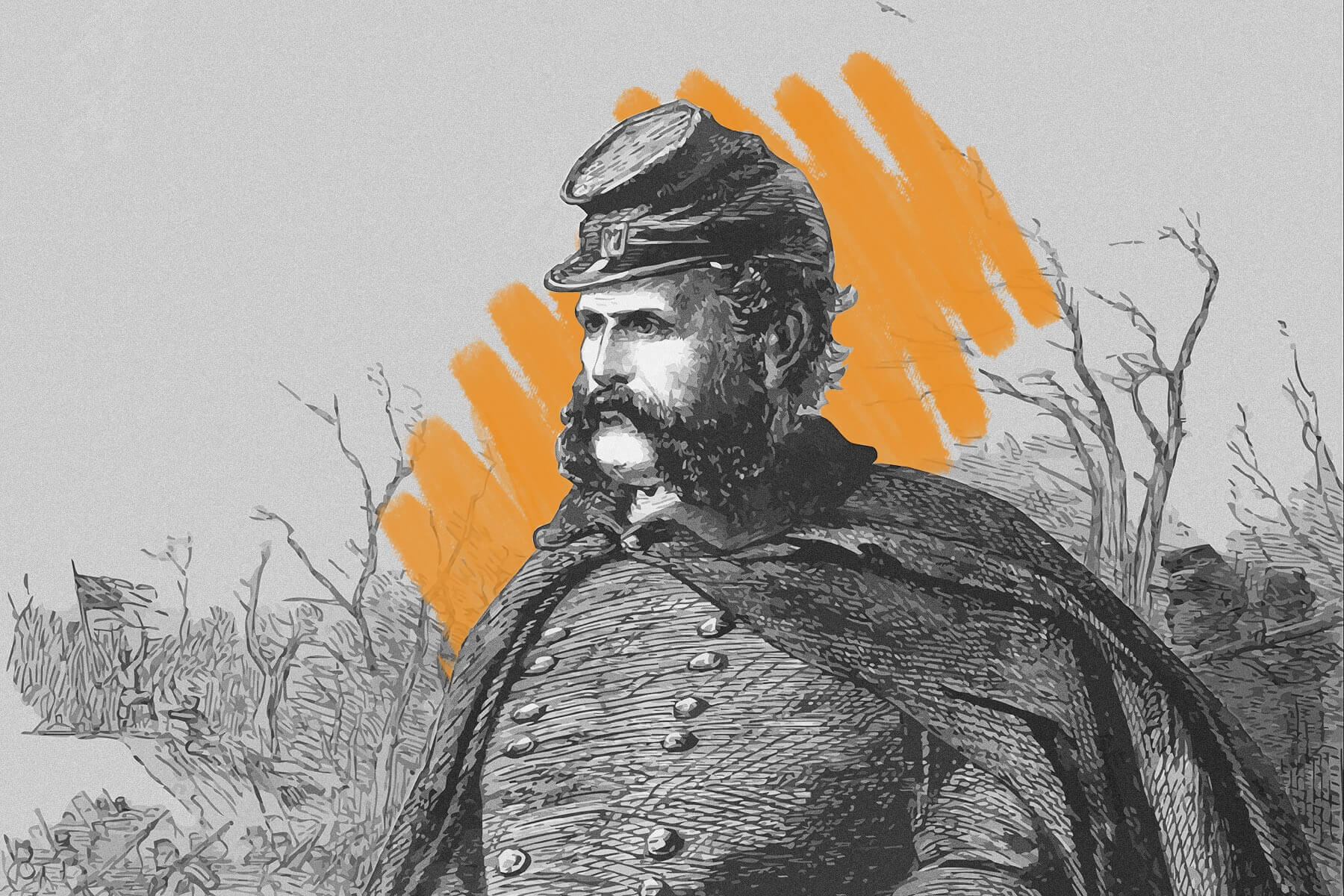
Politics and professional wrestling are more alike than most of us care to admit, a connection that traces back to a time before the “professional” part even existed. Case in point: Abraham Lincoln was an accomplished wrestler prior to his political career. He spent more than a decade competing in matches as a young man, winning nearly every one — a harbinger of his future electoral success, perhaps. His most famous bout occurred when one Jack Armstrong, leader of a group of tough guys known as the “Clary’s Grove gang,” called out the 6-foot-4 future commander in chief. Lincoln was just 22 at the time, and though accounts differ as to how the conflict went down — some say Honest Abe threw Armstrong and won, while others claim Armstrong emerged victorious — it’s widely accepted that Lincoln earned the respect of everyone involved. 

Lincoln posthumously earned the National Wrestling Hall of Fame’s Outstanding American award in 1992, and a mural of him can be found in the organization’s lobby. “In the rough and ready style of the frontier, ‘catch as catch can’ wrestling was more hand-to-hand combat than sport,” reads the NWHOF’s biography of Lincoln, which also notes that the 16th President of the United States was “widely known for his wrestling skills and had only one recorded defeat in a dozen years.” His trash-talking skills were on point as well, with Lincoln once egging on an opponent by reportedly proclaiming himself “the big buck of this lick,” and saying, “If any of you want to try it, come on and whet your horns.” It may not have been the Gettysburg Address, but it got the job done.

Leo Tolstoy’s wife helped him write “War and Peace.”

  • Illustration of Tolstoy
Illustration of Tolstoy
Photo credit: ilbusca/ Getty Images
Author Michael Nordine

June 2, 2023

Love it?

As the saying goes, “behind every great man is a great woman,” and that apparently includes renowned Russian novelists. To wit: Leo Tolstoy’s wife, Sofya Tolstoy, helped him write War and Peace, one of the most influential works of literature in history. (That it isn’t universally considered Tolstoy’s magnum opus is a testament to his prowess, as Anna Karenina is equally revered.) The couple married in 1862, when Leo was 34 and Sofya was 18, and began their informal collaboration on Tolstoy’s sprawling tome the following year. In addition to sitting with him as he wrote, Sofya was also the first set of eyes on the manuscript and suggested changes along the way — including the removal of a graphic scene that took place during one of the main characters’ wedding nights.

As the first typewriter had yet to be invented at the time, Tolstoy naturally wrote the book by hand — not that his penmanship was particularly easy to read. Perhaps the most important project Sofya undertook, according to biographer Rosamund Bartlett’s Tolstoy: A Russian Life, was taking her husband’s “execrable handwriting, and then preparing a legible final draft of the manuscript,” an undertaking described as “a gargantuan task.” She sometimes had to use a magnifying glass to decipher the author’s chicken scratch and rewrote the entire manuscript eight times. Leo and Sofya’s far-from-perfect relationship is dramatized in 2009’s The Last Station, starring Christopher Plummer and Helen Mirren, both of whom received Academy Award nominations for their performances.

The Welsh are said to have worn leeks on their heads in battle.

  • Freshly lifted leeks
Freshly lifted leeks
Credit: Graham Corney/ Shutterstock
Author Sarah Anne Lloyd

April 8, 2024

Love it?

St. David is the patron saint of Wales, and his feast day, celebrated on March 1, is a major national celebration full of parades and eisteddfodau (a Welsh cultural festival of poetry and music). Each year, revelers pin leeks to their lapels, as the leafy vegetable has long been a national emblem of Wales. But how did the Welsh become associated with a type of onion, of all things? According to one prevailing theory, the connection began back in the seventh century, when David, then a Celtic monk, ordered soldiers to wear leeks on their heads in battle. 

As the popular story goes, David instructed soldiers to pull leeks from the ground and affix them to their helmets during a battle against Saxon invaders, so that other Welsh soldiers could easily differentiate their comrades from their enemies. (Another version of the story says the order was given by Cadwalader, king of the Welsh kingdom of Gwynedd.) However, some historians suggest the tale is just a myth, and one that got an extra boost when the Welsh scored a major military victory in a leek field at the Battle of Crécy during the Hundred Years’ War. In any case, leeks became a point of national pride for the Welsh. William Shakespeare even referenced the connection several times in his play Henry V, most notably when Pistol, an Englishman, makes a disparaging remark about the vegetable. The Welsh Captain Fluellen, wearing a leek in his cap, insists that Pistol eat one in retaliation. He retorts, “If you can mock a leek, you can eat a leek.”

On April 18, 1930, the BBC announced, “There is no news.”

  • BBC radio microphone
BBC radio microphone
Author Bennett Kleinman

July 17, 2023

Love it?

With today’s 24-hour news cycle, it feels like notable events are happening every second. But on April 18, 1930, nothing newsworthy occurred — at least according to the British Broadcasting Corporation. At the start of its regular news broadcast at 8:45 p.m., the BBC announced, “Good evening. Today is Good Friday. There is no news.” This unexpected declaration was followed by 15 minutes of piano music, before the radio station resumed its broadcast of Wagner’s opera Parsifal. Though curious listeners were likely dumbfounded by this bold assertion, there were no other national networks to contest the BBC’s claim. That’s because the BBC held a nationwide monopoly on delivering news on television until 1954, and on the radio until 1972.

In reality, April 18, 1930, was quite the notable news day, as nationalist rebels conducted a raid on British forces in India, which was then part of the British Empire. But communication lines were cut during the attack, making it impossible for the BBC to be aware of the news. Under the impression there were no major headlines that day, the network felt no need to lower its broadcast standards solely to fill time. The BBC decried sensationalist news reporting, and shied away from covering local automobile accidents and fires in favor of big-picture affairs that had global repercussions. In the end, the small news department — which consisted of just two editors and two sub-editors at the time — determined that April 18 simply had no events worth commenting on.

A woman was elected to Congress before women had the right to vote.

  • Women’s suffrage protest
Women's suffrage protest
Photo credit: Everett Collection/ Shutterstock
Author Darren Orf

May 31, 2023

Love it?

On August 26, 1920, U.S. Secretary of State Bainbridge Colby certified the 19th Amendment, finally granting American women the vote after a hard-fought battle dating back to the nation’s very founding. However, perplexingly, the U.S. Capitol had already played host to its first congresswoman a few years prior: Representative Jeannette Rankin of Montana. 

Like many other American liberties, women’s suffrage was slowly granted state by state before becoming a national right protected by the Constitution. Montana granted women the unrestricted right to vote in 1914. Two years later, 36-year-old Rankin, a vocal suffragist, ran for one of the state’s two House seats and won. 

The election of Rankin, the first woman ever elected to the federal government, was a bright spot in American history made dimmer by her misogynistic welcome to Washington. Rankin didn’t take her rightful seat in the chamber until April 2, 1917, due to a month-long debate about whether it was appropriate for a woman to be a U.S. representative (even though Montanans had clearly already decided the matter). The country still has a long way to go to achieve gender parity in the nation’s legislative branch, but 28% of the members in the current 118th Congress are women — the largest percentage in U.S. history. 

Attila the Hun’s Bizarre Death

  • Attila the Hun in battle
Attila the Hun in battle
Photo credit: Christine_Kohler/ iStock
Author Michael Nordine

June 9, 2023

Love it?

Almost everything about Attila the Hun’s life was remarkable, including his death. Though some details of the story remain unknowable — this was the year 453 CE, after all — we do know that the leader of the Hunnic Empire married a beautiful young woman named Ildico just as he was preparing his latest attack on the Eastern Roman Empire, then ruled by Marcian. The celebration lasted all night, with Attila leading the way by drinking and feasting to his heart’s content. But his guards became nervous when he didn’t wake at the normal time the following morning. Breaking down the door to the bridal chamber, they found their leader dead and his new wife sobbing at his side.

Attila had no visible wounds; according to an account from Byzantine historian Priscus (a diplomat who had dined with Attila), the Hunnic leader had choked to death on his own blood after suffering a drunken nosebleed. Though some later theories suspected Ildico of foul play, and others thought Marcian was somehow behind it, no proof has ever emerged for either theory. Attila is far from the only world leader to depart this mortal coil under strange circumstances, of course. King Adolf Frederick of Sweden ate himself to death after consuming everything from lobster and caviar to champagne and a sweet roll called “semla.” Greece’s King Alexander I, meanwhile, was done in by an infected monkey bite, and Greek philosopher Chrysippus is thought to have died of laughter after seeing a donkey eat his figs.

A brown bear became an army corporal during WWII.

  • Wojtek the bear
Wojtek the bear
David Kilpatrick/ Alamy Stock Photo
Author Rachel Gresh

December 19, 2023

Love it?

Standing in the shadow of Scotland’s Edinburgh Castle is a statue of a man and a bear. The placard next to them reveals they are Polish soldiers and World War II heroes — yes, even the bear. Named “Wojtek,” the Syrian brown bear spent years in the Polish army before his journey ended in Edinburgh, where his statue’s nose now gleams gold from friendly pats. But that journey began thousands of miles away in Iran, in 1942.

Wojtek arrived at the 22nd Artillery Supply Company of the Polish II Corps by happenstance, when a young Iranian shepard traded the orphaned bear for a Swiss army knife, some chocolate, and canned beef. The Polish soldiers received a tiny cub in a burlap sack, who was placed under the care of a soldier named Peter Prendys. To everyone’s delight, the animal quickly assimilated, and in 1944 he became Private Wojtek, meaning “joyful warrior” in Polish. He was fed double rations, often washing it down with a beer. 

Wojtek’s antics provided much-needed entertainment, but he was more than just a pet. The bear proved his worth on the battlefield when his company was reassigned to Italy. Eyewitness reports from May 1944, during the Battle of Monte Cassino, purport that Wojtek bravely carried artillery shells and ammo crates across the battlefield. After the battle, the company changed its insignia to a bear holding an artillery shell, and Wojtek was promoted to corporal. When the war ended, Wojtek said goodbye to his compeers and retired to the Edinburgh Zoo, where he lived from 1947 until his death in 1963, and where a statue now honors his extraordinary life of adventure and achievement.

There’s an old Irish festival that crowns a goat king each year.

  • Goat at Puck Fair
Goat at Puck Fair
Credit: Trinity Mirror/ Mirrorpix / Alamy Stock Photo
Author Michael Nordine

March 26, 2024

Love it?

Plenty of small towns have animal mayors, but what about animal monarchs? Killorglin, Ireland, has one: a goat king it crowns in a festival every year. The Puck Fair has been held since at least the 1600s, and many believe it’s considerably older. It’s thought to have originated with the legend of a goat alerting the townsfolk of English raiders led by Oliver Cromwell one fateful day, thereby giving the noble residents of Killorgin enough time to fortify their defenses and save their home from the encroaching Englishmen. (Others believe it’s merely related to pagan symbols and rituals, a rather less fanciful theory.)

The festival is held from August 10 to 12 each year and attracts visitors from near and far hoping to take part in the royal caprine festivities. On day one, known as “the Gathering,” a wild male goat found in the nearby wilderness is crowned for the duration of the festivities by Queen Puck, a young girl from the town. Fair Day follows on day two, with a cattle fair held while King Puck observes from his regal scaffold. It comes to an end, as all good things must, with “the Scattering” on day three, when King Puck is returned to the wilderness and presumably tells his fellow goats the strangest story they’ve ever heard.