

Stonehenge was bought at auction in 1915.

  • Stonehenge circa 1930
Stonehenge circa 1930
Trinity Mirror / Mirrorpix / Alamy Stock Photo
Author Adam Levine

July 11, 2023

Love it?

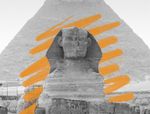
Stonehenge has been a UNESCO World Heritage Site since 1986, but back in 1915 it was privately owned by one man — a barrister named Cecil Chubb, who purchased the prehistoric monument at an auction for £6,600 (more than $1 million in modern U.S. currency). Stonehenge had been privately owned since the reign of Henry VIII, passing from one wealthy proprietor to the next. According to popular legend, Chubb purchased the monument as an unusually extravagant gift for his wife, who purportedly sent him to bid on a set of curtains and got more than she bargained for when he instead returned with one of the most famous structures in the world. 

The more likely reason for the purchase is that Chubb, hearing that an American was interested in buying and relocating the monument, wanted to ensure that the iconic landmark remained in the possession of locals. In fact, in 1918, Chubb donated Stonehenge to the British public. In recognition of this generous gift, Prime Minister David Lloyd George elevated Chubb to the level of nobility, and he became Sir Cecil Chubb, First Baronet of Stonehenge. The Neolithic monument is now owned by the British monarch and managed by English Heritage, which charges tourists a small fee to visit. Locals, as Chubb insisted over a century ago, still get in for free. 

Antarctica had a rainforest 90 million years ago.

  • Cretaceous Antarctica
Cretaceous Antarctica
J. McKay/ Alfred-Wegener-Institut (CC-BY 4.0)
Author Darren Orf

July 11, 2023

Love it?

It’s difficult to comprehend within our limited, double-digit life spans, but Earth is a dynamic planet that is constantly changing. The continents have crashed together and separated a handful of times now (Pangaea is the latest supercontinent, but not the only one), and the planet’s atmosphere, oceans, and orbit are all temporary and movable. Take, for instance, Antarctica, arguably the most inhospitable place on the planet. Not long ago (geologically speaking), the icy continent wasn’t frozen at all. In fact, it was filled with temperate rainforests teeming with life. 

Some 90 million years ago, during the Cretaceous Period — the tail end of the age of dinosaurs — Antarctica was home to a completely different habitat, known as the “Cretaceous hothouse.” The Earth was much warmer due to increased carbon dioxide levels (sea-surface temperatures in the tropics were at an incredible 95 degrees Fahrenheit, for example), and the world’s oceans were a staggering 558 feet higher than they are today. Estimates suggest that Cretaceous Antarctica had a climate similar to today’s Italian peninsula and was filled with plant and animal life, including dinosaurs. The southern continent’s hospitality didn’t end with the dinosaurs, either; it continued on into the Eocene Epoch around 56 million to 34 million years ago. It was then that marsupials likely migrated across Antarctica from South America into modern-day Australia before the continents separated. So while Antarctica is pretty inhospitable to humans now, it may just be a phase.

Ancient Olympic athletes competed naked.

  • Ancient Olympia
Ancient Olympia
ZU_09/ DigitalVision Vectors via Getty Images
Author Kevin McCaffrey

July 10, 2023

Love it?

Many aspects of the ancient Olympics are similar to what we see in our modern competition, but there’s at least one notable difference: Today, all Olympians wear clothes. For ancient Greek athletes, nudity functioned as something of a national uniform, an intentional contrast to their Persian rivals, who traditionally found it against decorum to appear naked. Competing in the nude (often while covered in olive oil) was also seen as a way to show off status. According to historian Donald Kyle, “In Archaic Greece, disrobing fully to become naked for sport became an assertive communication of maleness, ethnicity, status, freedom, privilege, and physical virtue.” Some athletes also considered performing naked a tribute to Zeus. In fact, the words “gymnasium” and “gymnastics” both come from the Greek word “gymnasion,” which refers to a place to train or exercise naked. 

While competing naked became a Greek tradition, it wasn’t always that way; some ancient vases from the Minoan period (which ended around 1200 BCE) depict Athenian athletes competing in loincloths. According to accounts by various scholars, the first naked competitor appeared in the 15th Olympiad in 720 BCE. Orsippus of Megara was said to have lost his loincloth during a race, and then ran on to victory. An epitaph of Orsippus, attributed to the poet Simonides of Ceos, reads, “First of the Greeks in Olympia was he crowned while naked; Before him, all contestants were girdled in the stadium.” In the modern Olympics, things have changed a little bit, and now competitors wear clothing —  though on rare occasions, some modern runners will still go without shoes.

The ancient Romans celebrated a version of Mother’s Day.

  • Matronalia celebration
Matronalia celebration
Credit: PRISMA ARCHIVO / Alamy Stock Photo
Author Sarah Anne Lloyd

April 30, 2024

Love it?

Each May, American families celebrate their matriarchs with brunches, flowers, cards, and phone calls. Thousands of years before this modern Mother’s Day tradition started, the ancient Romans had a similar observance, although it focused on marriage and childbirth at least as much as mothers themselves. Celebrated each year on March 1, Matronalia commemorated the establishment of a temple to Juno Lucina, the Roman goddess of childbirth, on Rome’s Esquiline Hill. 

As on our modern Mother’s Day, husbands would give their wives gifts — but that’s about where the similarity ends. Matronalia was a pretty pious affair; after a procession of married women to the temple to make offerings to Juno Lucina, families would return home and pray for marital happiness. Enslaved women were also given a feast by their female enslavers as part of the festivities.

Matronalia wasn’t the only ancient Roman holiday relating to mothers, however. In fact, it was pretty tame in comparison to the annual celebration of the Great Mother of the Gods, also known as Magna Mater or Cybele, who entered the Roman pantheon around the third century BCE. Her festival, called Megalensia, took place over several days in March or April, and included games, theatrical performances, and other rituals.

Popcorn used to be banned in movie theaters.

  • Liberty Theater in 1935
Liberty Theater in 1935
The New York Public Library/ Unsplash
Author Michael Nordine

July 10, 2023

Love it?

Few things go together like movies and popcorn, but that wasn’t always the case. In fact, popcorn used to be banned in movie theaters. As the nickelodeons of the early 20th century were replaced by comparatively luxe venues that wanted to emulate the sophisticated vibe of traditional theaters in the 1920s and ’30s, cinema owners decided to ban the now-ubiquitous snack — it was loud, messy, and didn’t exactly evoke seeing Madama Butterfly at the Met. “Movie theaters wanted nothing to do with popcorn,” according to Popped Culture: A Social History of Popcorn author Andrew Smith, “because they were trying to duplicate what was done in real theaters. They had beautiful carpets and rugs and didn’t want popcorn being ground into it.”

That’s a reasonable objection, but it was eventually trumped by how much money those same owners stood to make during the Great Depression. Movies were a much-needed (and inexpensive) escape during that historic downturn, and selling popcorn in-house for 5 to 10 cents a bag helped keep countless theaters afloat at a time when many popcorn-less venues were going under. By 1945, more than half the popcorn consumed in the U.S. was sold in movie theaters, and in the nearly 80 years since, that association has only grown stronger.

Pan Am created a waitlist for moon travel in the 1960s.

  • Surface of the moon
Surface of the moon
Photo credit: NASA/ Unsplash
Author Darren Orf

June 2, 2023

Love it?

In 1964, an Austrian journalist asked a travel agent in Vienna to book him on a flight to the moon, and it gave the folks at Pan Am an idea. Within weeks, the popular airline created a waitlist for would-be space travelers eager to reserve a spot on the first lunar flight. It was an advance reservation to be sure: The airline predicted that the first commercial flight to the moon would depart in the year 2000. 

Though Apollo 11 would not make its historic journey to the lunar surface for another five years, Pan Am was already busy working out the messy details of spaceflight service (chief among them being the inevitable discomfort of rocket launches). As the airline advertised its lunar list on radio and TV, the waitlist only grew. By the time Neil Armstrong took his “one small step for man” in July 1969, some 25,000 people were waiting for their ticket beyond Earth’s gravitational embrace. Pan Am even set up a “First Moon Flights” Club, issuing club cards to around 93,000 certified members between 1968 and 1971.

Ultimately, Pan Am was unable to deliver on its lofty lunar promises; high operational costs combined with an economic slowdown led to the airline’s financial decline in the 1970s and eventual bankruptcy in 1991. The dream of space tourism, however, lives on. In 2021, Virgin Galactic’s space travel waitlist (at $250,000 per ticket) had some 600 names on it, including Tom Hanks, Leonardo DiCaprio, and Lady Gaga. The spaceflight company Axiom Space, meanwhile, is busy curating 10-day visits to the International Space Station for a cool $55 million and launched its first private mission in April 2022. Still, though humans have clearly long been hungry for ways to leave our home planet, the surface of the moon remains an exclusive destination for professional astronauts — for now.

Genghis Khan established a postal system.

  • Statue of Genghis Khan
Statue of Genghis Khan
Photo credit: DavorLovincic/ iStock
Author Michael Nordine

June 12, 2023

Love it?

Genghis Khan is rightfully known as one of history’s greatest conquerors, but there’s more to establishing the largest contiguous land empire the world has ever known than winning battles. Born Temüjin in 1162, Genghis Khan adopted the name by which he’s known today when he was anointed the Mongols’ sole leader in 1206, and he eventually became one of the most influential figures in history. One of his more surprising accomplishments was establishing a postal system known as the “Yam,” also called the “Örtöö,” which was expanded across the empire by his son Ögedei. Stations were placed 20 to 30 miles from one another, each featuring food, lodging, and horses; riders could either rest up or hand off their message to the next rider. Not everyone could use it, however — merchants and travelers were originally afforded the privilege (alongside foreign dignitaries and traveling officials), but they lost it after they “abused the system” somehow.

To be sure, the Mongols were brutal — Genghis Khan particularly so. But he was also pragmatic, with the Yam being just one example of the stability brought about by his reign. His subjects were free to practice their own religion and largely left alone after the Mongols had subjugated the city and moved on. (However, the Mongols were still known to massacre people even if they provided little or no resistance.) It’s believed that at least some of the khan’s mixed reputation is attributable to the fact that most historical accounts of the Mongols were not written from the Mongol perspective (with one notable exception). Whether he’s a hero or a villain depends on who you ask, but there’s no denying his historical significance.

Lego was created as a result of the Great Depression.

  • 1958 LEGO box design
1958 LEGO box design
Simon Robinson / Easy On The Eye / Alamy Stock Photo
Author Bennett Kleinman

July 24, 2023

Love it?

In October 1929, the U.S. plunged into financial despair as the crash of the New York Stock Exchange prompted the onset of the Great Depression. It wasn’t just Americans who were affected, however; the economically crippled U.S. put restrictions on European imports, causing an agricultural downturn overseas. This impact extended to the small Danish town of Billund, the home of Lego founder Ole Kirk Christiansen. Christiansen was a local carpenter whose farmer-heavy clientele dried up in the early 1930s, forcing him to cut his workforce by 1932. Given the lack of demand for intricate carpentry work, Christiansen pivoted into producing cheap wooden goods including toys, which stood a greater chance of selling despite the poor economic conditions.

At first, this decision failed to salvage the business, and Christiansen was forced to declare bankruptcy. Despite this, he maintained a childlike sense of optimism and pressed on. In 1934, Christiansen came up with a new company name, Lego, based on the Danish words “leg godt,” which translate to “play well.” Though the materials were cheap, Christiansen’s carpentry work cut no corners, producing wooden ducks and car models that became highly popular throughout Denmark. The company later discontinued wooden toy production in 1960 after a fire destroyed its carpentry workshops, but not before Lego embraced a company-wide pivot into the world of plastics. In the late 1940s, Lego purchased a plastic molding machine, allowing the company to produce the very first plastic Lego brick in 1949. In 1953, it began producing entire sets made of plastic, and later shifted away from wooden toys. Lego was able to weather the bleak financial times, and grew into a successful global company that continues to brighten lives today.

Three pigeons were awarded a military medal in 1943.

  • WWII Carrier Pigeon
WWII Carrier Pigeon
Photo credit: Hoberman Publishing/ Alamy Stock Photo
Author Michael Nordine

June 12, 2023

Love it?

Pigeons have always gotten a bad rap, especially when you consider the disparity between their reputation and that of the dove — which is actually just a pigeon with a better PR team. In addition to being much more intelligent than you may have realized, some members of the Columbidae bird family are even war heroes. This includes the three pigeons who were awarded a military medal in 1943, all of whom served in the U.K.’s Royal Air Force. White Vision, Winkie, and Tyke were the inaugural recipients of the Dickin Medal, which was created by the People’s Dispensary for Sick Animals (PDSA) to honor animals who aided Britain’s efforts in World War II; the carrier pigeons delivered lifesaving messages that led to the rescue of ditched aircrews.

All three decorated pigeons traveled great distances to complete their duty, with Winkie flying some 120 miles in order to alert the RAF Leuchars air base of his handlers’ predicament. The flight crews were located within 15 minutes, and all of them were saved. The birds’ medals, meanwhile, included this citation: “for delivering a message under exceptionally difficult conditions and so contributing to the rescue of an Air Crew while serving with the RAF.” In the 80 years since the Dickin Medal was created, a total of 32 messenger pigeons have received the medal alongside as many as 38 dogs, four horses, and one cat. The bronze medallion is inscribed with the words “for gallantry” and “we also serve.”

Darth Vader was based on Japanese samurai.

  • Samurai Date Masamune
Samurai Date Masamune
Photo credit: Patchiya Wasitworapol/ Shutterstock
Author Michael Nordine

June 9, 2023

Love it?

George Lucas drew a great deal of inspiration from Japanese culture when creating the Star Wars films, which is perhaps most apparent in the character of Darth Vader. The most feared man in a galaxy far, far away was based on the samurai, the skilled and disciplined warriors of Japan’s feudal era (roughly the 12th century to 19th century). One look at the samurai’s awe-inspiring black armor is enough to make the connection clear, though the similarities go beyond the surface. Lucas was greatly influenced by Japanese filmmaker Akira Kurosawa’s The Hidden Fortress, transposing several aspects of the 1958 samurai drama onto his 1977 space opera; everything from the Imperial crest to the fact that a princess leads a rebellion can be traced back to Kurosawa’s film. “The one thing that really struck me about The Hidden Fortress,” Lucas acknowledged in 2001, “was the fact that the story was told from the [perspective of] the two lowest characters. I decided that would be a nice way to tell the Star Wars story… which in the Star Wars case is the two droids.”

Over the years, many have speculated that Darth Vader was even based on a specific samurai warrior, the famed Date Masamune, a feudal warlord born in 1567 and known as the “One-Eyed Dragon.” Masamune lost an eye, grew up in a time of political instability, and was disliked by his mother before becoming a ruthless leader who struck fear in the hearts of his enemies and underlings alike — all of which parallel the story of a certain Sith lord born Anakin Skywalker.