



Emperor Hirohito was buried wearing a Mickey Mouse watch.

  • Japanese Emperor Hirohito, 1989
Japanese Emperor Hirohito, 1989
Credit: colaimages/ Alamy Stock Photo
Author Michael Nordine

September 19, 2024

Love it?

You might be a Disney adult, but if you’re not planning to be buried with a Mickey Mouse accessory, it would appear you’re less of a fan than Japanese Emperor Hirohito, who was interred wearing his Mickey watch. The monarch, who reigned over Japan from 1926 to 1989, first visited the “Happiest Place on Earth” in 1975 after being a fan of Disney cartoons for decades. It was then that he was gifted the watch, which he was apparently quite taken by.

The emperor’s love of the timepiece was noted several times before his passing, including in a 1984 Washington Post article marking his 83rd birthday. “Hirohito expressed his approval of America not in words but with a gesture,” the Post reported. “For years afterward, he wore a Mickey Mouse watch that he picked up at Disneyland.” Anyone who wears the same shirt every time they visit the “Happiest Place on Earth” can surely relate.

The oldest recorded customer complaint is from 1750 BCE.

  • Reading customer reviews
Reading customer reviews
ronstik/ Shutterstock
Author Bennett Kleinman

September 20, 2023

Love it?

Customer dissatisfaction is far from a modern phenomenon; in fact, the oldest recorded complaint dates back 3,773 years. The grievance was etched into a tablet that was rediscovered during excavations of the Sumerian city-state Ur in the early 20th century. Dating back to 1750 BCE, this tablet was written by Nanni, a dissatisfied customer whose ire was directed toward a copper merchant named Ea-nasir. In the complaint, Nanni expressed dismay over the quality of copper they received, accusing the trader of poor treatment and demanding money back. The translated text includes exasperated statements such as, “Who am I that you are treating me… with such contempt?” Nanni also wasn’t the only customer who felt slighted by this Ea-nasir — there’s archaeological evidence of other Sumerian individuals who expressed frustration over the quality of copper from the same merchant.

The complaint tablet was one of several fascinating discoveries uncovered during British archaeologist Leonard Woolley’s excavations of Ur between 1922 and 1934. Woolley and his team dug out 1,800 burial sites, including the spectacular tomb of Queen Puabi, one of the few female rulers in ancient Mesopotamia. Much like the Egyptian tomb of King Tut, Puabi’s tomb was largely intact and included a headdress worn by the queen, made of lapis lazuli (a blue gemstone), ribbons, and gold. Woolley also uncovered layers of water-laid clay, which likely formed during a great flood. Some theories suggest that this ancient flood may have influenced writings about the deluge of water described in the Bible’s Book of Genesis, though these theories are difficult to confirm.

Cotton candy was invented by a dentist.

  • Spinning candy floss
Spinning candy floss
Tobias Titz/ fStop via Getty Images
Author Nicole Villeneuve

September 20, 2023

Love it?

Cotton candy consists of just two simple ingredients: air and sugar. The supersweet indulgence seems like the last thing a dental health professional would promote, but it was invented by a dentist from Tennessee in 1897.

Born in Nashville in 1860, William James Morrison was quite successful by his early 30s, having graduated from dental school and been made president of the Tennessee State Dental Association in 1894. As accomplished as he was in his professional life, Morrison also racked up a number of impressive inventions: He patented a device to extract oils from cottonseed and turn them into a lard substitute, as well as a process that chemically purified Nashville’s drinking water. In 1897, Morrison turned to John C. Wharton, a local candymaker, for his next invention. Together, they worked on building what they called the “electric candy machine,” a device that melted sugar, then used air to force it through a mesh screen and into a spinning chamber. The result was the cloudlike confection we now know as cotton candy — then called, appropriately whimsically, “Fairy Floss.” 

Morrison and Wharton introduced their invention at the 1904 St. Louis World’s Fair. They sold the Fairy Floss in small boxes for 25 cents each — half the price of admission. Despite its high price tag, Fairy Floss was a hit, selling 68,655 boxes and grossing $17,163.75 (that’s over $500,000 today) during the fair’s seven-month run. In the 1920s, Fairy Floss got its more commonly known current name when a man named Josef Lascaux started dabbling in his own confectionery. He called the treat “cotton candy,” and he sold it from his — believe it or not — Louisiana dentist office.

The world’s oldest place of worship predates the Egyptian pyramids by at least 6,500 years.

  • Göbekli Tepe archaeological site
Göbekli Tepe archaeological site
Credit: Giovanni Camici/ Alamy Stock Photo
Author Timothy Ott

September 11, 2024

Love it?

While the pyramids of Giza (dating back to 2500 BCE) and Stonehenge (3000 BCE) are likely the most famous ancient monuments, the world’s oldest place of worship predates these sites by a whopping 6,500 to 7,000 years. Dating to around 9600 BCE, Göbekli Tepe is an archaeological tell — a raised mound formed by continuous settlements rebuilt in the same location — in the foothills of southeastern Turkey. It not only reveals evidence of Stone Age human activity, but also has forced a reckoning of some of the widely held beliefs about the origins of civilization. 

Since excavation of the site began in 1995, Göbekli Tepe — which translates to “potbelly hill” in Turkish — has yielded enclosures of T-shaped limestone megaliths, along with smaller human statuettes, early Neolithic tools, and remnants of animal bones. Because many of these megaliths are arranged in circular patterns and feature carvings of wild animals, anthropomorphic creatures, and human clothing, it’s generally believed these structures served as a gathering site for spiritual ceremonies. And as radiocarbon dating has revealed the Göbekli Tepe ruins to be at least 11,000 years old, from a time when nomadic hunter-gatherers were beginning to transition to permanent settlements, anthropologists have had to reconsider the previously held belief that organized religion only emerged well after agriculture-based communities were firmly in place.

Archaeologists have determined that Göbekli Tepe housed more of a permanent settlement than originally believed, and that it wasn’t the only Neolithic temple complex in the region. But while archaeologists suspect it’s not the only place of worship from the era, the site remains an invaluable source of information about people who lived thousands of years before the great pyramids rose to the sky, even if we can only guess at what the stone arrangements and their strange symbols really mean.

Tug-of-war used to be in the Olympic Games.

  • Sweden’s tug-of-war team
Sweden's tug-of-war team
TT News Agency/ Alamy Stock Photo
Author Adam Levine

September 18, 2023

Love it?

Today, we associate tug-of-war with cookouts and schoolyard games, but for a brief period in the early 20th century, world-class competitors participated in tug-of-war matches on one of the most prestigious stages in athletics: the Olympic Games. Tug-of-war was an event at five Summer Games: in 1900, 1904, 1908, 1912, and 1920. The rules of Olympic tug-of-war were essentially a slightly more regulated version of the game commonly played today. Two teams of eight competitors (or five or six competitors in the 1900 and 1904 Games) grabbed hold of either side of a rope, and two lines were drawn in the middle of the field, 6 feet away from each team. The two sides then battled to pull the opposing team 6 feet over the line closest to their side — or to make the other team fall over. If this wasn’t accomplished within a five-minute time limit, the team that had pulled their opponent the greatest distance was declared the winner.

However, there were some unusual rules in Olympic tug-of-war that led to a few odd results. For instance, a country could enter multiple teams into the same competition, which resulted in the United States winning the gold, silver, and bronze medals in tug-of-war at the 1904 Olympics. A similar result occurred after a controversy in the 1908 Games: When the United States complained that the competitors from Great Britain had an unfair advantage from the heavy, spiked police boots they were wearing, the U.S. withdrew from the competition in protest, and all three medals went to Great Britain. After the 1920 Games, the International Olympic Committee removed around 30 sports from the Olympics, including tug-of-war, amid concerns that the event was getting too large.

Ferrets were a popular pet in ancient Rome.

  • Pet ferret
Pet ferret
Credit: Trygve Finkelsen/ iStock
Author Michael Nordine

September 11, 2024

Love it?

Ferrets, Romans, countrymen, lend me your ears. I have come to tell you about one of ancient Rome’s most surprising pets: ferrets, whose small size and playful nature belie their fierce hunting abilities. These wily weasels were primarily kept to hunt rabbits and keep pest populations under control, including by soldiers. As the Roman Empire expanded, so too did the humble ferret’s range. According to the Roman historians Pliny and Strabo, around 6 BCE, Emperor Augustus sent γαλέη — a Greek word believed to have been referring to ferrets, though it also could have meant mongooses or polecats — to the Balearic Islands in modern-day Spain to control their plague of rabbits.

Though certainly not as common as cats and dogs, ferrets remain popular pets today. They’re beloved for their mischievous personalities — their name literally means “little thief” due to their habit of taking small objects and hiding them — and how much they love to play, including with other animals. They’re also high-maintenance, meaning you shouldn’t attempt to channel your inner Roman without giving it a good deal of thought first. 

The Hundred Years’ War was actually 116 years long.

  • Armagnacs in France, 1415
Armagnacs in France, 1415
Nastasic/ iStock
Author Michael Nordine

September 13, 2023

Love it?

Anyone who’s watched the TV series Succession or Game of Thrones knows that bad things tend to happen when an aging ruler is without a clear heir. Yet both of those fictional conflicts look positively quaint next to the Hundred Years’ War, which was actually 116 years long. Lasting intermittently from 1337 to 1453, the conflict has its roots in the 1328 death of Charles IV of France, who went to the grave without a son. His first cousin succeeded him as King Philip VI, much to the chagrin of Edward III of England and his supporters — as the late king’s nephew, Edward was a closer blood relation and many considered his claim stronger. However, an assembly of French barons declared that the throne should pass to a native Frenchman instead, which eventually led to a century-long clash.

France was considerably more powerful at the time, with the strongest military and deepest pockets in all of Western Europe, but a series of early victories by the scrappy English prolonged the war far longer than initially expected. The war, which historians divide into three distinct phases (Edwardian, Caroline, and Lancastrian), was an intermittent affair that finally ended in a French victory after the Battle of Castillon. Though this was the last military conflict of the Hundred Years’ War, England and France were technically at war with one another until the Treaty of Picquigny was signed in 1475. The Hundred Years’ War is a catchier name than the 116 Years’ War (or the 138 Years’ War), however, so it’s easy to see why it stuck.

Marie Curie’s daughter also won the Nobel Prize.

  • Marie & Irene Curie, 1925
Marie & Irene Curie, 1925
Hi-Story/ Alamy Stock Photo
Author Adam Levine

September 13, 2023

Love it?

In 1903, Marie Curie won the Nobel Prize in physics for her study of radioactivity, including the discovery of the elements radium and polonium. She shared the award with her husband, physicist Pierre Curie, and engineer Henri Becquerel. The Curies’ aptitude for science seems to have been hereditary, because in 1935, their daughter Irène Joliot-Curie also won the Nobel Prize, in chemistry, for her own study of radioactive elements. Like her mother, Joliot-Curie shared the prize with her husband, physicist Frédéric Joliot-Curie.

Irène and Frédéric developed a technique for inducing artificial radioactivity in previously nonradioactive elements, a breakthrough that had widespread ramifications. Scientists were better able to observe the behavior of atoms as they underwent radioactive decay, which led to new insights into atomic structure and nuclear physics. In medicine, radioactive iodine prepared using the Joliot-Curies’ methods became a key means of treating thyroid diseases, and the ability to easily produce radioactive material at a commercial scale was essential to the development of new cancer treatments. In the years following her Nobel Prize win, Irène followed in her mother’s footsteps once more; in 1946, she became the director of the Radium Institute in Paris, where Marie ran her own laboratory for 25 years.

The planet Uranus was originally named “George’s star.”

  • Galaxy with Uranus planet
Galaxy with Uranus planet
hideto111/ iStock
Author Bennett Kleinman

September 13, 2023

Love it?

In 1781, astronomer William Herschel discovered the planet we know today as Uranus, though the celestial orb nearly had a much more regal name. Herschel, who lived in Britain, proposed naming his new find “Georgium Sidus,” Latin for “Georgian star,” in honor of England’s reigning monarch, King George III. However, his suggestion was met with pushback within the scientific community, particularly from astronomer Johann Elert Bode, who noted that the name “George” didn’t quite mesh with the mythological-based names of the other planets. Instead, Bode put forward the name “Uranus,” the Latin form of the Greek word “Ouranos.” In mythology, not only is Uranus the Greek god of the sky, but Uranus’ Roman counterpart, Caelus, is Saturn’s father. Given those fitting associations, scientists adopted Bode’s suggestion in lieu of Herschel’s initial proposal.

Uranus’ 27 moons have a fascinating etymological history of their own, as all are named after characters from the works of William Shakespeare and Alexander Pope. In 1787, Herschel discovered the moons Titania and Oberon, named after the king and queen of the fairies from Shakespeare’s A Midsummer Night’s Dream. Other Uranian moons include Miranda, Stephano, and Trinculo, all characters from Shakespeare’s The Tempest. And in 1851, astronomer William Lassell discovered two additional moons that he named Umbriel and Ariel in honor of Alexander Pope’s poem The Rape of the Lock. The name “Ariel” also applies to a character in The Tempest, meaning that either 24 or 25 of Uranus’ moons are named after Shakespearean characters specifically, depending on how you view it.

Four days of the week are named after Norse gods.

  • Norse goddess Frigg
Norse goddess Frigg
duncan1890/ DigitalVision Vectors via Getty Images
Author Adam Levine

September 12, 2023

Love it?

Each week, whether we know it or not, we pay a small tribute to several gods from the ancient Norse pantheon. In fact, four days of the week are named after deities from Norse mythology. Tuesday comes from Tyr, the Norse god of war, while Wednesday is named after Odin , a powerful deity who was the father of many other Norse gods and ruled over Valhalla, the hall of slain warriors (the name is derived from the Anglo-Saxon word “Wodnesdaeg,” meaning “Woden’s day”). Thursday’s namesake is Thor, the Norse god of Thunder, and Friday is named for Frigg, the wife of Odin and the Norse goddess of marriage and fertility.

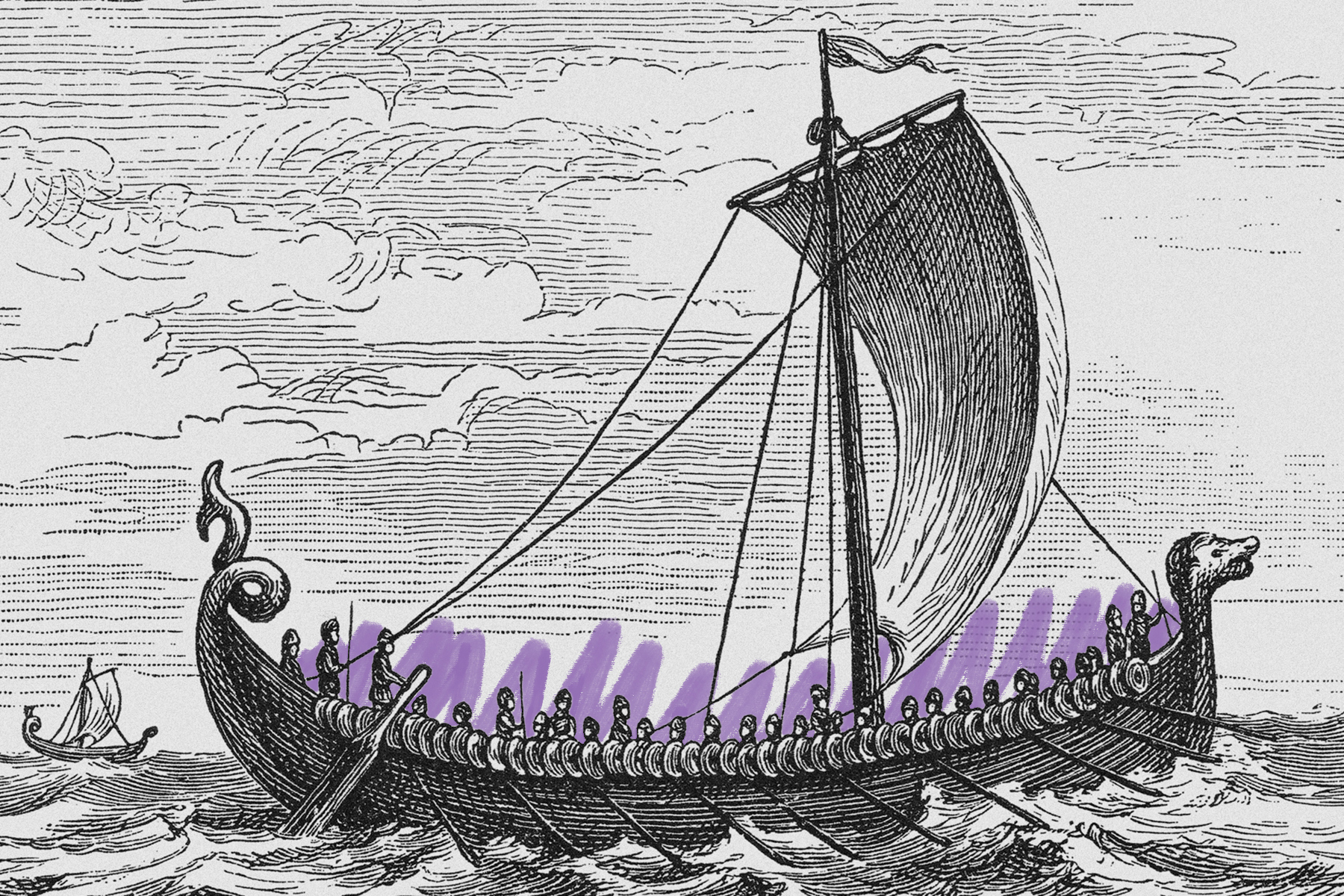
The presence of Norse mythology in our days of the week is due to the historical connection between the English and Old Norse languages. In the eighth century CE, the British Isles were invaded by Viking tribes from Denmark, Norway, and Sweden, all of whom spoke Old Norse. As a result, many words in the English language are descended from Old Norse. The Vikings adopted the Roman custom of naming the days of the week after gods, but replaced the Latin deities with gods from their own mythology. The Old Norse names of Tyr, Odin, Thor, and Frigg evolved over time to become the weekdays we use in modern English today.