


There’s an ancient mosaic in Pompeii that says “Cave Canem,” or “Beware of the dog.”

  • Cave Canem reproduction
Cave Canem reproduction
Underawesternsky/ Shutterstock
Author Michael Nordine

September 28, 2023

Love it?

Most cities are spoken of in the present tense, but then most cities aren’t synonymous with disaster. And while few details about Pompeii and its destruction following Mount Vesuvius’ eruption in 79 CE are anything less than tragic, there are exceptions — such as the fact that a mosaic reading “Cave Canem,” or “Beware of the dog,” was uncovered in the ancient city. In addition to the text, the mosaic features a very well-preserved engraving of the guard pup in question. The warning was found at what’s now called the House of the Tragic Poet, also known as both the Iliadic House and the Homeric House, which is famous for the detailed portrayals of Greek mythology found on its frescoes and floors.

Despite the dwelling’s name, no one knows who lived there; the moniker is a reference to one of the mythological scenes depicted on its walls. The house was discovered by archaeologist Antonio Bonucci in 1824 and, due to its fanciful artwork, has become one of the excavated city’s most sought-after destinations for visitors and historians alike. Mount Vesuvius has erupted many times throughout its destructive history, but no eruption has stayed in the collective imagination quite like the fateful one that destroyed Pompeii — it’s not often that an entire city and the surrounding area are buried and preserved in volcanic ash.

Zachary Taylor never voted until his own presidential election.

  • President Zachary Taylor
President Zachary Taylor
traveler1116/ DigitalVision Vectors via Getty Images
Author Bennett Kleinman

September 22, 2023

Love it?

In the 1848 U.S. presidential election, Major General Zachary Taylor — a political newcomer representing the Whig Party — faced off against Democratic Senator Lewis Cass. Taylor was so new to the world of politics that he had never even voted before his own presidential election. A lifelong military man and hero of the Mexican-American War, he was unexpectedly drafted as the Whig Party candidate in 1848 — a move that came as a surprise even to Taylor himself. He wasn’t present at the Whig National Convention, and didn’t find out about his nomination until weeks later, as he initially refused to pay postage on a letter sent his way alerting him of the news. After accepting the nomination, Taylor refused to actively campaign in the race, so supporters hit the trail on his behalf instead. 

On Election Day, Taylor defeated Cass as well as former president and third-party candidate Martin Van Buren, earning the votes of 1,360,099 Americans en route to the presidency. Taylor’s time in office was brief, however; he served only 16 months before his untimely death in July 1850. His presidency was largely unmemorable, though he was a vocal supporter of California statehood, which became a reality two months after his death. Despite this minimal impact on the world of politics, Taylor holds the distinction of being the last person elected to the presidency who was unaffiliated with either the Democratic Party or the Republican Party. His successor, Millard Fillmore, was also a member of the Whig Party, but Fillmore never actually won a presidential election.

France had a calendar with 10-hour days during the revolution.

  • 10-hour decimal clock
10-hour decimal clock
Michael Wheatley/ Alamy Stock Photo
Author Bennett Kleinman

October 11, 2023

Love it?

French Revolutionary Time was a short-lived concept that used a base-10 timekeeping system. Otherwise known as “decimal time,” this unprecedented method included 10-hour days, 100 minutes per hour, and 100 seconds per minute. Each day was divided into 10 equal parts, with “zero” marking the start (what is now midnight) and “five” denoting the midpoint (noon). This meant that every hour was more than twice as long as an hour of standard time. New clocks and watches were even manufactured displaying both decimal time and standard time, to considerable confusion. 

While France formally adopted this practice on November 24, 1793, the idea was first promoted in 1754. That year, mathematician Jean le Rond d’Alembert drew inspiration from the base-10 numeral system that had existed since ancient times and argued that it would be easier and more convenient to calculate times that were divisible by 10. The concept was revived in 1788 and met with enthusiasm from French revolutionaries seeking to shed their ties to the past. French Revolutionary Time was later adopted by the French Parliament, though it proved to be unpopular among citizens who found the switch confusing. The new system was deemed optional on April 7, 1795, and the country ultimately reverted to the previous timekeeping method.

In addition to changing how the country kept time, revolutionary France also adopted the French Republican calendar. The new formula divided the year into 12 months, each of which contained three 10-day weeks. To bring the total days up to 365, France tacked on five additional days at the end of the year as holidays. Debuted on October 24, 1793, the new calendar was also short-lived, and was abolished by Napoleon Bonaparte on January 1, 1806.

The oldest known song is from the 14th century BCE.

  • Hurrian hymn tablet
Hurrian hymn tablet
Album/ Alamy Stock Photo
Author Darren Orf

September 20, 2023

Love it?

Music is as old as humanity itself: Our Paleolithic ancestors likely sung lullabies to their children, and evidence of ancient instruments dates back some 40,000 years. But when it comes to recorded history, specific melodies are hard to come by. That’s why the cuneiform tablet known as “Hurrian Hymn No. 6” is such an incredible artifact. Dating back to the 14th century BCE — some 3,400 years ago — it is the oldest known melody in human history. 

As the name suggests, the song was originally composed by the Hurrians, an ancient people who lived in parts of modern-day Iraq, Syria, and Turkey. Originally a dedication to the Mesopotamian goddess Nikkal, the hymn was unearthed in the Syrian city of Ugarit in the 1950s, and the artifact is now housed at the National Museum of Damascus. The tablet contains not only near-complete musical notation and lyrics, but also instructions on how to perform the song on a nine-stringed lyre, a U-shaped harp that was popular throughout Mesopotamia. Many varied versions of “Hurrian Hymn No. 6” exist today, largely due to translation inconsistencies, but one of the most popular compositions is from Syrian American composer Malek Jandali, who has performed the ancient piece with a solo piano and also a full orchestra. 

Bootleggers wore cow shoes to cover their tracks during Prohibition.

  • Bootlegger cow shoes
Bootlegger cow shoes
Credit: Everett Collection Inc/ Alamy Stock Photo
Author Bennett Kleinman

September 25, 2024

Love it?

During the Prohibition era in the U.S., the continued demand for alcohol led to a drastic increase in the illegal manufacturing and trafficking of booze. This illicit profession, known as bootlegging, required clever work-arounds to avoid detection from federal officials. One unusual trick that bootleggers turned to was wearing “cow shoes” in an effort to quite literally cover their tracks. The disguise entailed outfitting the soles of normal shoes with wooden blocks that left behind markings that looked like cow tracks instead of shoe prints.

As described in a 1922 article in the Evening Independent of St. Petersburg, Florida, “The cow shoe is… a wooden block carved to resemble the hoof of a cow, which may be strapped to the human foot.” The idea was to make it more difficult for feds to track down hidden bootlegging operations in places such as the middle of the woods, where many crime syndicates set up shop. The simple scheme was rumored to be inspired by a Sherlock Holmes short story called “The Adventure of the Priory School,” in which a criminal uses fake cow tracks to cover up their crimes. By the mid-1920s, however, federal officials had seized some cow shoes and were well aware of the ruse, and so the practice waned in popularity.

The Senate picked the vice president once in history.

  • U.S. Senate chamber
U.S. Senate chamber
Hum Images/ Alamy Stock Photo
Author Michael Nordine

September 20, 2023

Love it?

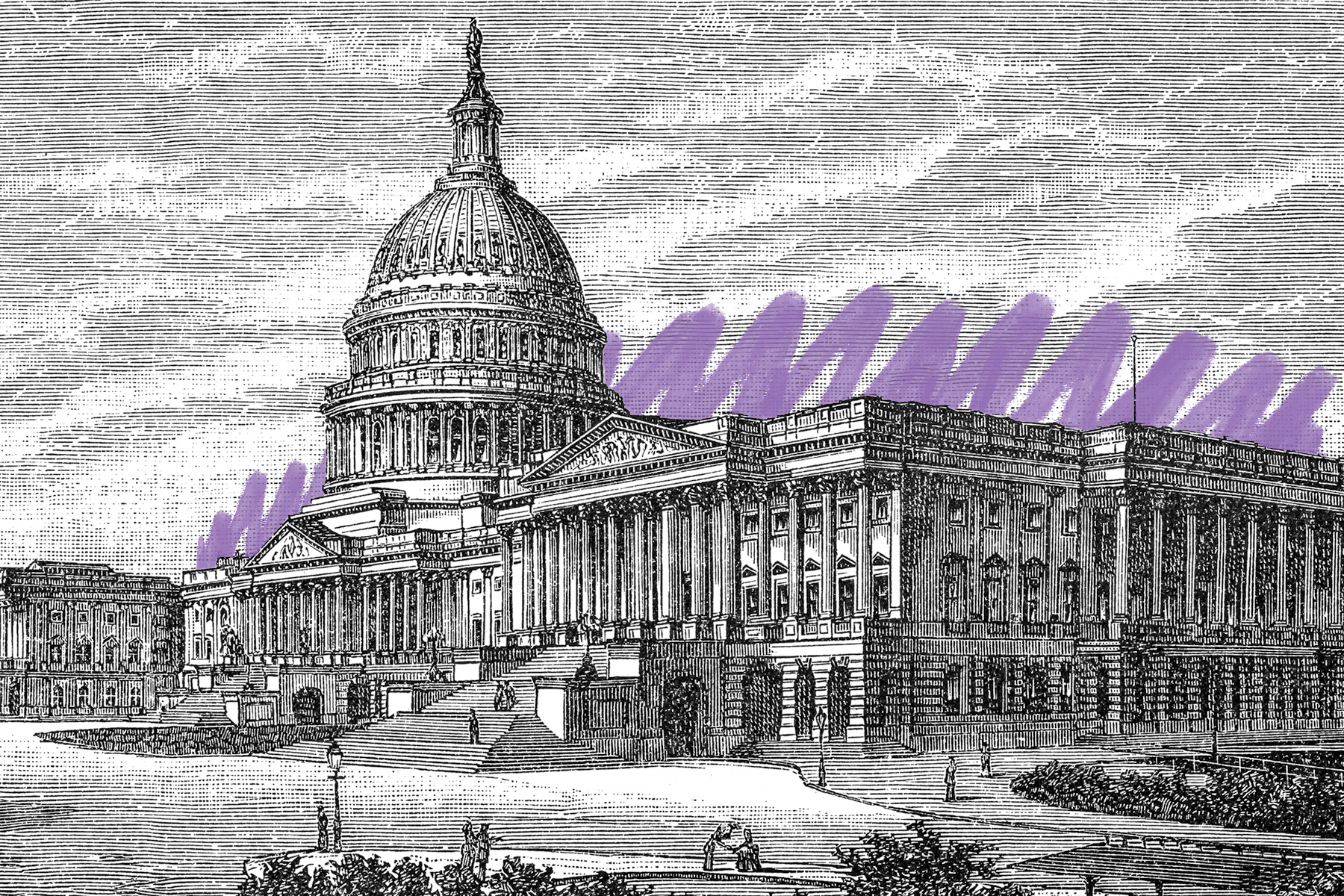
The United States has had some strange elections over the last 230-odd years, few more so than the presidential contest of 1836 — the one and only time that the Senate picked the vice president. Like the president, veeps are chosen by the Electoral College, and that year three names were on the ballot: Richard Mentor Johnson (who received 147 electoral votes), Francis Granger (77), and John Tyler (47). Johnson was the running mate of Democrat Martin Van Buren, who emerged victorious in the presidential race with 170 electoral votes. When it came to the vice presidential race, however, the Virginia delegation became faithless electors due to Johnson’s many controversies — including the fact that he had a relationship and two children with an enslaved woman named Julia Chinn — and cast their votes elsewhere. As fate would have it, the 147 electoral votes Johnson received left him one shy of a majority.

The Senate was thus called upon to exercise one of its rarest and most important duties. On February 8, 1837, it elected the beleaguered Johnson as vice president by a party-line vote of 33 to 16. Johnson had represented Kentucky in the upper chamber for 10 years, and upon being elected expressed the self-deprecating hope that “the intelligence of the Senate will guard the country from any injury that might result from the imperfections of its presiding officer.” He spent much of his term running his tavern back in Kentucky, eventually came to be considered a liability for Van Buren, and was dropped by the Democratic Party for the reelection campaign, leaving Van Buren without an official running mate. 

Woodrow Wilson was the only president with a Ph.D. 

  • Woodrow Wilson at Princeton
Woodrow Wilson at Princeton
Credit: North Wind Picture Archives/ Alamy Stock Photo
Author Michael Nordine

September 25, 2024

Love it?

Most U.S. presidents have attained some form of higher education, and there are a number of commanders in chief with law degrees, but only one received a Ph.D.: Woodrow Wilson. After beginning his undergraduate career at Davidson College in 1873, Wilson transferred to the College of New Jersey (now Princeton University) and studied political philosophy and history. He next attended the University of Virginia School of Law, though he withdrew during his second year. He managed to become a lawyer anyway, but quickly grew bored and chose to pursue a Ph.D. in history and political science instead. He did so at Johns Hopkins University in Baltimore, completing his doctorate in 1886.

While there, he wrote a book called Congressional Government: A Study in American Politics that was published before he graduated. Wilson’s time in academia didn’t end there, however. After teaching at Bryn Mawr College and Wesleyan University, he returned to his alma mater — first as a professor, and then as the 13th president of Princeton. He served in that role from 1902 to 1910, when he launched his successful bid for governor of New Jersey, and later won the 1912 presidential election with 435 electoral votes. 

James Joyce used crayons when writing his novels.

  • James Joyce portrait
James Joyce portrait
Science History Images/ Alamy Stock Photo
Author Michael Nordine

September 20, 2023

Love it?

James Joyce didn’t just write some of the most acclaimed novels of the 20th century — he did so using crayon. Though it sounds like a quirky affectation on the part of the Ulysses and A Portrait of the Artist as a Young Man author, it was actually a medical necessity. Because Joyce had trouble with his eyesight and was nearly blind by the time he wrote Finnegans Wake in the last few years of his life, “the large crayons thus helped him see what he was writing,” according to culture writer Maria Popova. Joyce was farsighted as a child and had severe issues with his eyesight by the time he reached his 20s; these problems only worsened after a bout of rheumatic fever left him afflicted with the condition iritis.

Fortunately for readers, Joyce was as adaptable as he was brilliant. He began writing while “lying on his stomach in bed, with a large blue pencil, clad in a white coat” that reflected more light back at the empty page at night. This process became even more elaborate during the editing phase, when Joyce relied on crayons of varying colors (namely orange, blue, red, and green) to underline and circle individual words or sentences and even cross out entire pages. Finnegans Wake in particular remains one of the English language’s most difficult and inscrutable works some 85 years after it was written, but at least there’s no mystery as to how it was written.

Couples in the Victorian era exchanged engraved coins. 

  • 17th-century love tokens
17th-century love tokens
Credit: Salisbury and South Wiltshire Museum/ CC BY-SA 4.0
Author Sarah Anne Lloyd

September 19, 2024

Love it?

People have always used trinkets to show their love, whether in the form of jewelry, locks of hair, or even fancy spoons. In the Victorian era, love tokens — ordinary coins that were engraved for a loved one — were a popular choice. The practice of exchanging love tokens dates back to at least the 18th century (and possibly even earlier), and it reached its peak in the United States and Great Britain in the late 19th century.

One possible influence on love tokens were treizains (French for “thirteen”), a set of 13 custom-carved coins given to French couples on their wedding days. Some early love tokens were also carved by people about to be sent off to Britain’s penal colony in Australia for the loved ones they were leaving behind; sometimes called “prisoner tokens,” these were typically carved by tapping out little dots with a hammer and nail. Meanwhile, love tokens took off in America during the U.S. Civil War, when many soldiers had someone waiting for them back home.

By the middle of the Victorian era, love tokens had become — like most hallmarks of the time — quite ornate. Engravers found extra work carving elaborate designs for customers to give not just to romantic partners, but also to family members and dear friends, too. They could even be used to propose marriage; diamonds weren’t marketed as an engagement must-have until the 1930s. Initials — typically those of the recipient — were common coin designs, as were birds — often bluebirds for happiness, or lovebirds, or turtle doves for romance — and landscapes. But because these were deeply personal gifts, all sorts of images that were meaningful to the recipient or the relationship made their way into the carvings. The popularity of love tokens declined by the turn of the 20th century, when they were largely usurped by lockets — although soldiers in both world wars carved coins in the trenches for their loved ones back at home.

French waiters once went on strike for the right to grow mustaches.

  • Paris waiter circa 1900
Paris waiter circa 1900
Shawshots/ Alamy Stock Photo
Author Nicole Villeneuve

September 20, 2023

Love it?

In 1907, one of the more unusual strikes in France’s history unfolded. Better wages and working conditions were at stake, as is often the case, but this strike was also about something unexpected: the right to grow a mustache. Mustaches were at their peak in early 20th-century Europe, and were even obligatory for policemen — an attempt to convey military-like masculinity and authority. Restaurant servers, however, were forced to be clean-shaven, a reminder of their “lower class” status. Behind closed doors, trade unions began organizing a strike for workers’ rights to autonomy over their facial hair. They were also fighting for one day off a week and their fair share of tips, which were often the only source of pay for servers. Surveys about dates and times were sent to the various unions and, after results were compiled, strike instructions were sent to union members. On April 17, 1907, at 6:30 p.m. sharp, waiters walked off the job. 

Although the number of servers who took to the streets in protest is unclear, The New York Times estimated it at about 500 by late April. While the strike wasn’t without its critics, the waitstaff found solidarity in high places, including in Parliament. Socialist Deputy Antide Boyer — who, even before the strike, had proposed a bill that would make mustache bans illegal — told The New York Times the mustache rule was “grotesque and humiliating.” Boyer’s bill never actually passed, but the strike resolved quickly. After 16 days, the waiters returned to work. They did not get their desired one day off per week, but a fairer pay structure was in place — as were their mustaches.