




Live lizards were once a fashion accessory.
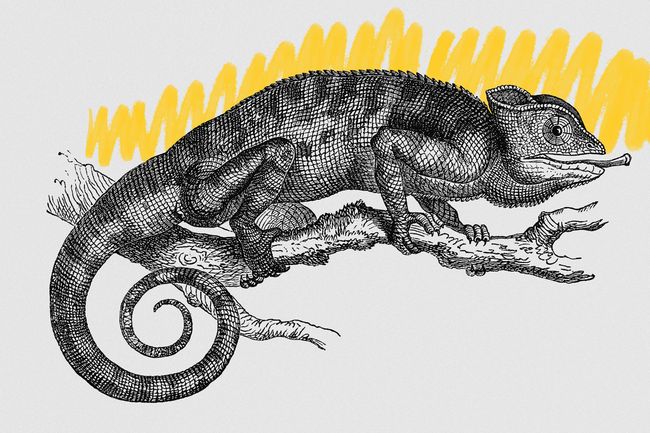
A brooch might catch someone’s eye, but in the early 1890s, it could also catch a fly. As the wildlife historian Mark Barrow describes, some American women back then wore live lizards attached to their clothes by tiny collars and chains. Sold as “chameleons,” the creatures were a fashion sensation — and eventually a target for animal-welfare advocates.
The fad began in Florida, where tourists first bought the lizards as living souvenirs. By 1890, a shop in St. Augustine was offering them as jewelry, with slender gold chains encircling them and attached to pins that could be fastened to fabric like an animate brooch. The lizard accessories later appeared for sale at Chicago’s massive 1893 World’s Columbian Exposition, helping introduce the novelty to a national audience. (One reporter described it as a “lively but rather uncanny breastpin.”) By February 1894, the New York World was proclaiming, “Everywhere the Chameleon!”
Despite the fact that these curios were usually marketed as chameleons, the creatures in question were actually anoles, lizards native to the southeastern United States whose ability to change from green to brown earned comparisons with true chameleons. But keeping them alive required more care than some buyers apparently realized. An 1893 newspaper story described an unnamed but fashionable young woman who tried feeding her live brooch raw meat and bread after bringing it north from Florida. It refused both. With the lizard’s preferred flies unavailable in cold weather, she offered cockroaches, which it reportedly devoured “with avidity.”
The fashion craze directly coincided with a growing American animal-protection movement. In February 1894, the ASPCA decided the collars, chains, and generally inadequate conditions for the animals constituted cruelty. The organization moved against New York dealers, ordering sales be stopped, with a possible penalty of up to one year in prison, a $500 fine, or both. Advocates elsewhere (including Massachusetts and San Francisco) also challenged the trade, which helped bring an end to the fad.


