




Why Do We Cross Our Fingers for Luck?
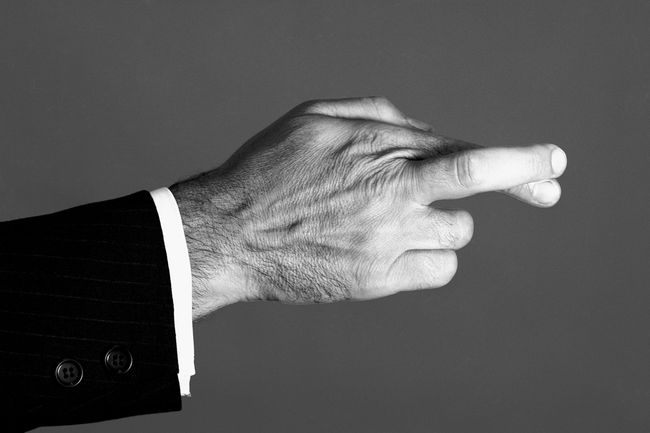
Crossing your fingers for luck is one of the most familiar gestures in the English-speaking world. We nervously do it before a big moment, ask friends to keep their fingers crossed for a specific outcome, and use the crossed fingers emoji as a shorthand for hope. But where did the custom come from? How did looping our middle finger over our index finger become a symbol of good luck and hopefulness?
Crossing Fingers Once Required a Friend
Today, crossing your fingers is a solitary act. Historically, however, it was a social ritual. One widely cited origin theory traces the custom to pre-Christian Europe, where the shape of a cross was believed to possess special power. According to this interpretation, the point where two lines intersected was seen as a place where beneficial spirits gathered. A wish made upon a cross could become anchored at that intersection until it came true.
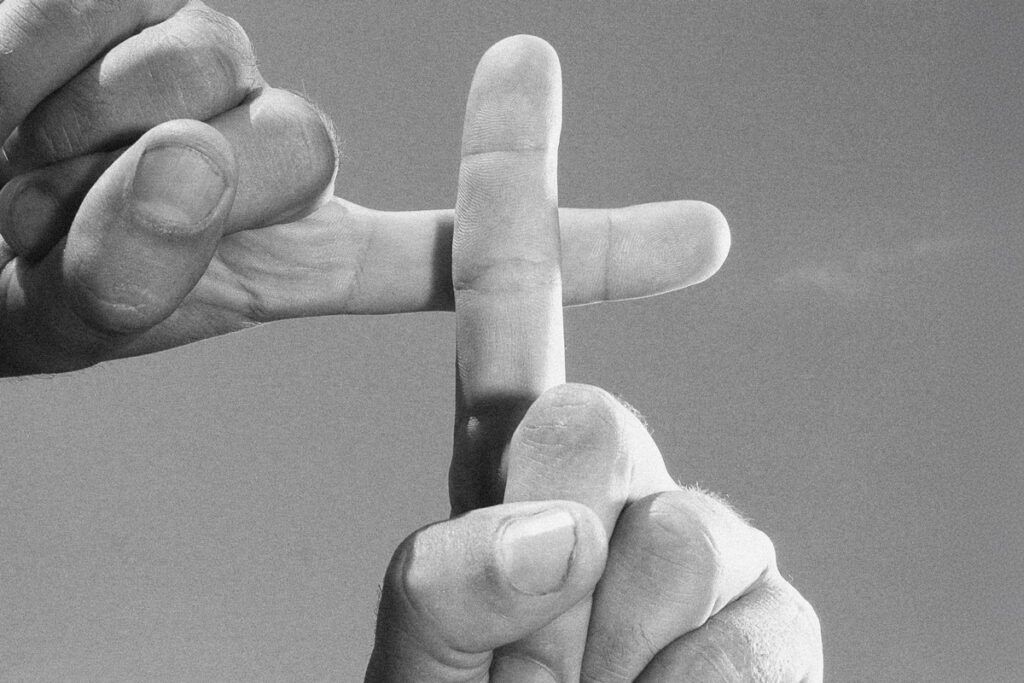
Originally, making the gesture of a cross required two people. One person would make a wish while another crossed their index finger over the wish-maker’s finger, forming a small cross. The second participant effectively lent support to the wish, helping guide it toward fulfillment.
Over time, the ritual became simpler. Instead of requiring a partner, people began creating the symbol themselves, first by crossing the index fingers of both hands and eventually by crossing the index and middle fingers of one hand. The modern gesture may be the descendant of this much older cooperative custom.
More from our network






The Cross Was a Powerful Symbol
Another theory points to the rise of Christianity. For early Christians, the cross carried obvious religious significance. The symbol had existed in various forms long before Christianity, but Christians gave it a distinct meaning through its association with the crucifixion. Making the sign of the cross was believed to offer protection, ward off evil, and invoke divine favor. Some folklorists have suggested that crossing one’s fingers may have developed as a smaller, more discreet version of this protective gesture.
According to one explanation, persecuted Christians used hand signs to identify fellow believers. One such gesture reportedly involved crossing the index fingers while touching the thumbs, helping form the outline of the ichthys, or fish symbol — an important early Christian emblem. While this theory does not fully explain how finger-crossing became associated with luck, it’s another line of thinking for why the crossed-fingers gesture may have carried connotations of blessing, protection, or hope long before it became a secular expression of good fortune.
Evidence for some of these specific stories is difficult to verify, and folklorists continue to debate how much influence early Christian practices had on the modern custom. Nonetheless, the association between the cross and good fortune became deeply embedded in European culture, making Christianity a plausible contributor to the gesture’s evolution.

From Sacred Symbol to Everyday Habit
Whatever its exact origins, finger-crossing gradually moved from the realm of ritual into everyday life. Many customs that began as serious religious or supernatural practices eventually became casual habits. Few people who knock on wood today are consciously invoking ancient beliefs about spirits dwelling in trees. Likewise, most people who cross their fingers are not thinking about pagan wishes or Christian symbols of protection.
Instead, the gesture has become a simple expression of hope. Language reflects this shift. By the early 20th century, English speakers were commonly using phrases such as “keep your fingers crossed” to mean “wish me luck” or “let’s hope things turn out well.” The gesture has become less important than the sentiment behind it.
Today, crossing your fingers requires no ceremony, no partner, and no special belief system. Yet every time someone crosses their fingers in hopes of a good outcome, they’re participating in a tradition that stretches back centuries.


