



The Year That Changed American Shopping
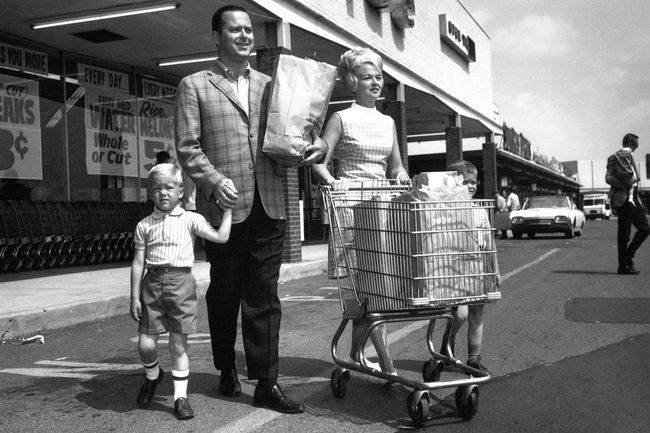
In 1962, while Americans anxiously followed escalating Cold War tensions, witnessed the violent racial integration of the University of Mississippi, and mourned the tragic death of Marilyn Monroe, a quiet but monumental shift was occurring in the way people shopped.
In the space of just seven months, three retail chains opened their very first stores: Kmart, Target, and Walmart.
Before this, the retail landscape consisted of department stores, five-and-dime variety stores, hardware specialists, supermarkets, and mom and pop stores — all of which would face a new reckoning with the arrival of these giant retailers.
Of course, they weren’t the only companies to see how suburbanization, a booming middle class, and widespread car ownership had opened up new retail opportunities. Woolco (owned by the F.W. Woolworth Company) and Meijer (Thrifty Acres) also opened in 1962, along with a handful of other discount retailers. But it was Kmart, Target, and Walmart that managed to outlast the competition.
At the time, however, perhaps none of them could have foreseen quite how much they would change the retail landscape — and, together, permanently alter the way Americans shopped, spent, and lived.
The Store That Set the Pace
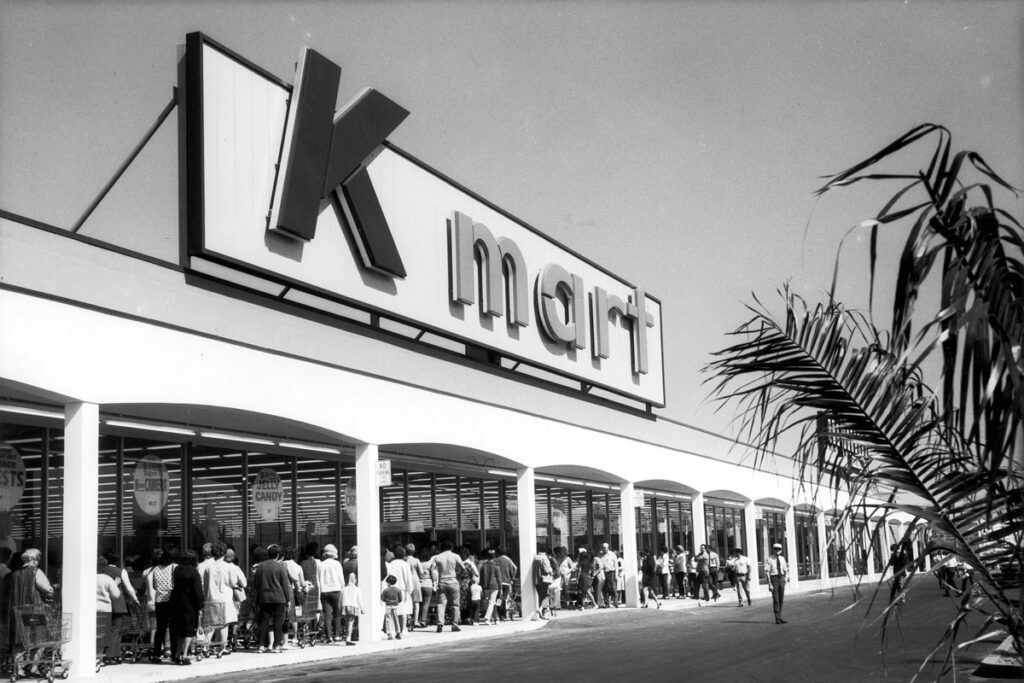
Kmart was first out of the gate. On March 1, 1962, the S.S. Kresge Company — a long-established chain of five-and-dime variety stores founded in Detroit in 1899 — opened its first full-sized, 80,000-square-foot discount store in Garden City, Michigan. It was the brainchild of Kresge President Harry Cunningham, who had spent years studying the emerging discount retail model before deciding to go all in.
The discount model itself was not a brand-new invention, but Kmart revolutionized how it was scaled, operated, and marketed. The company was able to undercut traditional retail stores through extreme supply chain efficiency, high-volume sales, and centralized distribution.
The results were swift and staggering. Seventeen additional Kmart stores opened before the year was out, and the company continued its aggressive expansion, opening an average of 85 stores per year over the next two decades. For about 30 years, Kmart was one of the clear front-runners among American discount retailers, reaching its peak in 1994 when it operated more than 2,400 stores globally and employed some 350,000 people.
But Kmart’s dominance eventually faded. Increased competition from Walmart and Target, combined with a series of poor strategic decisions in the 1990s, sent the company into bankruptcy in January 2002. It merged with Sears in 2005 and has since dwindled to near extinction, with only a handful of remaining stores. But for several decades, the blue light special — Kmart’s iconic flash sale — was about as American as apple pie.
More from our network





The Upmarket Discounter
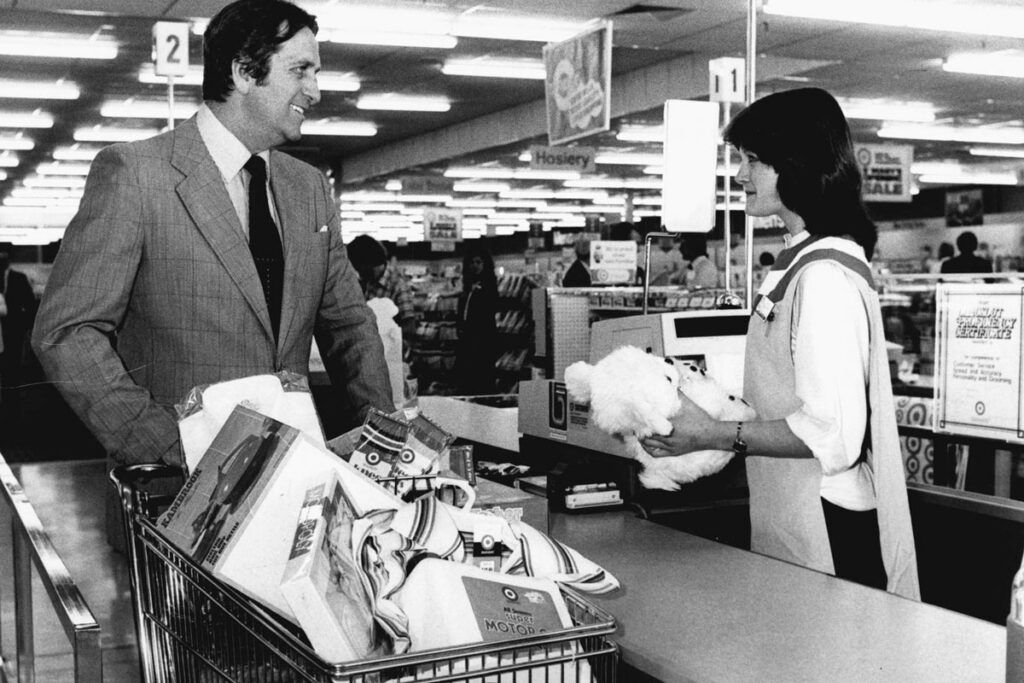
On May 1, 1962 — just two months after Kmart’s debut — a would-be rival opened its doors in Roseville, Minnesota. It was called Target, and it was the creation of the Dayton Company, a respected Minneapolis department store business founded in 1902. Target’s founders believed there was a market for a discount chain that offered lower prices without sacrificing the quality or aesthetics found in the best department stores. As such, it marketed itself slightly differently from its rivals. Where Kmart and Walmart were aggressively positioning themselves on low prices alone, Target placed an emphasis on design, cleanliness, and a more pleasant shopping experience — something that has remained part of its philosophy to this day.
Target’s growth was slower than Kmart’s in the early years. It opened its fifth store in 1965 — a considerably more measured expansion than Kmart — but made a profit of $39 million in sales that same year. Target has had its ups and downs over the ensuing decades, but it’s still going strong.
The Rural Revolution
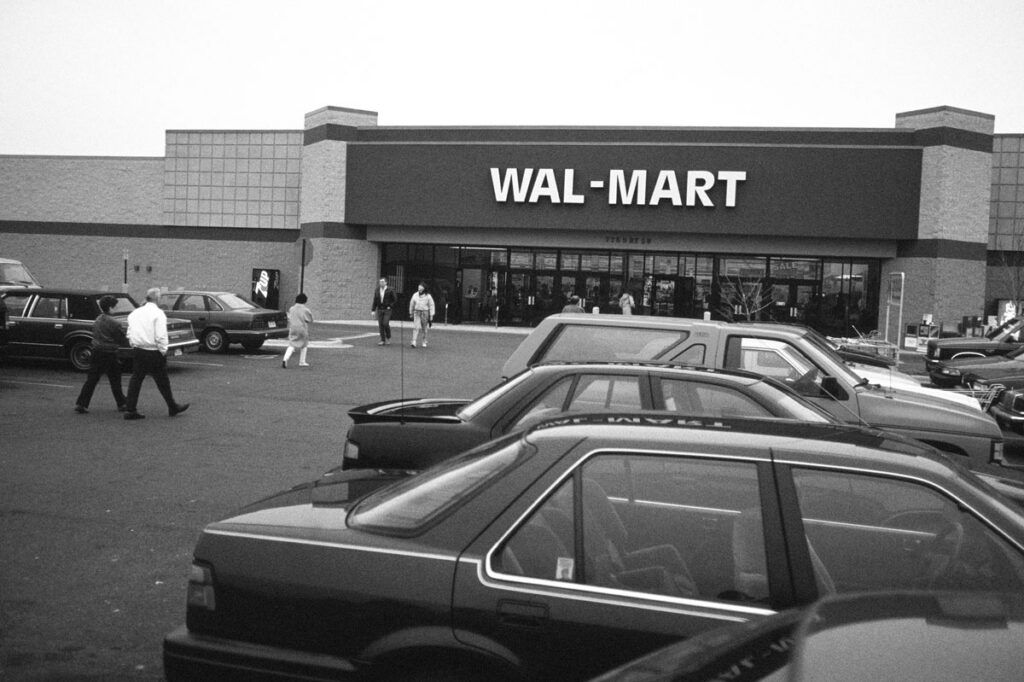
The last of the three retail giants to open — but ultimately the largest of them all — was Walmart. On July 2, 1962, Sam Walton opened the first Walmart store in Rogers, Arkansas. Rogers was a small, rural town — exactly the kind of place that other major retailers had long ignored. This was a very deliberate strategy, as Walton was convinced that small-town America represented an untapped retail goldmine.
According to consumer strategist Richard Hastings, Walmart took advantage of rural and semirural opportunities “with an almost military-like strategy.” The retailer often built stores in these specific geographic areas five to seven years ahead of suburban sprawl — a smart way to bake in future growth. This strategy, combined with a commitment to keep costs as low as possible and pass the savings on to the customer, soon established Walmart as a major player. By 1970, Walmart was a publicly traded company — and by 1990, it was the largest U.S. retailer by revenue, outpacing its main rivals Kmart and Sears.
Walmart eventually grew into a retail behemoth. Like Kmart and Target, it had recognized the opportunities presented by rapid suburban growth, rising car ownership, and a new consumer appetite for self-service shopping at lower prices. Together, the three discount retailers found themselves at the heart of everyday American life, ensuring that the weekly shopping trip would never be quite the same again.


