



Why Do Shirts Have Collars?
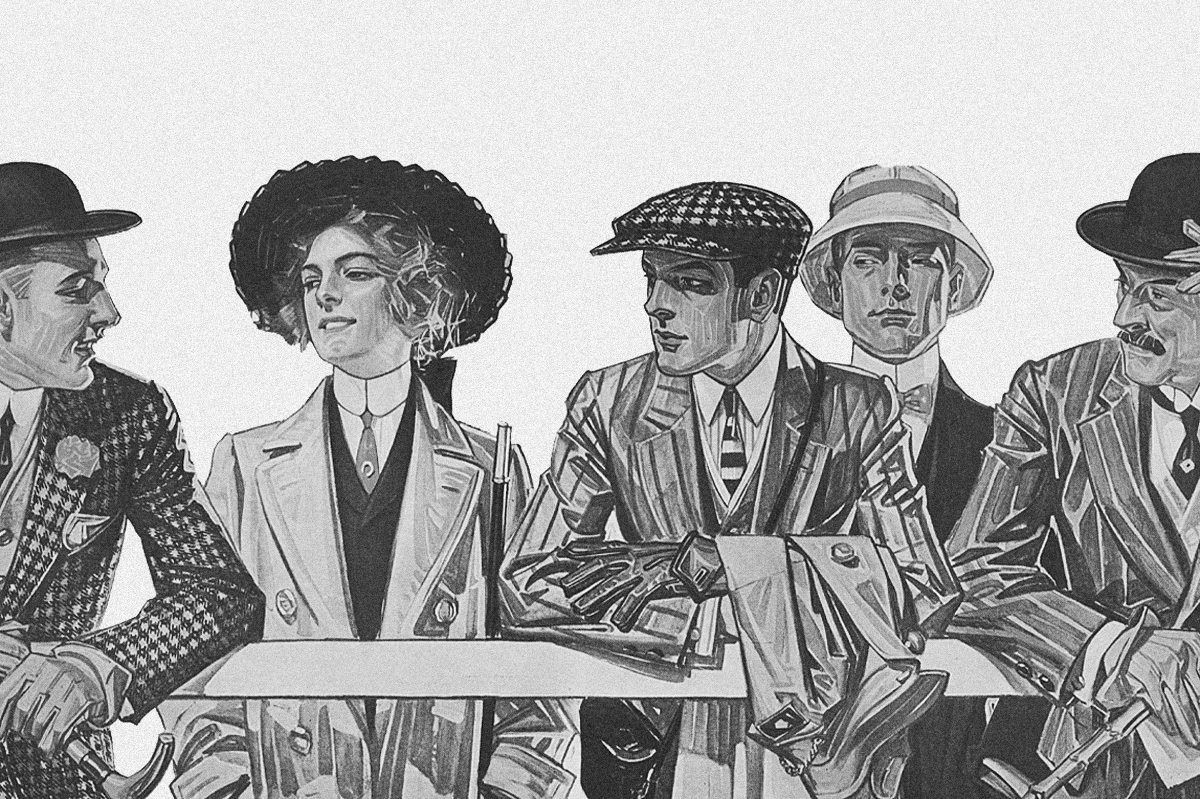
As we go about our daily lives, we tend to take the existence of many simple things for granted, rarely considering how or why they came to be. Take, for example, the humble shirt collar. Most of us own a shirt with a collar, along with other tops — such as the ubiquitous T-shirt — that have no collar at all. So, why do some shirts have collars? What purpose do they serve and when did they first appear? To answer these questions, we need to take a journey across five centuries, starting with the medieval clergy.

Clerical Collars
Before the 15th century, there were no shirt collars at all — shirts were simple undergarments with open, round, or scoop necklines, and long sleeves made of linen or hemp. Collars first appeared in the Western world sometime during the mid-to-late 15th century as simple standing bands of fabric around the neckline. And it wasn’t the nobility who introduced the style, but rather men of faith. Members of the clergy often wore stiff tunics with high necks. Adding a collar to the shirt worn beneath the scratchy tunic helped prevent the tunic’s stiff neck from aggravating the skin.
Among the clergy, these collars became the only visible part of the shirt — a small yet distinct strip of fabric emerging from the neckline. While they likely originated for purely practical reasons, the distinctive collars became symbols of humility and purity — although it wasn’t until the 19th century that Scottish Reverend Donald McLeod invented and popularized the clerical collar (informally known as a dog collar) worn by ministers today.
You may also like


More from our network






Renaissance Ruff Collars
It didn’t take long for collars to catch on among the European nobility, at which point the garment moved from being a symbol of religious modesty to a blatant display of wealth and status. As the collar became more public-facing, it transformed into a fashion statement — and the aristocracy, per usual, quickly got carried away. Along with prominent codpieces and ridiculously pointy shoes, the Renaissance wardrobe began to include increasingly extravagant ruff collars.
By the 16th century, members of the aristocracy were stepping out in plate-sized, stiffly starched pleated ruffs that looked like unfurled accordions running around their necks. Being highly impractical — not to mention quite silly-looking by today’s standards — these ruffs were ideal for displaying social standing. If you could afford to wear something that prevented you from performing manual labor, the theory went, then you were obviously a person of means.
After a century or so, ruffs began to fall out of fashion. By the 17th century, they had been largely replaced by two styles of band: the falling band, which lay flat over the shoulders, and the standing band, a semicircular collar that stood up stiffly around the back of the head with the straight edges at the front meeting under the chin. Both were worn by men and women and were either a built-in part of a shirt or bodice, or attached with small ties.
Around this time, the collar as we know it today began to emerge as a standard part of everyday clothing. As well as framing the face and other purely aesthetic considerations, collars added structure to a garment and offered some protection to the neck — a welcome addition on chilly days.
The Detachable Collar
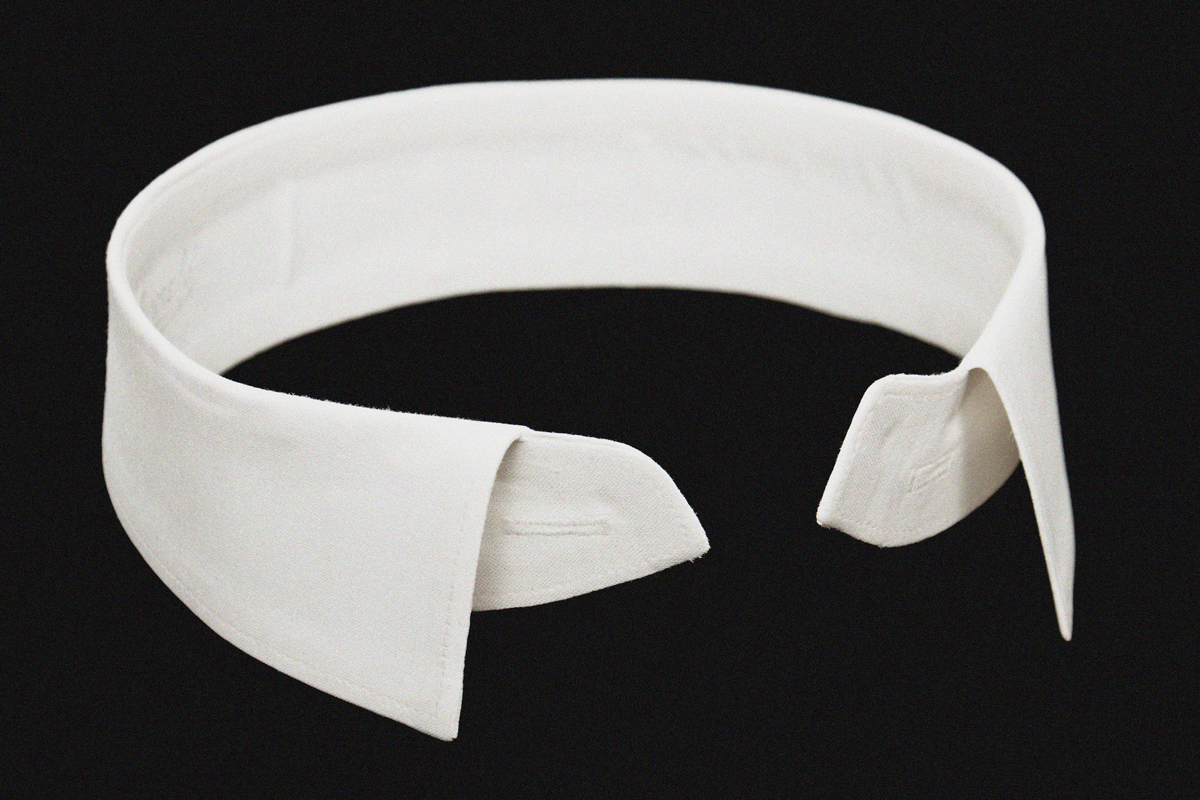
As ruffs fell out of fashion and collars became more modest, a new practical challenge emerged. Collars were often the most visible part of shirts — which were still normally worn as undergarments, especially in public — and they also tended to be the most troublesome element of the garment when it came to collecting dirt and grime. Back in the 18th century, washing clothes was a backbreaking, time-consuming task involving washboards and considerable physical labor. As such, laundering an entire shirt just to clean the collar was wasteful at best.
So, in 1827, Hannah Montague, a homemaker in Troy, New York, invented the detachable shirt collar. By separating the collar from the shirt body, she made it possible to maintain a crisp, clean appearance while doing significantly less laundry. Montague’s innovation revolutionized men’s fashion, and became so popular that Troy — which was soon manufacturing 90% of the collars worn in the U.S. — became known as “Collar City.” The rigid, starched collar increasingly became a mark of respectability and class, and wearing a shirt with a collar was the standard in both the workplace and at formal events.
World War I and Beyond
The early 20th century brought dramatic changes to collar design. During World War I, it was impractical for soldiers to have stiff and uncomfortable detachable collars, so they were issued soft shirts with attached collars. In the same way that wristwatches first became popular among men during World War I, soldiers soon found themselves preferring the softer, attached collars over their heavily starched, detachable predecessors.
With the end of the war, this preference was taken back into civilian life, and by the mid-1920s, collars — be they blue or white — were almost always attached to shirts. In the 1930s, few shirtmakers still considered detachable collars as daily wear, but they remained an option for formal evening wear. With the rise of washing machines, the need for detachable collars decreased even further, and today they are rarely seen.
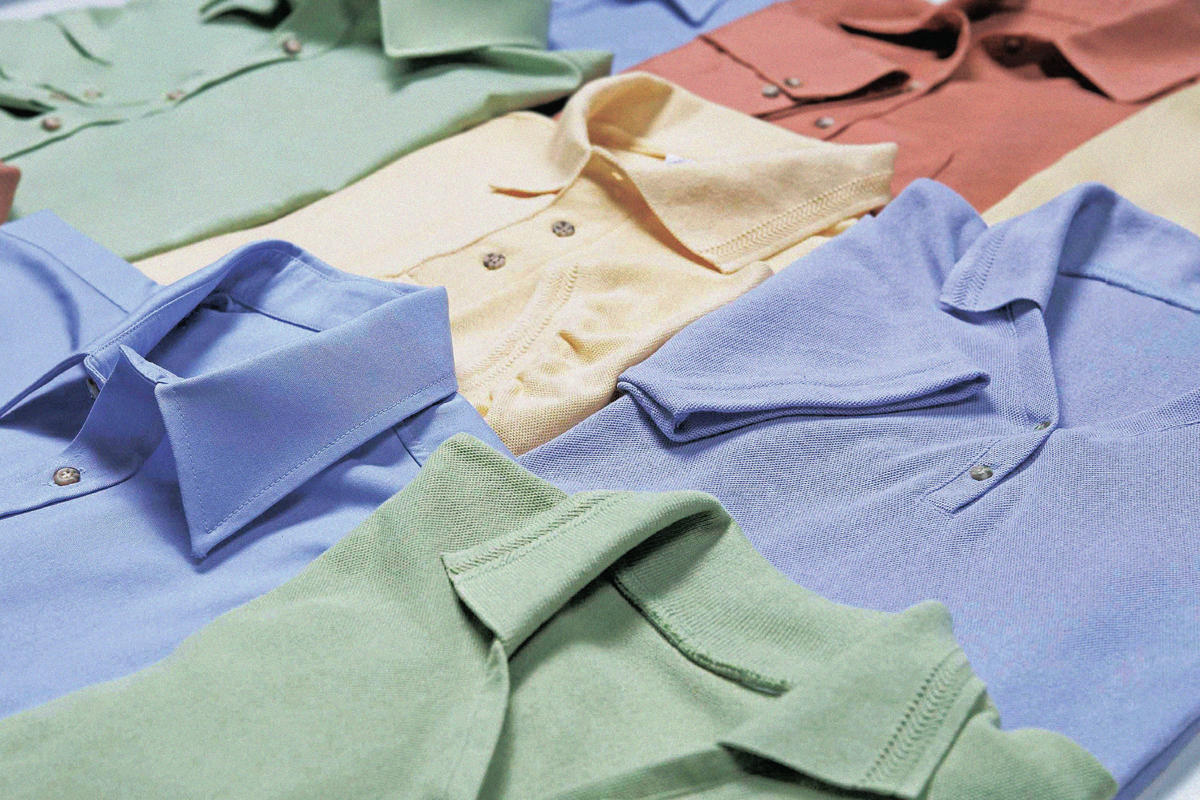
Today, softer shirts with attached collars are the norm, with different styles signaling various levels of formality and fashion sensibility. And while T-shirts have arguably become the most ubiquitous type of shirt in the modern wardrobe, a shirt with a collar — a small strip of fabric with a very long history — is still considered standard attire in many workplaces and at all manner of formal events.


