




When Did People Stop Eating With Their Hands?
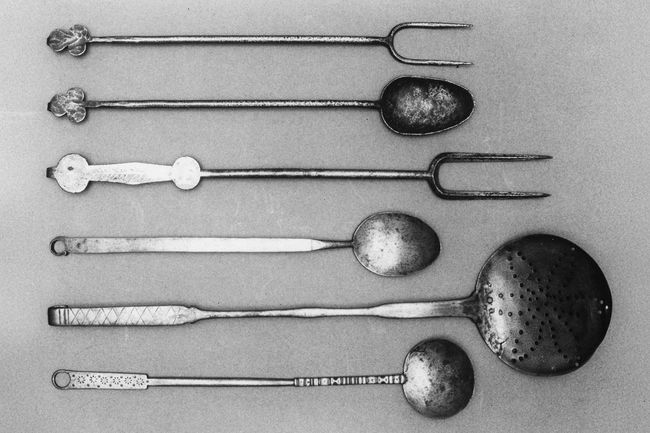
Eating utensils can feel ancient and inevitable, as though humans have always gathered around tables set with forks, knives, and spoons. But for a long time, that wasn’t the case at all. Forks — today’s cutlery MVP — were once rare, controversial, and even mocked as unmanly. For most of human history (and in many parts of the world today), eating with your hands was normal.
The shift away from hands-on eating in the West didn’t happen all at once. Instead, it unfolded gradually over centuries, shaped by changing dining customs, new utensils, and evolving ideas about etiquette.
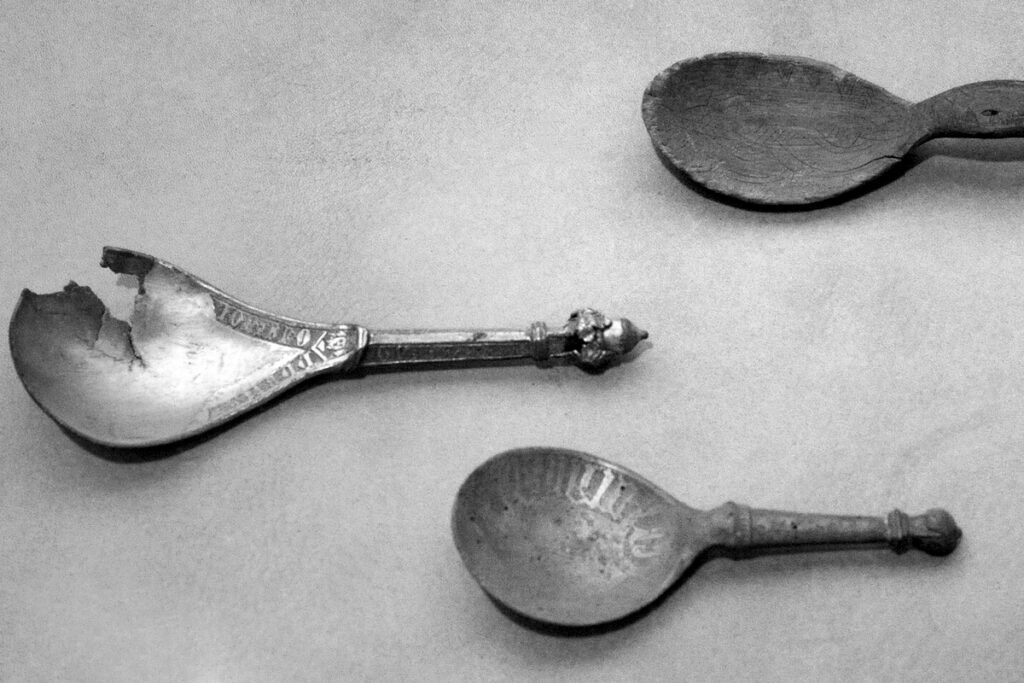
Spoons and Knives Came First
Humans have used eating tools for tens of thousands of years. Prehistoric people likely scooped liquids with shells, hollowed wood, or animal horns, while sharpened stones and bones helped cut food when needed. Spoons are especially ancient: The Anglo-Saxon word spon referred to a chip of wood, while Greek and Latin words for “spoon” were derived from the word “cochlea,” a type of spiral shell, suggesting what some early versions of the utensil may have looked like. Ancient Egyptians employed spoons carved from wood, ivory, and gold.
Knives, meanwhile, served many purposes beyond dining. In both ancient and medieval societies, they were tools, weapons, and eating utensils all at once. Guests often carried personal knives to meals, especially in medieval Europe.
But even with those tools available, most food was still eaten directly with the hands in ancient and medieval Europe. The Romans, for instance, reclined on couches while dining and used their fingers for much of the meal. Forks were virtually unknown at Roman tables, and spoons were used mainly for liquids or soft foods.
In the Middle Ages, bread acted as its own utensil. Europeans of the era generally ate meat and vegetables off thick rounds of stale bread called trenchers (think early bread bowls). Some sources suggest the trenchers were given to the poor after the meal.
More from our network





The Fork Had an Image Problem
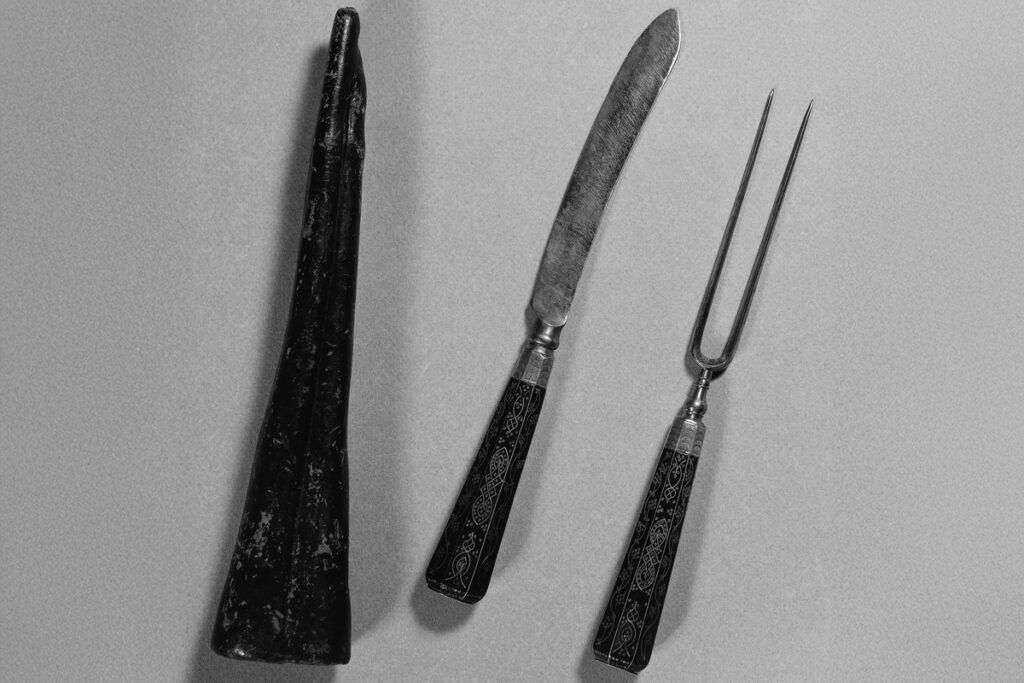
Of all the eating utensils, forks had perhaps the most difficult path to acceptance. Although two-pronged forks existed in ancient Greece and Rome, they were mostly cooking tools used to handle hot food. Smaller forks for eating first spread among wealthy elites in the Byzantine Empire and the Middle East.
One of the most famous European fork controversies took place in Venice in 1004. Maria Argyropoulina, a Byzantine noblewoman marrying into a Venetian family, reportedly used delicate golden forks at her wedding feast. According to later accounts, scandalized Venetians considered the utensil decadent and unnatural. One critic supposedly complained that God had already provided humans with “natural forks” — fingers. When Maria died of the plague a few years later, some religious figures interpreted her death as punishment for vanity.
Even centuries later, forks retained an air of pretension in parts of Europe. In Renaissance Italy, they slowly gained popularity among the wealthy, and Catherine de’ Medici helped introduce fashionable fork use to France after marrying the future King Henry II in 1533. But elsewhere, many diners remained skeptical.
Around the early 1600s, English traveler Thomas Coryat returned from Italy enthusiastically describing forks he had encountered abroad. His friends mocked him relentlessly, nicknaming him “Furcifer” (Latin for “fork-bearer”). To many English people, forks seemed fussy, foreign, and faintly effeminate. That reputation lingered for a surprisingly long time. Some historians note that British sailors were still refusing to use forks around 1900 because they considered them unmanly.
Every Man His Own Fork
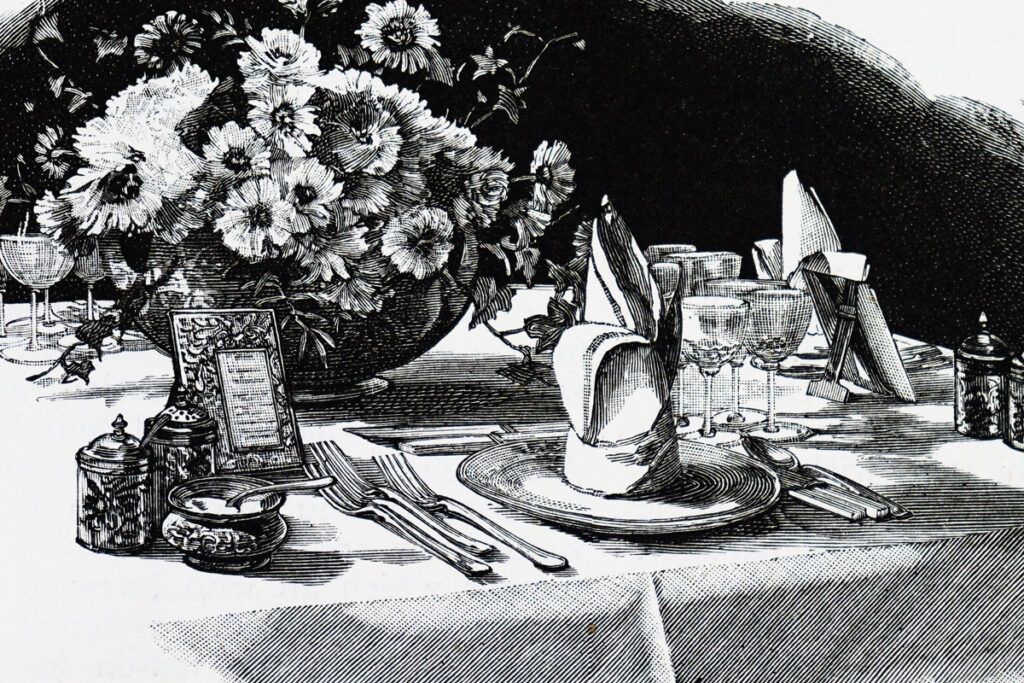
Medieval meals were deeply communal: People shared dishes, serving vessels, and sometimes knives or spoons. But beginning around the 17th century, European dining gradually became more formal and more individualized. Guests increasingly received their own plates, cutlery, and designated place settings.
As etiquette grew more elaborate, forks became increasingly useful — and increasingly expected. By the 18th century, forks were making inroads with wealthy Europeans, and by the 19th century, eating with your hands at formal meals was considered improper except for a few approved foods (such as bread or olives).
Victorian culture then took dining etiquette to remarkable extremes. Wealthy households accumulated specialized utensils for nearly every imaginable dish: fish knives, asparagus tongs, snail forks, tomato servers, and chocolate muddlers, to name just a few. Some upper-class cutlery sets approached 100 separate pieces.
But since then, flatware sets have been shrinking. Modern diners use far fewer utensils than their Victorian predecessors, partly because elaborate formal dining has declined — and partly because few people want to polish dozens of specialty forks.

Most of the World Never Stopped Eating With Their Hands
Even as forks became standard in Europe and North America, many cultures continued eating with hands or chopsticks. Chopsticks had already been used in China for thousands of years before forks became widespread in the West. Originally developed for cooking, they later became everyday eating tools across East Asia.
Meanwhile, in India, Sri Lanka, parts of the Middle East, Africa, and elsewhere, eating with the hands remains both ordinary and highly sophisticated. Different regions developed their own techniques and etiquette around handling food properly — from shaping rice with the fingertips to avoiding the use of the left hand (which is associated with bathroom use in some parts of the world).
And even in the modern West, people never entirely abandoned eating with their hands. Pizza, burgers, tacos, sandwiches, french fries, and fried chicken are all commonly eaten without utensils. In other words, some of the world’s most popular foods still rely on the oldest eating tools humans have ever had: what’s on the end of our arms.


