



What the School Day Looked Like 100 Years Ago
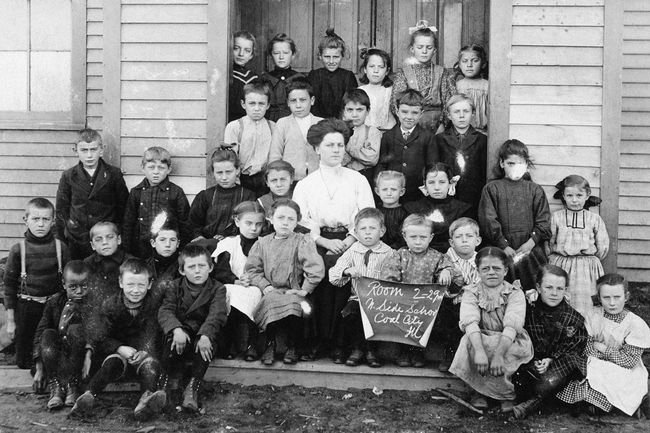
There’s a particular kind of nostalgia attached to school memories, from the ring of a bell announcing the start and end of the day to the scrape of chalk on slate and the smell of pencil shavings. For those who grew up in the 1960s and ’70s, those memories already feel like a different world compared with the computers and smart boards of contemporary classrooms. But go back to the 1920s, and school looks almost unrecognizable.
A century ago, education in the United States depended heavily on where you lived. Children in rural areas often learned in one-room schoolhouses scattered across farmland and small towns, while urban students filled increasingly crowded classrooms in fast-growing cities shaped by immigration, industrial labor, and reform movements trying to keep pace with it all.
But it wasn’t just the setting that was different: The education system was far more intertwined with the demands of everyday life than it is today. Here’s a look at a day in the life of a typical American student a century ago.
The School Day
The school day in the early 20th century rarely began or ended with the kind of timing we expect now, and daily life often determined whether a child was in school at all. In 1910, only 59% of children ages 5 to 19 attended school, according to the National Center for Education Statistics.
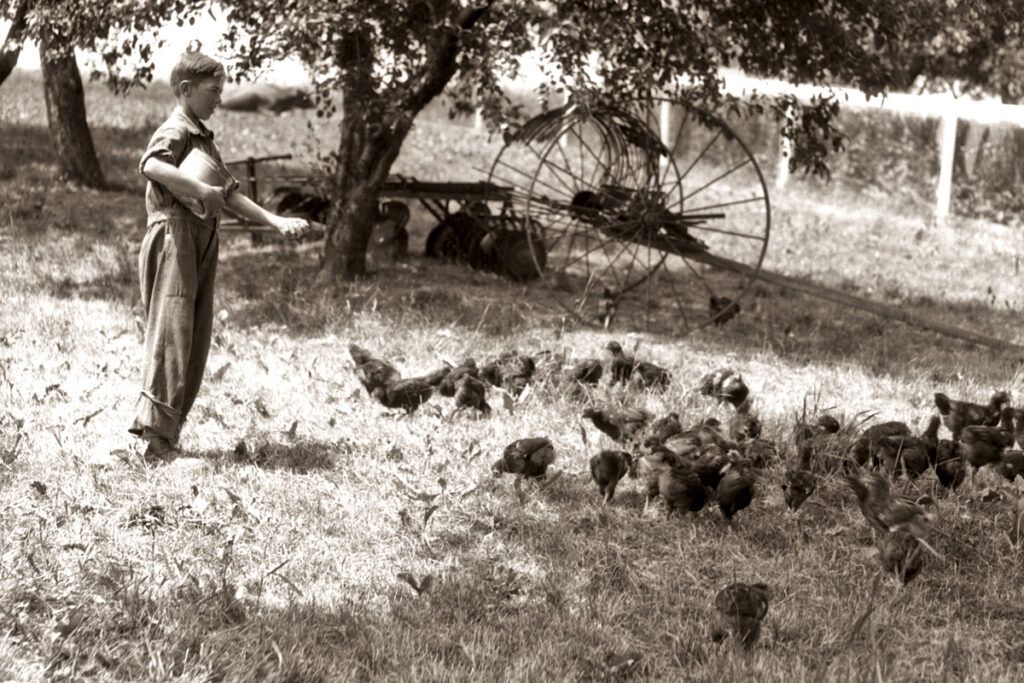
In rural areas, mornings started long before lessons, with children responsible for milking cows, collecting eggs, chopping wood, and hauling water. Only after chores were finished would children walk, sometimes for miles, to reach a one-room schoolhouse, which was the standard at the time. Attendance shifted with the seasons, and planting or harvest could empty classrooms for days or weeks at a time.
In cities, the rhythm was similarly shaped by economic necessity. Many children lived in crowded tenements and worked part-time jobs in factories, in shops, or selling newspapers on street corners. Truancy laws and compulsory education began expanding at the turn of the 20th century, but enforcement often collided with the realities of working-class life. As a result, start times were early, days were long, and breaks were short — reflecting a system still evolving toward the standardized school schedules we now take for granted.
More from our network






The Classroom
Whether rural or urban, classrooms in the 1920s shared a defining feature: They were crowded, multipurpose spaces. In both rural and urban settings, individualized learning wasn’t at all common. Instead, teachers had to manage a collective group with limited time, materials, and attention. Segregation was also a reality of American education in this era, with many schools, particularly in the South, still separated by race, creating deeply unequal learning conditions in school.
In rural areas, the typical one-room schoolhouse brought together children of all ages in a single space, where one teacher taught every subject — reading, arithmetic, geography, history — across as many as eight grade levels at once. Students were grouped by ability rather than age, and older children often helped younger ones to keep the classroom functioning day to day.
In cities, classrooms could hold dozens of students, who were sometimes split into half-day shifts to accommodate overcrowding in rapidly growing neighborhoods. Multistory school buildings were becoming more common, shaped by Progressive era reforms, and students were separated by grade level.

The Curriculum
While modern education often emphasizes interpretation and critical thinking, the 1920s leaned heavily on memorization and recitation. Students were expected to master arithmetic tables, spelling lists, historical dates, and literary passages by heart, often repeating them aloud until they could be delivered on demand. Standing at the front of the room to recite a lesson was a regular ritual, and clear, confident elocution was an important component in determining success.
Instruction was based on a limited number of textbooks that were reused year after year. Copying passages by hand, drilling lessons repeatedly, and memorizing large blocks of information were central to how knowledge was acquired. At the same time, education carried a strong moral and civic layer, with readers and textbooks emphasizing character, obedience, patriotism, and work ethic — influencing not only what children learned but also how they were expected to behave in the world.

Discipline
Classroom discipline in the 1920s was generally strict, immediate, and rarely questioned. There was little uncertainty about what was expected, and behaviors such as talking out of turn or incomplete work were met with swift consequences that could include standing in corners, writing lines, or, in some cases, corporal punishment that would be considered severe by today’s standards.
The rules were rigid and consistently enforced, a reflection of the pressure placed on teachers to maintain order. Order was a foundational principle of schooling itself, shaping the structure of daily life in the classroom. Individualism and independence were not considered traits to be cultivated in the modern sense. Instead, obedience, cooperation, and conformity within the group were expected.

Lunch and Recess
Lunch in the 1920s was simple across both rural and urban settings. Typically carried from home in tin pails or wrapped in cloth, meals might have included sandwiches, fruit, biscuits, or leftovers from the night before, as cafeterias were rare and refrigeration was limited or nonexistent. The idea of school-provided meals had only just emerged at the end of the 19th century.
Recess, when offered, was brief and largely unstructured, and children played outside in all weather conditions. Games were invented on the spot, shaped by whatever space or materials were available, and physical activity was woven into daily life rather than organized as a formal subject. In cities, health education began to take hold through public campaigns promoting hygiene and disease prevention, reflecting broader Progressive era efforts to improve child welfare.

Then and Now
The differences between school in the 1920s and school today are significant across nearly every dimension, from structure to curriculum, discipline, and daily experience. Education was shaped by local necessity, economic pressure, and limited resources rather than national standardization or individualized instruction. These limitations resulted in classrooms that were often larger, more rigid, and more dependent on repetition and collective instruction.
And yet, school has always been a place where children learn how to exist in a shared world, follow structure, form relationships, meet expectations, and gradually grow into life beyond the home. The tools have changed and the expectations have evolved, but the experience of being a child in school — figuring out where you fit and how to move within a structured environment — carries a steady thread across the decades.


