




Letters are called ‘uppercase’ and ‘lowercase’ because of how printers stored them.
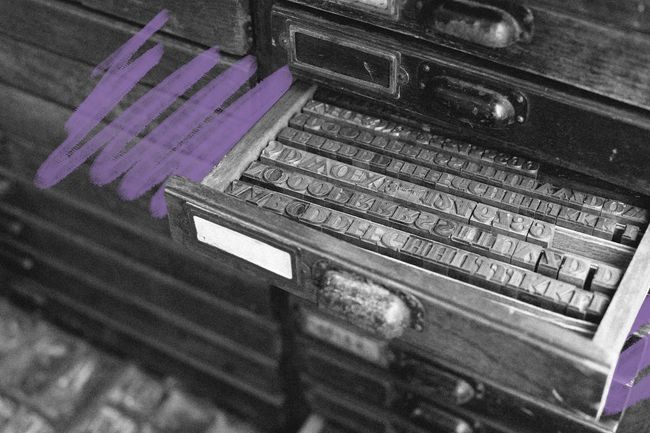
When you first learned to write, it may have seemed like the terms “uppercase” and “lowercase” referred simply to the fact that the letters existed in a big or small form in different contexts. But it turns out that the “case” here doesn’t mean something akin to “circumstance” or “condition.” Instead, the word refers to a literal case — the kind typesetters used for storage.
When the printing press came along in Europe in the 15th century, the pieces of movable type — the actual letters and other characters used for printing — were kept in shallow wooden trays, also known as cases. Capital letters were stored in the top case (the upper case), while small letters were stored lower down (the lower case) for more frequent use. Each tray was divided into compartments to hold the type; the lower case also generally held the punctuation marks and other pieces of type that weren’t letters, such as spaces.
Today, of course, nobody keeps punctuation in a wooden tray beside a hand-operated printing press, but the terms stuck around long after the cases themselves disappeared. Every time you hit the caps lock key or toggle between uppercase and lowercase on your phone, you’re using a bit of printing shop vocabulary that dates back more than 500 years.


