




Why Is Table Salt Iodized?
It’s probably sitting in your kitchen cabinet right now: a container of salt, maybe the familiar blue Morton Salt canister with the little girl carrying an umbrella, with the word “iodized” somewhere on the label.
The curious fact that most table salt contains iodine — a trace mineral — is the result of a long chain of historical discoveries. The story begins with seaweed ash and gunpowder, runs through a scientific priority battle, and ends with one of the most effective nutritional interventions ever devised. Adding iodine to salt helped vanquish a problem that had plagued humankind for millennia — and the effects occurred within a single generation.
A Violet Vapor in a Seaweed Vat
The story of iodine starts in 1811, toward the end of the Napoleonic Wars, when French chemist Bernard Courtois was searching for a new way to make saltpeter, or potassium nitrate, a crucial ingredient in gunpowder. France was running out of wood — the traditional source of saltpeter via wood ash — and the government urgently needed alternatives. Seaweed, abundant along the coast of Normandy, seemed promising.
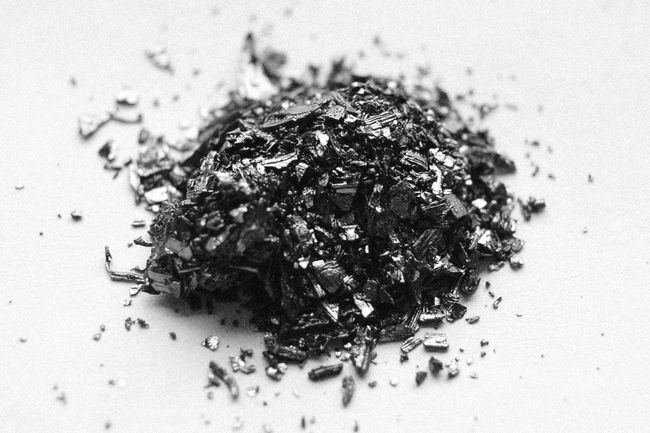
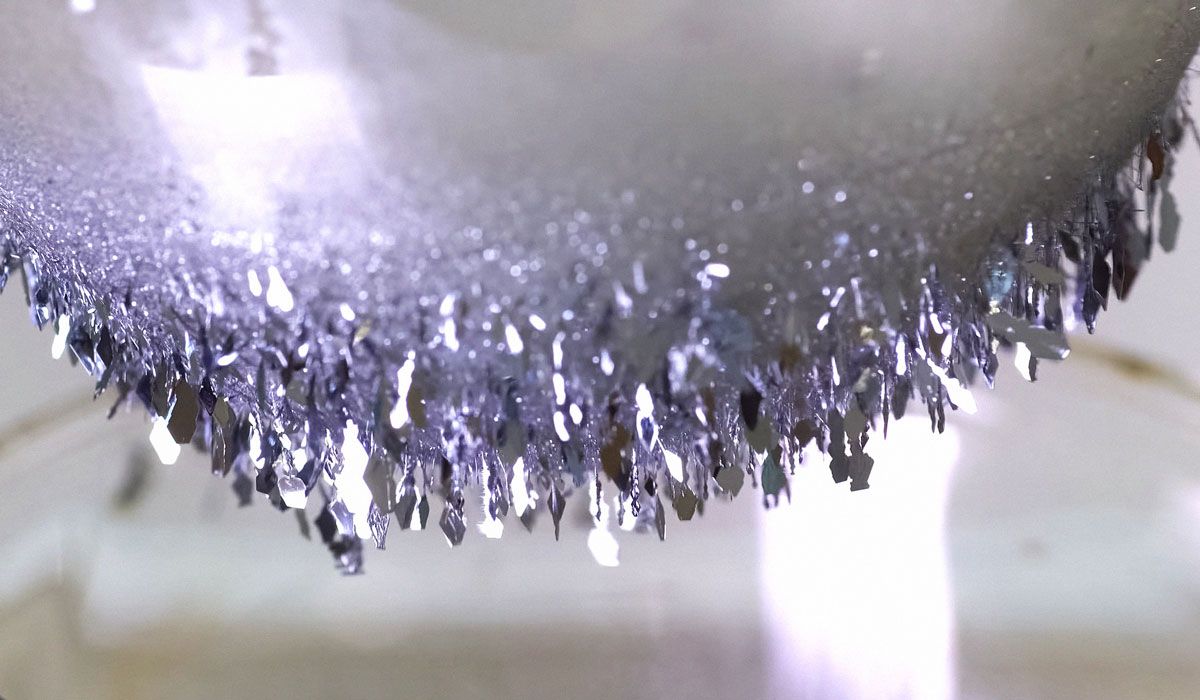
Courtois used sulfuric acid to clean his tanks, and one day, after a particularly strong batch of acid had been applied, he noticed something unusual: a billowing of violet vapor. When the vapor condensed, it left purplish-black crystals that gleamed on the sides of the vats. Courtois had unknowingly isolated a new element.
He reported his discovery in 1813 in the Annales de chimie, in a paper titled “Découverte d’une substance nouvelle dans le vareck” — vareck being the French word for washed-up seaweed. On the second page of that paper, Courtois labeled the new substance iode, the French form of “iodine,” after the Greek word for “violet-colored,” ἰοειδής (ioeidḗs).
Within months, two major scientists — English chemist Humphry Davy and French chemist Joseph-Louis Gay-Lussac — independently studied Courtois’ samples and claimed to have isolated and identified the element. A scientific priority quarrel followed, but a surprisingly polite one. Both men ultimately credited Courtois as the true discoverer.
It was Davy who suggested “iodine” as the English term, aligning with elements such as chlorine (both belong to the same group of elements, the halogens). The element was officially ushered into the chemical pantheon in 1813, and its biological importance became clear almost immediately.
More from our network






Medicine Takes Notice
Only a few years after Courtois announced his discovery, Swiss physician Jean-François Coindet found that small doses of iodine could shrink goiters — often dramatically. Goiters are enlargements of the thyroid gland, located at the base of the neck, caused most commonly by a lack of iodine in the diet.
Goiter was endemic in many parts of Switzerland, and Coindet suspected that the old folk remedy of using dried or ashed seaweed (or sponges) to cure it might indicate that iodine would be an effective remedy. He was right. Rarely had a new element made such an immediate medical impact.
Courtois and Coindet jointly won an award from the French Academy of Sciences in 1831 for their contributions to medicine. At the time, no one realized how widespread iodine deficiency truly was, nor how crucial iodine would prove for brain development and general health.

Why Goiters Form
Goiters develop when the thyroid cannot make enough hormones due to lack of iodine. To compensate, the gland enlarges, sometimes dramatically. Iodine is present in seawater and coastal soils, but glaciation, flooding, and leaching stripped it from many inland regions. The result was a global patchwork of iodine-deficient zones.
In the United States, this included the Great Lakes, Appalachia, and parts of the Pacific Northwest — regions that became known collectively as the “goiter belt.” During World War I draft exams, Michigan physician Simon Levin found that more than 30% of local registrants had enlarged thyroids, sometimes severe enough to disqualify them from service. Around the same time, Ohio physician David Marine demonstrated in a landmark study that iodine dramatically reduced goiter rates in school-age girls.

Where Salt Comes In
Iodine is essential not only for preventing goiter but also for producing the thyroid hormones that regulate metabolism, support heart and digestive function, and play a critical role in fetal and infant brain development. For public health officials, the question quickly became how to supply iodine cheaply and universally. Salt — inexpensive, widely consumed, and used at predictable levels throughout the seasons — was an ideal candidate.
Switzerland adopted iodized salt in the early 1920s. In the United States, University of Michigan pediatrician David Cowie pushed for a similar approach, arguing that fortifying table salt could eliminate simple goiter (the kind caused by iodine deficiency) nationwide. His effort succeeded: Iodized salt appeared on Michigan shelves on May 1, 1924.
There were occasional setbacks, including outbreaks of iodine-induced hyperthyroidism among adults with long-standing nodular goiters, but the public health benefits were overwhelming. Within a generation, goiter rates plunged across former deficiency regions.

Iodized Salt Today
More than 120 countries now require iodization of all food-grade salt. Globally, the percentage of households consuming iodized salt rose from about 25% in 1990 to roughly two-thirds today. (Though the health benefits of iodine had been known for decades, uptake was slow in certain parts of the world, due in part to public relations battles.) It remains one of the cheapest and most effective nutritional interventions in the world.
The United States takes a voluntary approach. Most table salt is iodized, but many processed foods rely on non-iodized salt, and labeling iodine content is not mandatory. Even so, iodine intake is supported by dairy (where it occurs thanks to cleaners used on teats and milk cans; iodine is also a disinfectant), seafood, grains, and eggs, and widespread deficiency has been largely prevented.
Still, an estimated 2 billion people worldwide remain iodine deficient, especially where iodized salt is scarce or costly. Some countries fortify bread instead or distribute iodized oil capsules.
Courtois set out to make gunpowder more efficiently and ended up uncovering an element that transformed global nutrition. The violet vapor rising from a seaweed vat in 1811 eventually led to a simple solution — adding iodine to everyday salt — that has prevented goiters, improved cognitive health, and safeguarded generations against a once-common deficiency.


