




Why Do Men’s and Women’s Shoes Have Different Sizes?
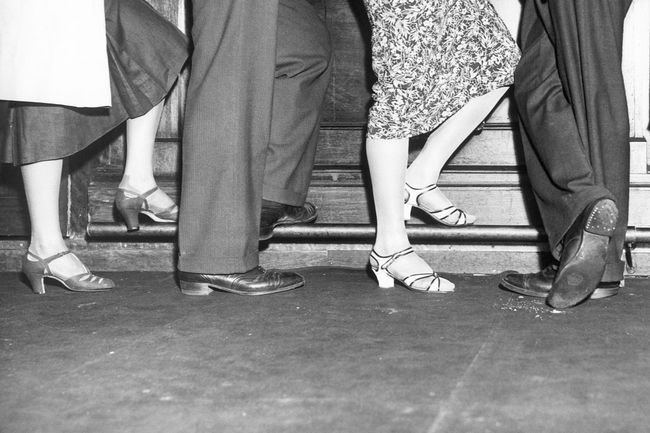
If you’ve ever tried on a pair of shoes in your size that didn’t even come close to fitting, it could be because they were labeled for the opposite sex. Men’s and women’s shoes have completely different sizing systems in the United States (unlike most of the world, where sizing is unisex). A women’s size 8 foot, for example, is roughly equivalent to a men’s 6.5 in U.S. sizing. This seemingly arbitrary system leaves many shoe-hunters scratching their heads. Why do we have different numbers for men’s and women’s shoes? Why not just use the same sizes for everyone, regardless of gender?
The First Shoe Sizes
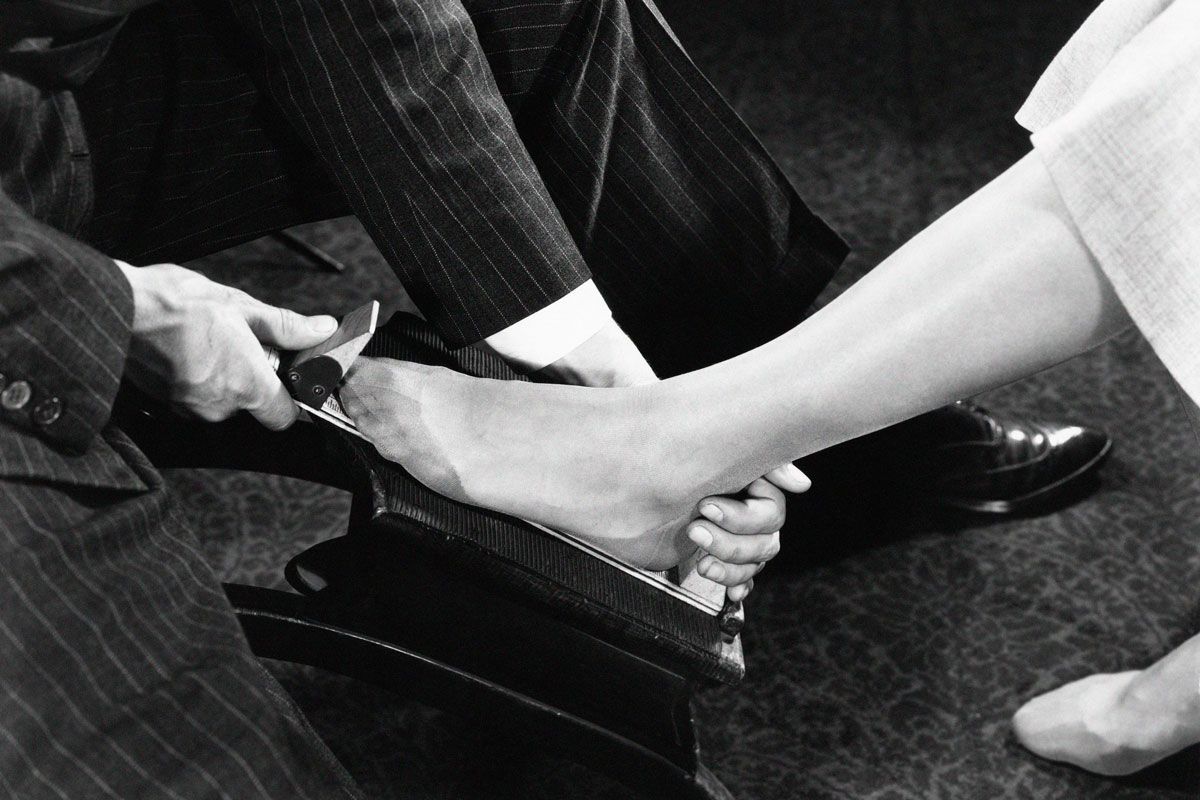
Though the first known description of a shoe-sizing system appears as early as 1688 in England, it wasn’t until the 19th and early 20th centuries that concerted efforts at shoe standardization took place. Manufacturing was becoming increasingly industrialized, and shoemakers were transitioning from custom-made footwear to mass production — which required standardized sizing systems.
In the United States, the first detailed sizing system was introduced by New York businessman Edwin Simpson in the 1880s. He based his sizes on the existing barleycorn system in the U.K.: The British standard for an inch was historically measured as three barleycorns laid end to end, and had long been used to measure bespoke shoes.
Each full U.S. shoe size increases by one-third of an inch (a barleycorn), so to turn a foot measurement into a size number, you multiply the foot length by three (to count how many of those one-third-inch measurements fit) and then subtract a fixed amount: 22 for men’s shoes and 21 for women’s shoes. For example, a man who wears a size 9 typically has a foot about 10 and one-third inches long, because 9 plus 22 is 31 (the barleycorn measurement), and 31 divided by 3 is 10.333 inches.
This subtraction keeps the size numbers small and convenient instead of having much larger sizes such as 30 or 40. The slight difference in how much is subtracted for men’s versus women’s sizes accounts for historical differences in how the sizes were set up. The details of who determined these subtraction amounts has been lost to history, but the resulting sizes are still used to this day.
Simpson’s measuring system was adopted by the Retail Boot & Shoe Dealers’ National Association about a decade later, providing the first nationwide shoe-sizing guidelines. By the 1920s, standardized measuring devices such as the RITZ Stick and the Brannock Device were adopted by stores across the country, further cementing standardized shoe sizes.
More from our network






Why Different Sizes for Men and Women?
Somewhere along the line, women’s shoe sizes in the United States were offset from men’s by about 1.5 sizes, though there’s no record of exactly when. But the precise reason for this remains unknown. It wasn’t, as far as we know, a choice made by Simpson — he did take into account shoe widths, and included “slim” and “fat” options in his system, but records did not specify any gender differences.
It does seem probable, however, that the offset was created to account for anatomical differences between men’s and women’s feet. The average male foot is longer, while female feet are relatively narrower with higher arches. By introducing gender-specific sizing, shoes could be more easily tailored and targeted in accordance with the varying needs and preferences of men and women.
When creating shoe lasts — the 3D molds that replicate the shape of a human foot — shoe designers would have been very much aware of the difference in structure between male and female feet. So, it’s logical that differences in sizing would emerge. And once those sizing norms were established, shoe manufacturers and footwear companies would have had little incentive to unify the systems, which would have required retooling and relabeling throughout the market.
Nowadays, shoes don’t really need to have different sizing systems based on gender. Many European countries, after all, use the same shoe sizes for men and women, relying on different designs to accommodate different foot shapes. And while some major shoe companies such as Nike, Adidas, Reebok, and New Balance now offer unisex sizing with some of their models sold in the United States, they normally use men’s sizing as the base, with conversion charts to help female shoppers. The idea of shifting the whole U.S. shoe industry to a truly unified sizing system, and forgoing the gender offset altogether, is likely just as unappealing to manufacturers now as it was a century ago.


