


What Did People Keep in Their Medicine Cabinets in the 1950s?
In the mid-20th century, the medicine cabinet was a fixture of many homes. Open one and you’d likely find a thermometer, a box of bandages, maybe a tin of aspirin — basics we still recognize today. But alongside those common essentials were remedies that didn’t just look different from modern products — they were also built on ideas modern medicine has long since abandoned.
These old-school treatments reflected the medical knowledge of the era, when the risks of certain heavy metals, narcotics, and chemicals weren’t fully understood. Here are six things people regularly stocked in their medicine cabinets in the 1950s that you rarely see anymore.
Mercurochrome
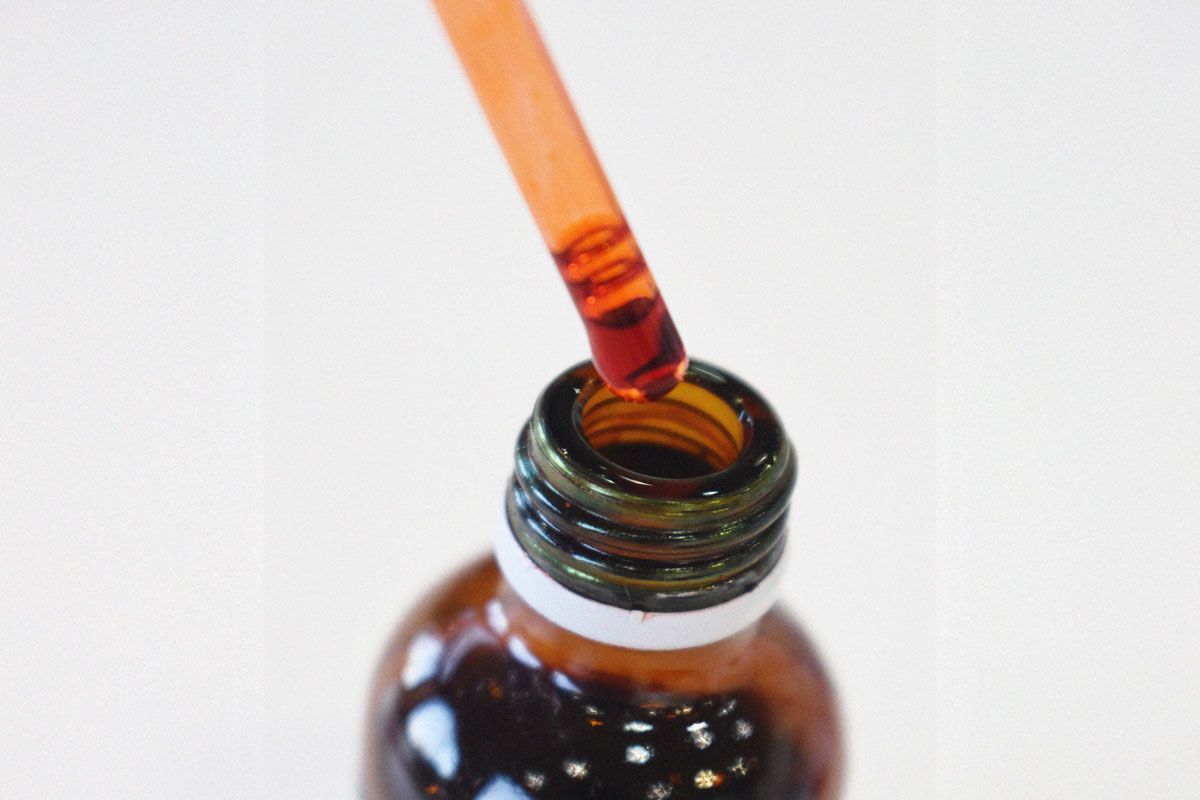
For many families in the 1950s, a flash of bright red wasn’t just a sign of a scrape or cut — it was also the remedy. Products such as Mercurochrome and Merthiolate were staples in medicine cabinets, used for disinfecting skinned knees and elbows or a knick from a kitchen knife. They came in glass bottles that showed off their unmistakable bright red-orange color. A streak of the liquid, applied to the skin with a glass dobber, meant your mishap was on the way to healing.
Mercurochrome was first developed in the early 20th century, and as the name implies, it relied on mercury compounds to stop the spread of bacteria and help prevent infection. The dangers of mercury poisoning are well known today, but for much of the 20th century, mercury was widely used in medical treatments. Mercurochrome stayed on shelves (and as an add-on in products such as pretreated bandages) as late as 1998, when the U.S. Food and Drug Administration withdrew its approval of the product’s ingredients, and it was removed from the market.
More from our network





Bile Beans
Digestive issues were once thought to be the root of countless everyday problems, and midcentury America had no shortage of treatments to improve digestion. Many of these, curiously, targeted the liver, including the popular Bile Beans. The product was primarily marketed to homemakers as a way to stay “fit, bright, and attractive” by stimulating the liver, improving digestion, and relieving constipation.
Most liver pills of the era — Bile Beans included — were essentially laxatives, and typically relied on herbal ingredients such as cascara, rhubarb, and licorice to force bowel movement. Bile Beans were the target of fraud claims around 1904, but their presence in medicine cabinets persisted throughout the 1950s and beyond; they remained available on store shelves until the 1980s.

Paregoric
It wasn’t uncommon for everyday foods and remedies to contain narcotics in the not-too-distant past. Early versions of Coca-Cola famously contained cocaine, and early cough syrups commonly relied on morphine. And paregoric — a tincture containing opium — was a fixture in many medicine cabinets in the 1950s.
The liquid was kept on hand in glass bottles and was used by adults for stomach and gastrointestinal issues and given to babies for everything from stubborn coughs to teething pain. Up until 1970, paregoric was available at pharmacies without a prescription; after that point, it became a regulated drug in an attempt to curb misuse or dependence on the opiate. Paregoric is memorable for more than one of its ingredients: Thanks to the addition of anise oil, it had a distinctive flavor not unlike licorice.

Dr. Miles’ Nervine
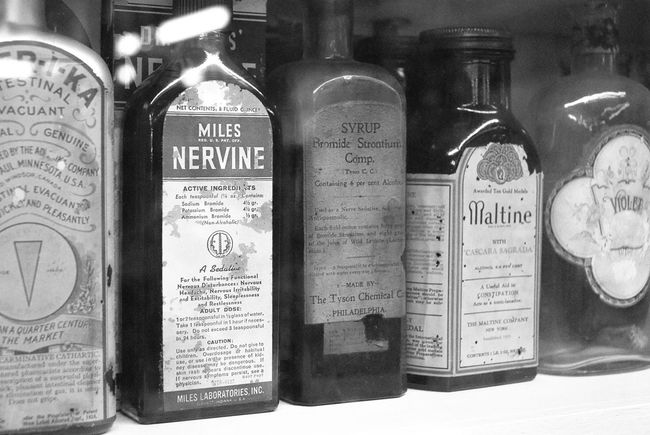
Tonics were a staple of midcentury medicine cabinets. One of the most popular was Dr. Miles’ Nervine, a product that had been around in various forms since the late 19th century. By the 1950s, however, it had shifted away from earlier claims of treating hysteria or epilepsy and instead taken the form of a widely available liquid and effervescent tablet that promised relief from “sleeplessness and restlessness, nervous tension headaches, and nervous irritability.”
Dr. Miles’ Nervine affected the nervous system through its bromide compounds, chemicals once commonly used in sedatives. While indeed effective, bromides can accumulate in the body and become toxic, sometimes causing bromism and leading to hallucinations, skin rashes, and neurological symptoms. By 1975, bromide salts were banned as an ingredient in over-the-counter products.

Miltown
Before modern antidepressants and anti-anxiety medications, there was a brief moment when a single pill promised to take the edge off postwar life. Introduced in the mid-1950s, Miltown — chemically known as meprobamate — was discovered by Czech scientist Frank Berger while researching ways to preserve penicillin. Instead, he stumbled onto a compound that relaxed muscles and calmed the mind without putting users to sleep. When Miltown reached the market in 1955, it barely registered at first; within a year, it was everywhere.
Hollywood embraced it (comedian and television host Milton Berle joked about changing his name to Miltown Berle), and millions of Americans tried the tranquilizer. The product promised something new: calm, but not total sedation; a way to stay functional while smoothing life’s anxieties. Miltown’s success, though short-lived, sparked a pharmaceutical gold rush, and newer medications such as Valium soon eclipsed it.

Lysol
Lysol is, of course, still one of the most familiar names in American households, disinfecting countertops with a lemony scent. But in the early-to-mid-20th century, it was also marketed for a very different purpose: feminine hygiene. ALysol advertisements from the 1920s through the 1960s told women that using Lysol as a feminine wash was an essential part of marital harmony. This language, however, is believed by some historians to have actually been a vague way of encouraging the use of the product as a contraceptive.
What those ads downplayed was that Lysol was a powerful chemical disinfectant, not a gentle personal-care product. Its ingredients could irritate or burn sensitive tissue; as early as 1911, Lysol exposure had led to nearly 200 poisonings by those using it for hygiene, and several deaths were linked to using the product internally. As the formula evolved, Lysol was increasingly promoted as a versatile disinfectant — even as it remained a top-selling feminine hygiene product through the 1960s.


