




Why Do We Dial 911 for Emergencies?
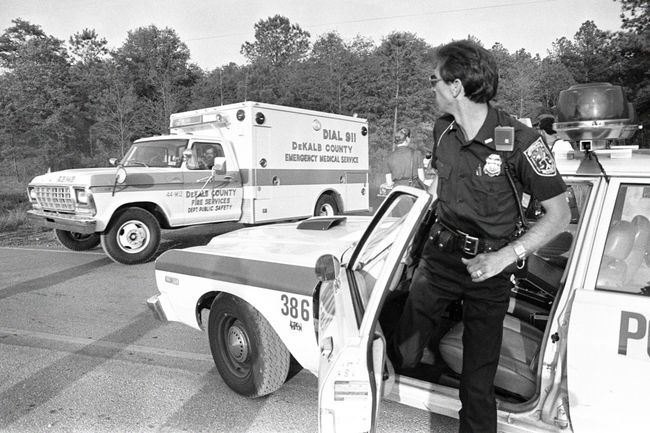
When Americans find themselves faced with an emergency situation, they instinctively reach for their phones to dial 911. These three digits are ingrained in the collective consciousness. Even toddlers know the number — take, for example, the case of little A.J. Hayes, a 3-year-old who made a lifesaving 911 call after his father accidentally stabbed himself with a chisel. Today, it’s hard to imagine any other number being used in times of crisis.
But not all that long ago, no universal emergency number existed in the United States. Instead, people had to call their local police station or fire department directly, sometimes desperately fumbling through phone books to find the correct number. It wasn’t until the 1960s that 911 was created, revolutionizing emergency response in the country. But why were these three particular numbers chosen?
A Nationwide Emergency Number
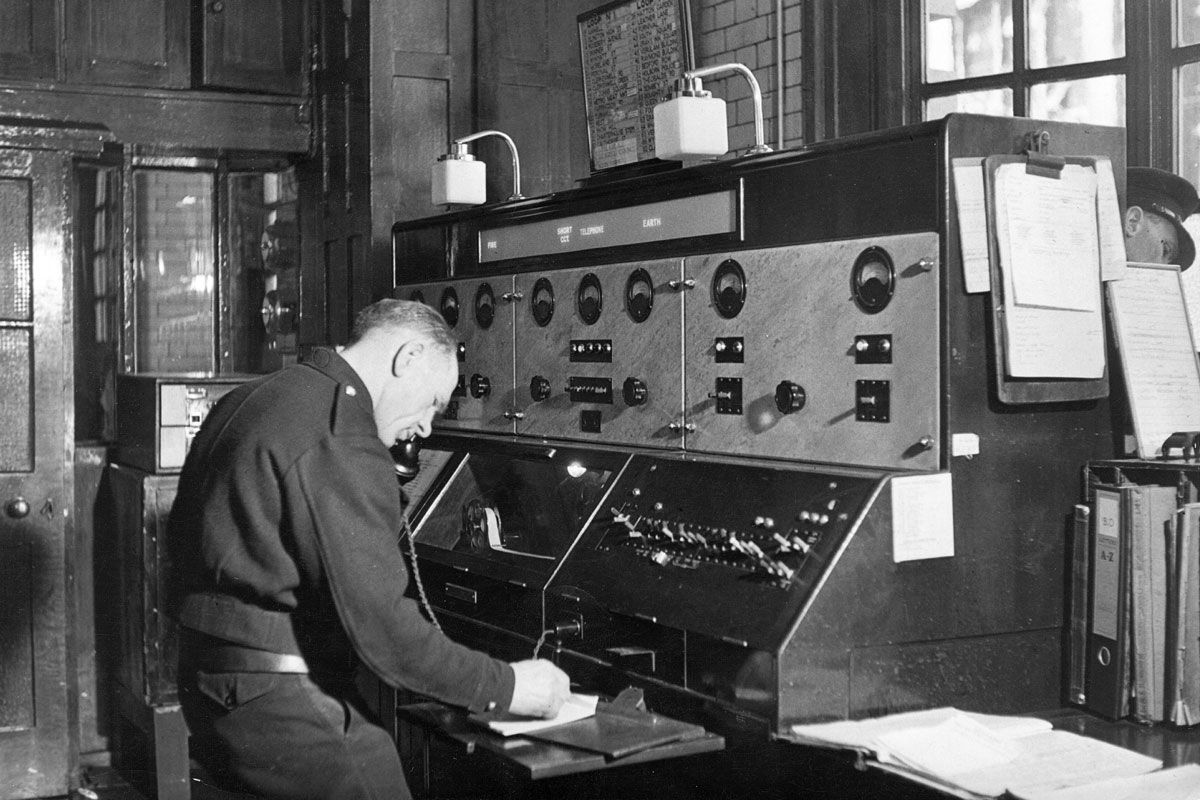
Up until the mid-20th century, there were two main ways Americans could get in touch with emergency services: by calling their local fire department or police precinct directly, or by pressing “0” for the operator. Both options were time-consuming, confusing, and unreliable. People were often unsure where exactly to call, and there was no guarantee that a police station would actually pick up.
In 1957, the National Association of Fire Chiefs recommended that a single set of numbers be used for reporting fires, as precious seconds — if not minutes — were being lost when panicked citizens struggled to find the right number. Then, in 1967, the President’s Commission on Law Enforcement and Administration of Justice, established by President Lyndon B. Johnson, recommended the creation of a nationwide number for reporting emergencies. After all, the United Kingdom had been using its universal emergency number, 999, since 1937 (it was the first country in the world to roll out such a system)— so, why wouldn’t America do the same?
More from our network






Why 911?
In 1968, in response to growing calls for a single emergency number, the Federal Trade Commission and AT&T announced that they had decided on a new, universal three-number sequence for emergency calls: 911. The number was chosen to satisfy multiple criteria. Most importantly, it was short, easy to remember, and quick to dial. On the rotary phones used at the time, “9” and “1” were both relatively easy to find, even in the dark. Dialing 911 was also faster than the 999 used across the pond, as “9” takes slightly longer to dial than “1” on a rotary phone. With the numbers being at opposite ends of the dial, it also meant that accidentally dialing 911 was less likely.
Another important characteristic in 911’s favor was its uniqueness — it had never been previously authorized as an office code, area code, or service code. According to the National Emergency Number Association, the choice of 911, purely on a technical level, “best met the long-range numbering plans and switching configurations of the telephone industry” at the time.
In other words, 911 didn’t conflict with any existing or planned numbers, and could be programmed into existing switches without major overhauls, meaning it was a good fit for both the existing telephone infrastructure and the industry's plans for future expansion. What’s more, AT&T had already helped standardize numbers such as 411 (the number for directory assistance), allowing it to use the same preexisting telephone system infrastructure to process and route 911.

A Slow Rollout
For the public, 911 was brief, catchy, and very easy to dial. And for the telephone industry, it offered a relatively hassle-free implementation. Dialing 911 would access a central operator that then routed to local emergency services by mapping landline phone numbers to addresses (or today, using location data from your cellphone). The nationwide rollout, however, proved to be a slow process.
The new universal emergency number was first dialed in 1968, but it took decades until most of the country could use it. One major obstacle was the fact that the new 911 number only worked through Bell System telephone companies — all of the nation’s independent phone companies, of which there were many, were not included in the emergency telephone plan. Local jurisdictions also had to fund the infrastructure upgrades, and some of them simply didn’t think the cost was worth it. By 1976, only 17% of the population had access to the service, rising to just 50% a decade later.
Eventually, however, 911 made its way across the United States, becoming arguably the most memorized and instantly recognizable number in the country. Today, around 240 million calls are made to 911 in the U.S. each year — more than 650,000 emergency calls every single day.


