




People used to hang chairs on walls.
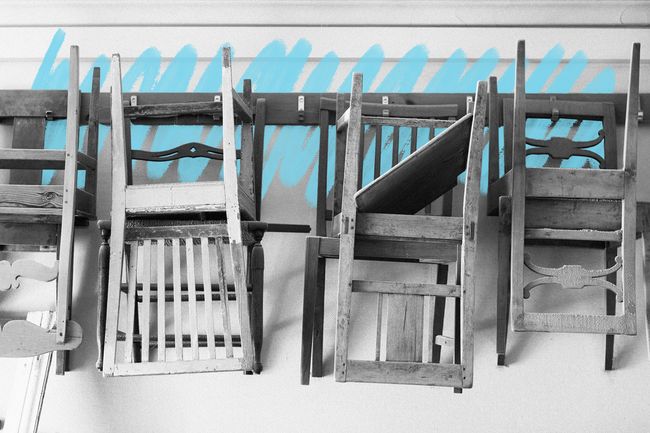
If you’ve ever gotten frustrated watching a robot vacuum repeatedly ram itself into a chair leg, you might have liked spending time in an 18th-century Shaker home.
The Shakers were a religious group founded in England in 1747, and many emigrated to the American colonies, where they lived communally and shared nearly every aspect of daily life. Cleanliness, order, and efficiency were more than practical preferences; they were part of the Shakers’ belief that their communities should reflect the order and purity of heaven.
That philosophy found its way into their furniture. Shaker homes were fitted with long wooden peg rails on the walls where residents could hang clothing, tools, baskets, and even chairs. When it was time to sweep, chairs could simply be lifted off the floor and hung on the wall. Shaker chairs were even specially designed to be lightweight.
Hanging chairs on the walls saved space in homes that were full, and it also made cleaning easier and kept rooms orderly. Chairs were hardly the only thing Shakers designed around their guiding principles: They also worked to improve already utilitarian tools and machinery, including brooms and washing machines.


