




Medieval people slept inside wooden cupboards.
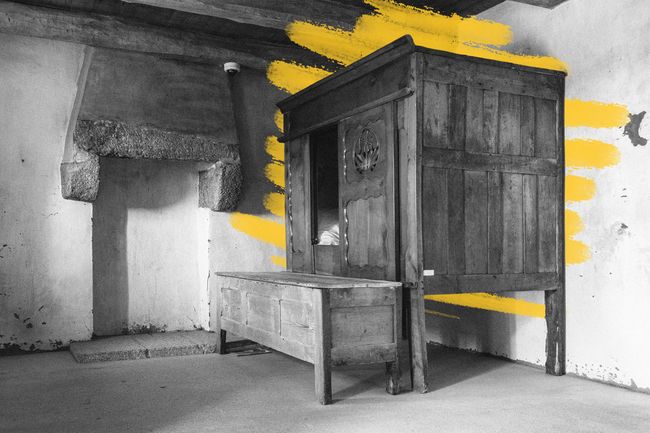
Sleeping in a cupboard sounds more like a punishment than a good night’s rest. But in parts of Europe in the medieval and early modern era, people often slept on beds inside wooden cupboards.
Built right into house frames or crafted as freestanding pieces of furniture, these boxes didn’t look like modern beds so much as wardrobes: The cupboard stood upright like a wardrobe, often with elaborate carving details on the outside. Inside, the sleeping space inside was a horizontal bed enclosed by wooden walls and doors or curtains that could close up at night.
Box beds (or closet beds) were quite practical for the time. The average house in the Middle Ages was smaller than today, with just one or two rooms serving as both living and sleeping spaces for families, so having the option of even a small amount of privacy was valued. Even more importantly, homes could often be quite cold, and enclosing the bed helped trap body heat. Many box beds measured around 5.5 feet long — about as long as a modern queen-sized bed is wide — and were wide enough to fit at least two people, so they would sometimes be shared by more than one family member.
The furniture piece began to fade out of use in the 19th century amid rising concerns about hygiene and air quality, improved indoor heating, and the increasing popularity of bed frames. Closet beds eventually became a symbol of rural poverty and an old-fashioned way of living, and by the mid-20th century, they were no longer used.


