




Medieval cathedrals were painted in vibrant colors — not gray stone.
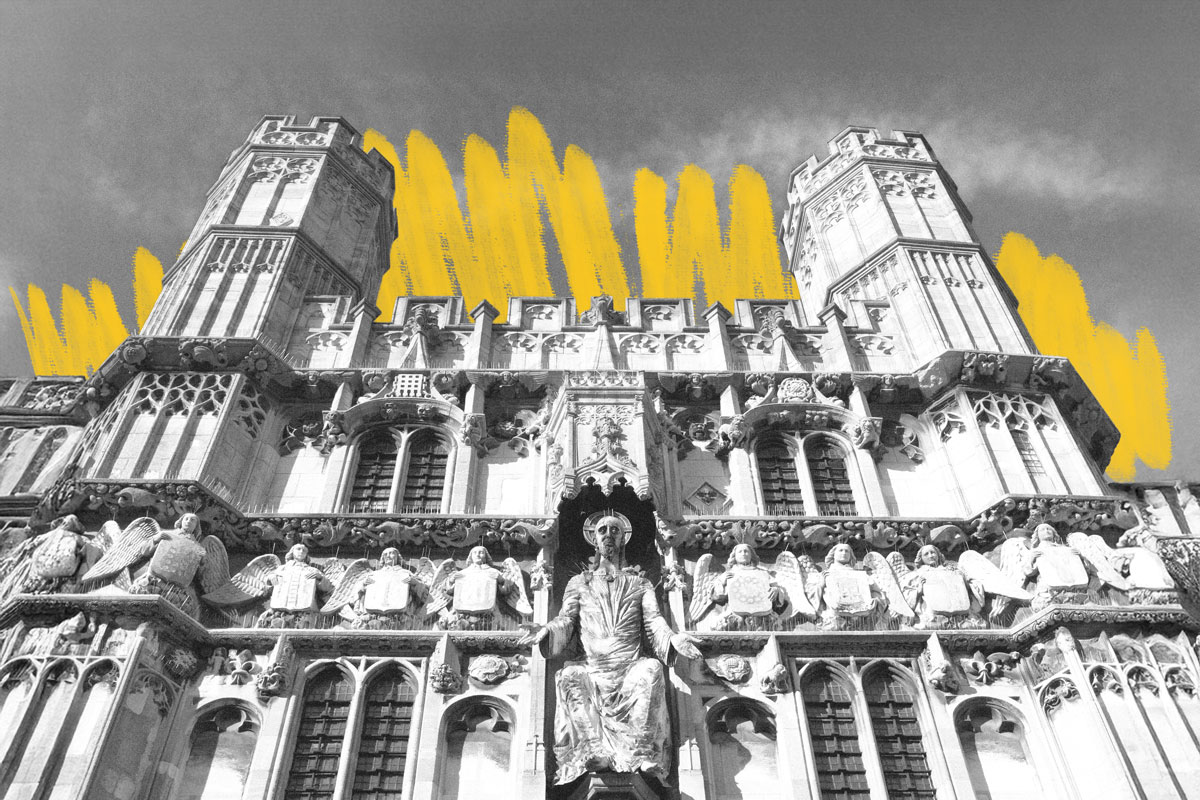
Walk into a medieval cathedral today and you’re likely to see pale stone, worn statues, and a restrained palette of beige and gray. But to medieval worshippers, these buildings would have looked very different. Cathedrals weren’t meant to be austere monuments — they were immersive spectacles, painted in a rainbow of colors and gilded from top to bottom.
Recent studies have made it clear that medieval churches were originally covered in vibrant pigments: reds, blues, ochres, greens, and gold. Exterior sculptures were painted to resemble living figures, while interiors were layered with murals, patterned columns, and richly colored vaults. Traces of this polychromy (the use of many colors) still survive at sites such as the Gothic cathedrals in Amiens and Chartres, and scientific analysis has confirmed pigment residues on cathedrals across Europe.
So why do these structures look so colorless now? Time played a role, as weathering, oxidation, and pollution gradually stripped paint from stone. But later human choices mattered even more. During the Reformation (the religious revolution of the 16th century), murals were deliberately painted over to fit new ideals. In the 18th and 19th centuries, restorers scraped paint from statues and walls to match modern tastes that prized “pure” stone. These decisions reshaped how the Middle Ages would be remembered.
Yet that preference for monochrome was never medieval. As historian Yvonne Seale has noted, medieval people thought about color differently than we do, and primarily in terms of expressions of clarity, brilliance, and spiritual “greatness.” Bold, saturated colors carried meaning. The deep blues used for the Virgin Mary’s cloak, for example, were meant to soak the senses and signal holiness.
Seen this way, gray stone cathedrals aren’t timeless relics — they’re artifacts of later centuries. The medieval world was anything but dull. Its churches were designed to dazzle, instruct, and envelop visitors in color, light, and meaning, from painted façades to stained glass that quite literally bathed worshippers in sacred hues.


