




Kids used to gather to watch giant blocks of ice being delivered.
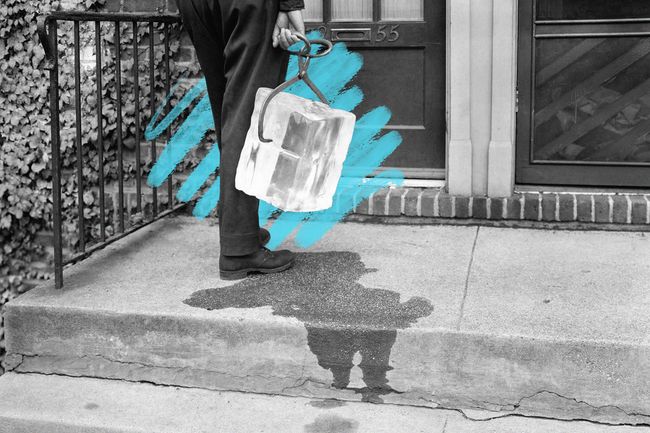
Before electric refrigerators became standard kitchen equipment in the U.S., the arrival of the iceman was a familiar neighborhood event. Horse-drawn wagons carried huge blocks of ice through American streets, stopping wherever a household needed to replenish its icebox. The delivery was especially popular with children, who waited beside the wagon or followed it down the street in hopes of receiving cold chips broken from the larger blocks.
The ice had often started its journey months earlier. During the winter, crews cleared the snow from frozen lakes and ponds, scored the water’s surface into a grid, and used saws and pikes to separate the ice into blocks. These were packed into heavily insulated icehouses, then transported by railroad, barge, or wagon. Sawdust, once an unwanted byproduct of lumber mills, proved remarkably effective at slowing the ice’s melting.
Customers indicated how much ice they wanted by placing a numbered card in a window. The iceman would chop the requested amount from a larger block, grip it with iron tongs, and hoist it onto a shoulder protected by a thick leather or sheepskin pad. Once inside, he placed it in the household icebox, where the cold air helped preserve meat, dairy products, and produce. Because the ice continually melted, the delivery wagon soon had to return, much to the delight of local children.
Ice delivery was wet, grueling work traditionally performed by men, although women took over some routes during World War I. As electric refrigerators spread through American homes, the neighborhood iceman gradually disappeared. But one trace of the profession remains: People still occasionally call the refrigerator an icebox, even though no one has to carry a dripping block through the kitchen anymore.


