




Gardeners used to weed grass to make room for dandelions.
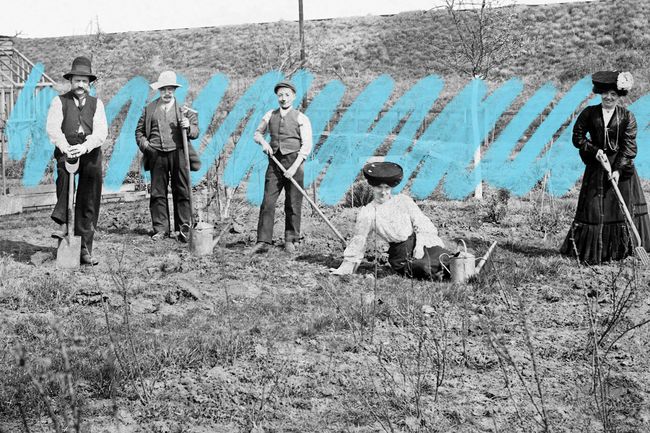
Dandelions weren’t always the bane of suburban lawn care. A little more than a century ago, the unmistakable yellow flowers were even commonly grown on purpose.
In the 19th and early 20th centuries, when fresh produce was more dependent on seasons, dandelions were put to good use: Their young leaves were eaten raw in salads or cooked like spinach, the roots were roasted for a coffee substitute, and the flowers could be turned into wine. So instead of being ripped up to protect the grass, the useful plant was purposefully cultivated.
According to traditional-cooking author William Rubel, dandelions were being grown for the Boston market as early as 1836. By the 1870s, seed catalogs were offering several dandelion varieties, including selections bred specifically for their leaves.
Herbalists had praised the plant for its medicinal properties for centuries, using it to treat digestive issues and as an effective diuretic. Dandelion root was even listed in the United States Pharmacopoeia, a reference for medicinal substances, from 1831 to 1926. But at the turn of the 20th century, the dandelion’s reputation began changing. As early as 1909, homeowners were being encouraged to eradicate the flowers in pursuit of uniform green grass.
After World War II, the dandelion faced an even tougher opponent: the suburban American lawn. As housing developments spread, neatly trimmed grass became a symbol of the American dream, and increasingly affordable lawn mowers, herbicides, and sprinklers helped homeowners maintain it. In 1946, Dow Chemical all but did dandelions in with an advertisement proclaiming “Doomsday for the Dandelion” and targeting other “noxious weeds,” which changed the mainstream perception and treatment of the plant, it seems, for good.


