




What People Really Ate at Medieval Feasts
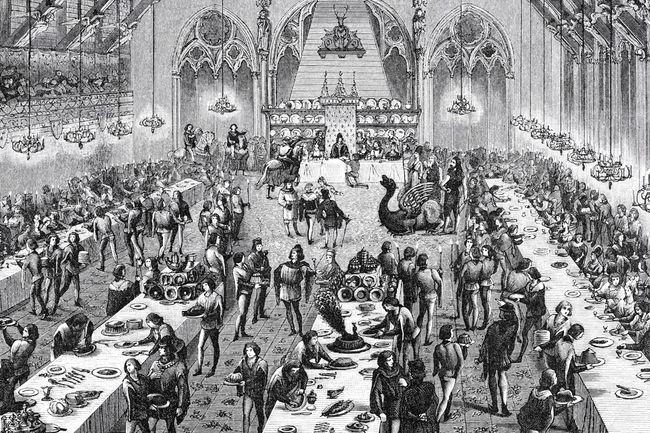
If your main image of a feast in the Middle Ages is from a night at Medieval Times or your favorite medieval fantasy movie, you might picture giant turkey legs, goblets sloshing over, and bare hands streaked with remnants of rich foods. It’s indeed a vivid image — and it isn’t entirely wrong. But in reality, a medieval feast was less about indulgence for its own sake and more about performance.
The meal, parts of which could involve months of preparation, was elaborate and sophisticated. No details of the hours-long events were overlooked, because for nobles and wealthy households throughout Europe, a feast wasn’t just dinner; it was a carefully staged display of status. Here’s what a medieval feast actually included.
The Food
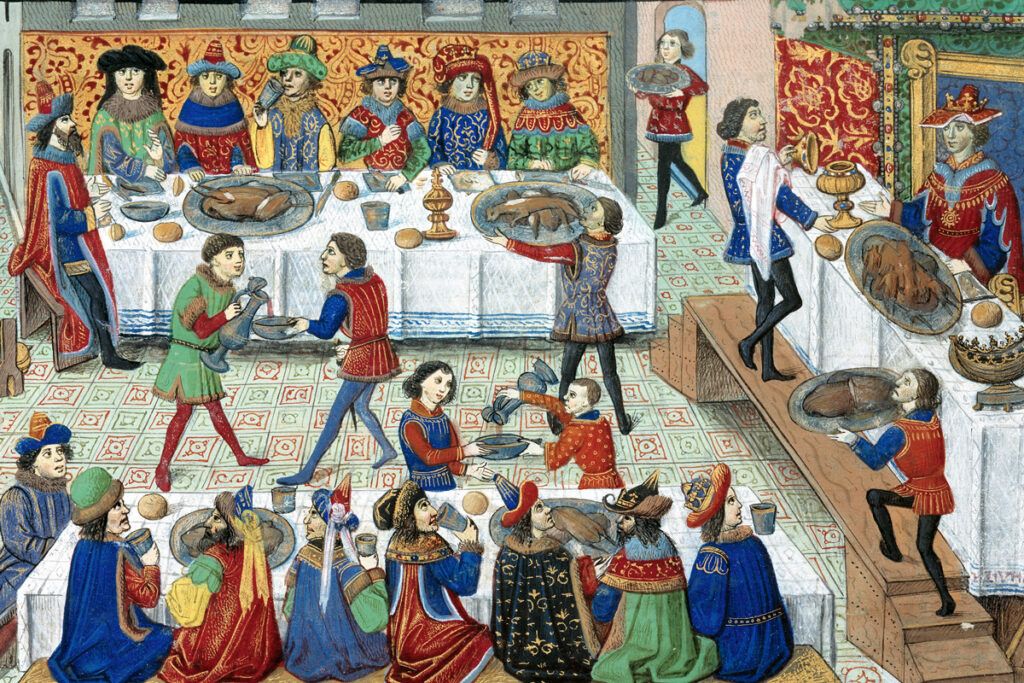
The modern image of a medieval feast is not entirely unrealistic. There was indeed plenty of roasted meat, although turkey legs would not have been on the menu; the bird itself arrived in Europe after the Middle Ages, sometime after 1500. Wealthy medieval households instead often served venison, pork, mutton, and beef, as well as swan on occasion.
Medieval cooks loved combining sweet and savory flavors. Meat might be seasoned with cinnamon, saffron, cloves, ginger, or nutmeg, while sauces often included dried fruit, wine, vinegar, or even sugar, although at the time sugar remained a costly luxury spice rather than a pantry staple.
Despite popular stereotypes, vegetables were also abundant. Stews known as pottages were made with onions, herbs, cabbage, peas, or beans, and were common across all levels of society. Fish was also abundant at feasts. Medieval Christian fasting rules restricted meat consumption on many days a year, so eel, cod, herring, and pike became staples of even elite kitchens.
More from our network





The Presentation
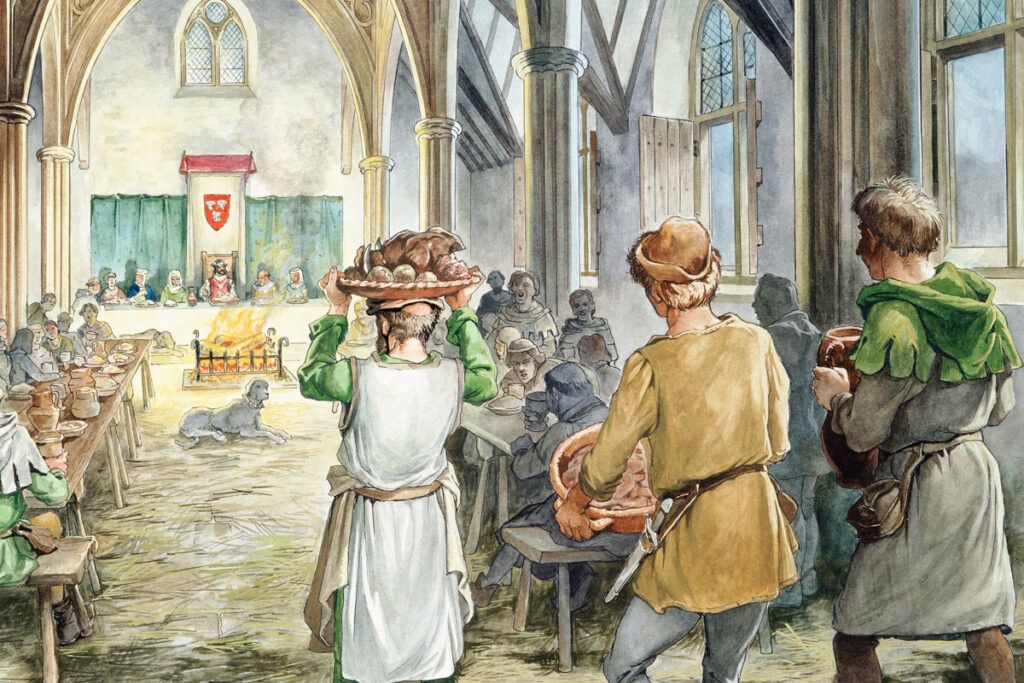
In especially extravagant medieval courts, cooks could stage dramatic food reveals. Some cookbooks from the era describe making pies to release live birds when cut open. The birds were not actually baked alive; instead, cooks would prepare the pie shell separately and add live birds just before serving, creating a chaotic fluttering when the crust was cut open.
Peacock was also served for spectacle. The bird was carefully prepared so the skin and feathers were removed before cooking, then reattached after roasting to create a dramatic, lifelike presentation when served. While the meat itself was not especially prized, the visual effect made it a centerpiece of the feast.
The Cutlery
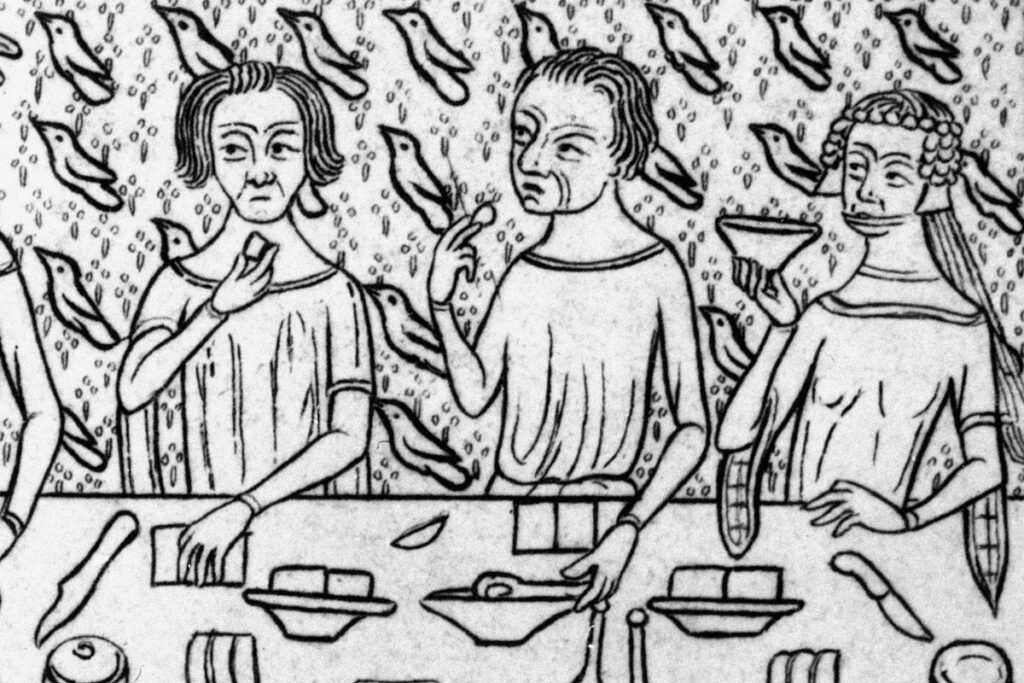
Dining customs at medieval feasts also looked different from modern formal meals: Forks were considered sinful and were not commonly used in much of medieval Europe, so people instead ate with just knives, spoons, and of course, their hands. Diners also shared cups and platters, while thick slices of stale bread called trenchers were often used as plates that could also be employed to sop up leftover liquids (or, on occasion, given to the poor after the meal).
Contrary to popular myth — and, thankfully, given how hands-on this dining experience was — hygiene was not ignored. Wealthy guests often washed their hands before meals using bowls of scented water brought around by servants. While it was done to be practical, it was also yet another sign of excess, getting at the medieval feast’s core idea of flexing one’s status and demonstrating abundance in a world where luxury was rare.
The Entertainment
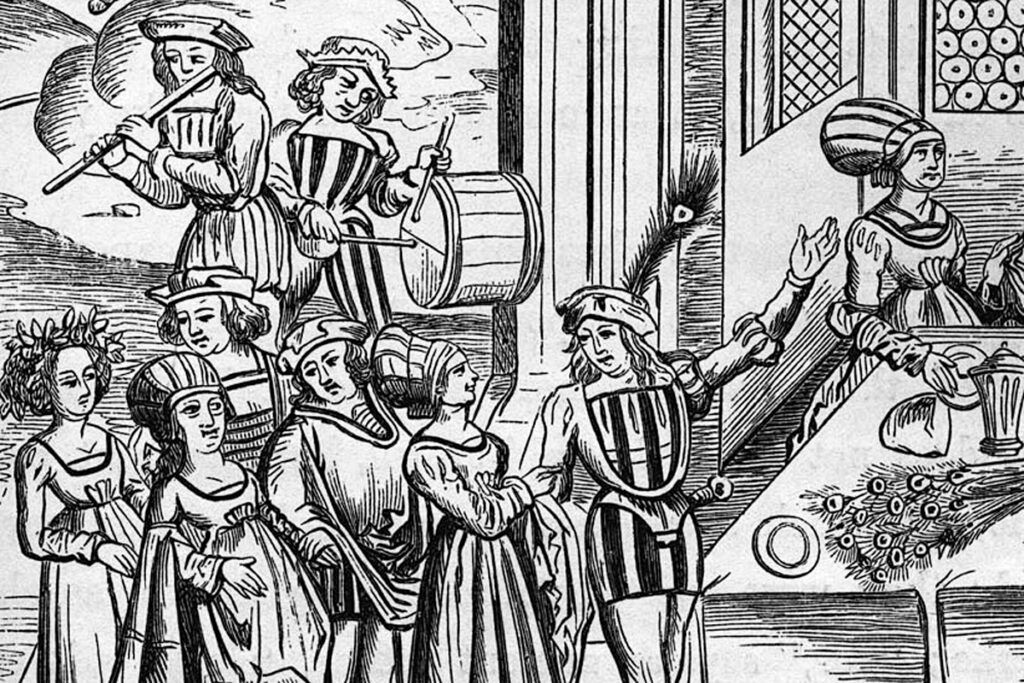
A medieval feast could stretch on for hours, so food was only part of the event. Between courses, guests might watch musicians, acrobats, or jesters. Some noble courts employed entertainers full time, a few of whom became quite famous. One of the best known was Roland the Farter, a 12th-century English court performer employed by King Henry II. Roland reportedly even earned land and other privileges in exchange for performing “one jump, one whistle, and one fart” at every Christmas banquet.
The Crowd
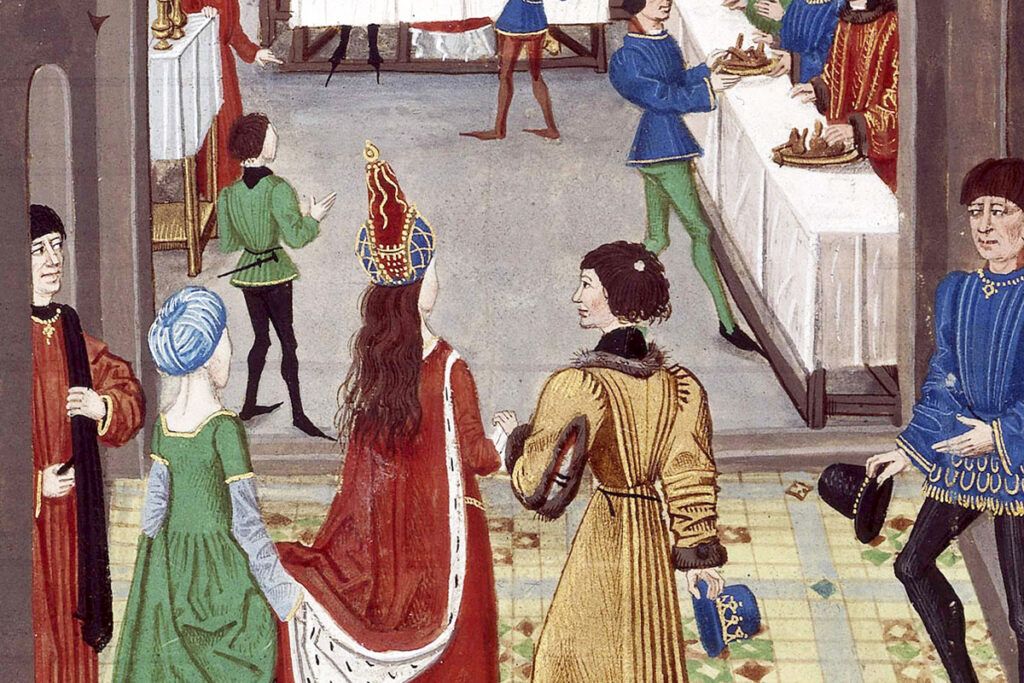
Not everyone at a medieval feast was there simply to eat. These gatherings were usually tied to major occasions such as weddings, religious festivals, diplomatic visits, or military victories. More than a meal, a feast was a public performance of status and relationships, bringing together the people a household wanted to honor, impress, negotiate with, or wield power over.
Guests could include a wide mix of people depending on the scale of the feast: Nobles, knights, clergy, wealthy merchants, and visiting dignitaries were likely on the list. Alongside them, dozens or even hundreds of servants, cooks, musicians, and entertainers worked to prepare, serve, and stage the event.
The Seating
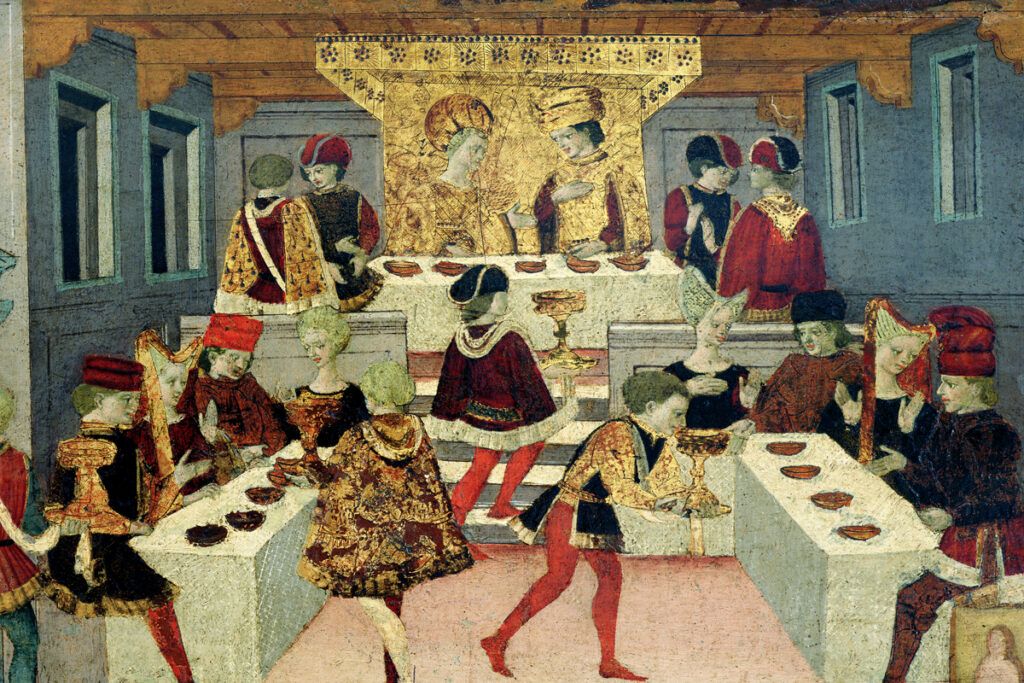
Seating at a medieval feast was highly structured and tightly controlled. The most important guests sat at the high table, usually placed at the front of the hall on a raised platform known as a dais. From there, the host and honored visitors could be seen by everyone in the room. Below them, lower-ranking attendees such as knights, lesser nobles, or household officials were seated farther away according to status.
Interestingly, salt placement on the tables reinforced the feast’s hierarchy. Expensive imported salt was often placed near elite diners, which is where historians believe the phrase “above the salt” may have originated.


