




Why Did Medieval Beds Have Curtains?
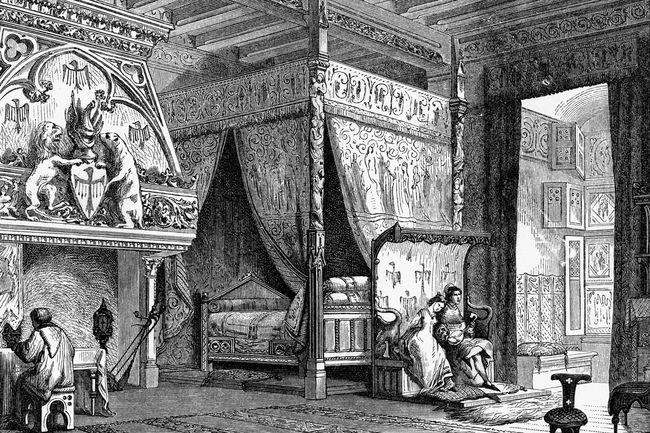
To modern eyes, the medieval beds depicted in paintings and period dramas often look incredibly elaborate. With richly decorated curtains on multiple sides, it’s almost like the bed has its own outfit. But was there a reason for all that fabric, besides looking fancy?
Not everyone in medieval Europe enjoyed such luxurious accommodations, of course. The poorest people might have slept on straw, while wealthy merchants and nobles could have furnished beds with mattresses, pillows, blankets, and decorative hangings. Let’s take a trip back to medieval England, where household records and manuscript illustrations offer a particularly revealing peek into the bedchamber.
Keeping Out the Cold
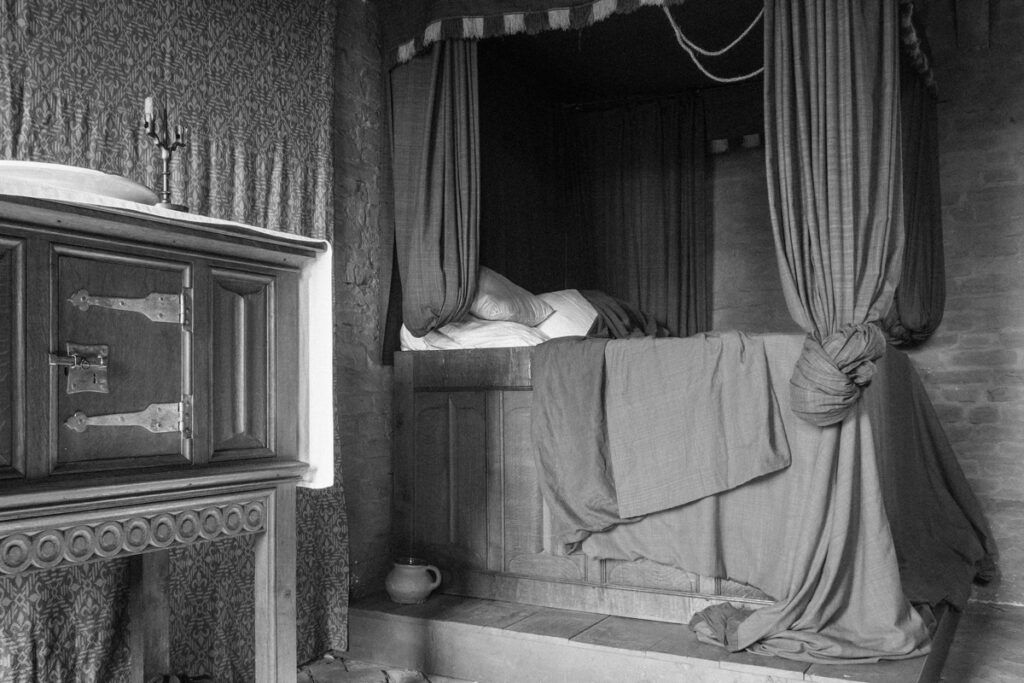
Before central heating, keeping warm required some ingenuity. Blankets helped, but so did enclosing the bed itself. As historian Hollie L.S. Morgan explains in her research on late medieval English beds, curtains blocked drafts (especially useful in big stone castles) and added warmth. Drawing the curtains shut created a sheltered pocket around the sleepers, rather like putting the bed inside a tent. This was especially helpful in rooms that didn’t have fireplaces — and most rooms didn’t.
The curtains didn’t necessarily hang from four towering posts. Morgan describes arrangements in which curtains hung from rails attached to the walls or the ceiling over the bed. In other beds, curtains hung around the edges of an overhead canopy. Three curtains could enclose the sides and foot of the bed, with the head of the bed already covered. In other words, there was more than one way to build a cozy bedtime cocoon.
More from our network





A Little Privacy, Please
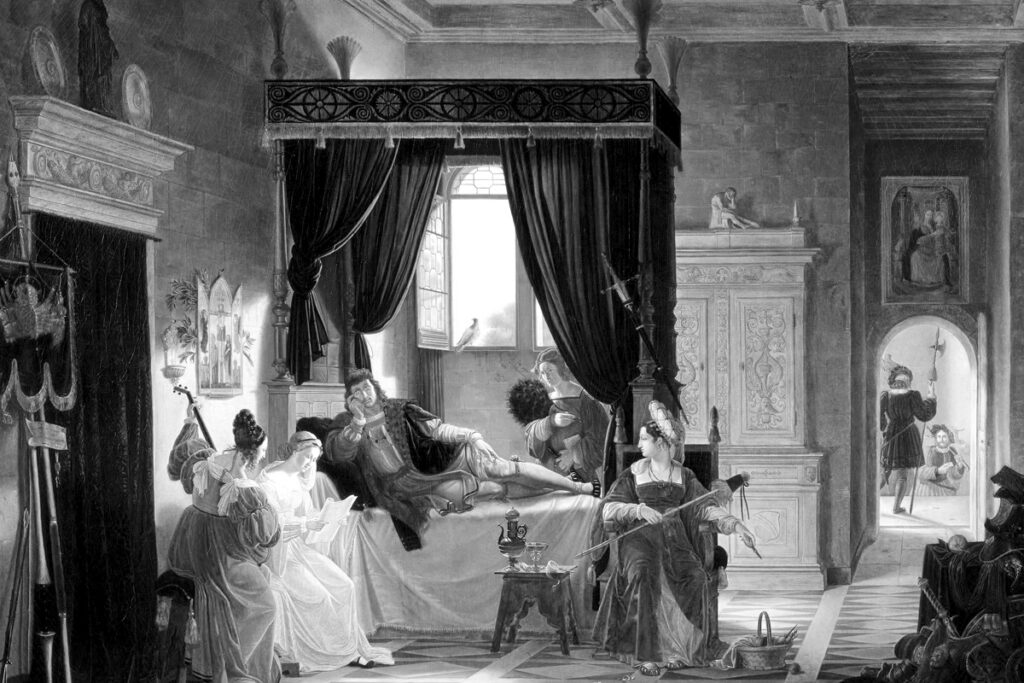
Even if you were lucky enough to have your own bedroom (not to be taken for granted in the Middle Ages), that didn’t necessarily mean sleeping alone. Servants often slept in the same chamber as their employers, and children might also have bedded down nearby. Curtains offered a way to screen off the main bed without evicting everyone else.
A 1488 inventory of London fish merchant Thomas Cowper’s possessions gives a sense of how crowded things could get. His principal chamber contained what’s described as a “standing bed” (probably just a bed with posts), a trundle bed tucked underneath, and a cradle. Historians think Cowper and his wife occupied the main bed, while children or servants used the trundle. An infant could sleep in the cradle. Pulling the curtains wouldn’t silence the room, but it could at least block the view.
A bedchamber wasn’t always reserved for private activities. Elite medieval beds could serve as seating when their owners entertained special guests. In other words, your bed might be both a personal retreat and a place to receive company. Under those circumstances, the curtains had an audience. Which brings us to the next point ….
Dressing To Impress
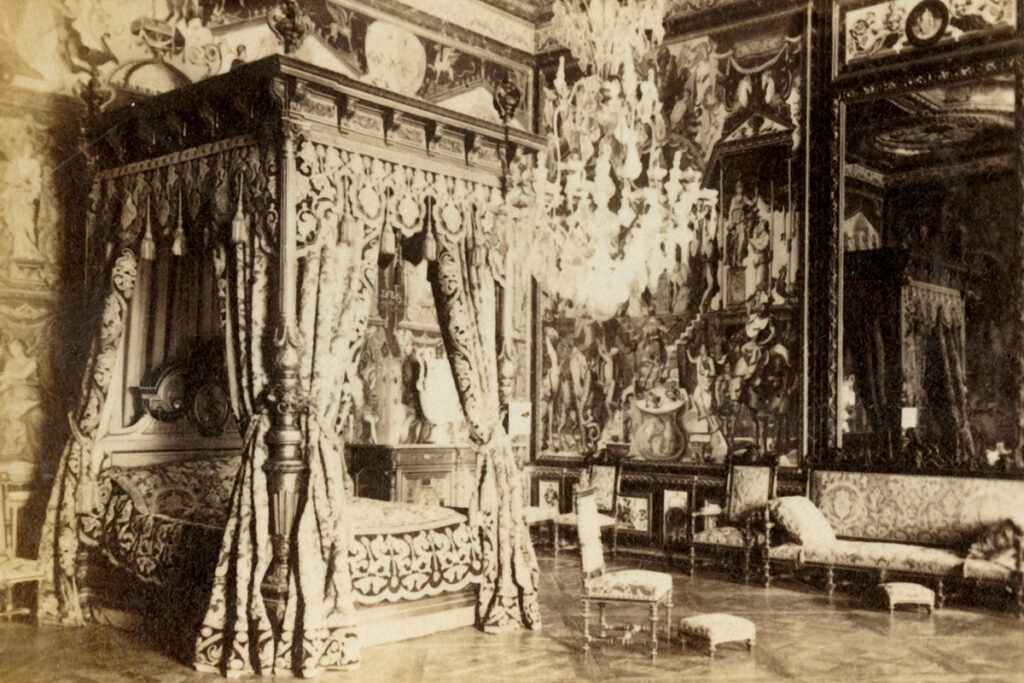
A bed’s decor could announce the owner’s taste, identity, and finances as effectively as any outfit. Bed hangings could be made from relatively ordinary linen or wool, or from gorgeous and expensive silk and velvet fabrics. The decoration might include plants, animals, biblical imagery, coats of arms, or images of saints, either painted, embroidered, or woven into the fabric.
In some cases, the message conveyed on the bed curtains was delightfully personal. In 1463, London ironmonger Richard Fawkener left his son a bed canopy and curtains decorated with falcons, apparently in a visual play on the family name. You can think of it as almost a form of medieval monogramming.
The financial investment in curtains like these could be substantial. In the household of Thomas of Woodstock, Duke of Gloucester, a 1397 inventory described a lavish bed ensemble featuring cloth of gold, “fine blue satin” with gold garter emblems, and matching curtains and cushions. (The garter emblems likely refer to the Order of the Garter, to which the duke belonged.) This was considerably more than somewhere to put your head down, and it was just one of the duke’s 16 beds. Textiles like these were generally worth even more than the bed frame, and could be a significant repository for the family’s finances.
This combination of comfort and display outlasted the Middle Ages. The Shakespeare Birthplace Trust explains that in William Shakespeare’s childhood home, the quality of the hangings probably distinguished the best bed from the second-best bed more than the wooden frames did. Warmth, privacy, and a chance to impress the neighbors: Bed curtains had plenty of reasons to stick around.


