




How the Calendar Got So Complicated
The modern calendar can seem confusingly arbitrary, with uneven months, leap years, and even missing days in history. But despite its strange inconsistencies, the calendar we use today is the result of a long quest to design the perfect time measurement system. Here’s a look at how we ended up here.
The Roman Calendar: New Months and Seasonal Chaos
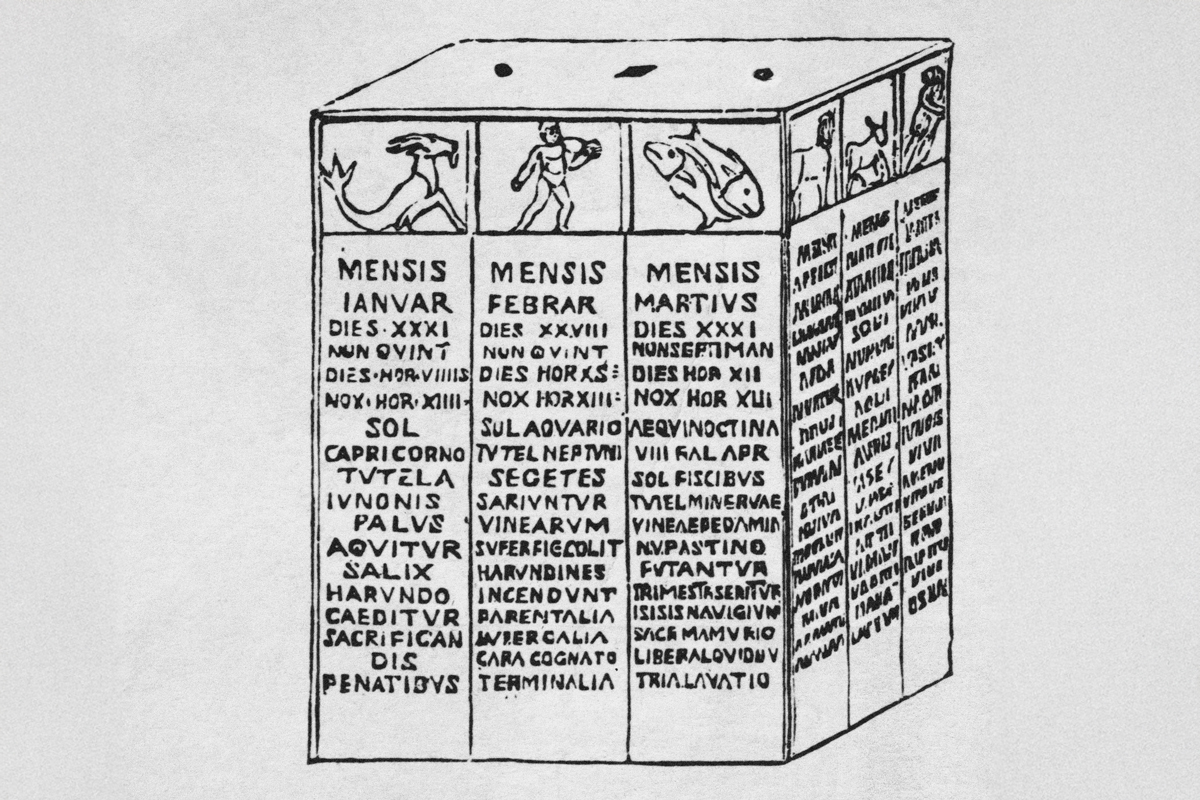
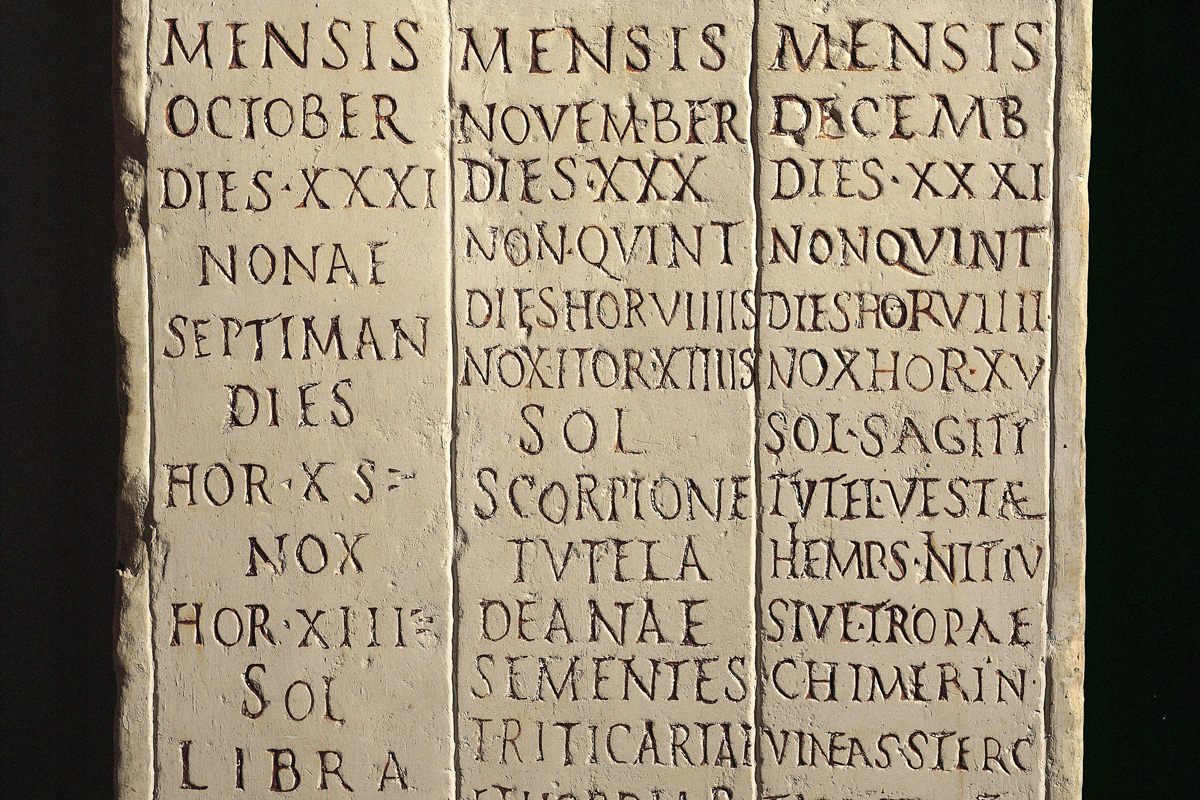
Our uneven months — ranging from 28 to 31 days long — have their roots in the Roman calendar, which changed several times over the Roman Republic’s existence from 509 BCE to 27 BCE. Based on the lunar cycles, the early Roman calendar originally had 10 months instead of 12 — six 30-day months, and four 31-day months, for a total of 304 days annually. The year began in March, ended in December, and was followed by an unnamed and uncounted gap during the winter months before the solar year would start again in spring.
According to Roman tradition, in an attempt to eliminate this unaccounted-for winter gap and sync the calendar with the lunar year, the legendary King Numa Pompilius added January and February to the calendar around 713 BCE, bringing the number of months to 12. Since the Romans believed odd numbers were auspicious and even numbers were unlucky, Numa wanted years and months to have an odd number of days. (For some reason, an even number of months was fine.) To achieve this, he deducted one day from each of the 30-day months, so they had 29 days.
However, because the newly established year consisted of 355 days (based on 12 lunar cycles), it was mathematically inescapable that one month would have an even number of days. It was thus decided that February, the month dedicated to the infernal gods, would be the “unlucky” month with 28 days.
Though Numa’s reforms brought the Roman calendar closer in line with the lunar year, it was approximately 10.25 days short of the solar year, causing it to fall out of sync with the seasons over time. To address this, the Romans observed an extra month called Mercedonius every two or three years. However, Mercedonius was practiced inconsistently, resulting in seasonal confusion, and was subject to manipulation as politicians would extend or shorten the month in order to prolong or cut short political terms.
You may also like



More from our network






The Julian Calendar: Leap Years and a New Start of the Year
Due to this imperfect system, the Roman calendar had drifted about three months ahead of the solar calendar by the first century BCE. To further standardize the calendar and sync it with the solar year, Julius Caesar implemented the Julian calendar in 46 BCE. Designed by the Alexandrian astronomer and mathematician Sosigenes, the timekeeping system was based on the Egyptian solar calendar, which was the first known calendar to use 365 days.
The Julian calendar largely resembles the calendar we still use today — it had 365 days and 12 months, all of which had 30 or 31 days except for February, which had 28 days. Because the Julian calendar took the solar year as having 365 1/4 days, it also instituted leap years — which, unlike the month of Mercedonius, were regular and predictable — to prevent the calendar and solar years diverging over time.
The Gregorian Calendar: Easter Reset and 10 Missing Days
Though the Julian calendar brought the calendar year much more in line with the solar year, it still wasn’t perfect. Due to a difference of about 11 minutes between the Julian calendar, which averaged 365.25 days per year with leap days) and the true time it takes for Earth to orbit the sun (365 days, 5 hours, 48 minutes, 45.25 seconds), the Julian calendar became out of sync with the seasons by about one day per century.
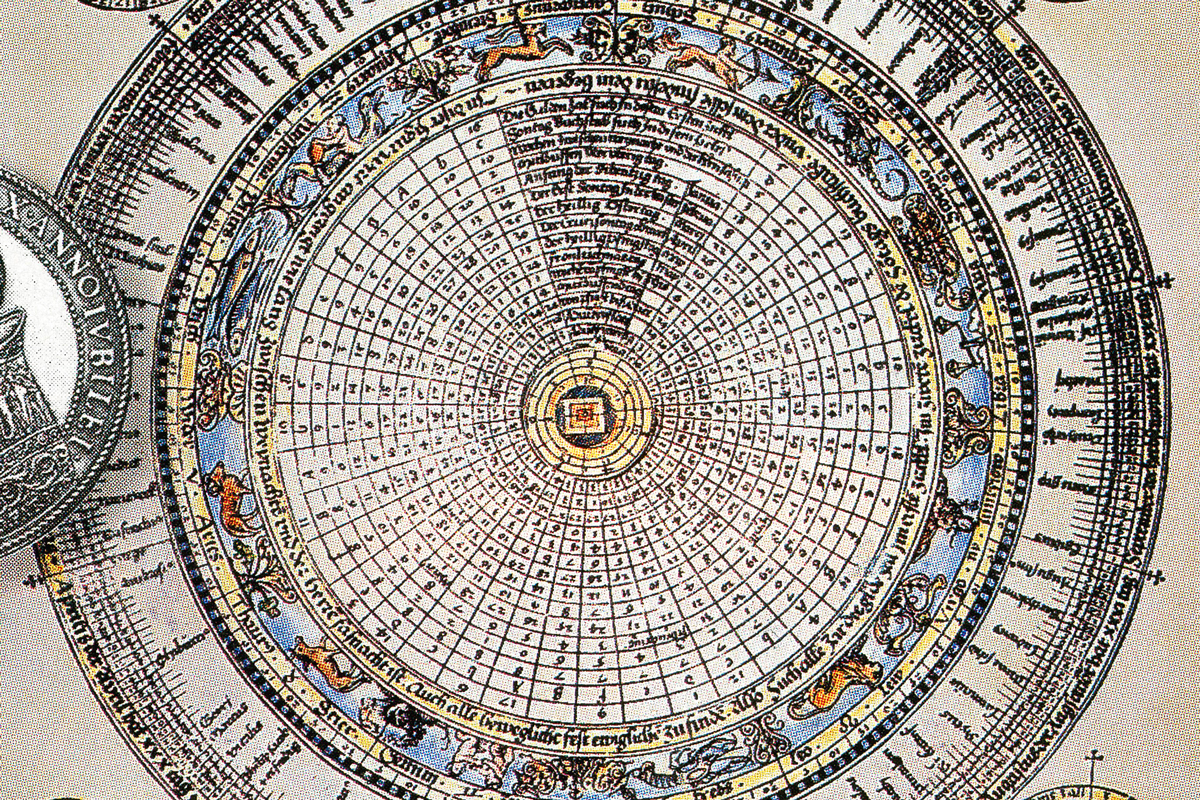
This was addressed in 1582, when Pope Gregory XIII instituted the Gregorian calendar, developed by the Italian scientist Aloysius Lilius — the calendar most of the world still uses today. Lilius realized that leap years every four years made the calendar slightly too long, and so devised a system that adds leap days in years divisible by four, unless the year is also divisible by 100 (on years also divisible by 400, a leap day is added regardless). Though this system works admirably well, it is still off by 26 seconds — so by the year 4909, the Gregorian calendar will be one day ahead of the solar year.
Pope Gregory’s calendar also had a religious motivation: to reset the date of Easter, which over the centuries had drifted from the spring equinox when it was supposed to take place. To remedy this and “reset” the date of Easter, the Gregorian calendar skipped 10 days in 1582, when October 4 was followed the next day by October 15.
The modern calendar may seem like a strange system nowadays, but many of its quirks are the result of continual refinement and improvement throughout history. And though some have proposed alternative systems for keeping track of time, none has stuck. Looks like we’ll be reminding ourselves “30 days has September, April, June, and November” for the foreseeable future.


