



6 Pioneer Survival Skills We’ve Completely Forgotten
Modern conveniences make everyday life easier in ways we rarely stop to think about. Yet living “off-grid” has a certain appeal, especially for people drawn to the idea of being more self-sufficient and less dependent on technology.
But there’s a big difference between choosing to unplug and having no choice. For 19th-century settlers moving into the unfamiliar territory of the American West, basic survival skills could mean the difference between making it through a difficult season and facing a survival crisis.
So if the closest you’ve ever come to wilderness survival is playing The Oregon Trail on a computer or watching the reality show Alone, you might want to brush up on a few skills that were once part of everyday life.
Banking a Fire
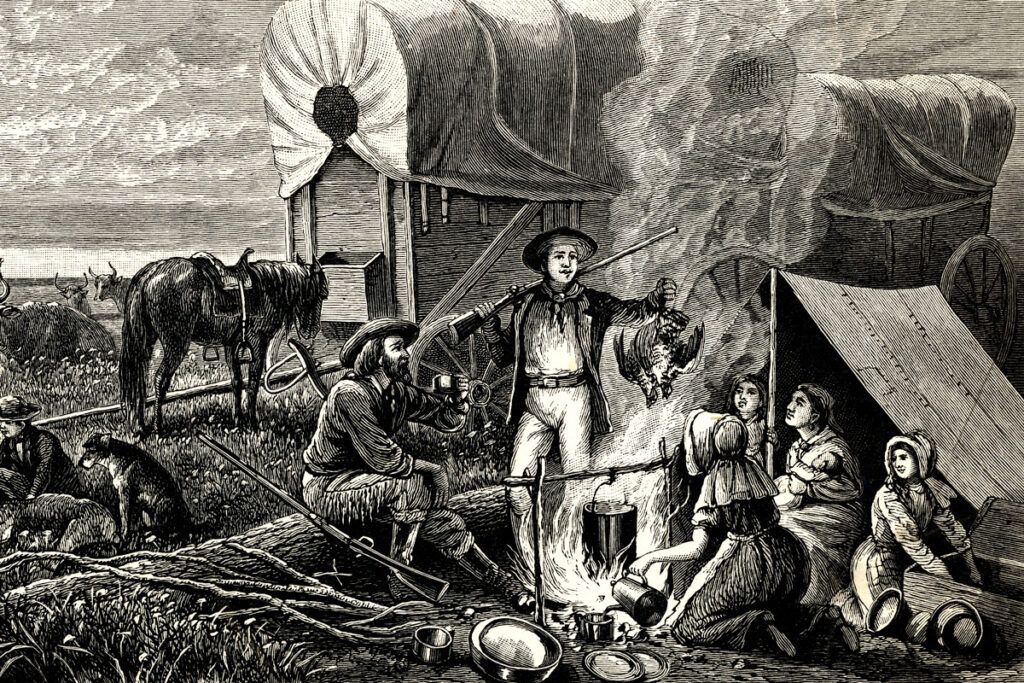
Starting a fire was only part of the job for American pioneers. Keeping it alive was another. Before matches became widely available, knowing how to build and maintain a fire could be a matter of life or death. One useful technique was banking a fire, which involved covering hot coals with ash to slow the burn and preserve the embers overnight. In the morning, the coals could be uncovered and used to get the flames going again.
Pioneers — both on the trail heading West and after settling on the frontier — cooked over open flames and gathered fuel whenever they could. On the largely treeless Great Plains, dried buffalo dung, commonly called buffalo chips, often substituted for firewood. Adults would generally have been responsible for keeping the household fire going, but children learned to gather fuel and help tend the fire as part of their daily work. Knowing how to bank a fire meant preserving their hard-won source of warmth, light, and heat for cooking overnight instead of having to start from scratch the next day.
More from our network





Curing Meat
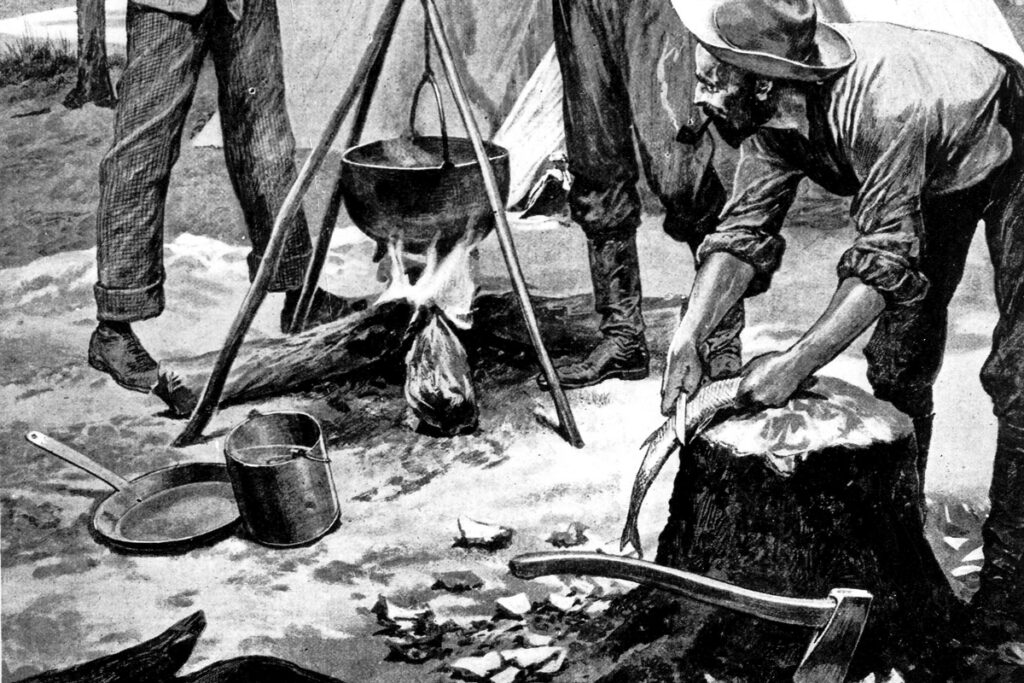
A pioneer couldn’t toss leftovers into the refrigerator and plan to eat them tomorrow. Meat had to be preserved, sometimes for weeks or months. Salting, drying, and smoking were among the methods used to extend its shelf life. Salting drew moisture out of the meat, while drying that reduced the moisture that microorganisms need to grow. The two methods could be used separately or together, depending on resources available. Smoking was another method of preserving meat, adding compounds that could help inhibit microbial growth while also helping dry the meat.
Settlers planned meals around foods that could be stored without refrigeration — from salt pork and dried beef to beans and dried fruit — and the goal was to make the food they had last as long as possible. Preserving meat could determine how long a family’s food supply lasted between hunts, harvests, or trips to the nearest trading post.
Finding and Purifying Water
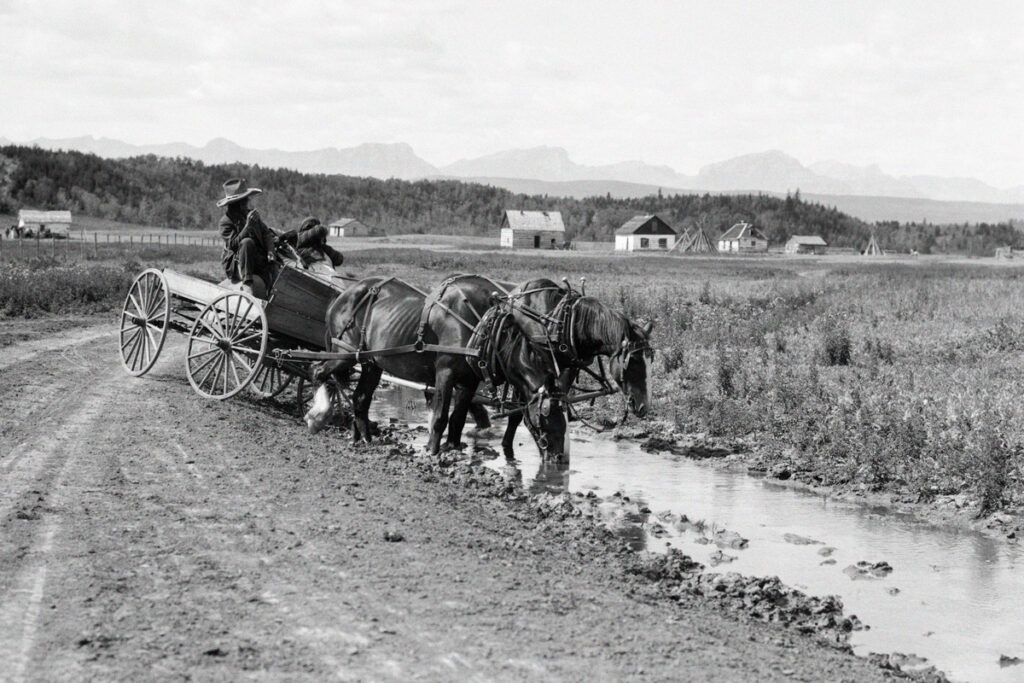
Pioneers had to pay close attention to where they found water, because a reliable supply was essential for drinking, cooking, cleaning, and caring for livestock. Rivers, springs, and wells could determine where a family settled or how far a wagon party could travel in a day. Waterborne diseases — including cholera, dysentery, and typhoid fever — also made contaminated water a serious threat to pioneer communities.
Knowing how to find water and make it safer to drink was part of staying alive in an unfamiliar landscape. A clear stream wasn’t necessarily a safe one, however, and finding dependable water sources was only the first step. Pioneers also learned to use methods such as boiling or filtering through cloth to remove some impurities and reduce the risk.
Reading the Landscape
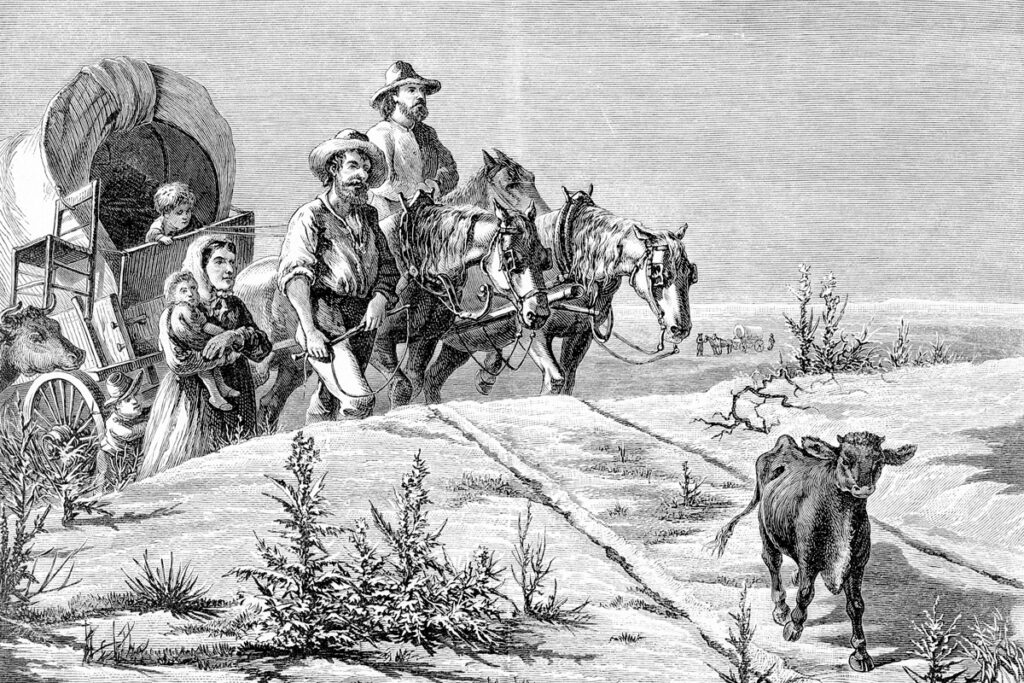
Pioneers learned to pay close attention to the landscape in order to get their bearings. They used landmarks, rivers, mountains, the position of the sun, and, when conditions allowed, the stars to maintain their bearings. They could also follow the wagon wheel ruts left by travelers who came before them, which helped mark the route across stretches of open country. A distinctive rock formation, ridge, or bend in a river could serve as a landmark, helping travelers recognize where they were and determine where to go next.
Reading the landscape also meant understanding how terrain affected travel. A steep mountain pass could slow a journey, a river might offer a useful route or present a dangerous crossing, and the presence or absence of water could determine where travelers stopped for the night. The ability to read those clues and adjust a route accordingly was especially important in places where familiar landmarks and worn paths were scarce. A wrong turn could prove fatal, leaving travelers miles from the nearest reliable source of water or shelter.
Foraging for Food
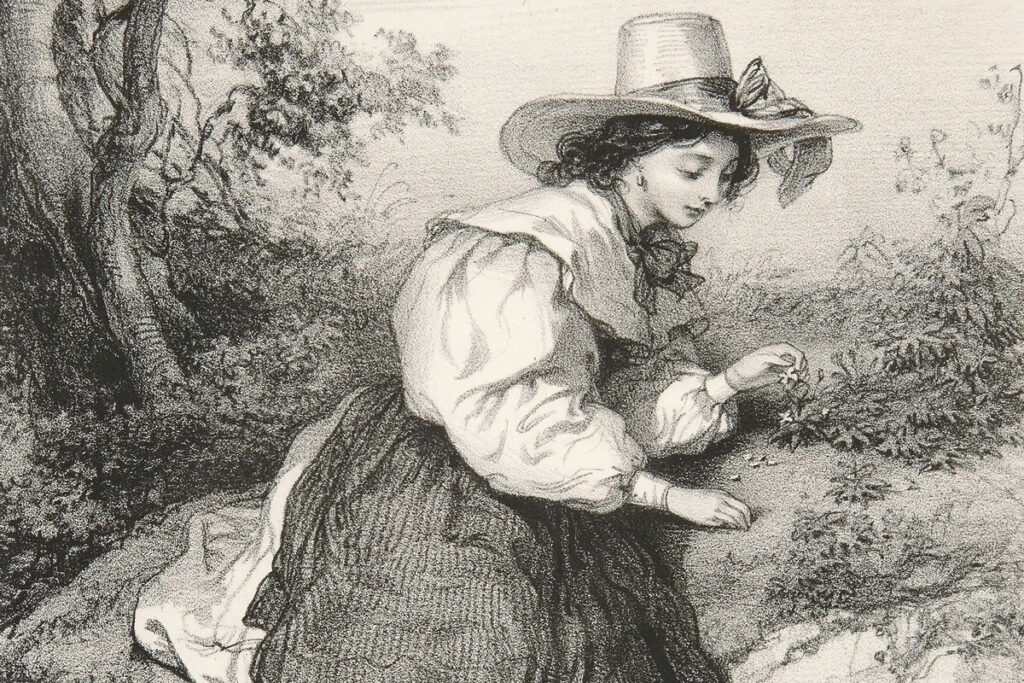
Foraging required knowing which wild plants, berries, nuts, roots, and other foods were safe to eat and when they were ready to harvest. Pioneers didn’t have to figure this out entirely on their own. They could draw on knowledge passed down through families and communities, learn from experienced settlers and guides, and, in some places, gain valuable information from Indigenous people willing to help them. Printed guides eventually offered another source of information.
This knowledge could supplement whatever food pioneers grew, preserved, or hunted, giving families another source of nourishment through the year. Foraging provided food that didn’t require tracking and killing an animal — a time-consuming pursuit with no guarantee of success — and some wild plants offered vitamins and other nutrients that might be limited in a diet heavy in meat and preserved foods.
Making and Mending Clothes
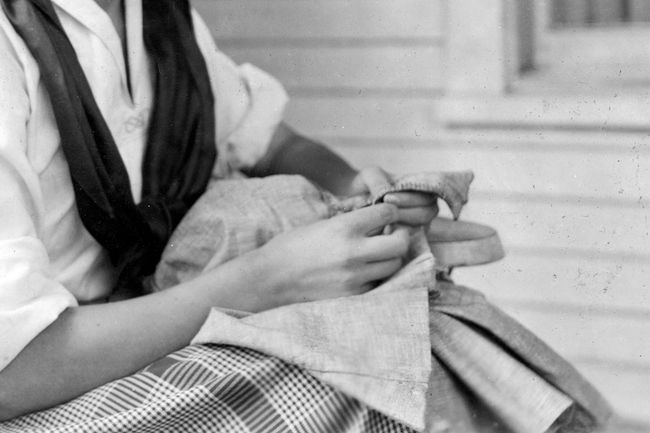
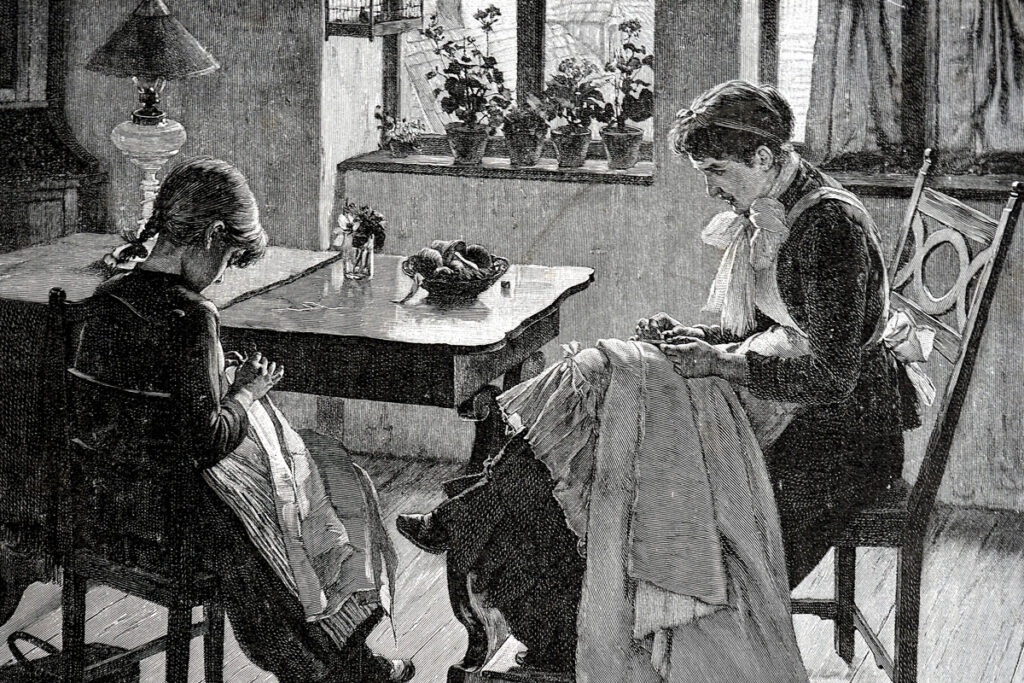
Making and mending clothing were routine household skills for pioneer families. Garments took time and labor to produce, from spinning fibers and weaving or knitting fabric to cutting, sewing, and fitting each piece. Once made, clothing had to last, so people patched, reinforced, resized, and repurposed garments as they wore out.
Women were often responsible for much of the sewing and clothing production, but these skills weren’t limited to adults, with children learning to sew from a young age. Part of the skill was knowing how to make clothing work for changing circumstances. Children’s garments could be altered as they grew, worn-out clothing could be cut down and turned into something else, and scraps of fabric could be saved for future repairs or stitched together into patchwork quilts.
For families living far from stores and other sources of supplies, these skills were part of the knowledge that helped them make a life in a difficult and unfamiliar place.


