


During WWI, sheep grazed the White House lawn to save on labor.
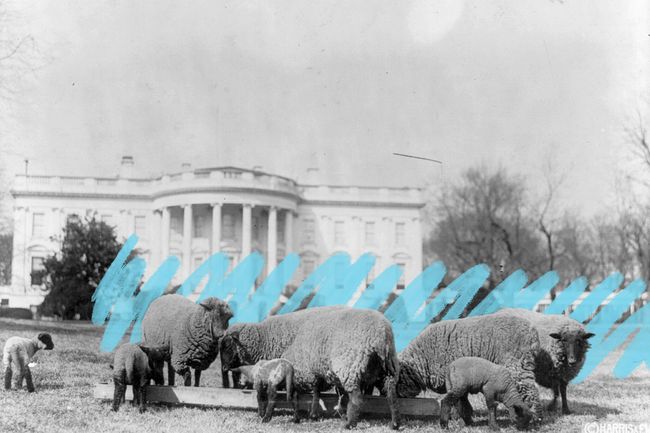
After the United States entered World War I in 1917, labor and resources were redirected toward the military, and maintaining ornamental landscaping became a low priority. So President Woodrow Wilson allowed a flock of 18 sheep to graze the White House grounds to keep the lawn trimmed.
It wasn’t all for practicality’s sake — Wilson’s sheep were meant to reflect a broader wartime message of civic duty and conservation. Men were conscripted into military service, and civilians were urged to conserve food and fuel as a patriotic duty. Wilson and his wife, Edith, also scaled back on hosting at the White House, and occasionally rode in a carriage instead of an automobile to save on fuel. The sheep’s wool was regularly sheared and auctioned off for charity, eventually raising more than $50,000 for both the Red Cross and the Salvation Army.
The sheep quickly became part of daily life on the grounds, and over time, the flock grew well beyond its original number, expanding to 48 animals. They proved an impactful symbol and remained on the lawn even after the war ended. But by August 1920, the experiment had run its course. The flock had outgrown the White House grounds, and the animals were sold and returned primarily to the Maryland farm they came from.


