


The weekend was created so workers would stop taking ‘sick’ days on Monday.
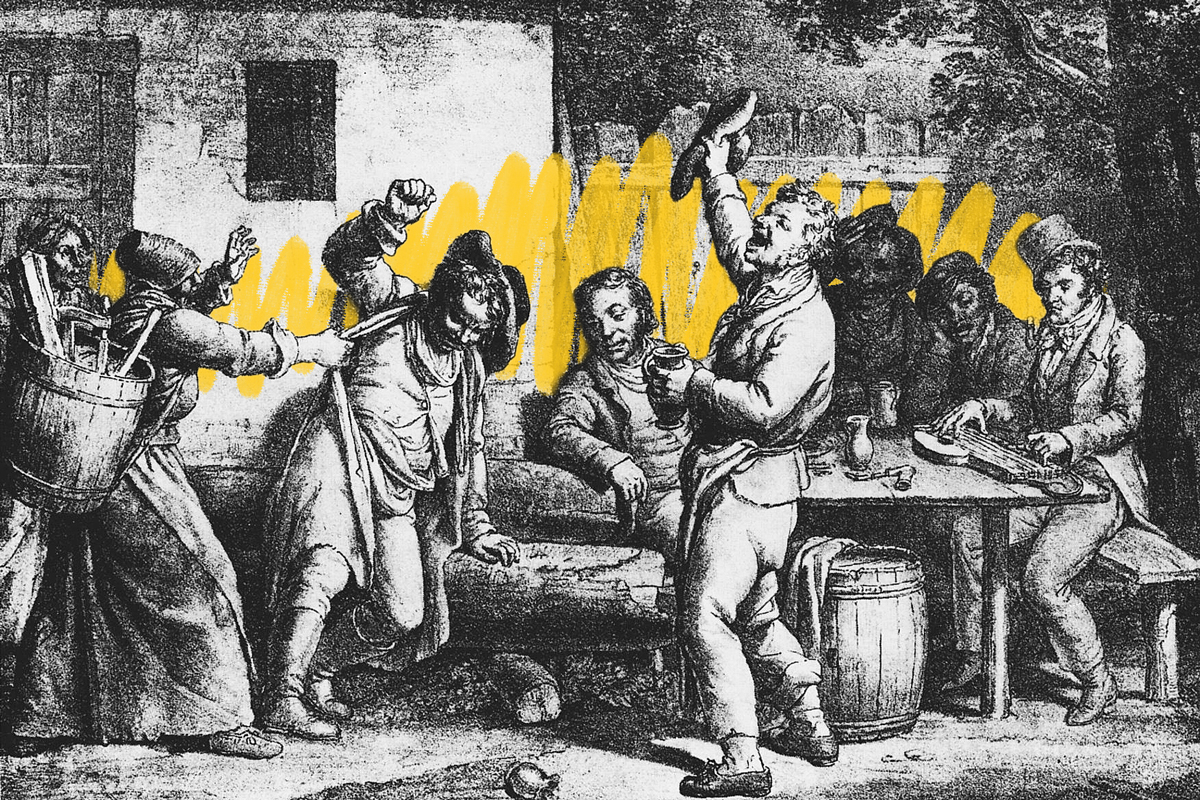
In Britain and other parts of Europe, the first day of the workweek used to be known as “Saint Monday,” and not for the reasons you might expect. Workers often treated Monday as an unofficial holiday. Sunday was their one sanctioned day off, and though it was meant as a day of religious observance, for many people it also became a time to let loose after a long workweek. Come Monday, many workers simply didn’t show up, using the day to recover — or to continue imbibing. The day became known as “Saint Monday,” a tongue-in-cheek reference to religious holidays.
By the mid-19th century, taking Monday off work was a widely practiced custom, honored in tradition if not on any calendar or work schedule. At the same time, however, the rise of industry saw workplaces become more structured, and Saint Monday disrupted production. So employers, influenced by temperance groups and labor unions throughout Britain, tried a different approach: making time off a formality. Starting in the mid-1800s, workweeks were shortened, first by reducing Saturdays to half days. Employers hoped the change would satisfy workers and encourage them to reliably return to work on Monday.
Leisure time indeed took on new meaning for the working class: Recreational travel, live music and theater, and sporting events — especially football (or soccer in the U.S.) — became Saturday fixtures. Still, the shift to a full two-day weekend didn’t happen overnight. In the U.K., it unfolded gradually after World War I, while in the U.S., the Ford Motor Company formalized a five-day workweek in 1926. By the 1940s, Saturdays and Sundays were firmly ingrained in society as the weekend we now know and love.


