The Washington Monument sat partly built for two decades.

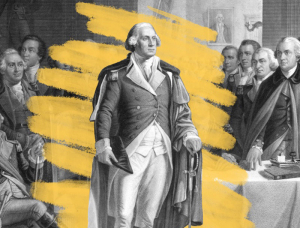
In 1848, a long-planned monument to George Washington finally broke ground in the capital city bearing his name. Funded by donations collected by the Washington National Monument Society, the Egyptian-influenced obelisk began taking shape with the steady climb of its white marble walls. But the project hit a major snag in 1855 when members of the Know-Nothing Party, an upstart nationalist political group, seized control of the society in order to stack the board with people who shared their political views.
The Know-Nothings knew nothing about fundraising, it turned out, and construction slowed to a trickle with the structure standing at less than one-third of its planned 500-foot height. A bigger issue was the worsening political climate that soon exploded into all-out civil war, leaving the unfinished monument hovering above a field of grazing animals like “a factory chimney with the top broken off,” in the words of Mark Twain.
After Congress finally addressed the lingering eyesore in 1876 by appropriating $2 million for the project, Lt. Col. Thomas Lincoln Casey of the U.S. Army Corps of Engineers set about reconfiguring plans to adjust the monument’s foundation and height. Obstacles resurfaced when the marble available for construction proved to be of poor quality, prompting a change of suppliers that produced stones of a slightly different shade — and causing a noticeable change to the appearance of the exterior. Nevertheless, a milestone was reached when Lt. Col. Casey placed an 8.9-inch aluminum tip atop the capstone in December 1884. The monument was formally dedicated the following February, even as the elevator and other interior portions remained under construction.
When the Washington Monument opened to the public on October 9, 1888, it was the world’s tallest structure at just over 555 feet, its towering stature impressive enough to eclipse the history of delays and serve as a fitting tribute to the revered founding father who was eulogized as “first in war, first in peace, and first in the hearts of his countrymen.”