



The CIA trained ravens to drop bugging devices on windowsills.
Most spies don’t work for peanuts, but a few of the CIA’s Cold War recruits worked for morsels of “crow salad.” The agency experimented with some unconventional operatives during the era, including dolphins, cats, pigeons, and, yes, ravens. The raven program grew out of research by Animal Behavior Enterprises, a company whose founders had studied under behavioral psychologist B.F. Skinner. When they weren’t teaching chickens to play baseball or pigs to vacuum at their I.Q. Zoo in Arkansas, the company’s trainers developed animal acts for the U.S. government.
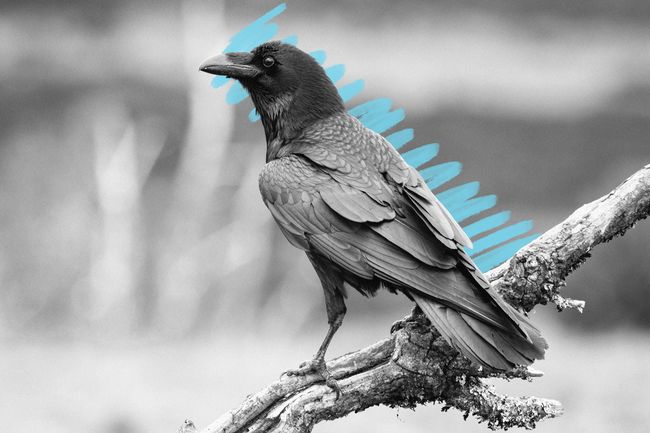
Ravens were particularly promising recruits. They were intelligent, strong enough to carry small packages, and capable of working independently. According to the CIA’s declassified Operator’s Manual: Avian Delivery System, a raven could be trained to take a package in its beak, fly to a specified ledge or windowsill, deposit the package, and return to its cage. Handlers guided a raven by projecting a pulsing red laser onto the target; once the bird had deposited its cargo, a special recall lamp beckoned it back.
The CIA envisioned ravens delivering listening devices disguised as ordinary debris, such as a piece of roofing slate. Trainers also taught the birds to press cameras against windows and take snaps of the rooms inside. The birds were trained with “crow salad” — specifically, a mixture of meat, canned corn, whole wheat bread, cottage cheese, and other ingredients.
A raven in the program did succeed (sort of) at its mission at least once, somewhere in Europe. But although the bird left the eavesdropping device on the designated windowsill, the machine failed to pick up the intended target’s conversation. The CIA eventually abandoned its animal experiments around 1975, but not because the birds were bad — the raven had performed its part of the operation perfectly.


