

The Origins of the Beloved Teddy Bear
Theodore Roosevelt is known as the first conservationist President, having established national parks, wildlife refuges, and national forests during his time in the White House. It seems fitting, then, that one of the world’s most recognizable animal figures — the beloved teddy bear — was inspired by and named after the 26th U.S. President.
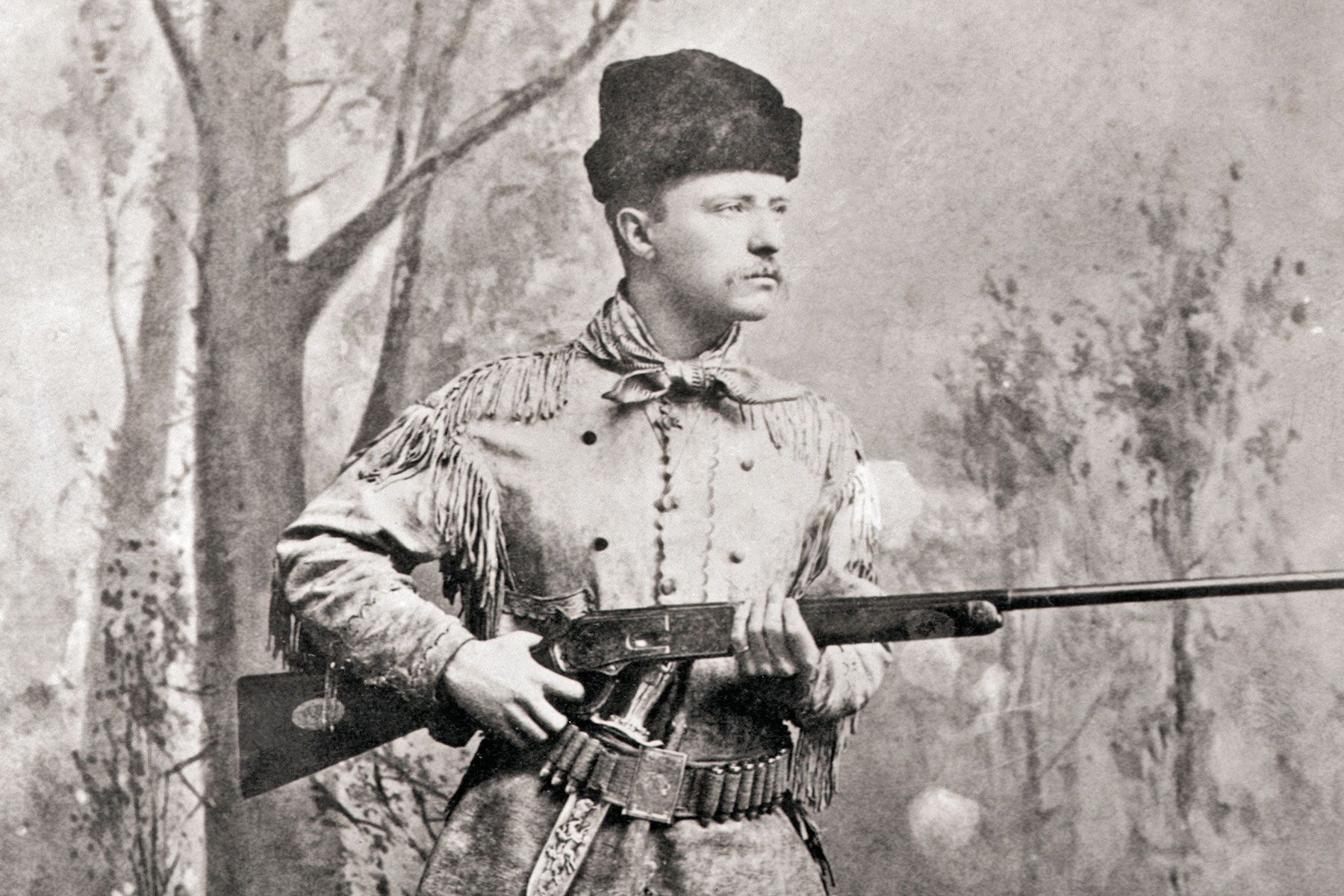
In November 1902, Roosevelt joined Mississippi Governor Andrew H. Longino on a hunting trip in Mississippi. On the second day of the trip, Roosevelt’s aides — including guide Holt Collier, a skilled hunter in his own right — captured a bear, tied it to a tree, and presented it to the President, who was eager to start the trip off strong with a catch. Roosevelt, however, refused to shoot the restrained bear. He may have been an avid hunter, but he found it unsportsmanlike to harm a defenseless animal.
The hunting incident attracted attention in the press. Washington Post cartoonist Clifford Berryman depicted Roosevelt refusing to shoot a small, tied bear in “Drawing the Line in Mississippi,” a cartoon that doubled as a commentary on the President’s handling of a state border dispute. The cute bear cub character became popular with Americans, and in the ensuing years, Berryman continued to use the bear as a symbol for President Roosevelt, who was commonly known as “Teddy,” short for Theodore.
More from our network






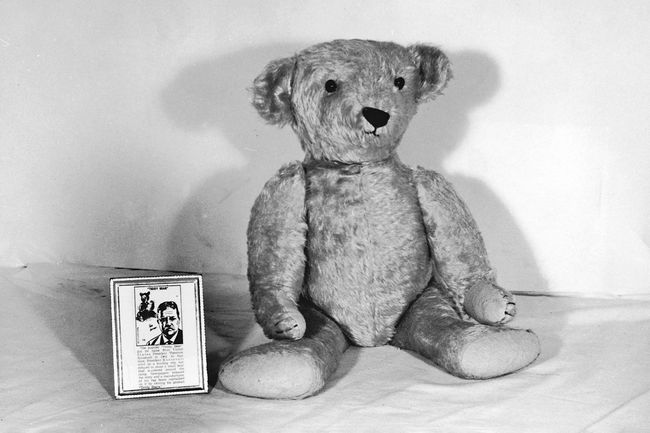
Berryman’s cartoon, published on November 16, was particularly inspiring to Morris and Rose Michtom, owners of a Brooklyn toy and candy store. Morris, a Roosevelt supporter, created a stuffed bear and named it after the President. Before making more, he reportedly wrote to Roosevelt to ask his permission to name the toy “Teddy’s Bear.” Roosevelt agreed, but is said to have expressed skepticism. “I don’t think my name is likely to be worth much in the bear business,” Roosevelt wrote, according to the Michtoms, “but you’re welcome to use it.” The Michtoms’ first teddy bear stood about 2.5 feet tall, had button eyes, and was made of a golden-honey plush fabric. By 1903, the Michtoms founded the Ideal Toy Company in order to produce and sell the teddy bears that their customers loved.

At around the same time, the German toy company Steiff introduced a stuffed bear of its own. Designed by Richard Steiff, the nephew of company founder Margarete Steiffthe, the bear first appeared in 1902, reportedly inspired by animal sketches Richard made as a child. The bear was made of soft mohair and had a movable head and limbs. After the toy appeared at the 1903 Leipzig Toy Fair, a U.S. buyer ordered 3,000 of the stuffed bears, kicking off the company’s success overseas. By 1906, the Steiff bear was also known as the “teddy bear” (though exactly how this happened remains something of a mystery), and in 1907 alone the company produced 974,000 teddy bears.
It wasn’t long before the teddy bear’s popularity extended beyond toy stores. In 1907, composer John Walter Bratton wrote “The Teddy Bear Two-Step,” which later became known as “The Teddy Bear’s Picnic.” That same year, the toy’s popularity sparked minor controversy when a Michigan minister suggested the stuffed animals were a “menace” to the country and would take away young girls’ desire to nurture human babies.

Roosevelt, for his part, was supportive of the eponymous stuffed toy, and in 1904, he even used a teddy bear as a symbol in his campaign for reelection, printing the teddy’s likeness on buttons and displaying the Michtoms’ creations at the White House. Even after his presidency came to an end, Roosevelt’s passion for wildlife and the outdoors endured. He went on numerous expeditions, some of which, such as his 1913 trek through the Amazon’s River of Doubt, were more treacherous than others.
In 1963, the Ideal Toy Company reached out to Roosevelt’s family to offer them one of the original teddy bears. It made its way into the hands of one of Theodore’s grandsons, Kermit Roosevelt, and in 1964, the Roosevelt family donated it to the Smithsonian National Museum of Natural History.