



7 Facts That Reveal the Wonder of the Ancient Maya
For thousands of years — beginning around 1800 BCE — the Maya flourished throughout Mexico and Central America, primarily calling modern-day southern Mexico, Guatemala, Belize, and parts of Honduras and El Salvador home. One of the great civilizations of ancient Mesoamerica (along with the Olmecs and Aztecs), the Maya created a sophisticated society with advanced mathematics, architecture, and writing. Today, the Maya peoples make up one of the largest Indigenous populations in the Americas. Here are seven facts that explore the complexity and wonder of this ancient culture.
The Maya Were Skilled Mathematicians
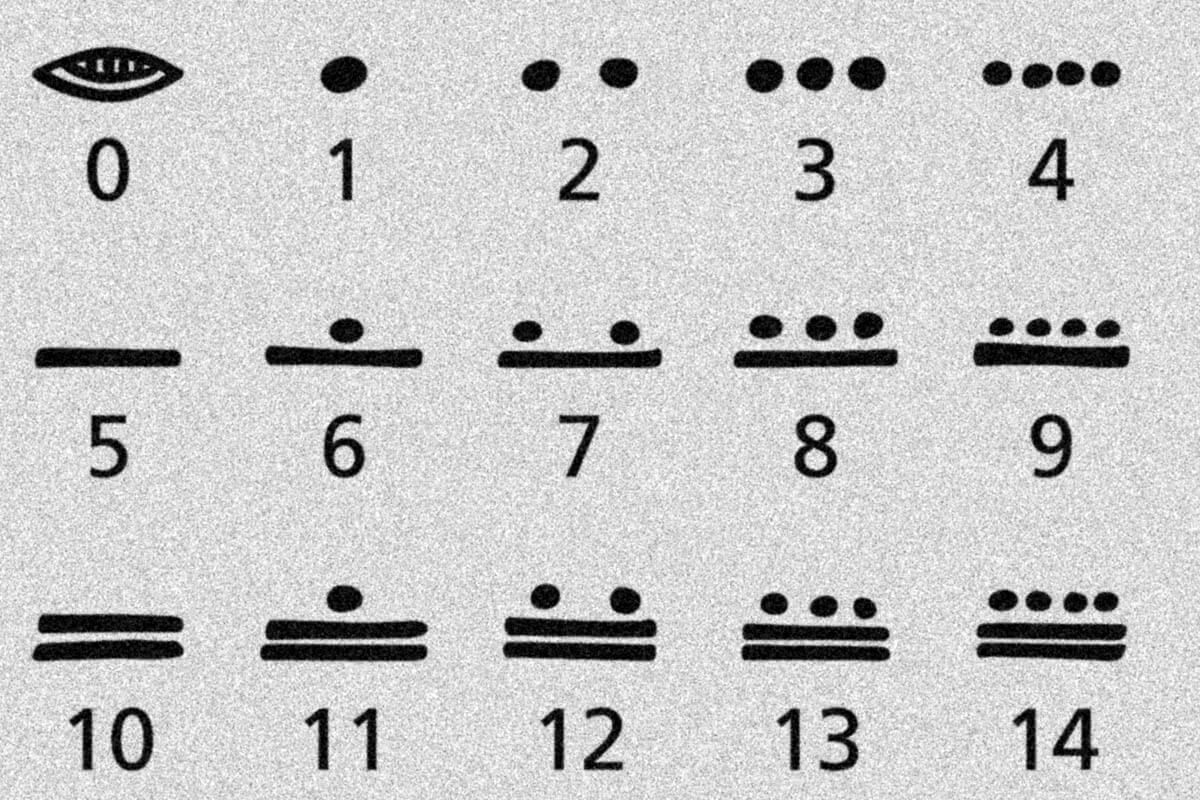
The numerical system used by the Maya, as well as many other Mesoamerican cultures, was a vigesimal (or “base 20”) system. While our modern “base 10” system uses 1, 10, 100, 1,000, and so on, the Maya used 1, 20, 400, 8,000, etc. The Maya system was much more effective for counting than the confusing system of numerals used in the Roman Empire, and the Maya also devised the concept of zero (perhaps around the year 36 BCE), a major mathematical accomplishment. The Maya leveraged their mathematical skills to build impressive cities, chart astronomical movement (using little more than geometry and some sticks), and develop their famous calendar. Speaking of which…
Sponsored Content




More from our network






The Maya Did Not Think the World Was Going to End in 2012
The Maya calendar is a complicated system — in fact, it’s three calendars in one. One of them, the Long Count calendar, which measures time in much longer stretches than the other calendars' 52-year cycle, garnered quite a bit of attention in 2012, as some doomsayers believed the ancient calendar marked December 21, 2012, as the end of the world. The Maya, however, did not believe that. The mostly U.S.-based hysteria grew from the fact that the Long Count calendar was about to reach a 13th “b’ak’tun,” which occurs around every 400 hundred years or so, and this particular b’ak’tun also completed what’s known as a Great Cycle or Grand Cycle, which lasts 5,125.366 solar years. The Maya believed that the end of the Great Cycle simply meant the beginning of a new one — not the apocalypse. But lacking any evidence to the contrary, some doomsday soothsayers in the U.S. believed that life on Earth would end with the cycle (it didn’t), or that the ancient Maya were somehow following extraterrestrial instructions (they weren’t). Instead, December 21, 2012, came and went like any other day, and a new Great Cycle began.

The Maya Civilization Grew to Some 40 Cities at Its Peak
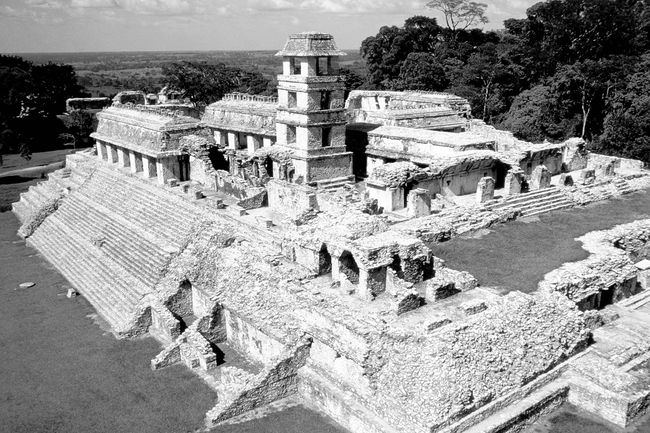
The first Maya cities formed in the Yucatán around 1800 BCE, around the same time as the rise of the first major Mesoamerican civilization, the Olmecs, from whom the Maya inherited parts of their calendar and writing system. The Maya civilization began to flourish around 250 CE, entering a golden age known as the classic period. Much like the ancient Greeks who thrived centuries earlier, the Maya had no central authority during this period and were instead dominated by dozens of city-states. The Maya followed “kuhul ajaw,” or holy lords, who claimed to be descendants of gods and were seen as intermediaries between the Maya people and their deities. The city-states, of which there were about 40, held populations as small as 5,000 or as large as 50,000 to 120,000. The most famous examples were Palenque, Copán, and Tikal, the largest city in the southern Maya lowlands. During the classic period, anywhere from 2 million to 10 million Maya lived in Mesoamerica.

Many Maya Cities Were Mysteriously Abandoned Around 900 CE
Around the year 750 CE, the fortunes of the Maya began to change. Artifacts show that by the middle of the eighth century, construction in some cities had drastically declined, and by 925 CE, many of the city-states that made up the heart of this Mesoamerican power were abandoned. So what happened? Well, it’s hard to know for sure, but it’s likely that a combination of factors led to the decline of the Maya civilization. Geologic records gathered from stalagmites in Belize show prolonged drought affected the area at the time. Environmental degradation, overpopulation, shifting trade routes, and warring city-states also likely contributed to the civilization’s decline. However, these ill fortunes mostly impacted the southern lowlands (southern Mexico, northern Guatemala, and Belize), and between 900 CE and 1519 CE, cities in the northern lowlands and Guatemala’s highlands rose to prominence. (After all, the name “Maya” comes from the northern capital Mayapan.) Cites such as the highland city of Utatlán (also known as Qʼumarkaj) in modern-day Guatemala remained regional powers as late as the arrival of the Spanish in 1524.

Only Three Maya Codices Still Exist
The first evidence of Maya writing, likely adopted from the Olmecs, dates to around 300 BCE, found in the murals at San Bartolo in Guatemala. Similar to the ancient Egyptians, the Maya used ornate hieroglyphics and pictographs to express themselves and record government and calendar events. Maya writing also graces myriad monuments (known as stelae), ceramics, and other objects, but for centuries scholars had no idea what they said. That’s because when the Maya were subjugated to Spanish rule in the 16th century, a zealous inquisitor named Diego de Landa tragically set fire to dozens of Maya codices — essentially accordion-style books made from the bark of a fig tree — that likely contained detailed writings about monuments and other important historical facts about the ancient civilization. Thankfully, three codices (and possibly a fourth, though it has yet to be confirmed) survived the conflagration. These three codices, named for the cities where they’re kept today — Paris, Dresden, and Madrid — along with Landa’s own account of how the Maya writing system worked, allowed scholars to decipher the glyphs in the 1950s and revolutionized our understanding of the culture. Today, some Maya are teaching this rediscovered script to future generations in an effort to preserve the ancient writing system.

Nearly Half of Guatemala's Modern Population Is Ethnically Maya
Today millions of Maya still inhabit the same regions of their ancestors spread throughout southern Mexico and Central America, and one of the largest populations lives in Guatemala. Out of the county’s 15 million inhabitants, some 6.5 million identify as Maya, which today comprises a rich tapestry of peoples (there are 22 Mayan languages in the country alone). Along with large populations also living in Mexico, including the Yucatecs, the Tzotzil, and the Tzeltal, the Maya are one of the largest Indigenous groups in the Americas today. Despite being the original stewards of these lands, the Maya have endured incredible hardships both past and present. In recent years, the Mexican government, for example, has apologized to the Maya for historical mistreatment, but the group is still subjected to racism, poverty, and inequality. The Maya continue to fight for civil rights, such as bilingual education for the preservation of the Mayan language. In 1992, Maya activist Rigoberta Menchú Tum even received the Nobel Peace Prize for her lifetime of work in promoting the rights of the Maya throughout their ancestral homeland.

Maya Ruins Are Still Being Discovered Today
In the 1840s, American archaeologist John Lloyd Stephens began clearing the jungle undergrowth that was covering sites such as Uxmal and Palenque in Mexico, kicking off a journey of discovery that continues to this day. Because the Maya occupied dense sections of rainforest, finding ruins can be extremely complex. However, modern laser technology, satellite imaging, and ground-penetrating radar have made the job much easier, and new discoveries are still illuminating aspects of this fascinating culture. In 2018, for example, archaeologists mapped 810 square miles in northern Guatemala by using laser technology to peer through the rainforest’s dense canopy. What they discovered was 60,000 previously unknown Maya ruins — Stephen Houston, a professor of archeology and anthropology at Brown University at the time called the discovery “one of the greatest advances in over 150 years of Maya archaeology.” As recently as February 2023, a similar study revealed a “superhighway” of interconnected cities around 1000 to 350 BCE, showing just how sophisticated the ancient Maya were. As discoveries continue, it’s likely the full nature of this remarkable civilization will only become more clear over time.