




The dishwasher’s inventor said clumsy servants inspired her idea.
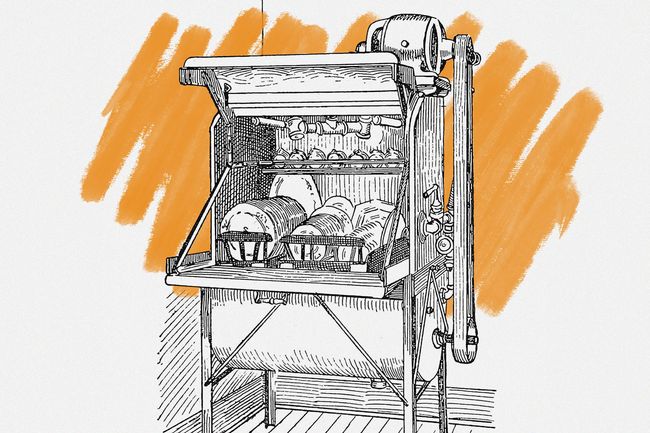
Josephine Garis Cochran, born in Ohio around 1841, was good at many things. She designed, patented, manufactured, and sold the first modern dishwasher, turning wire baskets and hot water jets into a labor-saving device that has helped countless people. Yet Cochran (who added an “e” to her last name later in life) also had a knack for public relations. She told the press she’d gotten the idea for her “Dish Washing Machine” after she got tired of servants chipping her expensive china — an anecdote that stuck around for more than a century.
That said, historical research has shown that Cochran probably didn’t have that many servants and perhaps wasn’t quite as wealthy as she had portrayed herself. In the 1880 census, around the time she invented her machine, her residence lists only one servant, while previous censuses list none. Cochran also let the press believe she was descended from steamboat inventor John Fitch, even though she knew that wasn’t true.
Press exaggerations aside, Cochran’s life and inventions are still impressive. After her husband died in 1883 leaving her with significant debts, Cochran set out to build a machine that could do what earlier dishwashers could not. Previous designs relied on scrubbers that often damaged dishes; Cochran’s key insight was to use water pressure instead.
Working with a mechanic named George Butters, she developed a system of wire racks inside a copper tub, where jets of hot water blasted dishes clean. In 1886, she received a patent for the machine, despite having no formal training in engineering — and despite resistance from the men she hired to help manufacture it. “They knew I knew nothing, academically, about mechanics,” she later recalled, “and they insisted on having their own way.” Yet ultimately, her own design proved superior.
Cochran didn’t just invent the machine — she built a business around it. She opened her own factory and began selling dishwashers in both home and commercial models under the Garis-Cochran name. Because the machines were expensive and required large amounts of hot water, her earliest customers were hotels and restaurants. The breakthrough moment came at the 1893 World’s Columbian Exposition, where her dishwasher won honors and impressed judges with its speed and efficiency.
By the time she died in 1913, Cochran held multiple patents and had established the foundation of a new industry. Her company was later absorbed into what became KitchenAid, now owned by Whirlpool, and her water-pressure design remains the basis of modern dishwashers.


