




Men used to believe mustaches filtered germs.
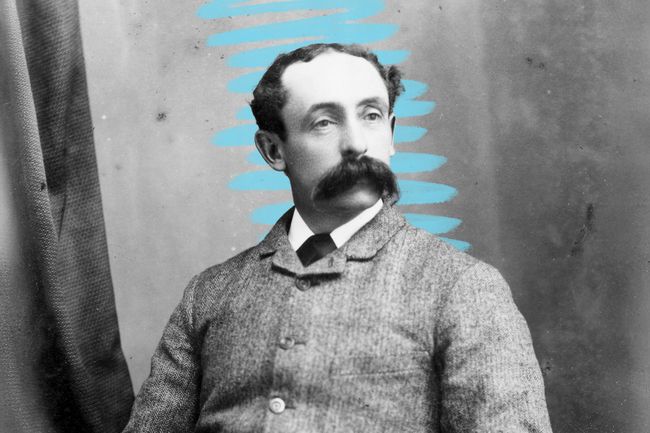
Victorian doctors had what they considered a good reason for prescribing beards: They believed that facial hair, including mustaches, served as a natural barrier against germs and illness. The idea would appear to make sense at first glance: If whiskers can make cold weather a bit more bearable, surely they could protect against the foul air that, at the time, was believed to cause most disease.
Indeed, one doctor wrote in the Edinburgh Medical Journal in 1861 that “the moustache is emphatically nature’s simple respirator, while the hair covering the jaws and throat is intended to afford warmth and protection.” By the late 19th century, however, the miasma, or foul air, theory fell out of favor, and the medical community accepted that “wee beasties,” as microbes were known in the U.K., are responsible for most infectious diseases.
Unfortunately for those of us who do sport facial hair, it seems to have the opposite effect when it comes to shielding us from illness. According to a study in Behavioral Ecology, “hair on the face and body are potential localized breeding sites for disease-carrying ectoparasites.” Meanwhile, Bav Shergill of the British Association of Dermatologists told the Guardian that “facial hair is more likely to trap bacteria and food” and “there is actually more chance of infection with a beard than a clean-shaven face.” The things we do for fashion.


